
A crypto wallet card that pays out like an ordinary Visa, at a fairly honest price
 Available in US
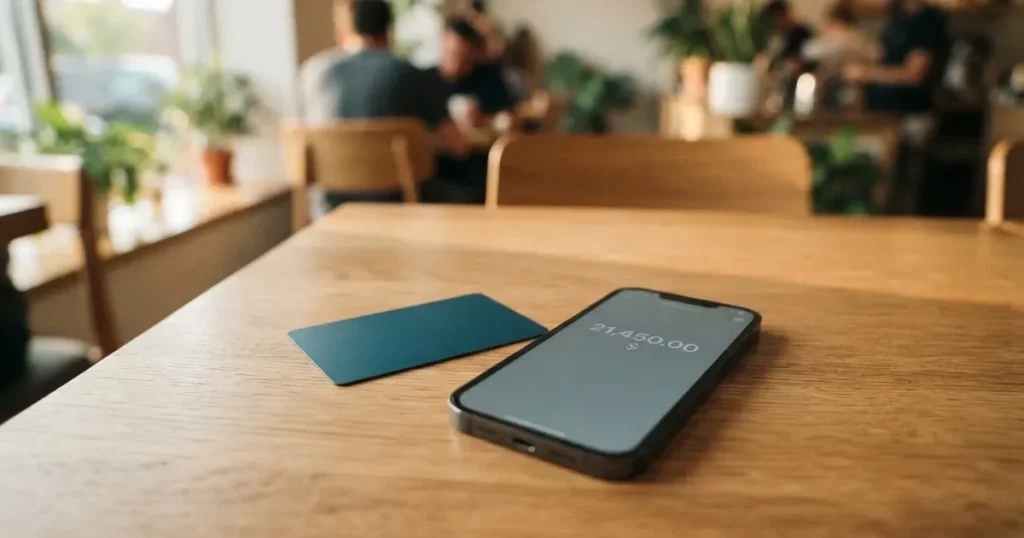
If you have tried to open a normal bank account and it did not work — because of where you live, what documents you hold, or what a bank decided about you — then the MP card is worth an hour of your attention. MP, which runs under the brand MPChat, is a crypto wallet with a payment card attached: a virtual card for online spending and a physical Visa you can hold. You load it from your own crypto balance, and then it spends like any other card in the shops where cards are accepted.
I went through the card’s own pages with the questions a person in that position actually has. Here is what I found, including the parts that are less flattering than the marketing.
The conditions described below are current as of October 28, 2026.
Verdict: 7.1 out of 10, useful for a specific person
My score for MP is 7.1 out of 10. That is not a rounded-up “great card” number and not a put-down either. It is a card that does one thing — gives you a Visa that spends from a crypto balance — and does it with costs I can actually see written down. What holds it back is not the product so much as the thinness of the evidence around it: no card issuer is named, no customer reviews exist anywhere I could find, and one card in the range has already been retired.
Who it suits: someone who already holds stablecoins, wants both a virtual and a physical card from one wallet, wants Apple Pay and Google Pay, and has decided that a crypto balance is where their money sits for now. Someone for whom a normal debit card is closed, and for whom the 23-country restriction list does not catch them.
Who it does not suit: someone who needs deposit-guarantee protection on their money, someone who wants a named bank behind the card, someone who plans to spend outside the US dollar without thinking about an extra percentage, and — bluntly — anyone who wants to read what other users say before handing over their identity documents. There is nothing to read.
The score, criterion by criterion
| Criterion | Mark | Why, in my words |
|---|---|---|
| Who can get it | 8 / 10 | 23 countries are closed, Russia and Belarus among them, plus several disputed territories; most of the world is open and what decides it is where your document was issued and where you are registered as living |
| Cost | 5 / 10 | Cloud Card costs 10 USDT and Boundless 100 USDT with no monthly fee, but there is a 0.80% transaction fee and ATMs cost 2% |
| Top-up options | 7 / 10 | USDC and USDT into the MP wallet, which is non-custodial, via Binance Pay or on-chain, then across to the card; the supported networks are not listed |
| Reliability and complaints | 7 / 10 | MP Network Inc with licences in the US, El Salvador and Hong Kong, but no issuer named, Flash Card retired on 30 September 2026, and no reviews found |
| Everyday use | 9 / 10 | Cloud virtual and Boundless physical Visa, Apple Pay and Google Pay, Alipay and WeChat Pay on Cloud, and an ATM on Boundless — this is the strongest part of the offer |
| Total | 7.1 / 10 |
Will they give you the card?
Not if you are in one of 23 named countries, and the decision rests on your document and your address rather than on your intentions.
MP says it does not issue in 23 countries “unavailable due to regulatory compliance”: Afghanistan, Belarus, Central African Republic, Cuba, DR Congo, Dominican Republic, Guinea-Bissau, Haiti, Iran, Iraq, Lebanon, Libya, Mali, Myanmar, North Korea, Russia, Somalia, South Sudan, Sudan, Syria, Venezuela, Yemen, Zimbabwe. Russia and Belarus are both on that list, so if you are reading this from either, the answer is no and there is no appeal to make.
There is a second, softer list. KYC cannot be completed in parts of Ukraine — Crimea, Donetsk, Luhansk, Zaporizhzhia, Kherson — and also in Abkhazia, South Ossetia, Northern Cyprus, Somaliland, Transnistria and Nagorno-Karabakh. Living in a place on that list does not necessarily close the door on its own; what counts is whether you can complete verification.
The rule MP states is that eligibility is “based mainly on your document’s place of issue and your registered residential address”. That is worth reading twice. A document from a restricted country can disqualify you even if you live somewhere open, and a registered address somewhere restricted can disqualify you even if your passport is from elsewhere. The page also says documents cannot be switched in order to get around a regional restriction — no shopping for a friendlier passport, no registering at an address you do not actually live at.
Here is the shape of who is left: anyone whose identity document and registered home address are both outside those lists. That is a large part of the world, and for most readers in the position I am writing for, the practical test is simple — read the two lists, check your document and your address against them, and stop reading this section.
One more thing worth understanding before you commit. Merchants and banks look at the first six or eight digits of a card number, the BIN, and can see which institution and country issued it. If that issuer country does not match your billing address, a shop may apply extra scrutiny, decline the payment, or ask questions. Cards issued in Singapore, which is what MP says its cards are, routinely look “foreign” to payment processors in other countries. That is a category fact, not an MP quirk, but it is the practical reason some people get declined after passing KYC.
How to get it
Register in the app, verify once with a government ID and a selfie, fund the wallet, then buy the card — five steps, and only one of them is the hard part.
The app is MPChat, on iOS and Android. The path through it is: download the app, register, go to Assets and tap Activate Now, fund the wallet, then choose your card type and buy it.
The verification is KYC level 1, and it needs four things: you must be 18 or older; basic personal information; a government-issued ID — a passport or a national ID; and a selfie liveness check. A few details that catch people out. One identity can verify only one account, so a second account on the same passport is a refusal, not a workaround. The document’s expiration date must be “more than three months away” — an expired document fails outright. And proof of address is not stated as a requirement, which is unusual and helpful, but do not treat that as permanent.
MP runs two account levels and the difference matters more than it first appears. At Registered level — which is just a phone sign-up — you get transfers capped at 1,000 USD a day and 10,000 USD in total, and no card. The card only comes at KYC1, which is where the ID and selfie come in, and which the card pages describe as also carrying unlimited transfers and withdrawals up to 200,000 USD a day.
The reasons MP lists for a rejection are worth having in your head before you try: under 18, an unsupported country, a document that is blurry, cropped, printed or expired, a face mismatch or another person in the frame, a second account on the same identity, and a mismatch between your name, date of birth or document number across what you typed and what the document shows. Nothing here is discretionary or vague — each one is a fixable photograph or a typographical error.
On the cards themselves, there are two live options and one that is gone. The Cloud Card is virtual, bills in USD, is issued in Singapore and has no ATM; its network is not stated. The Boundless Card is a physical Visa, BIN 45659910, in USD. The Flash Card — virtual, BIN 40433705 — is retired; existing Flash cards were converted to Cloud cards and balances moved to Total Assets. So if you are reading a guide from before autumn 2026 that tells you to order a Flash, it is out of date.
Delivery for the Boundless is the softest spot in the whole application. Delivery time and region are “subject to the announcement on the Boundless Card application details page”, and postage, if any, is set there too. MP does not publish a number. If a physical card in the post matters to you, that is the page to read before you pay 100 USDT, because the card’s own front door does not tell you what to expect. Replacement or reissue costs $5 the first time and $10 each time after, and you have to wait at least 31 days between them.
What it really costs: Fees
Cheap to hold, ordinary to spend: no monthly fee and no crypto conversion fee, but 0.80% on every transaction, plus whatever the issuer charges for currency.
The headline numbers are good. The monthly fee is $0. The Cloud Card costs 10 USDT to buy. The Boundless costs 100 USDT as a “card opening fee/card production fee”. Converting crypto into the balance the card spends is $0 — that is MP’s own number, and it is the part that most cards in this category cannot match. Once the money is in the wallet and on the card, spending is what costs you.
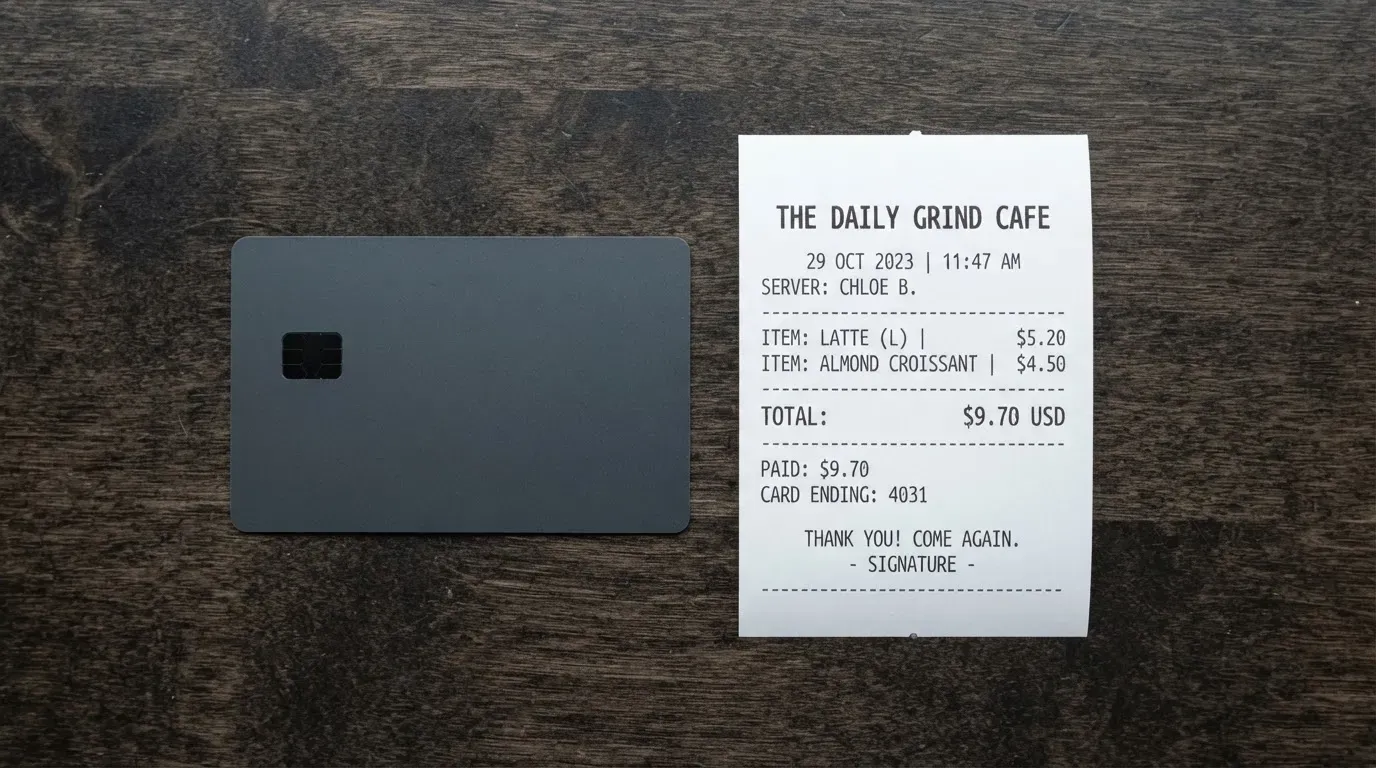
The transaction fee is 0.80% of each transaction. Then there is a small-value fee of $0.15 on any transaction of $1 or less, which quietly means a $0.50 coffee costs you $0.65 in fees. Cross-border and currency conversion is described as a pass-through set by the card issuer, varying by country and region — which means MP does not control that number and does not publish it.
The card’s own page tries to give you a usable summary: roughly 1% all-in for spending in US dollars, and 1.8% to 2.2% for spending in a currency other than the dollar. Hold that range in mind if you are not a dollar spender. Every card in this category bills in dollars, so a euro or naira or taka purchase picks up the issuer’s spread on top of the 0.80%.
ATM withdrawals are Boundless-only, since Cloud is virtual with no ATM. The fee is 2% with a $1 minimum. The limits are $1,500 per transaction, $1,500 per day, a maximum of five withdrawals a day, and $15,000 per month. ATMs are unavailable in mainland China and prohibited in Singapore — which is a slightly odd pair of restrictions given that the cards are issued in Singapore.
| Fee or limit | Value |
|---|---|
| Cloud Card purchase | 10 USDT |
| Boundless Card purchase | 100 USDT |
| Monthly fee | $0 |
| Crypto-to-fiat conversion | $0 |
| Transaction fee | 0.80% of each transaction |
| Small-value fee (transactions of $1 or less) | $0.15 per transaction |
| FX / cross-border | Pass-through set by the card issuer, varies by country and region |
| All-in cost in USD, per the card’s page | roughly 1% |
| All-in cost in non-USD, per the card’s page | 1.8%–2.2% |
| ATM fee (Boundless only) | 2%, minimum $1 |
| ATM limits | $1,500 per transaction; $1,500 per day, max 5 withdrawals; $15,000 per month |
| Card reissue | $5 first time, $10 each time after, at least 31 days apart |
| Online withdrawal (Wallet > Pay) | 2.1 USDT per transaction, plus 0.1% on same-day withdrawals above 5,000 USDT |
| Dispute / chargeback | $35 per case |
| Refund | $0 |
| Reversal | $0.80 if the reversal rate reaches 15% or more |
| Declined transaction | $0.80, first five each month waived |
| Single transaction limit | $100,000 / $20,000 / $100,000 across the three limit sets |
| Daily spending limit | $250,000 / $1,000,000 / $250,000 |
| Monthly spending limit | $1,000,000 / $5,000,000 / $1,000,000 |
| Annual spending limit | $2,000,000 / $10,000,000 / $2,000,000 |
Three ordinary payments, so you can see what the percentages actually do.
Coffee, $4.50, in a dollar shop. The 0.80% is $0.036, so the fee is nearly invisible and this is the case the card is good at. It is a little over 1% all-in once the small-value fee is out of the way, which is honest value for a card that works everywhere.
A $30 supermarket shop. 0.80% comes to $0.24. Still comfortable. This is where a card with a flat monthly fee starts to look expensive by comparison, but MP has no monthly fee, so it is only the transaction percentage you pay.
A €40 dinner in Europe. Now the non-USD range applies. On the card’s own estimate of 1.8% to 2.2% all-in, €40 costs you somewhere between €0.72 and €0.88 in fees, and that spread is the issuer’s, not MP’s. If you live outside the dollar and spend constantly, this is the line on the invoice that decides whether MP is right for you.
Limits are generous to the point of being irrelevant for an ordinary person: the lowest single-transaction figure across the three sets is $20,000, and the lowest daily spending figure is $250,000. Account-level caps are much tighter and more relevant — Registered tier caps transfers at 1,000 USD a day with 10,000 USD total, and KYC1 withdrawals run to 200,000 USD a day.
How to top it up: Top up
Deposit USDC or USDT into the MP wallet, then transfer from the wallet to the card — two steps, with a network choice that is not documented.
The MP Wallet is described as non-custodial, which is the single most important word on this page. It means the private keys to your crypto stay with you rather than with MP, so a failure at the company does not by itself hand your funds to a bankruptcy estate. You deposit USDC or USDT into that wallet — by Binance Pay or on-chain — and then transfer the balance across to the card, which spends it as dollars.
Two things to know before you move money. First, the pages I read do not list which networks are supported. This matters more than it sounds. Blockchain transfers are irreversible, so a deposit sent on a network the provider does not support, or to an address belonging to a different network, can be lost or may need manual support recovery with no guarantee. If you are depositing on-chain, write down the exact network your deposit is on before you send, and keep the transaction hash.
Second, the two tokens behave differently in ways that catch people. ERC-20 is the Ethereum token standard, and gas on Ethereum is paid only in ETH — a wallet holding USDT but no ETH cannot send it. Tron instead prices transactions with bandwidth and energy and often burns TRX, and Circle stopped supporting USDC on Tron in February 2024, so “USDC over TRC20” is not a native option at all. Getting these mixed up is one of the commonest ways an otherwise sensible transfer goes wrong.
A USDT deposit is the straightforward case: Tether issues it across several chains including Ethereum, Tron, Solana, Polygon and Avalanche, with reserves intended to back it one-to-one. USDC is the cleaner asset in one respect — Circle says it is redeemable one-to-one for dollars and fully backed by cash and cash equivalents, mostly in an SEC-registered government money market fund, with monthly reserve attestations — but choose a chain Circle supports for it. Stablecoins are not risk-free or permanent: USDT and USDC together hold about 90% of stablecoin market capitalisation per the BIS in July 2025, and a stablecoin can lose its peg. TerraUSD collapsed in May 2022; USDC wobbled in March 2023 during the US banking crisis.
On costs, MP does not list an issuance or top-up fee on its fee page, and the minimum top-up is not stated. On-chain network fees — gas or bandwidth — are charged by the blockchain, not by MP, so they come out of your deposit on top of everything else. The Binance Pay route may avoid the network fee entirely, which is worth knowing if you are depositing small amounts.
If you want the money back out: the online withdrawal fee under Wallet > Pay is 2.1 USDT per transaction, plus 0.1% on same-day withdrawals above 5,000 USDT, and KYC1 withdrawals are capped at 200,000 USD a day. What happens to a remaining balance if you close your account is not stated, and there is a help article on bank transfers and withdrawal to a bank that I did not read. Read it before you plan to use this as a route to a real bank account.
Paying with it every day
This is the part MP does well: virtual and physical from one wallet, the two mobile wallets everyone uses, two Asian wallets on the Cloud, and an ATM on the physical card.
The Cloud Card supports linking with Alipay, WeChat Pay, Google Pay and Apple Pay. The Boundless physical card supports Apple Pay and Google Pay. For anyone who has been managing without a card, being able to tap a phone at a supermarket is not a small thing, and having both cards draw on the same balance removes the awkwardness of moving money between two instruments.
Adding the card to Apple Wallet works the way it does for any Visa, and the mechanics are worth a sentence because people expect something different of a crypto card. Apple Pay does not send your card number to Apple: the number is replaced with a device-specific Device Account Number held in the Secure Element on the phone, and every payment carries a one-time dynamic security code. The issuer can restrict that tokenised number — blocking it on magnetic stripe, on phone payments or on websites — so if one channel suddenly stops working, that is a plausible cause rather than a scam.
You will meet merchant category codes. A merchant category code is the four-digit number that classifies what a business sells, set when the business starts accepting cards, and MCC 7995 is gambling: casinos, betting, lotteries. Many issuers block it on specific cards by policy rather than by law, and the blocked list differs between issuers. What MP blocks is not stated, so do not assume travel to a betting site will work.
Two more everyday things that catch people out. Address verification compares the numeric parts of the billing address you type with the issuer’s records; it is mainly offered in the US, Canada and the UK and is generally unavailable for foreign-issued cards, which can cause declines at checkout where it matters. And a declined authorisation can leave a hold on your funds that stays for several days — typically up to seven — so a failed attempt at a till is not necessarily money gone.
On rewards, I have nothing encouraging. The card mentions a “rewards balance” that cannot be used to pay reissue fees, but the rate is not published. I would not build any expectation around it.
The app is MPChat on both platforms. Store ratings are not something I obtained, and support is reachable in-app under Me – Customer Support, on X, by email at [email protected], and in the Help Center at help.mp.net, which is in English, Simplified Chinese and Traditional Chinese. Hours are not stated.
What can go wrong
Nothing catastrophic that I can point at, but a lot of thin disclosure — and one card in the range has already been shut down.
Start with the thing that unsettles me most: the issuing bank is not named. MP describes itself as “a financial technology company, not a bank”, registered as MP Network Inc at 8 The Green, Suite B, Dover, DE 19901, USA, and says the cards are issued in Singapore. But the bank behind the card programme is not disclosed on the pages I read, and that is the institution that actually holds your balance, sets the FX spread and stands behind a chargeback. It is not a fatal gap — plenty of good programmes run this way — but you are being asked to trust a chain you cannot see.
The licences that are named are these: a US MSB registration, El Salvador BSP and DASP licences, and a Hong Kong TCSP registration, per the help centre, in a statement dated 13 August 2026. The issuing authorities behind each are not named on the pages read. What this arrangement means in plain terms: an MSB registration in the US is a money-services registration, not a banking charter; an EMI or equivalent elsewhere may hold funds, and under EU rules those funds must be safeguarded — segregated in dedicated accounts or insured — but safeguarded funds are not bank deposits and may not sit under a deposit guarantee scheme. If that distinction matters to you, and for many readers in my situation it very much does, MP does not make the claim and neither can I.
Then the closure. The Flash Card was permanently retired on 30 September 2026. Existing cards were converted to Cloud Cards and balances moved to Total Assets. Nobody was caught out here because balances were preserved and people were told, but it is a live demonstration of the category’s central risk: a card programme is a business decision that can be reversed. Closures typically follow a pattern — a notice period, then spending and loading stop, then you are asked to withdraw what is left. What you have in the card at that moment is what you have.
Custody cuts both ways and I want to be even-handed. Because the wallet is non-custodial, your crypto is not sitting inside MP — key loss, phishing, or clipboard-hijacking malware that swaps a copied address are your problem alone. A seed phrase is typically 12 to 24 words and is an unencrypted form of the private key; anyone who obtains it can restore the wallet and spend everything. Blockchain transfers are irreversible. And stablecoins are not censorship-proof in either direction: Tether says it disables tokens in wallets on the OFAC sanctions list and has frozen funds tied to illicit activity. On the security side, MP says card funds are “securefully backed within a regulated trust framework”, spending limits are managed in the app, and the wallet is non-custodial; an in-app freeze and two-factor authentication were not confirmed on the pages I read, so I will not claim they exist.
What I could not find is the thing readers ask for most and I would want most: any reviews. Searching for MPChat MP card reviews on Trustpilot and Reddit found no reviews of this product, and no Trustpilot or Reddit page for MPChat was found in the search of 21 October 2026. Complaint handling detail is not stated either. That is not proof of a bad service — it is proof that there is no public track record, and for a card where I am already asking you to hand over identity documents, that absence is a cost in itself.
Two smaller things you will meet. Disputes are expensive: $35 per case, which is enough to make arguing over a small transaction pointless. And a 15% or higher reversal rate triggers a $0.80 fee per reversal, so a card used badly in merchants’ eyes gets priced accordingly.
One category point that belongs here rather than later: a prepaid or foreign BIN can be declined precisely because the lookup reveals the card type and issuer country. Some shops refuse prepaid cards on principle. Nothing MP does causes that, but you should expect it occasionally and not treat it as a malfunction.
What to take instead
If MP’s weak point is thin disclosure, then the alternatives with published numbers are worth a look — though each buys that clarity by being narrower or more expensive.
MetaMask Card — the same 7.1 / 10 I gave MP, and I think the more documented of the two. It is a Mastercard, one card per user, virtual first and issued instantly, with a Metal card you can pre-order in the app after approval; the issuer is named (Monovate) and the card provider is named (Crypto Life). The virtual card is free with no annual or maintenance fee; Metal is $199 a year. Fees are described as a “minimal fee for each transaction” with no additional MetaMask fees and no foreign transaction fee, the Mastercard rate being used — though the actual amount is on a fee table I did not read. Sign-up is open in 45 listed countries and territories, and other regions join a waitlist; proof of residency is required; US and UK sign-ups are temporarily closed per the FAQ. It spends directly from the connected wallet on Linea, Base, Monad and Solana, with mUSD, wETH, EURe, GBPe, USDC and USDT named. Cashback is the best published here: 1% on Virtual, and 3% on Metal up to the first $10,000 spent then 1%.
KAST — 6.1 / 10, and the most transparent pricing of the three. Virtual and physical, up to 10 cards per user, Visa Platinum on Standard, Visa Infinite metal on Premium, Visa Infinite gold plated on Private. The annual membership is the headline: Standard 0 USD, Premium 1,000 USD, Private 10,000 USD, billed annually upfront with no monthly option. Fees are unusually clear: stablecoin top-up 0%, USD card spend 0%, transaction fee 0%, Apple and Google Pay 0%, non-USD foreign exchange 0.5% to 1.75% depending on your country and the card programme, non-USD transactions under 25 USD a flat $0.10, and a declined transaction for insufficient balance $0.50. There is a $40 delivery fee on the Standard physical card and a $1 per month inactivity fee after twelve months. Cashback is 1.5% on the first 2,000 USD a month at Standard, 2% on 10,000 at Premium, 3% on 40,000 at Private. Its catch is eligibility: the country list is shown only at KYC, and holding an ID from a restricted region can disqualify you even if you live in a supported country — a VPN does not help.
TokenPocket — 5.8 / 10, the weakest of the three. A Visa or Mastercard debit depending on region, running on Arbitrum, with Fiat24 cards that are virtual. The NFT creation fee is partly covered by TokenPocket and you pay “a small portion”, with the amount not stated, and apart from that it charges no additional fees. A 1% fee is charged when depositing cryptocurrency into the card, to be refunded later via rewards or reduced transaction fees. No cashback is stated and the foreign-exchange fee is not stated either.
| MP | MetaMask Card | KAST | TokenPocket | |
|---|---|---|---|---|
| My score | 7.1 / 10 | 7.1 / 10 | 6.1 / 10 | 5.8 / 10 |
| Card | Cloud virtual, Boundless physical Visa | Mastercard, virtual then Metal | Virtual and physical, Visa Platinum / Infinite | Visa or Mastercard debit, virtual |
| Issuer named | No | Yes — Monovate | Not stated in what I read | Not stated |
| Entry cost | 10 USDT Cloud, 100 USDT Boundless | Virtual free, Metal $199/year | Standard 0 USD/year, Premium 1,000 USD/year | Small portion of NFT fee, amount not stated |
| Ongoing fee | 0.80% per transaction | Minimal, amount not stated | 0% on USD spend | 1% on crypto deposit, refunded later |
| Non-USD cost | 1.8%–2.2% all-in | No foreign transaction fee | 0.5%–1.75% | Not stated |
| Cashback | Not published | 1% virtual, 3% Metal to $10,000 then 1% | 1.5% / 2% / 3% by tier | None stated |
| ATM | Boundless, 2% | Not in what I read | Not in what I read | Not in what I read |
| Main drawback | No issuer named, no reviews | US and UK sign-ups closed; one card only | High tier prices, yearly only | Unclear fees, weakest offer |
If your priority is knowing exactly what you pay each month and living in a supported country, KAST’s published fee table beats MP’s. If your priority is a free card with named issuers and cashback, MetaMask is the better-documented comparison — but the temporary US and UK closure is precisely the kind of thing that makes me hesitant to recommend a crypto card to someone whose whole problem is that banks are unpredictable about whom they serve.
Who I would recommend it to
I would recommend MP to someone who has stablecoins already, has read the country lists above and cleared them, has no access to an ordinary card, and wants a virtual and a physical Visa from a wallet they control the keys to — with the clear understanding that they will pay roughly 1% in dollars and up to 2.2% outside it, that no bank is named behind the card, and that nobody has posted a review.
I would not recommend it as a first financial relationship, or to anyone whose money is in dollars but who plans to spend mostly elsewhere, or to anyone for whom deposit-guarantee protection is not a nice-to-have. I would also hold off for anyone who wants to read other users’ experiences first, because those do not exist yet.
On the last point, one thing about crypto that is worth saying plainly rather than as advice: the IRS treats digital assets as property, so exchanging them for goods, services or dollars generally produces a taxable gain or loss, measured in your local currency at the value on the date of the transaction. Each card payment funded from crypto may therefore be a separate disposal. I am not giving you tax or legal advice and you should not treat this as any — if that is material to you, speak to a professional in your own jurisdiction.
If you still want to know what this card actually is before you decide anything about it, the honest summary is this: a card number and a crypto wallet. The card number starts with a six- or eight-digit BIN identifying the issuing institution, with the rest an account identifier and a check digit; Visa and Mastercard do not issue crypto cards to consumers themselves, they license issuers, and can suspend a programme — in November 2022 Visa said it had “terminated our global agreements with FTX” and the FTX US debit card was wound down by its issuer. In 2018 Visa suspended WaveCrest in Europe, closing all WaveCrest-issued Visa programmes. MP is a company that runs a programme on top of someone else’s licence, and that is not a criticism so much as the shape of the industry. The difference between a card that keeps working and one that stops is mostly whether the operator tells you early. MP told people about the Flash Card retirement, which is one small mark in its favour, and I would rather tell you that than let the silence do the work.
Frequently asked questions
What is the MP card?
It is a Visa payment card attached to the MPChat crypto wallet, billed in US dollars and funded from your own crypto rather than a bank account. You get two live options: the Cloud Card, which is virtual, and the Boundless Card, which is physical with BIN 45659910. A third option, the Flash Card, was virtual and has been permanently retired as of 30 September 2026, with existing cards converted to Cloud Cards.
Is MP a bank?
No. MP describes itself as “a financial technology company, not a bank” — MP Network Inc, registered in Dover, Delaware. It lists a US MSB registration, El Salvador BSP and DASP licences, and a Hong Kong TCSP registration. The bank that actually issues the cards is not named on the pages I read, and cards are stated to be issued in Singapore.
Who owns MP, and who runs it?
The operator is MP Network Inc, at 8 The Green, Suite B, Dover, DE 19901, USA, and the consumer brand is MPChat. The licences above are set out in the help centre in a compliance statement dated 13 August 2026, though the issuing authorities behind each are not named there.
Is the MP card available in my country?
It is not issued in 23 countries “unavailable due to regulatory compliance”: Afghanistan, Belarus, Central African Republic, Cuba, DR Congo, Dominican Republic, Guinea-Bissau, Haiti, Iran, Iraq, Lebanon, Libya, Mali, Myanmar, North Korea, Russia, Somalia, South Sudan, Sudan, Syria, Venezuela, Yemen and Zimbabwe. KYC also cannot be completed in parts of Ukraine, Abkhazia, South Ossetia, Northern Cyprus, Somaliland, Transnistria and Nagorno-Karabakh.
What decides my eligibility?
MP says eligibility is “based mainly on your document’s place of issue and your registered residential address”. So a restricted passport can disqualify you from an open country, and a restricted registered address can disqualify you from a country whose document you hold. The card’s pages also state that documents cannot be switched to get around a regional restriction.
How do I get the MP card, and what does KYC involve?
Download MPChat on iOS or Android, register, go to Assets and tap Activate Now, fund the wallet, then choose and buy your card. KYC level 1 needs you to be 18 or older, basic personal information, a passport or national ID, and a selfie liveness check. One identity verifies one account only, and the document’s expiry must be more than three months away.
How do I top up the card?
Deposit USDC or USDT into the MP Wallet, which is non-custodial, either through Binance Pay or on-chain, then transfer the balance to the card. The pages I read do not list which networks are supported, which matters because transfers are irreversible — send on the wrong chain or to the wrong network’s address and the funds can be lost.
What does it cost to spend with MP?
The Cloud Card costs 10 USDT and the Boundless 100 USDT, with no monthly fee. Converting crypto to the balance you spend is $0, but each transaction costs 0.80%, plus $0.15 on any payment of $1 or less. Non-dollar spending works out at 1.8% to 2.2% all-in per the card’s page, because currency conversion is an issuer pass-through.
Can I use the MP card at an ATM and in Apple Pay?
Apple Pay and Google Pay work on both the Cloud and Boundless cards, and the Cloud also links with Alipay and WeChat Pay. The physical Boundless card supports ATM withdrawals at 2% with a $1 minimum, capped at $1,500 per transaction, $1,500 a day for a maximum of five withdrawals, and $15,000 a month.
Is the MP card safe, and what happens if the company fails?
The wallet is non-custodial, so your keys stay with you, and MP says card funds are “securefully backed within a regulated trust framework”. But an in-app freeze and 2FA were not confirmed on the pages I read, and the Flash Card’s permanent retirement on 30 September 2026 showed the programme can be withdrawn — existing cards were converted to Cloud Cards and balances moved to Total Assets.
Wallet cards: who should pick one – cryptocardpicker
Content created by the «cryptocardpicker» team