
A strong everyday stablecoin card wrapped in a thin regulatory shell
 Available in US

The KAST card is one of those crypto cards that skips the awkward part most people find hardest — linking a bank account — and instead lets you spend stablecoin balances as if they were dollars in a wallet app. On the mechanics it does well: free standard membership, 0% spending in USD, no foreign-exchange sting when you pay in dollars, Apple Pay and Google Pay, and a genuine Visa network card you can hold. On trust and paperwork it is much shakier: the card’s own pages name no regulator, no licence numbers, and no issuing bank, and the company behind it sits in Anjouan in the Comoros with Seychelles governing law. If you already hold stablecoins and simply want to spend them, this is a capable tool. If you are opening your first financial relationship and want a named, licensed institution behind your money, look elsewhere. I would put it at 6.1 out of 10.
The conditions described on this page are current as of October 28, 2026.
The score at a glance
The total is not a vibe — it is six criteria weighed together. Here is each one with its mark and my reason, exactly as the figures stand.
| Criterion | Mark (of 10) | Why |
|---|---|---|
| Who can get it | 5 | The supported-country list only appears during KYC and is not published; Visa is said to be accepted in 170+ countries, but that is a network-wide claim, not a promise you will be approved |
| Cost | 6 | Standard is 0 USD a year; physical card 0 USD plus 40 USD delivery, an extra virtual card 2 USD; top-up in stablecoin 0%, spending USD 0%, FX 0.5%–1.75%, ATM 3 USD + 2% |
| Top-up options | 9 | USDT, USDC, PYUSD, RLUSD; USDT and USDC on Ethereum, Solana, Polygon, Arbitrum, TRON; top-up 0% |
| Reliability and complaints | 3 | No issuer named, no licences, structure in Anjouan (Comoros); Trustpilot sits around 2.5–2.7 with reports of frozen accounts and repeated document requests |
| Everyday use | 9 | Virtual and physical, Apple Pay and Google Pay, ATMs across the Visa network |
Adding those five plus the overall mark of 6.1 gives the picture: the card mechanics are excellent, the trust layer is thin, and the balance between them lands mid-table.
Who this suits: you already sit on USDT, USDC, PYUSD or RLUSD across several chains, you want to spend that balance without a bank in the middle, and you are comfortable that the counterparty is a fintech rather than a named bank. Who it does not suit: you need a card issued by an institution you can point to, you want your funds safeguarded the way an EMI must safeguard them under EU rules, or you live somewhere the country list matters and you cannot afford to find out mid-KYC that you are not on it.
Who will they actually give the card to?
This is where I would slow down, because the honest answer is that KAST does not publish who it serves. The supported-country list is shown to you only when you reach the KYC screen, and the public pages just say that if your country is not listed there, KAST is not available there. A “Restricted Locations” list is referenced but no countries are ever named on the pages I could read. So the first fact to check is not a fee — it is whether your country of residence appears at all, and you only find out mid-signup.
Citizenship matters separately from where you live, and this catches people out. The card’s own wording: if you currently live in a supported country but hold an ID only from a restricted region, you may still be ineligible to pass KYC. So a supported address does not rescue you if the document you would present is from elsewhere. On the other hand, dual citizens who hold an ID from a supported country may pass — citizenship is not a simple yes/no, it is which document you can show. Only your own ID is accepted; a VPN does not bypass this, and if it did it would be the wrong thing to rely on anyway.
One structural detail worth knowing: you can create an account while in an unsupported country, but KYC stays locked. That is not a loophole, it is just a shell with no card until verification clears. My practical advice is to expect the country gate to be the first thing that decides whether any of the rest of this review matters to you.
How to get it
Signing up is a three-level ladder, and each rung unlocks more of the product. Knowing the ladder in advance saves you from being surprised by a wall.
- Level 1 — account creation. Phone and a one-time code, a PIN, email, and your country of residence. This gives you app access only, no cards.
- Level 2 — identity. A valid government ID (passport, national ID card, or driver’s licence) plus a selfie and liveness check. This is the level that unlocks sending and receiving funds and getting cards.
- Level 3 — the full picture. Proof of address and enhanced checks, with citizenship requested, unlocking USD and EUR accounts and global payouts.
Source-of-funds documents may also be requested at any point, and US residents are asked for an SSN. The minimum age is the legal age in your country — 18 in most places, but check yours. The practical sequence is: install the app, clear KYC, then order a virtual or physical card.
On the card itself you have real choice. You can hold up to 10 cards per user. The Visa Platinum is the Standard tier; Visa Infinite in metal is Premium; Visa Infinite gold plated is Private. There are also design variants — Pengu, Solana, Bitcoin — which are cosmetic rather than functional. Balances sit in USD, and stablecoin deposits convert 1:1 with a 0% spread. Physical delivery runs 7–10 business days. Standard pays 40 USD for delivery on a 0 USD card; Premium and Private include the physical card. The app is called “KAST: Global USD Account” on the App Store under Troia Limited, rated 3.97 from 276 ratings and updated 2026-10-08 when I looked.
What is not stated, and I would not pretend otherwise: which countries physical cards ship to, what a replacement costs, and any official list of rejection reasons — beyond the two I did find, expired IDs and an unsupported or restricted country. Processing times are not published either.
What it really costs: Fees
The headline number is genuinely attractive: Standard membership is 0 USD a year, and spending a USD balance costs 0%. The Premium tier is 1,000 USD a year and Private is 10,000 USD a year, both billed annually upfront with no monthly option. Most readers will live entirely on Standard, so I would treat those two as a reminder that the expensive features exist, not as a plan. Here is the full picture of what can be charged.

| Fee or limit | Standard amount |
|---|---|
| Annual membership | 0 USD |
| Physical card (card fee) | 0 USD, plus 40 USD delivery |
| Extra virtual card | 2 USD (and in some regions 2 USD also applies to included Standard virtual cards) |
| Stablecoin top-up | 0% |
| Card spend in USD | 0% |
| Transaction fee | 0% |
| Apple Pay / Google Pay | 0% |
| Non-USD foreign-exchange fee | 0.5%–1.75%, depending on residence country, transaction country and card programme |
| Non-USD transaction under 25 USD | flat 0.10 USD |
| Declined transaction (insufficient balance) | 0.50 USD |
| ATM withdrawal | 3 USD flat + 2% of the amount, plus the FX fee on non-USD |
| Inactivity fee | 1 USD/month after 12 months |
Some charges exist but their amounts are not stated: renewal or reactivation fees, and a fee if you send a non-stablecoin token, which may be auto-converted at a rate shown in the app. Any top-up in stablecoin is 0% and unlimited, but the network fee you pay to the blockchain on the way in is separate and not controlled by the card.
Now three everyday payments, to show which of these actually fire.
A coffee in New York, 6 USD, paid from your USD balance. Stable and cheap. The spend is USD, so the FX fee does not apply, the transaction fee is 0%, the top-up that filled the balance was 0%. The only line that moves is the 1.5% Standard cashback, which comes back to you rather than away from you. This is the case KAST is genuinely built for.
The same coffee in Paris, 6 USD, but your balance is USD and the terminal charges in euros. Now the FX fee applies, somewhere between 0.5% and 1.75% depending on your residence country, the transaction country and the card programme — a few cents on 6 USD. Small, but it is the line item that decides whether a card is cheap for you: if you spend in your balance’s currency most of the time, KAST is 0%; if you spend across currencies, you pay a slice every time.
A hotel deposit or a card declined for insufficient balance. Two things to watch. A declined transaction costs a flat 0.50 USD, and the same decline can happen again on a retry, which is exactly the pattern some reviewers complained about in April 2026. Separately, merchants can place a pre-authorisation hold, and a declined authorisation may leave a hold that can sit for several days. A 6 USD coffee is not the risk case; a 300 USD hotel hold is.
The ATM line deserves its own note because the card’s own two pages disagree. The concierge fee page says “Up to $500 per withdrawal; up to 3 withdrawals or $1,500 per 24-hour period.” The card marketing page says “$250 per withdrawal, including fees, and three withdrawals per rolling 24 hours ($750/day).” Both are official, and they do not match. That is not me being pedantic — it means you should take the lower number as your working assumption until the app shows you your real limits.
On limits generally: card transaction, account deposit and balance limits are all listed as “Unlimited,” with the caveat that large transactions may be flagged for compliance and you can set lower limits yourself in the app. The Terms are vaguer, saying limits are “set by the Company and shown on the Platform,” with no figures. The one hard number is KAST Tag transfers — free, but capped at 10,000 USD a day and 5 per day.
How to Top up
This is the card’s best section, and the reason the mark is a 9. You fund it with stablecoins — USDT, USDC, PYUSD and RLUSD — and no bank account is needed at all. USDT and USDC can arrive on Ethereum, Solana, Polygon, Arbitrum or TRON, with the app listing the current networks. The stablecoin deposit fee is 0% and there is no stated ceiling, though the blockchain’s own network fee still applies to the transfer and is not KAST’s to set.
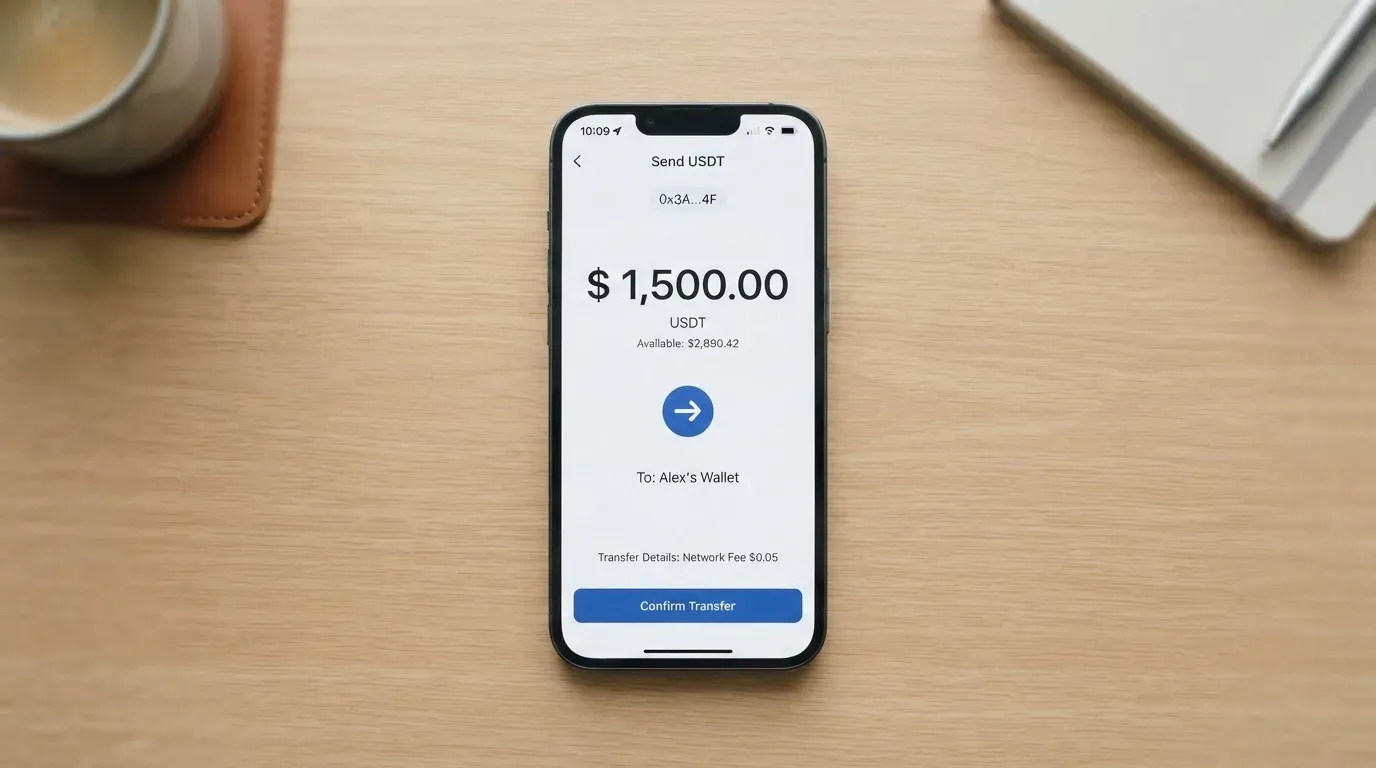
One internal inconsistency to know about: the app lists PYUSD and RLUSD as acceptable, while the Terms say acceptable tokens are “currently USDT and USDC.” I would not build a routine around PYUSD or RLUSD until the app and the Terms agree.
Spending comes straight out of your own balance — each purchase is deducted immediately, and this is not a line of credit. If the balance is empty, the card simply declines (and charges you 0.50 USD for it). That is the prepaid model, and it is why the card cannot overdraw you.
Bank deposits also work, with their own fees: USD ACH 2 USD, FedWire 15 USD, SWIFT 30 USD, EUR SEPA 0.5%. A minimum top-up is not stated.
If you ever want to move funds back out to a wallet, the withdrawal fees are set per network: Solana (USDT, USDC) 1 USD + 0.1%; Arbitrum (USDC) 0.20 USD + 0.1%; Ethereum (USDT, USDC) 6 USD + 0.1%; Tron (USDT) 5 USD + 0.1%. The minimum is 5 USD. What happens to any remaining balance if you close the account is not stated. So: topping up is cheap and easy; withdrawing is where you feel the network choice, and Ethereum is the expensive one.
Paying with it every day
Day-to-day use is the other strength. Both virtual and physical cards work with Apple Pay and Google Pay at 0% fee; Samsung Pay is not stated. Wherever Visa is accepted, the card works — the service claims 150M+ merchants and 170+ countries, which is the network’s reach, not a KAST-specific promise.
The wallets do the heavy lifting on security. When you add a card to Apple Pay, the card number is replaced by a device-specific number stored in the phone’s Secure Element, never on Apple’s servers, and each payment uses a one-time dynamic code. So losing your phone is less catastrophic than it sounds, and you can also freeze the card yourself.
Rewards are a real differentiator, and the tiers scale them:
| Tier | Cashback on USD spend | Monthly cashback ceiling | KAST Points | Card |
|---|---|---|---|---|
| Standard | 1.5% | first 2,000 USD/month | none | Visa Platinum |
| Premium | 2% | first 10,000 USD/month | +1% of eligible spend | Visa Infinite metal |
| Private | 3% | first 40,000 USD/month | +2% of eligible spend | gold plated Visa Infinite, VIP Concierge |
Cashback is paid in USD when the transaction is authorised. The Reserve rate on balances also scales (8% Standard, 10% Premium, 12% Private), and SOL staking pays in Points (0.25 per 1 SOL roughly every two days on Standard, 0.5 on Premium and Private) — note that Reserve is an offer that ends 1 July 2027, so treat it as temporary. Visa Infinite benefits (travel, purchase protection, lounge, eSIM) apply to Premium and Private and need registering on the Visa Benefits portal first.
Before you get comfortable, know the house rules. The Terms prohibit weapons, controlled substances, Ponzi/pyramid/MLM schemes, counterfeit goods, Darknet/Tor purchases, adult content and pseudo-pharmaceuticals. Gambling is not named directly — the relevant merchant category code 7995 is not mentioned — but many issuers block it by policy anyway, and the blocked list varies by issuer, so don’t count on it. If a payment is disputed, the Terms ask you to contact support within 90 days of the transaction, cap the company’s liability at 500 USD, and do not describe a chargeback process, so I would not assume a formal refund route.
What can go wrong
This is the section that pulls the total down, and the mark — 3 out of 10 — is the lowest here for a reason. Let me be blunt about what the card’s own materials do and do not say.
KAST describes itself as “a financial technology company, not a bank,” and says cards, custody and on/off-ramp are “provided by licensed partners.” The Terms name the entity as KAST Tech (Reg No. 16223), incorporated in Anjouan in the Comoros, with Seychelles governing law and SIAC arbitration in Singapore. The App Store developer is Troia Limited. Crucially, the card issuer or BIN sponsor is not named — only “one of our Partner.” Partners named in the Terms include Tazapay and BitGo; logos on the homepage include Stripe, Privy, Fireblocks, Visa, Sardine and Elliptic. On the pages I read there are no licence numbers and no regulator named, and availability is “subject to regulatory approval.” I found no regulatory action in search results, which is neutral, not a clearance.
What does that mean for you in practice? In the EU, an electronic money institution must safeguard customer funds by segregating them or insuring them, and even that is not the same as a bank deposit or covered by a deposit guarantee. If KAST is not an EMI, you cannot assume that protection exists. A card is also a payment service regulated separately from the crypto side, so a crypto card often rests on two licences — here, neither is visibly named to you. I am not accusing anyone of wrongdoing; I am saying the reassurance a licensed institution gives you is not something these pages deliver.
Then there is the user experience, which is where the complaints come from. On Trustpilot — a third-party site, not the card, so unofficial — the rating sits around 2.5 on regional pages to 2.7 on the main page across roughly 170 reviews when I read it. The themes are consistent: frozen or restricted accounts soon after depositing, deposits placed on hold, repeated 0.50 USD declined-transaction fees that pushed a balance negative (April 2026), failed ATM cash dispensation with the money still debited, and repeated document requests, including on self-transfers. Support is described as slow. In fairness, the positive reviews praise exactly what I praised above — low fees and stablecoin spending — and KAST replied to most negative reviews saying accounts can be restricted by security or compliance systems. That reply is plausible, because rules do require institutions to freeze when due diligence cannot be completed, but it is also what every frozen-account complaint hears.
Official incidents are not stated anywhere I could find, so I have no confirmed case to point at — this is user report, not adjudicated fact.
Support itself is 24/7 through KAST Concierge for all tiers, with a VIP Concierge on Private; email [email protected] appears in company replies. Russian is not offered on the membership page — the language selector there is English only, which is worth knowing if that is your preference.
What to take instead
If any of the above makes you hesitate, there are three other routes, all of which I have scored on the same basis. None is perfect; they just shift the trade-offs.
TokenPocket (5.8/10). A Visa debit for a list of European countries and territories (Germany, France, Spain, Switzerland among them) and a Mastercard debit for Australia, Canada, Hong Kong, Japan, Taiwan, New Zealand, Singapore, South Korea and the UK, among others, with the Americas planned. It runs on Arbitrum and its balances are EUR24 and USD24. The catch: a 1% fee on depositing cryptocurrency, though the page says that is refunded later through rewards and reduced transaction fees. Beyond that, no additional fees. If you want a cleaner regulatory footprint and already live in a covered country, it is worth a look.
MetaMask (7.1/10). The strongest score here, and the most conventional setup. Sign-up is open in 45 listed countries and territories (Andorra, Argentina, Brazil, Canada, Mexico, Germany, France, Spain, Uruguay among them), with other regions on a waitlist, proof of residency required, and US/UK sign-ups temporarily closed. It is a Mastercard, virtual first and instant, with a metal version you can pre-order, one card per user; the issuer is Monovate and the card provider Crypto Life. Virtual is free with no annual or maintenance fee; metal is 199 USD a year. It spends directly from your connected wallet on Linea, Base, Monad and Solana, using tokens like mUSD, wETH, EURe, GBPe, USDC and USDT. No foreign-transaction fee — the Mastercard rate applies. Cashback is paid in mUSD: 1% on Virtual, and on Metal the headline is 3% but the footnote caps it at 3% on the first 10,000 USD spent then 1%, with a 5X/7X dining bonus. If you want a named, conventional issuer and a licence you can read, this is the more comfortable pick.
Zeal (6.1/10). A Visa card you can spend in 150+ countries, with issuance depending on eligibility and regional availability; the card programme is live in the EU, UK, Brazil, Colombia, Mexico, Japan, Singapore, the Philippines, Indonesia and Thailand. Your balance sits in the card Safe in EUR, USD or GBP, and Zeal adds no FX fee of its own — conversion happens at Visa’s wholesale rate, though Gnosis Pay fees such as ATM can still apply. Rewards are up to 4% cashback in GNO, but you must hold GNO in the card Safe to qualify and the rate can change. Costs are not published, which is its main gap. If you want a Visa card with a stated no-FX policy and don’t mind holding a token for the rewards, it is a contender.
Comparing the four at a glance:
| Card | Score | Network | Upfront cost | The catch |
|---|---|---|---|---|
| KAST | 6.1/10 | Visa | Free standard; 0 USD + 40 USD delivery for physical | No named issuer or regulator; frozen-account complaints |
| TokenPocket | 5.8/10 | Visa / Mastercard | Not fully stated | 1% crypto deposit fee; narrower country list |
| MetaMask | 7.1/10 | Mastercard | Virtual free; metal 199 USD/yr | Long country list; US/UK sign-ups closed |
| Zeal | 6.1/10 | Visa | Not stated | Rewards require holding GNO; fees unpublished |
Who I would recommend it to
I would recommend KAST to you if three things are true. You already hold stablecoins and want to spend them directly, without opening or linking a bank account. You live in a country that turns out to be on the KYC list — remember you only find that out at the sign-up screen. And you have a high tolerance for the counterparty risk that comes with a fintech that names partners but not a regulator. In that profile, the card does its job well: free, no FX sting in dollars, real wallets, real network, and 1.5% cashback on the first 2,000 USD a month.
I would steer you away if you are opening your first financial relationship and want a named institution with visible safeguarding; if you plan to hold a large balance for months rather than spend it; if you need predictable ATM limits, since the card’s own two pages disagree; or if your country might not be on that unpublished list. In those cases MetaMask (if your country is among its 45) is the more conventional choice, and if the amounts at stake are large, a regulated institution that names its regulator is simply a different category of risk.
Whichever you pick, keep the crypto basics in mind: transfers on these networks are irreversible, and a deposit sent on a network or to an address the provider does not support can be lost or need manual recovery with no guarantee. Stablecoins can also depeg — TerraUSD collapsed in May 2022 and USDC briefly lost its peg in March 2023 — so a “1:1” dollar balance carries the same risk as the token behind it. And if you are in the US, the IRS treats digital assets as property, so spending them on goods is a taxable disposal; that is a matter for a tax professional, not for me.
Frequently asked questions
What is KAST card?
KAST is a stablecoin money app with a Visa payment card attached. You load it with USDT, USDC, PYUSD or RLUSD across several blockchains, and the balance converts 1:1 into a USD account you spend like an ordinary wallet balance. KAST describes itself as a financial technology company, not a bank, and says the card, custody and on/off-ramp come from licensed partners.
How does the KAST card work?
You create an account, clear KYC at Level 2 with a government ID and selfie, then order a virtual or physical card. Top up with stablecoins at a 0% deposit fee, and each purchase is deducted straight from your own balance — it behaves like a prepaid card, so it cannot overdraw. Spending in USD costs 0%, with 1.5% cashback on the first 2,000 USD a month on the free tier.
Is KAST a bank?
No — KAST says so itself: “a financial technology company, not a bank.” The Terms name the entity as KAST Tech, incorporated in Anjouan in the Comoros, with Seychelles governing law. It names partners like Tazapay and BitGo, but the card issuer is only “one of our Partner” and no regulator or licence number appears on the pages I read.
Who owns KAST?
The Terms list KAST Tech (Reg No. 16223) as the contracting entity, incorporated in Anjouan, Comoros. The App Store developer of the iOS app is Troia Limited. KAST also references a partner company for the card programme without naming it, so the ownership picture is layered rather than a single clear parent.
Can I get the KAST card in my country?
Possibly, but you cannot know until KYC. The supported-country list is shown only at the verification screen and is not published, and a “Restricted Locations” list is referenced without naming any country. Living in a supported country with an ID from a restricted region can still fail, so check both your address and your document.
How much does the KAST card cost?
The Standard tier is 0 USD a year with a 0 USD virtual card, and a physical card costs 40 USD in delivery. Spending a USD balance is 0%, stablecoin top-up is 0%, and Apple/Google Pay is 0%. You pay for FX (0.5%–1.75% on non-USD), ATM withdrawals (3 USD + 2%), a 0.50 USD declined-transaction fee, and 1 USD/month after 12 months of inactivity.
Does the KAST card require KYC?
Yes. Level 1 gives app access only; Level 2 requires a valid passport, national ID or driver’s licence plus a selfie and liveness check, and that is the level that unlocks cards. Level 3 adds proof of address and enhanced checks for USD/EUR accounts, and source-of-funds documents may be requested at any point.
How do I top up the KAST card?
Send USDT or USDC on Ethereum, Solana, Polygon, Arbitrum or TRON to your KAST address, or use PYUSD/RLUSD as the app lists them — though the Terms say only USDT and USDC, so check in-app. The stablecoin deposit fee is 0% and there is no stated ceiling, but the blockchain network fee is separate. Bank top-ups also work: ACH 2 USD, FedWire 15 USD, SWIFT 30 USD, SEPA 0.5%.
Is the KAST card safe?
On the mechanics, reasonably: cards work in Apple Pay and Google Pay with tokenised numbers and one-time codes, and you can set lower limits or freeze the card. On the institutional side, less so: no regulator or licence is named, no issuer is identified, and there is no stated safeguarding or insurance, so the usual protections you would assume from a licensed EMI are not visible here.
Is the KAST card worth it?
For someone already holding stablecoins who just wants to spend them cheaply with no bank account, yes — free membership, 0% USD spending, and 1.5% cashback are hard to beat. If you want a named, licensed institution, predictable ATM limits, or a large parked balance, the reassurance is not on offer, and a conventional card like MetaMask’s may suit you better depending on where you live.
Wallet cards: who should pick one – cryptocardpicker
Content created by the «cryptocardpicker» team