
The quiet USDC-to-Visa route, and what to check before you load it
 Available in US
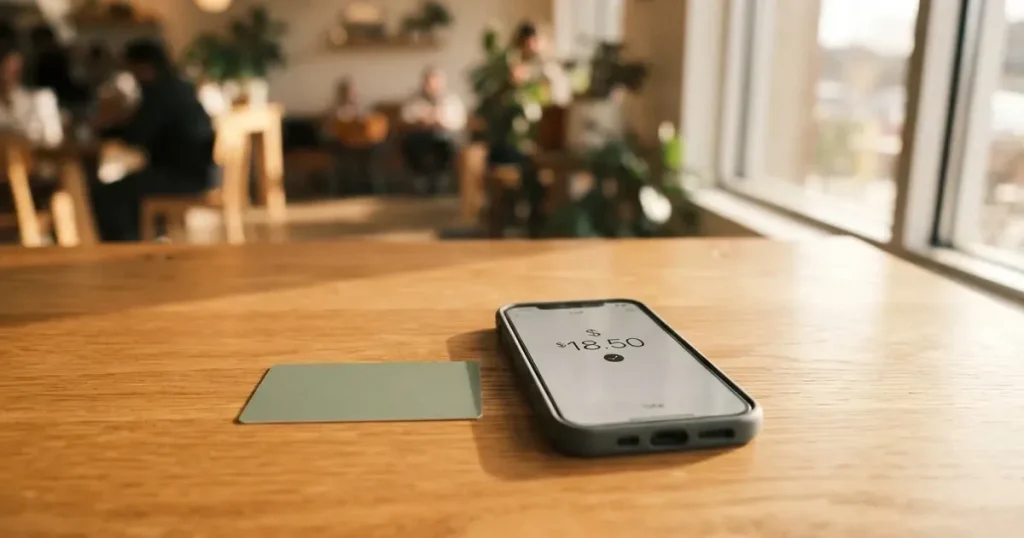
The ZAR card is a virtual Visa that spends US dollars, and you fill it by holding dollars in USDC — Circle’s dollar-pegged token — on your own wallet rather than at a bank. There is no plastic in your hand today: the physical card is described as “coming soon”, so what you actually use is the card number in a wallet app or in Apple Pay. If you have been told that a normal bank card is out of reach — because of where you live, because of your status, because of a banking history — this is the kind of thing people look at. If you already have a functioning everyday card and a bank account you trust, the appeal drops sharply, because the whole point of this product is the dollar balance you spend from, and you already have one.
My score is 7.3 out of 10. That is not a “buy it” and not a “avoid it”. It is a card with genuinely good cost terms and a real self-custody model, wrapped in documentation that leaves several things you would want to know unanswered. The conditions described here are current as of October 28, 2026.
| Criterion | Mark | Why |
|---|---|---|
| Who can get it | 8 / 10 | “100+ countries” on the site, 110+ on the App Store; named exclusions include Russia, Belarus, Iran, Iraq, China, Japan, Vietnam, Venezuela |
| Cost | 9 / 10 | Account opening and virtual cards are free, “No foreign fees”; plastic is paid for by country; the monthly fee is not disclosed |
| Top-up options | 5 / 10 | Right now only USDC on Solana; other stablecoins are converted into USDC; bank transfer is also listed |
| Reliability and complaints | 7 / 10 | Golden Age Dev Lab Pte Ltd (Singapore), dollars from Circle, banking by SSB (Member FDIC); card issuer not named; no complaints found; App Store 3.9/5 from 44 ratings |
| Everyday use | 6 / 10 | Virtual Visa in USD, Apple Pay present, ATM withdrawal advertised; plastic “coming soon”, Google Pay not disclosed |
| Total | 7.3 / 10 | Strong on price and reach, weaker on top-up flexibility and plainness about details |
Who it suits: someone who already holds USDC and wants a dollar Visa that draws on it, who is comfortable choosing a blockchain network correctly, and who reads terms rather than skimming them. Who it does not suit: anyone who wants a physical card in the post, who wants to be paid in their local currency and spend from it, or who wants a named card issuer and a published chargeback process before committing money.
Will they give you the card?
Yes, for most of the world, with named exceptions. The website says “100+ countries” and the App Store listing says 110+, without publishing a country list anywhere I could find. The Terms add the important half: ZAR may refuse service in certain locations, and Russia and Belarus are named explicitly alongside Iran, Iraq, China, Japan, Vietnam and Venezuela. The Terms describe that list as non-exhaustive, so it is a floor rather than a boundary.
The other baseline conditions are ordinary and worth stating plainly. Users must be 18 or older and must not be subject to sanctions. And here is the first thing the pages leave open: the Terms do not say whether eligibility runs on citizenship or on residence. That is not a small gap. A card can be open to residents of a country and closed to nationals of a country that is under sanctions, and providers that publish only one of the two words leave you to guess which you are.
My advice, given what is disclosed: assume the answer is the more restrictive of the two readings until the support team tells you otherwise in writing. Ask them directly, because the exception list is not complete and refusal is discretionary.
How to get it
You will not get a card without identity checks, and that is not a discretionary step — it is a legal requirement for the institutions in the chain. KYC/AML is required for bank connectivity and for card services. Plaid handles identity verification, which means the check runs through a third-party identity service rather than being done entirely by ZAR. Passports and driver’s licences are both accepted. There is PEP screening, meaning politically exposed persons are checked as part of the standard risk process.
One thing people ask about constantly, and one the card does not answer: proof of address is not stated. If you are registering at an address in a country you have never lived in, or without a document showing that address, you may find the account held for review.
There is only one KYC level. The card’s own documentation describes a single requirement rather than tiers, and it does not publish processing times. That is a meaningful absence — “verification takes three minutes” and “verification takes three days” are both consistent with what is written here.
The account can be suspended. The Terms cite fraud, legal requirements and breach of the terms as reasons. The card itself is virtual and physical Visa cards are described, with the physical one “coming soon” and denominated in US dollars. Delivery timing is not stated, which follows from the physical card not yet existing in a shippable form.
So the honest sequence is: create the account, complete KYC, receive card details for the virtual Visa, add it to Apple Pay, and treat the plastic card as a future possibility rather than part of the offer.
Fees: what it really costs
The cost picture is the strongest part of this product and the reason the Cost row scores 9. Opening an account is free, and virtual cards are free. Foreign transaction fees are what the card’s pages call “No foreign fees” — no mark-up on spending in a currency other than the dollar.

What is missing is as important as what is present, and you should read the table with the gaps in mind.
| Fee or limit | What the card’s pages say |
|---|---|
| Account opening | Free |
| Virtual card | Free |
| Physical card | Paid for, fee depends on country |
| Monthly fee | Not stated |
| Foreign transaction fee | “No foreign fees” |
| Conversion fee | Not stated |
| ATM withdrawal | “Withdraw dollars as local currency from ATMs worldwide” — fee and allowance not stated |
| Daily transaction limit | Set at registration, depends on currency, payment method and the KYC/AML assessment — no amounts published |
| Tiers | Not stated |
| Card currency | USD (“Spend and save in USD”) |
Two protections are worth knowing about. Fees are shown before you confirm, so a charge is visible at the point you approve it rather than arriving as a surprise on a statement. And fee changes are announced a week ahead, which is a real courtesy — most providers do not commit to that.
Now the three everyday payments, because “no foreign fees” only tells you part of the story.
A coffee in a local currency. You hold dollars, you need euros or pesos or whatever. The card says no foreign fees, but the conversion rate itself is not disclosed. If the rate is set by Visa, the difference versus the mid-market rate is not a “fee” in the card’s vocabulary, and it will still show up in what you pay. This is the number to ask about, and it is the number the pages do not give.
A subscription billed in dollars. No conversion at all. This is the case the card is genuinely good at — the balance is already in the currency the merchant wants.
Withdrawing cash from an ATM. The App Store listing says you can withdraw dollars as local currency from ATMs worldwide. Neither the fee nor the allowance is stated, so you cannot compute the cost of getting cash before you need it. Treat ATM use as unpriced until you have tested it yourself with a small amount.
The pattern across all three is the same: the card is clear about the things it charges and vague about the things it does not. Before you rely on any of it, ask the provider directly for the conversion rate source and the ATM fee.
How to top it up
This is the weak spot, and it is why Top-up options scores 5. The Terms state that currently only USDC on Solana is accepted. Other stablecoins, USDT named as an example, may be accepted but are converted into USDC. The site additionally lists bank transfer and cash at a merchant.
Read that again, because the network is not a detail. USDC on Solana and USDC on Ethereum are the same token with the same dollar peg, and they are not interchangeable. The card’s own terms warn that the wrong chain may lose funds. That is not theoretical caution: blockchain transfers are irreversible, so funds sent on a network the provider does not support can be gone or can depend on a manual support recovery with no guarantee. If you have ever swapped an address on a clipboard and lost the contents, you already know exactly how this happens.
The minimum stablecoin deposit and the network fee are not stated. On-chain fees for your deposit are charged by the blockchain, not by the card provider, which means they sit outside anything the card can promise you. Bank transfer fees vary by method, and the fee is always shown before you confirm — that is the one part of funding with a published rule.
There is a specific network trap in the wider stablecoin landscape that bites people who hold dollars on the wrong chain. Circle stopped supporting USDC on Tron in February 2024, so USDC over TRC20 is not a native option. Circle lists USDC as natively supported on 38 networks as of 16 September 2026, including Ethereum, Solana, Base, Polygon PoS, Avalanche, Arbitrum and Stellar. Solana is the one this card wants.
On the way out: you can close the account at any time, but every fund has to be withdrawn first. Withdrawal fees are not stated. So the thing to confirm before you load is not just how you get in, but how you get out and what that costs — because a card you cannot cheaply empty is a card you are stuck with.
Paying with it every day
Day to day, this is a virtual Visa in US dollars. Apple Pay tap-to-pay is supported and the site lists Tap to Pay as enabled. Apple Pay is the practical route: the card number is replaced with a device-specific Device Account Number held in the Secure Element rather than on Apple’s servers, and each payment uses a one-time dynamic security code. Google Pay is not disclosed, which tells you something about where the integration effort went, and blocked merchant categories are also not disclosed — and that omission matters more than it sounds, because issuers often block whole categories by policy.
The app is on iOS and Android. The UK App Store listing shows 3.9 out of 5 from 44 ratings, read 2026-10-21. Forty-four ratings is a thin base — it tells you very little either way, and the Google Play rating was not read. App Store scores in this range on a small sample are usually a mix of a couple of complaints and a lot of five-star quiet users, not a signal of instability.
Payments will not always go through, and the reasons are structural rather than ZAR’s fault. The card number begins with an issuer identification number of 6 or 8 digits that merchants can look up to see which institution and country issued it, and a shop may apply extra scrutiny when the issuer country differs from your billing address. Some merchants decline prepaid or foreign card numbers for exactly that reason. Address verification, which compares the numeric parts of the billing address the buyer typed against issuer records, is mainly offered in the US, Canada and the UK and is generally unavailable for foreign-issued cards — which can cause declines. A declined authorisation can also leave a hold on your funds that stays for several days, typically up to seven.
Rewards are not stated. If cashback is part of what you want from a card, you will not find it here.
The way I would use this day to day, if I used it at all, is narrow and deliberate: dollar-denominated subscriptions and dollar online payments, via Apple Pay, with the balance topped up in USDC on Solana from a self-custodial wallet. Not cash withdrawals, not local-currency street spending where the conversion rate is the thing eating the margin.
What can go wrong
Nothing bad has surfaced. That is a genuine finding, not a thin one: I found no official incidents, and no ZAR reviews at all in a search for ZAR app reviews, trustpilot and reddit complaints. There is no Trustpilot page for ZAR. For a young product that is either too new to have gone wrong or too small to have attracted attention, and the honest reading is that a clean complaint record is not evidence of safety.
The risk is structural, and you should look at it directly rather than at the absence of news.
Who you are trusting. The company is Golden Age Dev Lab Pte Ltd, under Singapore law, with Singapore courts as the forum. Its own Terms say it is a fintech company, not a bank, and that it is “not a money services business”, with no licence numbers published. The dollars are issued by Circle; the banking is done by SSB, a Member FDIC. The card issuer is not named. In the standard card structure, the card network routes the transactions and sets the rules, a licensed issuer holds the card programme, and the crypto brand is often only a programme manager and front end. Here the front end is named, the bank is named, and the issuer is not — which means the entity standing behind your card programme is the part you cannot inspect.
Custody, stated two ways. The Terms describe self-custodial wallet software and say “We do not custody or control your funds”. The site footer says customer funds are held at SSB in custodial accounts, FDIC-insured up to $250,000 per depositor — and adds that this does not protect against ZAR’s failure. Read both together: the wallet holding your keys is yours, and the funds route through a custodial account at a bank that is insured up to a limit which explicitly does not cover the failure of the fintech sitting on top of it. The App Store listing calls this “Bank-Grade Security”, which is a marketing phrase, not a regulatory status.
Irreversibility. A blockchain transfer cannot be reversed. The network cannot freeze or return funds. This is the category-level risk that matters most here, and it is the reason the Solana-only rule is a feature in disguise: a narrow network is a smaller surface for the mistake that loses money.
Programs get wound down. Visa terminated its global agreements with FTX on 13 November 2022 and the FTX US debit card was being wound down by its issuer. Visa suspended WaveCrest in Europe in 2018, closing all WaveCrest-issued Visa programmes. Visa and Mastercard do not issue crypto cards to consumers themselves; they license issuers and can suspend a programme. The standard sequence in a closure is a notice period, then loading and spending stop, then users are asked to withdraw. A 2026 closure reported by a secondary source had new loads ending 8 July 2026 and spending stopping 8 August 2026 — single source, unconfirmed, but the shape of it is what a closure looks like.
Disputes and chargebacks. This is the sharpest edge. Disputes about the smart contract, the oracle, the API, the backend and account access go to automated in-app resolution, and litigation and arbitration are waived for those; anything else goes to Singapore courts. A card chargeback process is not stated. So if your complaint is about a technical fault on the app’s side, the Terms route you to an automated system and take away your ability to go to court over it, and the ordinary card mechanism you would use against a shop is undocumented. Debit card reversal rights in the US come from Regulation E and prepaid-card coverage varies and should not be assumed — so do not assume the protection transfers here.
Support. Two addresses are published: [email protected] and [email protected]. That is a thin support operation for something you are asked to trust with money, though it is a starting point for the three questions above.
Regulation around you. MiCA, the EU’s markets-in-crypto-assets regulation, took legal effect in June 2023; its rules on stablecoins applied from 30 June 2024 and the remaining provisions, including crypto-asset service provider rules, from 30 December 2024. Under MiCA, e-money tokens may be issued only by a credit institution or an electronic money institution. Providers operating under national law could continue only until 1 July 2026 or until they receive or are refused an authorisation, whichever came first, and ESMA keeps an interim register of authorised providers that you can check. A card is a payment service regulated separately from the crypto side, so a card like this often depends on two licences in two frameworks — and ZAR’s own pages cite no licence numbers. In the US, FinCEN guidance treats administrators and exchangers of convertible virtual currency as money transmitters; people merely buying goods with a card are not in that category.
What to take instead
Three comparisons, each with its own trade-off. Scores are the same scale as the one above.
Morse — 7.5 / 10. Scores higher than ZAR, and it is the closest thing here to a direct competitor. Eligibility is by residence, not citizenship: 18+, and a resident in a supported country, with the app in over 140 countries and local add/withdraw in over 70. It cannot serve customers subject to US sanctions (also UK, EU, UN). Some countries are closed beta needing an invite code — Australia, Hong Kong SAR China, Japan, New Zealand, Singapore, Switzerland, the United Kingdom and others — and the card is available only in certain countries, with the list not published. The card is fully virtual for now, a Visa prepaid debit spending from a balance in any currency. On costs it says “Zero foreign exchange fees or markups” with the real-time Visa rate, conversions at the real exchange rate with no markup, and online and contactless payments free — but issuance and monthly fees are not stated, only “Fees may apply. See Cardholder Agreement”. Funding is broader: debit card, stablecoin transfer, account details in USD, EUR, MXN, COP (BRL needs a Brazilian CPF), and USDC, USDG and EURC via Solana free, with other tokens and blockchains carrying a fee. The Morse Wallet is self-custodial. Rewards are not stated on the card pages.
Where Morse wins: more networks, more currencies in and out, and a self-custodial wallet. Where ZAR wins: no published markup on FX, a cheaper stated entry (free virtual card), and broader stated country reach. Morse’s silence on fees is worse than ZAR’s silence, because ZAR at least says “no foreign fees”.
International Visa Card — 6.7 / 10. A U.S.-issued Platinum Visa, virtual, paying in USD, physical “Coming soon” — the same shape as ZAR. It is explicit where ZAR is vague: virtual card issuance $5 one-time, no maintenance fee, plans Classic free, Pro $9.00/month, Max $19.00/month, card use in USD free on all plans, foreign currency at “Visa exchange rate + 2% FX fee”, deposits of any kind free. Funding covers USDC or USDT into the USD account, plus USD, EUR, SEPA, SWIFT and FedNow. No cashback.
But the eligibility list is severe: not available to residents or legal registrants of Belarus, mainland China, North Korea, Cuba, India, Iraq, Iran, Israel, Myanmar, Nepal, Nicaragua, Russia, Syria, Turkey, Ukraine, Venezuela or Vietnam, with FATF grey-list countries reviewed case by case. Purchases are blocked in North Korea, Cuba, Iran, Russia, Syria, Ukraine and Venezuela. That list excludes India and Turkey, where many people reading this would be, and the rule runs on residence or registration with citizenship not mentioned. If the reason you are looking at cards like this is that your country is excluded elsewhere, this one is very likely excluded too.
UNi Card — 6.1 / 10. A multicurrency card on the Mastercard network, spending from the UNi.Global account balance, with no annual fee and no foreign transaction fee, assets converted at live OTC rates and “No hidden exchange fees”. Spend-to-Earn rewards up to 3% with the card. Eligibility, funding routes and issuance fee are not stated, which is why it lands lowest here — a good headline fee structure is not much use when you cannot check whether you qualify.
Who I would recommend it to
If you already hold USDC, are confident sending it on Solana, and want to spend dollars online from that balance without an exchange in the middle, this is a reasonable tool and the price is right. Free virtual card, no foreign transaction fee, self-custodial wallet, a named Singapore company, a named bank, and a plausible licensing picture: MiCA’s transitional period ended 1 July 2026, so a provider operating through an EMI or credit institution rather than on a grandfathered national licence is the shape a legitimate operation now takes.
If you want a physical card, forget it — it is “coming soon” and delivery timing is not stated. If you want to spend in your local currency from a local balance, this is the wrong instrument; it is a dollar card. If you want to be paid locally into it, nothing here describes that. If you want to hold something other than USDC, you can convert other stablecoins in, but that is a conversion, not a direct holding. If you cannot read terms and pick a network correctly, the 5 in Top-up options is a real risk, not a rounding artefact. And if you are in one of the named countries, or in a country the list does not mention, the first thing to do is ask — because the answer is discretionary and unpublished.
Three questions before you load money: what is the conversion rate source and spread, what does an ATM withdrawal cost, and who is the card issuer. Get those in writing. Then load a small amount first, spend it, and withdraw it before you treat the card as working.
Frequently asked questions
What is the ZAR card?
ZAR is a virtual Visa card that spends US dollars, funded by USDC held on the Solana network. Opening an account and getting the virtual card are free. A physical card is described as “coming soon”, so today the card lives in your app or in Apple Pay. The company behind it is Golden Age Dev Lab Pte Ltd, a Singapore fintech.
Is ZAR a bank?
No, and the card’s own terms say so plainly: ZAR describes itself as a fintech company, not a bank. The dollars are issued by Circle and the banking is done by SSB, a Member FDIC, which holds customer funds in custodial accounts insured up to $250,000 per depositor. That insurance explicitly does not protect you against ZAR’s own failure. The card issuer is not named.
Which countries can get the ZAR card?
The site says “100+ countries” and the App Store listing says 110+, with no published country list. The terms name Russia, Belarus, Iran, Iraq, China, Japan, Vietnam and Venezuela as places service may be refused, and say the list is not exhaustive. The terms do not say whether eligibility runs on citizenship or residence, which is the first thing to clarify with support.
How do I top up the ZAR card?
The terms say only USDC on Solana is accepted at present. Other stablecoins such as USDT may be accepted but get converted into USDC, and the site also lists bank transfer and cash at a merchant. Bank transfer fees vary by method and the fee always appears before you confirm. Deposit minimums and network fees are not stated.
What network do I have to send USDC on?
Solana, for this card. The terms warn that sending on the wrong chain may lose funds, and blockchain transfers cannot be reversed. This is the mistake to avoid: USDC on Solana and USDC on Ethereum are different tokens for payment purposes even though both track the dollar. Circle stopped supporting USDC on Tron in February 2024, so that route is not available either.
Does the ZAR card require KYC?
Yes. KYC/AML is required for bank connectivity and card services, with Plaid handling identity verification. Passports and driver’s licences are accepted, there is PEP screening, and you must be 18 or older and not subject to sanctions. Proof of address is not stated, and there is only one verification level with no published processing time.
What does the ZAR card cost?
Opening an account and the virtual card are free, and the card’s pages say “No foreign fees”. The physical card is paid for, with the fee depending on country, and there is no monthly fee disclosed. The conversion rate itself is not published, ATM withdrawal fees and allowances are not stated, and daily limits are set at registration based on currency, payment method and the KYC assessment.
Can I use the ZAR card in my country and add it to Apple Pay?
Apple Pay tap-to-pay is supported, and the site lists Tap to Pay as enabled. Google Pay and blocked merchant categories are not disclosed. Whether you can use the card where you live depends on the sanctions list — which is not published in full — and on where your billing address sits, since foreign-issued card numbers can be declined by some merchants.
Is the ZAR card safe?
Nothing bad has surfaced: no official incidents and no reviews, and no Trustpilot page. But that is thin evidence. The wallet is self-custodial and the Terms say ZAR does not custody your funds, while the footer places customer funds in custodial accounts at SSB whose FDIC cover explicitly excludes ZAR’s failure. Key loss, phishing and wrong-network transfers are all on you, and transfers cannot be reversed.
What happens if I want to close the ZAR account?
You can close it at any time, but every fund has to be withdrawn first. Withdrawal fees are not stated, and the withdrawal route matters: sending crypto back on the wrong network can lose it. So check the withdrawal cost and network before you load, not after. Nothing on the pages tells you how long a withdrawal takes.
App and neobank cards: when one suits you – cryptocardpicker
Content created by the «cryptocardpicker» team