
VIIO is a cheap USDC/USDT Visa card aimed at Colombia — generous on fees, quiet on the details that matter
 Available in US
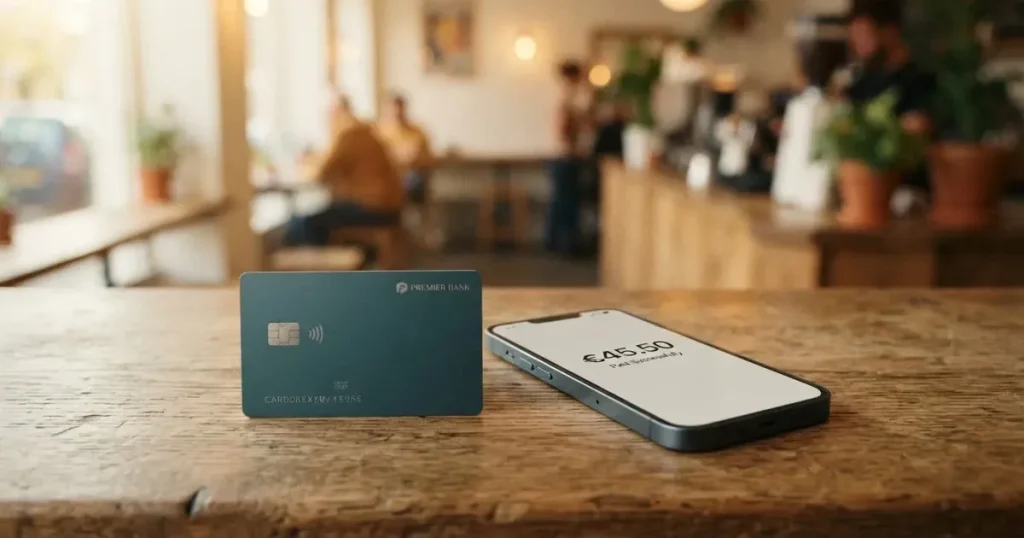
VIIO is a Visa card you fund with USDC or USDT and then spend like an ordinary payment card, from an account run by Persimon S.A.S. under Colombian law. It comes in two forms: a virtual card that exists from the moment your balance is topped up, and a physical contactless card you request once you hold a larger balance. The pricing is unusually friendly — no issuance fee, no monthly fee, no withdrawal fee, no cost on PSE bank transfers. That is where the score comes from. What pulls it down is documentation: the public pages do not publish the eligibility country list, the conversion percentage, the ATM fee, the networks accepted for crypto deposits, or the identity document list. On the day I checked, I could not answer “can I get this where I live?” from the card’s own terms, only “merchants in 200+ countries”, which is a different claim.
The conditions described here are current as of October 28, 2026.
If you are a Colombian resident holding dollars in USDC or USDT and you want a Visa card that converts and spends without monthly charges, VIIO is a shortlist candidate. If you are anywhere else, the missing eligibility list is the first thing to resolve before you bother — and if your main worry is proof that a card like this is regulated and safe, the pages I read will not settle that either, because the issuing bank is not named and the footer says the company “does not provide or offer regulated financial services”.
The score: 6.6 out of 10
My marks, criterion by criterion, with the reason I gave:
| Criterion | Mark | Why |
|---|---|---|
| Who can get it | 5 / 10 | Merchants in “200+ countries”, but the list of countries the card is issued in is not stated; the contract is governed by Colombian law and the product is aimed at Colombia |
| Cost | 8 / 10 | Virtual issuance $0, reissue $0, monthly $0; plastic is “No cost (currently exempt)”, with $5 USD listed if balance is under $50; “The Card currently does not charge any fee”; the conversion percentage is not listed |
| Top-up options | 6 / 10 | USDC and USDT balances, top up by PSE, bank transfer or crypto to an address or QR; networks not disclosed, crypto top-up fee not named |
| Reliability and complaints | 6 / 10 | Persimon S.A.S. (VIIO Colombia); issuer not named; no official incidents or reviews found; iOS app 4.0 out of 5 from 12 ratings |
| Everyday use | 8 / 10 | Virtual card with dynamic CVV, physical contactless card, Visa ATMs worldwide, virtual card links to Apple Pay; Google Pay not disclosed |
Total: 6.6 / 10.
The shape of that table tells you most of the story. Two eights for cost and everyday use, because the product does the simple things well and charges nothing for them. Three middling fives and sixes, because every one of them is about information the card has not published. A card can be excellent and undocumented at the same time; I am not scoring VIIO as risky, I am scoring what I can verify.
Will they give you the card?
Short answer: if you are in Colombia, probably yes; outside Colombia, I cannot tell you from the card’s own pages, and you should not treat the “200+ countries” line as an answer.
Here is what is actually stated. The card’s terms do not publish an eligibility country list — I looked, and it is not stated — but the contract is governed by Colombian law, and the product is clearly built for Colombia: a dollar-denominated balance, a Colombian top-up route through a local bank via PSE, a Colombian app store listing. The card page says the card works with merchants in “200+ countries”, which describes where you can spend, not where you can sign up. Those are different questions and people mix them up.
The help centre points to two things that both look Colombian: a bank/PSE top-up guide, and a question from someone holding a passport without a Colombian ID. That last one is worth flagging — it means people outside the obvious path ask, and the help centre has a page for them. I did not read the answer, so I am not going to guess at it. What I will say is that its existence is a hint worth following if your documents are not Colombian.
Three other eligibility facts sit in the terms rather than the marketing: you confirm you are of legal age, you supply the information the app requests and update it at least yearly, and you consent to credit bureau checks. That last clause is a Colombian-specific signal — credit bureau checks are not a routine part of a crypto card signup elsewhere, and it suggests the account is treated as something closer to a financial relationship than a plain wallet. It also implies a credit history is being built in Colombia whether you intend that or not.
What is not stated, and this matters for anyone planning ahead: the document list. The terms say you supply requested information, not which documents. If you are outside Colombia, the practical first question is not “what does it cost” but “will they open it for me” — and the card does not publish an answer. The KYC tier structure is also not stated; there is no published table of tier one versus tier two and what each unlocks.
So my honest position: the audience this card is built for is Colombian residents who want a dollar card funded from a USDC balance. That is a coherent product for a country where the local currency is volatile and access to dollar-denominated instruments is uneven. Outside that, you are reading between the lines of a help-centre question.
How to get it
The signup path is short, and the two thresholds in it tell you almost everything about how the product is built.
You confirm your legal age, provide what the app asks for, agree to credit bureau checks, and keep that information updated at least once a year. Then the card itself. A virtual card is free once you have topped up your account with at least 3 USD. A physical card requires at least 50 USD in balance. Both cards arrive deactivated and are activated in the app.
Two design choices here are worth slowing down on. First, the virtual card is free after a 3 USD top-up, which is a very low bar — you can hold a working Visa number for the price of a coffee. Second, the physical card has a 50 USD balance threshold, which is the real gate: the plastic is not free to obtain in the ordinary sense, it is unlocked by having money already on the account. There is no paid tier and no subscription to buy your way past that; the card has a single level, with the virtual and physical versions as the only variation.
On delivery, the terms are quiet about what you cannot guess. Physical-card delivery countries, delivery time and delivery cost are not stated. If you are outside Colombia and you are hoping a plastic card arrives in the post, that is a question for support, not for this page.
Replacement is where the pricing gets sharp again, and it is worth knowing before you need it. A replacement physical card is $5 USD. A virtual reissue is $0. And both are free if the card is defective or if a disputed charge is resolved in your favour — that is a genuinely fair clause, because the cost of the card is not yours to eat when the card failed or when the issuer’s own process made a charge stick.
What comes in the box, in the app: a virtual card with a dynamic CVV, and a physical card that supports contactless payments. Both are Visa. Both draw on what the terms call the “Digital USD balance” — a dollar balance, which may hold USDC or USDT depending on how you funded it. That pairing, a Visa card number on one side and a stablecoin balance on the other, is the whole product in two lines.
Fees and limits: what a VIIO payment really costs
The headline is that VIIO charges you nothing for most things, and the honest caveat is that it does not tell you the one number that determines what a purchase costs: the conversion margin.
| Fee or limit | What the card states |
|---|---|
| Virtual card issuance | Free |
| Virtual reissue | $0 |
| Physical card issuance | “No cost (currently exempt)”, but the page also lists $5 USD if balance is under $50 USD |
| Monthly fee | Free (virtual and physical) |
| Conversion / FX fee | Not itemised — purchases “Depend on the VISA type and exchange rate”; no percentage listed; “Pay in any currency, VIIO handles the conversion” |
| ATM withdrawal | Available at “any VISA ATM worldwide”; fee “Depend on the ATM operator”; VIIO’s own fee not listed; free allowance not stated |
| Withdrawal to bank or wallet | “No cost (currently exempt)” for COP, USD, CAD, AUD, EUR, GBP, MXN; crypto transfer — network fee only, VIIO charges none |
| Daily and monthly limits | Not stated per KYC level; credit capped at the value of digital assets in the account |
| Tiers | Single tier — virtual and physical card, no paid plans stated |
Read that table twice. The “currently exempt” wording appears on the physical card and on withdrawals, which means those are promotional rather than permanently free — the terms say fees may be reinstated. Nothing in what I read commits the company to keeping them at zero forever. The conversion fee is the quieter problem. “Depend on the VISA type and exchange rate” tells you that when you pay in Colombian pesos, some spread exists somewhere, but not who takes it or how much. “The Card currently does not charge any fee” tells you that VIIO is not charging you a line item. Those two statements are compatible, and together they mean: your purchase cost is the exchange rate you get, and you have to discover it per transaction rather than read it in advance.
The balance is a dollar balance, and you can withdraw in COP, USD, CAD, AUD, EUR, GBP or MXN. You pay in any currency and VIIO handles the conversion. Whether a currency is received, sent or spent does not depend on the Visa type as far as the terms go; they simply say rate-dependent.
Daily and monthly spending limits are not stated per KYC level, which is a gap rather than a number. What the terms do cap is credit: it is limited to the value of the digital assets in your account, so in practice you cannot spend beyond your balance. That is the defining characteristic of this class of card. It behaves like a prepaid card, not a credit card — crypto is converted and loaded as a balance, and the card spends only that balance, so it cannot overdraw.
Three ordinary payments, and which fees touch them:
- Paying in a US shop. The card is Visa and pays in any currency, so if the shop charges in USD the conversion question may not arise at all. If it charges in your local currency, the conversion applies at an unpublished rate.
- Paying a coffee in pesos in Colombia. This is the everyday case, and it is exactly where the unpublished conversion spread is felt most often, because small purchases convert most frequently.
- Withdrawing pesos at a local ATM. The card works at “any VISA ATM worldwide” and the fee “Depend on the ATM operator”; VIIO’s own fee is not listed and no free allowance is stated, so treat the ATM operator’s charge as the cost.
Top up: USDC, USDT, PSE, bank, or crypto address
Top-up is the strongest part of the offer and also the part with the sharpest edge, because two of the routes depend on details the card does not publish.
You can hold USDC and USDT balances. You can fund them three ways: by PSE, which is the Colombian instant-payment system; by bank transfer; and by crypto, received at a wallet address or by QR. In Colombia, a PSE top-up in pesos costs no cost (currently exempt). A bank transfer in pesos carries no VIIO cost, though your bank may charge its own. A crypto top-up requires at least 3 USD for the virtual card to become usable.
The edge is networks. Which networks the card accepts for a crypto deposit is not read and not published — so before you send, you need the supported network from the app or from support, not from general knowledge. This is the classic stablecoin trap: send on a network the provider does not support, or to an address belonging to a different network, and the transfer is irreversible. The blockchain cannot freeze or return it; you are relying on manual support recovery with no guarantee. The crypto top-up fee is also not stated.
A technical note worth having in your head if you are new to this. On Ethereum, fees are paid in ETH, so a wallet holding USDT but no ETH cannot send at all — the token is there and the money cannot move. Tron prices transactions with bandwidth and energy rather than plain gas, and USDC on Tron is not a native option because Circle stopped supporting it. The safe habit is simple and unglamorous: confirm the exact network the card shows you before you confirm anything.
On the way back out, withdrawals are “No cost (currently exempt)” for COP, USD, CAD, AUD, EUR, GBP and MXN, and a transfer to a crypto wallet costs only the network fee, none from VIIO. What is not addressed is what happens to a leftover balance if you close the account. That gap is one more reason not to treat this balance as a permanent store of value.
Paying with it every day
Day to day, VIIO behaves like a normal Visa card with two forms and one clear gap in wallet support.
The physical card is contactless. The virtual card carries a dynamic CVV, so the security code changes, which is a meaningful protection against a stored number being reused. It links to Apple Pay, and the card page does not disclose Google Pay — so if your phone is Android, assume nothing and check. Blocked merchant categories are not stated either; gambling is the category most often restricted on cards like this, and the usual convention is that the issuer may block it by policy rather than by law, but for VIIO the list is not published.
Where it works matters as much as how. The card is Visa, so it works at merchants in “200+ countries” and at “any VISA ATM worldwide”. Two practical wrinkles come with any foreign or prepaid BIN, and they are worth expecting rather than being surprised by: some merchants look up the issuing institution and country and apply extra scrutiny when it differs from your billing address, and some decline prepaid or foreign cards outright for the same reason. A card issued in one country can simply look foreign to a shop in another. If a decline happens, it is more often a policy at the till than a fault in the card.
The app is iOS, listed in the Colombian App Store at 4.0 out of 5 from 12 ratings. Twelve ratings is a small sample — enough to say the app has not been abandoned, not enough to say it is good. The Google Play rating was not readable because the page was truncated. Security controls in the app are the part that reads well: freeze or cancel instantly, instant alerts, and a PIN that blocks after three wrong entries. Dynamic CVV on the virtual card does the same job on its side.
Disputes have a deadline you should know before you need it. A reversal request — for fraud, an unauthorised purchase, non-delivery or defective goods — must be filed within five business days of becoming aware of the problem. It is handled under Article 51 of the Colombian Consumer Protection Statute. Five business days is short; if a charge looks wrong, the correct response is to raise it that week, not to think about it. Rewards are not stated, so plan on none.
What can go wrong
The honest risk picture has three layers, and the card’s silence sits across all of them.
On the company itself: Persimon S.A.S. (VIIO Colombia), brand “Persimon (VIIO)”. Press coverage in La Republica in January 2025 reported a launch with Visa and Dock for a USDC dollar card in Colombia. The footer says the company “does not provide or offer regulated financial services”, and the terms say VIIO “does not collect public funds”. The issuing bank is not named on the pages I read. Press mentions of Venezuela and Portugal additions were not confirmed on those pages.
On trust: I found no official incidents and no complaints — no Trustpilot or Reddit reviews turned up in my search. That is not a clean bill of health, it is an absence of data, and the complaints detail is not stated either. A young card with twelve app ratings and no public review history can be perfectly reliable or can simply have not been tested by many people.
On custody, the part that deserves a pause. Who holds your crypto is not stated, and the terms say VIIO does not receive or manage your money. Read that alongside the general risk: with a custodial wallet the provider holds the credentials and you must trust it completely, while a seed phrase is an unencrypted private key and anyone who gets it can restore the wallet and spend the funds. The record of custodial platforms is not encouraging — Mt. Gox (about $350 million reported stolen, 2011–2014), Coincheck (about $400 million, 2018), Ronin Network ($625 million, 2022) — so holding funds with a custodian carries counterparty and hack risk. Where a card is self-custody-linked, funds stay in your own wallet until the moment of payment, but then key loss, phishing and clipboard-hijacking malware are entirely yours. This card does not tell you which side of that line it is on, and for a balance you fund with stablecoins, that is the question I would ask first.
Then the smaller risks: a declined online authorisation can leave a hold on your funds for several days, typically up to 7. Address verification is mainly offered in the US, Canada and the UK and is generally unavailable for foreign-issued cards, which can cause declines. And the card itself can be suspended: Visa and Mastercard do not issue crypto cards to consumers themselves, they license issuers, and they can suspend a programme — Visa ended its agreements with FTX on 13 November 2022 and WaveCrest’s Visa programmes were suspended in Europe in 2018. Programme closures typically mean a notice period, then loading and spending stop, then you are asked to withdraw what is left. If you keep money on this card, keep it as spending money.
Support is the last practical thing: [email protected], a help centre at intercom.help/viio_help/en, open Monday to Friday 9 am to 5 pm with the time zone not stated, and help content in Spanish and English.
What to take instead
Three alternatives came up in the same category, and each trades VIIO’s weaknesses for its own.
| VIIO | International Visa Card | UNi Card | Morse | |
|---|---|---|---|---|
| Score | 6.6 / 10 | 6.7 / 10 | 6.1 / 10 | 7.5 / 10 |
| Form | Virtual + physical, Visa | Virtual, U.S.-issued Platinum Visa (physical “Coming soon”) | Multicurrency, Mastercard; physical/virtual not stated | Fully virtual Visa prepaid |
| Eligibility | Country list not stated; Colombian law | Not available to residents/registrants of a named list (Belarus, mainland China, North Korea, Cuba, India, Iraq, Iran, Israel, Myanmar, Nepal, Nicaragua, Russia, Syria, Turkey, Ukraine, Venezuela, Vietnam); FATF grey list case by case | Not stated | By residence, not citizenship: 18+, resident in a supported country; app in “over 140 countries” |
| Card cost | $0 virtual, $0/month; physical “currently exempt”, $5 under $50 balance | $5 virtual issuance, no maintenance; plans Classic free, Pro $9.00/month, Max $19.00/month | “No annual fee”; issuance not stated | Not stated (“Fees may apply”) |
| FX | Not itemised; rate-dependent | “Visa exchange rate + 2% FX fee” | None; assets converted at “live OTC rates”, “No hidden exchange fees” | “Zero foreign exchange fees or markups”, real-time Visa rate |
| Top up | PSE, bank transfer, crypto address/QR; networks not stated | USDC/USDT into USD account, plus USD, EUR, SEPA, SWIFT, FedNow | Not stated | Debit card, stablecoin transfer, Account Details (USD, EUR, MXN, COP; BRL needs CPF); self-custodial Morse Wallet |
| Rewards | Not stated | No cashback stated | Up to 3% Spend-to-Earn | Not stated on card pages |
The International Visa Card is the closest comparison and, on paper, nearly identical in score. Its advantage is that it publishes the number VIIO does not: “Visa exchange rate + 2% FX fee”, which is exactly the clarity VIIO lacks. Its disadvantage is the eligibility list — long, explicit, and by residence or registration rather than citizenship — and a $5 issuance fee plus paid tiers up to $19.00/month if you want them. If your country is on its exclusion list, it is not a candidate at all.
Morse scores highest at 7.5 / 10 and is the most transparent of the four about money handling: “Zero foreign exchange fees or markups”, conversions at the real exchange rate “with no markup”, and a self-custodial wallet. Its catch is that the card is “fully virtual for now”, its fees are not published on the card page, and a list of countries sits in closed beta behind an invite code — American Samoa, Australia, Cape Verde, Guernsey, Hong Kong SAR China, Isle of Man, Japan, Jersey, New Zealand, Serbia, Singapore, Switzerland, Thailand, Türkiye, United Kingdom, Western Sahara — while the supported-country list itself is not published and you are told to check the app. Note also that a card from this space can be closed: a 2026 programme closure reported by a secondary source had new loads ending 8 July 2026 and spending stopping 8 August 2026, single source and unconfirmed, but the shape of it is the same one FTX’s users saw.
UNi Card at 6.1 / 10 is the least transparent: eligibility and top-up are both not stated. What it does offer is the cleanest fee sentence of the four — no annual fee, no foreign transaction fee, conversion at live OTC rates — plus rewards of up to 3%.
The pattern across all four is the one worth remembering: nobody in this category publishes their conversion margin as a percentage, and the ones that publish their eligibility rules do it at the cost of length. VIIO is the most generous on stated fees and the vaguest on who can sign up. That is the trade you are making.
Who I would recommend it to
I would recommend VIIO to a Colombian resident who already holds USDC or USDT, wants to spend it as dollars rather than sell it, and would rather not pay a monthly fee or a withdrawal fee to do it. For that person the card does what it says: free virtual card after a 3 USD top-up, free physical card once you clear 50 USD, free withdrawals, zero monthly charge, and a Visa number that works at ATMs and merchants across 200+ countries. The two eights in my table are real.
I would not recommend it as a first card for someone outside Colombia, because the eligibility list is not published and I will not guess at it. I would not recommend it as a place to hold money you would be upset to lose, because the custody question is not answered on the pages I read. And I would not recommend it to someone whose main spend is gambling or any category that might be blocked, because the blocked list is not stated either.
Before you sign up anywhere, ask three questions and keep the answers: which countries are you issuing the card in; what is the conversion percentage on a purchase; and who holds the crypto — you or the provider. If support answers all three clearly, VIIO is worth your time. If the answers are vague, you have your answer about whether to proceed.
Frequently asked questions
What is the VIIO card?
The VIIO card is a Visa payment card that spends from a dollar balance you fund with USDC or USDT rather than from a bank account. It comes as a virtual card with a dynamic CVV and a physical contactless card, and both draw on what the terms call the “Digital USD balance”. It is run by Persimon S.A.S. (VIIO Colombia) under Colombian law, and a press report in La Republica in January 2025 described its launch with Visa and Dock.
How does the VIIO card work?
You top up a balance, then the card spends it. PSE, bank transfer and crypto transfer are the funding routes; the card converts and pays in any currency, and withdrawals are free to COP, USD, CAD, AUD, EUR, GBP or MXN. Because it is a prepaid-style balance, credit is capped at the value of digital assets in your account, so it cannot overdraw. The conversion cost itself is not published as a percentage.
Is VIIO a bank?
Not on the evidence of the pages I read. The company is Persimon S.A.S., and its footer says it “does not provide or offer regulated financial services”; the terms also say VIIO “does not collect public funds”. The issuing bank is not named. A card like this usually rests on an e-money or payment licence held by a partner institution, so ask support which entity actually issues the card before you rely on it.
Who owns VIIO?
VIIO is a brand of Persimon S.A.S., described as VIIO Colombia. Coverage from La Republica in January 2025 reported a launch alongside Visa and Dock. Mentions of Venezuela and Portugal expansions appeared but were not confirmed on the pages I read, so treat any country expansion you hear about as unconfirmed until support says otherwise.
Who can get the VIIO card?
The eligibility country list is not stated in the card terms, and the contract is governed by Colombian law with the product aimed at Colombia. The “200+ countries” figure describes merchants, not applicants. The card page says it is for merchants in 200+ countries; a help-centre page about holding a passport without a Colombian ID suggests non-standard documents are considered, but the answer was not available to me.
How much does the VIIO card cost to open and keep?
Virtual issuance is free and reissue is $0; the monthly fee is $0. The physical card is listed as “No cost (currently exempt)”, though the same page also lists $5 USD when balance is under $50 USD. Withdrawals are “No cost (currently exempt)” and VIIO charges none for crypto transfers, but the terms warn that fees may be reinstated — so treat zero as current, not permanent.
Is the VIIO card free?
Mostly, and with one asterisk. The card itself, the monthly fee, PSE top-ups in pesos, bank transfers and withdrawals are all free or currently exempt. The asterisk is conversion: purchases “Depend on the VISA type and exchange rate” with no percentage listed, and ATM fees “Depend on the ATM operator” with VIIO’s own fee and any free allowance unstated. So a purchase costs whatever exchange rate you are given.
Does VIIO require KYC?
Yes, of the standard kind. You confirm legal age, supply requested information, update it at least yearly, and consent to credit bureau checks — that last one is Colombian-specific and suggests a financial relationship rather than a plain wallet. The document list and the KYC tier structure are not stated, so you cannot tell from the terms exactly which papers will be asked for.
How do I top up the VIIO card?
Three routes: PSE for Colombian pesos (currently no cost), bank transfer (no VIIO cost, though your bank may charge), and crypto received at a wallet address or QR. The virtual card becomes usable after a top-up of at least 3 USD. The crypto route needs one check first — confirm the network the card expects, because the accepted networks are not published and a transfer on the wrong network is irreversible.
Is the VIIO card safe, and can I use it with Apple Pay?
The virtual card links to Apple Pay and carries a dynamic CVV; the app offers instant freeze and cancel, instant alerts, and a PIN block after three wrong entries. Google Pay support is not disclosed. On safety generally, I found no official incidents and no public reviews, which is an absence of data rather than a clean record, and the pages do not say whether your crypto is held custodially — that is the first thing to ask.
App and neobank cards: when one suits you – cryptocardpicker
Content created by the «cryptocardpicker» team