
An anonymous prepaid card with more questions than answers
 Available in US
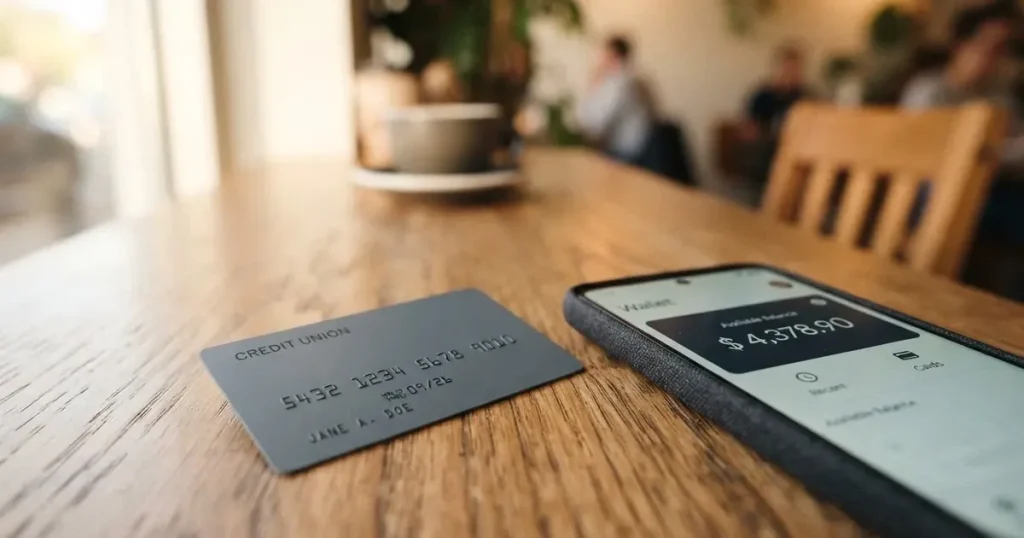
Card2Crypto sells a prepaid virtual Mastercard funded by crypto. The pitch is short: pick a card value between $5 and $499, pay with USDT, USDC, BTC, ETH, SOL or XMR, and a virtual card arrives in minutes. There is no identity check, no plastic, no app — just a card number you can drop into Apple Pay or Google Pay and spend at any merchant that takes Mastercard.
The catch is what’s not there. The site doesn’t name who issues the card, what licences it holds, where it is registered or what it charges for conversion, foreign exchange or ATM use. The terms describe Card2Crypto as a software service, and the unrestricted-country list sits next to a 30-country block list that includes Russia, Belarus, Serbia, Turkey and Ukraine. There is no public Trustpilot or Reddit footprint, and the card does not support 3-D Secure.
Conditions and card information below are current as of October 28, 2026.
Verdict: 6.0 out of 10
I came away thinking of Card2Crypto as a one-off tool rather than a card to build a routine around. If you need a single virtual card to spend crypto online, it gets the job done with a low minimum and broad crypto support. If you want anything more durable — a known issuer, published fees, dispute support, a physical card, an ATM option — the published material doesn’t give you enough to lean on.
The score reflects that tension. The card does well on access and funding, and less well on cost transparency, reliability and everyday usability.
Score breakdown
| Criterion | Mark | Why |
|---|---|---|
| Who can get it | 8 / 10 | Anyone worldwide can buy, but activation can be refused for residents of 30 countries |
| Cost | 5 / 10 | No fees are stated for the Mastercard; the 4–7% figure on the page applies to a PayPal gift card, not the debit card |
| Top-up options | 8 / 10 | USDT/USDC on Polygon, plus BTC, ETH, SOL and XMR — but no reload is described |
| Reliability and complaints | 4 / 10 | Software-only terms, no issuer, no licences named, no 3-D Secure, no public review footprint |
| Everyday use | 5 / 10 | Virtual Mastercard only, Apple Pay and Google Pay supported, no plastic, no ATM detail |
| Total | 6.0 / 10 |
Who will they give you the card
The headline from the site is “Anyone worldwide can purchase”. That is unusually wide for a payment card and reflects the no-KYC pitch. The fine print narrows it sharply: activation may be denied if you are a resident of any of 30 countries on the restricted list, and the rule is residence-based, not citizenship-based.
The restricted list, in the order it appears on the site, is: Afghanistan, Albania, Belarus, Bosnia & Herzegovina, Burma/Myanmar, Central African Republic, Croatia, DR Congo, Cuba, Ethiopia, Iran, Iraq, North Korea, Lebanon, Libya, Mali, Nicaragua, Palestine, Russia, Saudi Arabia, Serbia, Somalia, South Sudan, Sudan, Syria, Turkey, Ukraine, Venezuela, Yemen and Zimbabwe.
If you try to redeem or activate from one of these countries, the site says any right to a refund is voided. That phrasing matters: it suggests payment is taken up front and the no-refund clause is the safety net rather than a pre-check at checkout.
Two practical points fall out of this:
- A passport from a non-restricted country does not protect you. Activation looks at where you live, not where you were born. If your billing address is in Turkey, the activation can still be refused.
- The list is heavy on jurisdictions under sanctions or political pressure, and it is broader than a typical sanctions list — it includes, for example, Saudi Arabia, Croatia and Albania. If your country is not on the list today, that does not guarantee it won’t be added tomorrow.
The card is prepaid and virtual. There is no credit check, no proof of income and no minimum balance beyond the card value. The Terms treat Card2Crypto as a software service, so the legal counterparty on signup is a software provider, not a bank. The licensed payment parties behind the scenes are not named on the public pages.
How to get it
The flow is designed to feel like buying a digital gift card rather than opening a bank product. The site does not mention an app; the entire purchase happens in a browser.
The steps, as the site describes them:
- Choose a card amount. The available range is $5 to $499 in USD. Outside that range, there is no path to a higher-limit card from the public pages.
- Pick a payment coin. The dropdown shows USDT on Polygon, USDC on Polygon, Bitcoin, Ethereum, Solana and Monero. Network selection matters here, and is discussed in the funding section.
- Pay inside a 10-minute timer. The countdown starts once you confirm the order; if the on-chain payment does not confirm in time, the order expires.
- Receive the virtual card. The site says the card is typically ready in minutes, with up to 48 hours in busy periods.
There is no KYC. Activation may still need a name, email, phone number and billing address, but the site describes this as a card-activation step rather than a document check. The card supports Apple Pay and Google Pay, so once the virtual card details arrive you can add it to a mobile wallet and spend at a physical terminal by tapping your phone.
Two structural limits to keep in mind:
- The card does not support 3-D Secure. Online checkouts that require 3-D Secure will decline. This rules out a meaningful share of European and many larger US online stores.
- The card is virtual only. There is no plastic, so you cannot insert a chip card or hand a card over at a counter. Mobile wallet tap-to-pay and online checkout are the only spending channels.
Fees: what it really costs
The cost story is the weakest part of the public material. The page does not state a conversion fee, an FX fee, an ATM fee, a monthly fee, a top-up fee or a closure fee for the Mastercard. The site also does not state a cardholder agreement that sets out limits on free conversions.
What the page does show:
- Card value: a fixed amount between $5 and $499, set by you at purchase.
- A “4–7%” range that appears on the same page refers to a PayPal gift card product, not the Mastercard. It is easy to misread this as the card fee; it is not.
- No monthly or annual fee is mentioned.
- No stated spend limits beyond the card value.
For a balanced view, I have laid out what is and isn’t stated below.
Costs at a glance
| Item | What the card says |
|---|---|
| Card issuance (purchase) | $5 to $499 in USD, paid in crypto |
| Monthly or annual fee | Not stated |
| Conversion / FX fee | Not stated for the Mastercard |
| ATM withdrawal fee | Not stated |
| Top-up fee | Not stated (reloads not described) |
| Cardholder spend limits | Not stated beyond the card value |
| Inactivity or closure fee | Not stated |
| PayPal gift card fee (separate product) | 4–7% (not the Mastercard) |
Three everyday payments, walked through
Without published numbers I cannot add the fees up for you, but I can walk you through where fees will probably appear and what to look for on your statement.
- An online subscription paid in USD. The card is denominated in USD, so the only fee in principle is the spread baked into the crypto-to-USD conversion at top-up time. The site does not say whether the crypto you pay with is converted at an exchange rate that includes a margin. If you can compare the USD value of crypto you sent to the USD value loaded on the card, that gap is the effective conversion cost.
- A purchase at a European merchant. The card settles in USD, so Mastercard’s currency conversion will run. The mark-up Mastercard applies is not visible on Card2Crypto’s pages. Some issuers absorb a chunk of this; some pass it through. With no published rate, the only way to estimate is to watch a single small foreign-currency purchase on the card and compare to a mid-market rate.
- A tap-to-pay coffee via Apple Pay at a US shop. The spend is in USD, so no FX. The fee is whatever the crypto-to-USD conversion cost when you funded the card, plus any spread between the merchant’s USD price and what Mastercard’s network charges for tokenised mobile-wallet transactions. None of these are broken out on the site.
In short: the card’s headline cost is whatever you choose to load, but the absence of published fees means the real cost lives in the spread between what you sent in crypto and what landed as USD on the card, and in any FX margin Mastercard applies at the merchant.
Top up: how to fund the card
The funding story is straightforward at the top of the page and thin underneath it.
The site lists six coins: USDT, USDC, BTC, ETH, SOL and XMR. The dropdown that appears in checkout is more specific:
- USDT on Polygon
- USDC on Polygon
- Bitcoin
- Ethereum
- Solana
- Monero
Polygon is the only network listed for the two stablecoins, and the site does not say what happens if you send USDT or USDC on a different network. The other coins each have a single network, but the page does not spell out which (for example, Bitcoin’s mainnet rather than a Liquid or Lightning variant).
The timer is 10 minutes from order to on-chain confirmation. In practice this is comfortable for Polygon USDT/USDC, which usually settles in seconds, and tight for Bitcoin during busy periods.
Three things the page does not describe:
- Reloads. There is no mention of a top-up feature once the card is issued. The wording is “pay in crypto” against a chosen amount. If you spend the card down, the public material does not say whether you can add more to the same card.
- Withdrawals. There is no cash-out or “send to bank” function described. The Terms note that on termination the right to use the service ceases; the question of any residual balance is not addressed.
- Wrong-chain deposits. Crypto transfers are irreversible, so sending USDT on Tron or Ethereum to a Polygon address can mean a manual support ticket with no guarantee of recovery. The site flags Monero in the coin list, which is unusual for a regulated product; sending XMR to a mistaken address is generally unrecoverable.
The upshot: funding is flexible on the way in, but the product looks like a one-shot purchase. Treat the card as a single-use balance rather than an account you top up over time.
Paying with it every day
The card is built for online and mobile-wallet spend, not for a wallet full of receipts.
- Where it works. Anywhere Mastercard is accepted online, and at point-of-sale terminals that take a tokenised Apple Pay or Google Pay tap. The site does not list blocked merchant categories, but as a virtual prepaid card it cannot be used at physical-only locations like a vending machine or a parking meter that does not support mobile wallets.
- Where it is likely to struggle. Online stores that require 3-D Secure. Some merchants decline prepaid or foreign-issuer BINs based on the issuer country shown in the BIN lookup. Address Verification Service, used heavily in the US, Canada and the UK, is generally unavailable for foreign-issued cards and can produce a decline on a small share of checkouts.
- Rewards, cashback or perks. Not stated. There is no published programme on the public pages.
- App. None mentioned. You manage the card via the web purchase flow, and after that the only practical tool is your mobile wallet.
Apple Pay and Google Pay are the two meaningful everyday channels. Both replace the card number with a device-specific number stored in the phone’s Secure Element, so the card details are not shared with the merchant at the point of tap.
What can go wrong
This is the section that moved the score down the most. The card works in the simple case; the question is what happens in the awkward ones.
- No known issuer. The Terms describe Card2Crypto as a software service, and the card is “Mastercard” branded, but the issuer’s name, the country of registration and the licences that cover the programme are not on the public pages. Payments are said to be handled by unnamed licensed third-party providers. For a payment product, that is a thin disclosure.
- No 3-D Secure. The site states the cards do not support 3-D Secure, so any online merchant that enforces 3-D Secure will reject the payment. This is a hard limit, not a setting you can change.
- VPN use is “strictly prohibited”. The card provider treats VPN use as grounds for cancellation without a refund, per the site. If you travel or routinely use a VPN for privacy, that is a real conflict with how many people use the internet.
- Refunds are narrow. The site says activation from a restricted country voids the right to a refund, and VPN use is in the same bracket. The general refund policy for routine cases is not described, and the Terms’ dispute clause points to the courts of an unnamed home country.
- Custodial status is not stated. The site does not say whether the crypto you send is held by the same company that issues the card, by a separate custodian, or in a pooled arrangement. With a one-shot purchase the exposure window is short, but the question is still worth asking before any larger buy.
- A precedent worth knowing. Visa publicly ended its global agreement with FTX in November 2022, and the FTX US debit card was wound down by its issuer. In 2018, Visa suspended WaveCrest in Europe, which closed a number of crypto card programmes in one stroke. A card programme is only as durable as the issuer and the network relationship behind it. With Card2Crypto, neither is named on the public pages.
- No public review footprint. I did not find a Trustpilot page or a Reddit thread dedicated to Card2Crypto. The pages that show up in search belong to other brands. That is not, on its own, evidence of a problem, but it does mean a prospective buyer has very little third-party signal to lean on.
- On-chain mistakes are final. Sending USDT on the wrong network, or XMR to an address you mistyped, is generally unrecoverable. The site’s support contact is a contact page and a Telegram news channel; hours and languages are not stated.
What to take instead
I would not pick Card2Crypto as a daily driver. For a one-off, low-value virtual card spend, the low minimum and the no-KYC angle are real. For anything more, the alternative market has more published detail and a clearer issuer story.
| Card2Crypto | CardFlow | HyperCard | Card.fi | |
|---|---|---|---|---|
| Score | 6.0 / 10 | 4.9 / 10 | 4.7 / 10 | 6.6 / 10 |
| Card type | Virtual prepaid Mastercard | Virtual USD Mastercard | Prepaid card (network not stated on App Store page) | Virtual and physical, classic and premium, metal |
| Country access | Anyone worldwide, 30-country block list | Aimed at Nigeria and global users; no exclusions stated | Acceptance in 176+ countries; eligibility list not on official pages | Ships to 200+ countries; sanctions bar |
| Card cost | $5 to $499, paid in crypto | Free to create (per site FAQ); monthly fee not stated | Not stated on App Store page | Virtual Classic $49 once, Virtual Premium $249 once; no monthly, annual, inactivity or minimum-balance fee |
| Conversion and FX | Not stated | Not stated | Not stated | Top-up 1.5% + $1 (Classic) or 1% (Premium); FX 3.5% (Classic) or 2.5% (Premium) |
| Top-up coins | USDT/USDC on Polygon, BTC, ETH, SOL, XMR | BTC, USDT, ETH, Naira bank transfer | USDT, BTC, ETH in app | 32 coins on 5 networks (Ethereum, Base, BNB Chain, Solana, Kaanch) |
| Rewards | Not stated | Not stated | Not stated | Cashback on spending; up to 1.2% on Classic, 2% on Metal with caps; earn-on-balances up to 18% (variable) |
If you want a published fee schedule, a physical option and a real cashback programme, Card.fi is the most fully disclosed of the four. If you are happy with a virtual card, a small minimum and broad crypto funding, Card2Crypto still has a niche: a one-shot virtual card with the lowest entry I have seen and no identity check. If you are based in Nigeria, CardFlow’s positioning makes it a more obvious fit, and HyperCard is the option to look at if the App Store reach matters to you more than the published detail.
Who I would recommend it to
I would recommend Card2Crypto to a narrow reader: someone who wants a single virtual Mastercard to spend a small amount of crypto online, who is not in one of the 30 restricted countries, who is comfortable with no published fees and no 3-D Secure, and who treats the purchase as a one-shot rather than an ongoing relationship. The low $5 minimum and the option to pay in Monero set it apart from the wider field for that use case.
I would not recommend it to someone who wants a physical card, an ATM option, a transparent fee schedule, a chargeback path, or a card programme backed by a named issuer. For any of those, look at Card.fi, a mainstream crypto card from a licensed issuer, or a fiat prepaid card funded by a regulated on-ramp.
A final note on safety. No payment card is anonymous in the merchant’s eyes; the BIN lookup shows the issuer country, and mobile-wallet tokens carry device identifiers. The no-KYC pitch is real at sign-up, but the card still has to operate inside Mastercard’s network, which means the protections and the limits of that network apply. Treat the card as a tool for a specific job, not as a primary account, and keep the value on it small.
Frequently asked questions
What is the Card2Crypto card?
Card2Crypto is a prepaid virtual Mastercard you buy on the Card2Crypto website. You pick a value between $5 and $499, pay in crypto, and the virtual card details are usually delivered in minutes. The card runs on a USD balance and is intended for online and mobile-wallet spending.
How does the Card2Crypto card work?
You choose an amount, select a payment coin (USDT or USDC on Polygon, Bitcoin, Ethereum, Solana or Monero), send the crypto inside a 10-minute timer, and receive a virtual card number. The card is denominated in USD, supports Apple Pay and Google Pay, and is spent like any other Mastercard online or at a tap terminal.
Is Card2Crypto a bank?
No. The Terms describe Card2Crypto as a software service, and the public pages do not name a bank or e-money institution behind the card. Payments are said to be handled by unnamed licensed third-party providers, but the issuer’s identity and the relevant licences are not disclosed on the site.
Who owns Card2Crypto?
The public material does not name an owner, a parent company, a country of registration or a regulator. The Terms are presented as software-services terms and do not point to a registered entity or a licence number. If that information matters to you, ask the company directly through its contact page.
Is the Card2Crypto card available in my country?
The site says anyone worldwide can purchase, but activation can be refused if you are a resident of one of 30 restricted countries, including Russia, Belarus, Serbia, Turkey and Ukraine. The rule is based on residence, not citizenship, and a refused activation voids the right to a refund.
Does the Card2Crypto card require KYC?
The site says all cards can be purchased and activated without KYC. Activation may still ask for a valid name, an email address, a phone number and a billing address, but it is described as a card-activation step rather than a document check. There are no published KYC tiers.
How do I top up a Card2Crypto card after I buy it?
The public pages do not describe a top-up or reload feature. The flow is built around paying for the card in one transaction, and the published material is silent on whether the same card can be funded again. If reloads matter, ask the company before buying.
Is the Card2Crypto card free?
The card itself is prepaid: you pay for it at purchase. The site does not state a monthly fee, a conversion fee, an FX fee, an ATM fee or a closure fee for the Mastercard. The 4–7% figure on the same page refers to a separate PayPal gift card product, not the debit card.
Is the Card2Crypto card safe?
The card does not support 3-D Secure, the issuer and licences are not named on the public pages, and the Terms treat VPN use as grounds for cancellation without a refund. There is no public Trustpilot or Reddit footprint to lean on. Treat the card as a low-value one-shot tool rather than a primary account.
Where can I use the Card2Crypto card?
Anywhere Mastercard is accepted online, plus any point-of-sale terminal that takes a tokenised Apple Pay or Google Pay tap. The card is virtual only, so it cannot be inserted into a chip reader. Online merchants that require 3-D Secure will decline the card, and some merchants block prepaid or foreign-issuer card ranges.
Virtual cards: picking one for online use – cryptocardpicker
Content created by the «cryptocardpicker» team