
A creator-earning debit card built on Wirex, with a fees sheet that mostly isn't there
 Available in US

The Collective Memory card is one of the more unusual entries in today’s crypto-card market: it is a Visa or Mastercard debit card, virtual and physical, that does not accept a normal crypto deposit at all. Instead, the card spends USDC that the platform converts from your ATTN token earnings at the moment of payment. The card is run by Collective Memory, a decentralised social platform, on top of Wirex’s Banking-as-a-Service rails, and it targets creators who earn ATTN by staking on their own content. For anyone outside that narrow use case — a user who simply wants to top up a card with USDT from a self-custody wallet, say, or who needs a clear published fee schedule before signing up — the proposition gets thin fast.
This review walks through who actually qualifies, what the card costs (or rather, what the card does and does not tell you it costs), how topping up works in practice, and where the risks sit. I weigh it against three alternatives: TokenPocket (TP Card), MetaMask Card and KAST. Throughout, I stay with the facts the card itself publishes, mark the gaps, and flag anything drawn from third-party sites as unofficial.
Conditions are current as of October 28, 2026.
Verdict
I score the Collective Memory card 6.1 out of 10. That is not a number to be alarmed by, but it reflects a card that does a few things well for a specific audience and leaves a lot of important detail unstated. The strongest point is the audience fit: if you earn ATTN on the Collective Memory platform and want to spend it through a normal Visa or Mastercard reader, the product exists and the plumbing is built on Wirex Banking-as-a-Service, with Wirex describing itself as a principal member of both networks. The weakest points are the absence of any published fee figures, the fact that the card is funded only from ATTN earnings rather than from a normal crypto or bank deposit, and the limited public information about the issuing entity and its licences.
The card is a reasonable fit if you are a creator on Collective Memory who holds Liquid ATTN and wants a card that converts those earnings to USDC at the point of sale. It is a poor fit if you want a general-purpose crypto card, if you need a known monthly fee and ATM schedule before you sign up, or if you want to load the card from a self-custody wallet. Below, the score is broken down by criterion.
| Criterion | Mark | Reason |
|---|---|---|
| Who can get it | 7 / 10 | Long list of eligible countries across the US, Europe, Asia, Latin America and MEA, including Georgia, Kazakhstan, Turkey, the UAE and Ukraine; Russia and Belarus are not on the list |
| Cost | 5 / 10 | Release copy says “transparent pricing and competitive FX rates”, but no figures are published for issuance, monthly fee, FX, ATM or limits |
| Top-up options | 4 / 10 | Funded only from ATTN earnings, converted to USDC; no top-up from an external wallet or bank is described |
| Reliability and complaints | 7 / 10 | Card runs on Wirex Banking-as-a-Service; Wirex calls itself a principal member of Visa and Mastercard; no complaints were found in one search |
| Everyday use | 7 / 10 | Virtual and physical debit card; Apple Pay and Google Pay supported; ATM details are not stated |
| Total | 6.1 / 10 | Solid for creators holding ATTN, thin on published detail and on funding options |
Who they will give the card to
The eligibility list is unusually long for a new crypto card product. Collective Memory publishes a single, large roster of countries, and the card is positioned as global from launch rather than rolled out by region. The list spans the United States; most of the EU and EEA plus the UK, Switzerland, Norway and Iceland; a wide Asia-Pacific group including Australia, Hong Kong, Indonesia, Malaysia, the Philippines, Singapore, Taiwan, Thailand and Vietnam; a Latin American block covering Argentina, Brazil, Chile, Colombia, Ecuador, Mexico and Peru; and a MEA and CIS group that includes Azerbaijan, Bahrain, El Salvador, Georgia, Ghana, Guernsey, the Isle of Man, Israel, Japan, Jersey, Kazakhstan, Kenya, Macao, Moldova, Nigeria, Oman, Panama, Saudi Arabia, South Africa, South Korea, Turkey, Uganda, Ukraine, the United Arab Emirates and Uzbekistan.
What the public page does not say is just as important. Russia and Belarus are not on the list, which is consistent with how most regulated card products handle those jurisdictions. Whether the card is granted on a citizenship basis, a residence basis, or both is not stated, and the card documents do not explain how dual citizens or people living in one country with a passport from another are treated. If your situation is unusual — for example, a Ukrainian citizen resident in Portugal, or a Kazakh citizen living in a country that is itself on the list — you should expect to verify this directly with the card before you assume the card is for you.
The reader this fits best is a person in one of the listed countries who already has, or is willing to set up, a Collective Memory creator account and earn Liquid ATTN. The reader it does not fit is someone who simply wants a Visa or Mastercard debit card funded from a regular crypto wallet or bank transfer; this card does not behave like that.
How to get it
The card is offered in two forms: a virtual debit card and a physical debit card, both introduced in the February 2026 release. The card network (Visa or Mastercard) and the card currency are not stated on the public pages I read. Delivery time for the physical card is also not stated. Identity verification levels, document requirements, and the KYC flow are not stated in the docs I could see, so the precise steps at sign-up are not something I can describe line by line; the card is gated by Wirex’s KYC on the Banking-as-a-Service side, and you should expect standard identity-document and address verification as a minimum.
Practically, what you do today is: download the Collective Memory app from the link published on the platform’s site, complete onboarding, wait for the EU/UK waitlist that opened in March 2026 to clear, and request the virtual card in the app, with the physical card following once you are approved. Because the card is on Wirex rails, expect KYC to feel like a Wirex KYC, with photo ID, a selfie check, and address verification. The exact order of steps in the Collective Memory app is not spelled out publicly, so I would not promise a specific time-to-card here.
A useful way to think about it: this is a card you join to use, not a card you shop for on a comparison site. The product exists to give Collective Memory creators a way to spend what they earn on the platform, and the sign-up flow is built around that single use case.
Fees: what it really costs
This is the section where the card, frankly, leaves the most on the table. The release language says Collective Memory offers “transparent pricing and competitive FX rates”. That is a statement of intent, not a fee table. The card’s public pages do not publish:

- an issuance fee for the physical card,
- a monthly or annual maintenance fee,
- a conversion or spread fee between ATTN, USDC and the card’s settlement currency,
- a foreign-exchange (FX) fee or margin,
- ATM withdrawal fees or ATM limits,
- daily, monthly or per-transaction spending limits,
- any tiered plan (for example, a free tier and a paid tier with extra features).
Until the card publishes a fee schedule, anyone signing up is signing up on the basis of trust in the platform, not in published numbers. Cost gets 5 out of 10, even though the framework on which the card runs (Wirex) is known for transparent, published pricing on its own consumer card. For the Collective Memory-branded product, the figures are simply not on the page.
| Fee or limit | Value |
|---|---|
| Issuance fee (virtual) | Not stated |
| Issuance fee (physical) | Not stated |
| Monthly / annual fee | Not stated |
| Conversion / spread | Not stated (release says “competitive”) |
| FX fee | Not stated (release says “competitive”) |
| ATM withdrawal | Not stated |
| Daily spend limit | Not stated |
| Monthly spend limit | Not stated |
| Funding source | ATTN earnings only; EUR and USD IBAN accounts mentioned in release; bank-deposit top-up not described |
What I can do is walk through three everyday situations and tell you which fees would apply if the card’s published numbers followed the standard industry pattern. These are not the card’s own numbers; they are the categories you should look for once the card publishes its fees.
Buying a coffee in your home currency. If your card settles in, say, USD and you pay a USD-priced merchant, the only fee that should apply is the spread between Liquid ATTN, USDC and USD. The card’s release says the conversion happens at the point of sale, which usually means the spread is built into the rate rather than charged as a separate line item. Without a published number, I cannot tell you the size of that spread. On comparable cards, the spread between a major stablecoin and the same fiat at a card network is often under 1%, sometimes well under.
Buying something online in a foreign currency. If you are sitting in a listed country and paying a merchant in a different currency, you should expect an FX fee on top of the conversion spread. On a typical EU-issued crypto card, the FX fee ranges from 0% (a few cards absorb it) to around 1.5% to 2%. The Collective Memory card has not published its number, so ask before you travel.
Withdrawing cash from an ATM. ATM fees on a crypto card usually come in two parts: a fixed fee charged by the issuer (often around US$1 to US$2.50 per withdrawal) and a percentage fee (often 1% to 2% of the amount), plus any local ATM-owner surcharge. The Collective Memory card does not publish either. If you intend to use the physical card for cash, treat this as unstated and verify in-app or by email before relying on it.
The bigger picture: the card’s design — converting ATTN to USDC at the moment of payment — means the cost of using it is really the cost of that conversion plus any FX and ATM charges. Until those are published, the only honest answer to “what does it cost?” is “we don’t know yet”. That is exactly the kind of gap that drops a score from a 7 to a 5 on cost.
Top up: how to fund the card
This is the part of the card that is most different from any other crypto card I have looked at, and the difference is the single most important fact for you to understand before you apply.
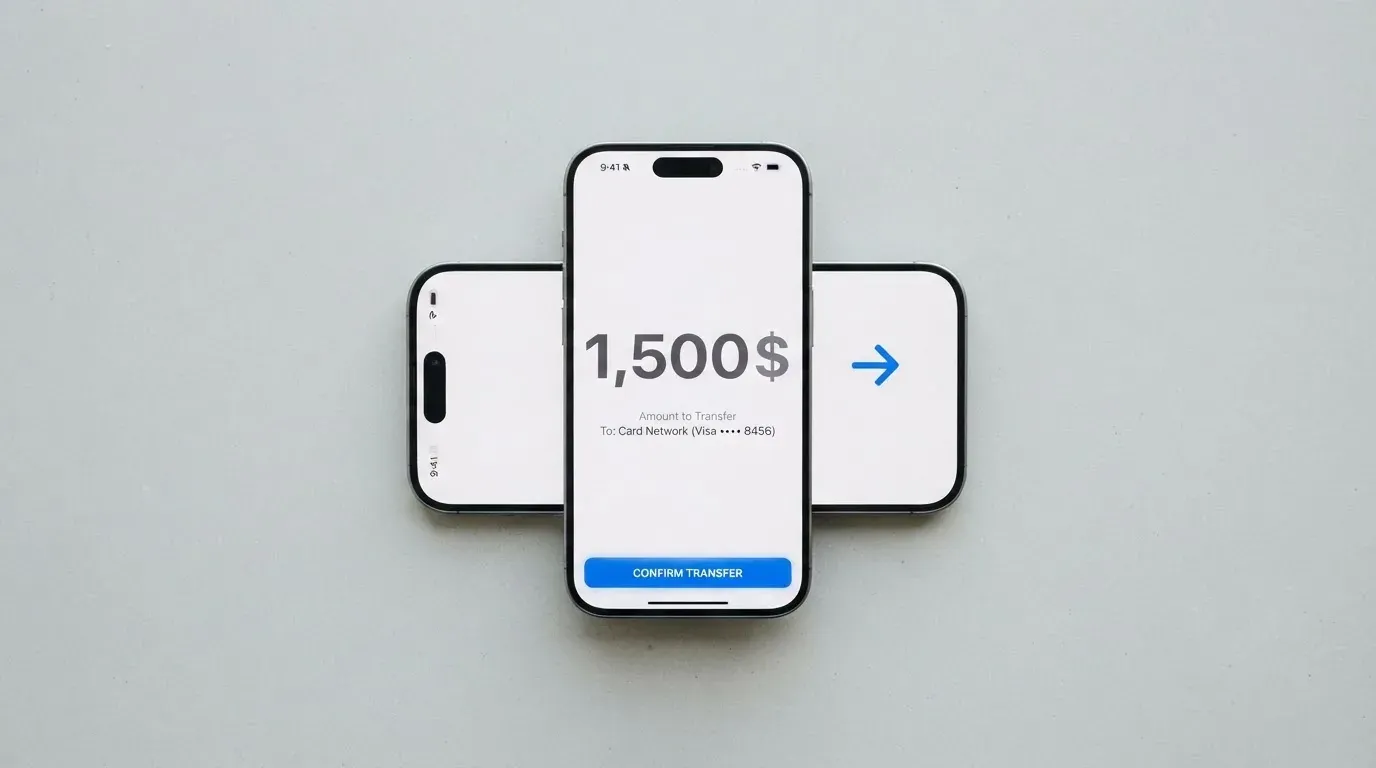
The card is not a deposit card. There is no described way to send USDC, USDT or any other token from an external wallet to a top-up address. There is no described way to push funds from a bank account to a card balance. What the card does is take your Collective Memory earnings — specifically the Liquid ATTN portion of your holdings — convert them to USDC, and spend that USDC at the point of sale.
A few details matter here:
- ATTN on the platform is split into Liquid ATTN (spendable) and Savings ATTN (locked). Withdrawals from the platform are split 50/50 between the two, which means only half of what you can withdraw is immediately usable through the card.
- The release describes conversion at the point of sale, with no prefunding step. In other words, the card does not need a “loaded balance” the way a prepaid card does; the system mints or releases USDC against your ATTN at the moment of authorisation.
- The release mentions EUR and USD IBAN accounts. This is interesting because it implies you can receive a normal bank payment in, but the card’s public pages do not describe a top-up flow from a bank deposit onto the card balance. Treat the IBAN detail as a platform feature, not as a card top-up route, until the card confirms otherwise.
- The in-app off-ramp — converting your card-side balance back to local currency in your bank — is described as “coming soon”. Withdrawal cycles move from 30 days to 14 days from 18 May 2026.
For a normal user, the implication is simple: if you do not have ATTN on the Collective Memory platform, this card is not a way for you to spend your own crypto. If you do, the card spends your earnings directly, and the questions about top-up fees, deposit networks and minimum amounts do not really apply in the way they would on a Wirex or Crypto.com card.
If your situation is “I have USDC in my own wallet and I want a card that spends it”, look at MetaMask Card or KAST instead. They are designed for that.
Paying with it every day
On the day-to-day side, the card behaves like a regular Visa or Mastercard debit card, in two shapes: a virtual card you can add to a mobile wallet straight away, and a physical card for in-store use and ATMs. The release explicitly says Apple Pay and Google Pay are supported, which is the part that matters for most readers.
A few points that are not stated, and which I would not assume:
- Blocked merchant categories. Many crypto cards block gambling, adult content, and certain crypto exchanges at the issuer level. The Collective Memory release does not list blocked categories. If this matters to you, ask the card.
- Cashback or rewards on the card itself. None is stated. Collective Memory’s reward model is that creators earn ATTN by staking on their content; that is a platform reward, not a card spend reward. You should not expect a percentage back on coffee.
- The app. The platform’s app is available at the published download link. App store ratings were not checked for this review.
- Disputes and chargebacks. Not stated. Chargeback rights on a crypto-funded card are a real consideration; if you ever need to dispute a transaction, you need to know what the issuer’s policy is, and the public pages do not say.
Two practical points worth flagging. First, mobile-wallet tokenisation (Apple Pay and Google Pay) replaces the long card number with a device-specific token; the card number never sits on Apple or Google’s servers, and the issuer can restrict a tokenised number if needed. Second, on online checkout, expect the standard 3-D Secure step where the issuer challenges the buyer with a code or a biometric prompt. The card does not say whether 3-D Secure is enforced, but Visa’s and Mastercard’s programmes now require it in many regions, so do not be surprised if it appears.
For the reader in a hurry: yes, it works in shops and online. No, the card does not promise cashback. Yes, you can put it on your phone. The blocked-category list is the only gap that could really bite you in everyday use, so check that before you rely on it for a specific type of spend.
What can go wrong
The honest version of “what can go wrong” for this card has to mix two things: the public record, which is thin, and the structural risks that come with the product’s design.
The card’s own record. I found no public complaints, no Trustpilot or Reddit threads, and no incident notices in one search. That is partly because the card is new (announced February 2026, rolling out from March 2026 in the EU/UK and across the eligible list in May 2026). It is also because the card’s name and brand overlap with the platform’s, which makes it harder to separate signal from noise in a search. None of this is a green flag; it is a small sample.
The issuer. The card is powered by Wirex Banking-as-a-Service. Wirex describes itself as a principal member of both Visa and Mastercard, which is the right level of seniority for a programme of this kind. The actual issuing entity for the Collective Memory card, and the licences under which it issues, are not stated on the public pages. That is a gap; on a regulated card programme, the issuing bank’s name, country and regulator are usually easy to find. Until the card publishes those, you are trusting the platform’s brand, not a regulator’s register.
Custody and control. The release describes the platform as giving “non-custodial control”. For a card that spends from your ATTN, the practical meaning is that the platform itself does not hold your private keys — the conversion and spend happen on the platform’s own rails. Two-factor authentication, app-based card freeze, and spending limits are not described in the public pages.
Programme risk. Crypto cards depend on a network (Visa or Mastercard) and an issuer, and either can suspend a programme. The category has seen this happen: in 2018 Visa suspended WaveCrest in Europe, which closed every card WaveCrest had issued for crypto brands; in November 2022 Visa said it had terminated its global agreements with FTX, and the FTX US debit card programme was wound down by its issuer. None of that is specific to Collective Memory, but it is a reminder that a card is a product, not a right. If the programme is suspended, you usually get a notice period, then a stop on new loads, then a stop on spending, then a window to withdraw.
Regulatory environment. The card is a payment service and is regulated accordingly; the crypto side in the EU is regulated by MiCA, which took legal effect in June 2023. The card does not say whether it is registered as a crypto-asset service provider, and ESMA’s interim register should be checked for the issuing entity once it is named.
Sanctions and country rules. The card is a regulated product and will apply the rules of the country it is registered in and the rules of the network. Citizens of Russia and Belarus are not eligible by the published list. If your situation is in a grey area (for example, you live in a listed country but hold a passport from a non-listed one), the card’s KYC may not clear, and that is not something to argue with.
The honest summary. The card’s main risks are not exotic. They are: (1) you do not yet know what it costs you to use, (2) you do not yet know who issues it or under which licence, and (3) you do not yet have a third-party track record to lean on. For a creator already on the platform, those are tolerable gaps. For anyone else, they are reasons to pause.
What to take instead
If the Collective Memory card does not fit, three alternatives are worth a look. The first two are crypto cards with their own published fee schedules; the third is a stablecoin-funded card with a clear cashback structure. I compare them along the same axes as the Collective Memory card.
| Card | Score | Who can get it | Cost and fees | Top-up | Cashback |
|---|---|---|---|---|---|
| Collective Memory | 6.1 / 10 | Long list of countries (see above); Russia and Belarus excluded | Not stated | ATTN earnings only (converted to USDC) | None stated |
| TokenPocket (TP Card) | 5.8 / 10 | Visa debit in several European countries (e.g. Germany, France, Spain, Switzerland); Mastercard debit in Australia, Canada, Hong Kong, Japan, Taiwan, New Zealand, Singapore, South Korea, UK and others; Americas “planned for Q2 2025” | NFT creation fee partly covered by TokenPocket, user pays “a small portion” (amount not stated); apart from that, “TP Card does not charge any additional fees”; 1% fee on crypto deposits, to be refunded via rewards | Crypto deposits from the TokenPocket wallet, on Arbitrum | No cashback stated; the 1% deposit fee is later refunded via rewards, reduced transaction fees, etc. |
| MetaMask Card | 7.1 / 10 | Sign-up open in 45 listed countries/territories (e.g. Andorra, Argentina, Brazil, Canada, Mexico, Germany, France, Spain, Uruguay); other regions join a waitlist; proof of residency required; US/UK sign-ups temporarily closed per FAQ | Virtual free, no annual or maintenance fee; Metal US$199/year; “minimal fee” per transaction (amount not on the pages read); no MetaMask fees; no foreign transaction fee, Mastercard rate used | Spends directly from the connected wallet on Linea, Base, Monad or Solana; tokens include mUSD, wETH, EURe, GBPe, USDC, USDT (nine named) | Cashback in mUSD: Virtual 1%; Metal headline 3%, footnote limits 3% to the first US$10,000 spent then 1%; plus $FLY bonus 5X (Virtual) / 7X (Metal) via Blackbird |
| KAST | 6.1 / 10 | Residence-based; country list shown at KYC, not published; restricted-locations list referenced but not named; citizenship and ID both matter; VPN does not bypass | Standard US$0/year, Premium US$1,000/year, Private US$10,000/year; extra virtual card US$2; Standard physical US$0 + US$40 delivery; inactivity US$1/month after 12 months; stablecoin top-up 0%; card spend in USD 0%; non-USD FX 0.5%–1.75% depending on residence, country, and programme; declined transaction US$0.50 | Stablecoins (USDT, USDC, PYUSD, RLUSD) on Ethereum, Solana, Polygon, Arbitrum, TRON; no bank account needed; spending from own balance, deducted at purchase | USD cashback: Standard 1.5% on first US$2,000/month; Premium 2% on first US$10,000/month; Private 3% on first US$40,000/month; KAST Points +1% Premium, +2% Private |
A few reader-facing notes on the comparison:
- If you want a clear fee schedule out of the box, KAST and MetaMask both publish more than the Collective Memory card does. KAST in particular is detailed on FX, declined transactions and inactivity.
- If you want to spend from a self-custody wallet you already hold, MetaMask Card spends from the connected wallet at the moment of payment, on Linea, Base, Monad or Solana. That is the closest design to a “self-custody-linked card” in this group.
- If you want stablecoin-funded spending with a tiered cashback, KAST’s published structure (1.5% to 3% USD cashback depending on tier, paid at authorisation) is the clearest in this comparison.
- If you are a TokenPocket wallet user in a supported country, TP Card works on the TokenPocket wallet on Arbitrum, and the 1% deposit fee is later refunded via rewards or reduced transaction fees; FX fees are not stated.
- If you are a Collective Memory creator who earns ATTN, none of the alternatives will spend ATTN for you; that is the one thing this card does that the others do not.
The simple read: the Collective Memory card is a creator-earnings card, not a general-purpose crypto card. If your situation is the former, the card is fit for purpose. If your situation is the latter, the alternatives above are stronger places to start.
Who I would recommend it to
Putting the whole review together, my honest recommendation splits the audience.
I would recommend the Collective Memory card to a creator who is already active on the Collective Memory platform, holds Liquid ATTN, lives in one of the published eligible countries (with a clean citizenship situation), and wants a simple way to spend their earnings at a normal card reader. For that person, the card’s design — point-of-sale conversion from ATTN to USDC, virtual and physical card, Apple Pay and Google Pay — is exactly the right shape. The reader should still ask for the fee schedule before they put the card through heavy use, and should not expect a cashback reward on the card itself.
I would not recommend it to anyone who wants to top up the card from a self-custody wallet or a bank account, anyone who needs a published fee schedule before they apply, anyone whose citizenship or residence does not clearly match the published list, and anyone who needs a known and named issuer with a regulator they can look up. For those readers, MetaMask Card, KAST and TokenPocket are better-fit products, and the comparison table above is a starting point.
The card’s score — 6.1 out of 10 — is not a verdict against it. It is a snapshot of where the product sits in late 2026: a sensible, narrow tool with a thin facts sheet. The right reader will use it for what it is, and the wrong reader should pass.
Frequently asked questions
What is the Collective Memory card?
The Collective Memory card is a Visa or Mastercard debit card, available in virtual and physical form, that lets Collective Memory creators spend the USDC value of their Liquid ATTN earnings at the point of sale. It runs on Wirex’s Banking-as-a-Service rails.
How does the Collective Memory card work?
When you pay, the card converts the required amount of your Liquid ATTN to USDC and settles the payment in the merchant’s currency. The release describes conversion at the point of sale with no prefunding step, so you do not need to “load” a balance before you spend.
Is Collective Memory a bank?
No. Collective Memory is a decentralised social platform. The card itself is powered by Wirex Banking-as-a-Service; Wirex describes itself as a principal member of Visa and Mastercard. The actual issuing entity and its licences for the Collective Memory card are not stated on the public pages.
Who owns Collective Memory?
Collective Memory is the brand of the platform. The card programme runs on Wirex Banking-as-a-Service. The card’s public pages do not name a separate card issuer or programme owner, so the issuing entity behind the programme is not stated.
Is the Collective Memory card available in my country?
The published list includes the United States, most of the EU/EEA plus the UK, Switzerland, Norway and Iceland, several Asia-Pacific countries (Australia, Hong Kong, Indonesia, Malaysia, the Philippines, Singapore, Taiwan, Thailand, Vietnam), several Latin American countries (Argentina, Brazil, Chile, Colombia, Ecuador, Mexico, Peru), and a MEA/CIS group that includes the UAE, Turkey, Georgia, Kazakhstan, Ukraine, Saudi Arabia, South Africa, Israel, Japan, South Korea and others. Russia and Belarus are not on the list. Whether the card is granted on a citizenship or residence basis is not stated.
How do I apply for the Collective Memory card?
The published flow is to download the Collective Memory app, complete onboarding, wait for the EU/UK waitlist that opened in March 2026 to clear if you are in those regions, and request the card in the app. KYC details and the precise sequence are not stated in the public docs.
Does the Collective Memory card require KYC?
The card is gated by KYC because it runs on Wirex Banking-as-a-Service. The card’s own pages do not describe the documents required, the age threshold, or the levels of verification; you should expect standard photo ID, selfie and address verification as a minimum.
How do I top up the Collective Memory card?
You do not top it up from an external wallet or bank account. The card spends the USDC value of your Liquid ATTN at the point of sale. The release mentions EUR and USD IBAN accounts, but does not describe a top-up flow from a bank deposit onto the card balance.
Is the Collective Memory card free?
The card’s release language says “transparent pricing and competitive FX rates”, but the public pages do not publish an issuance fee, a monthly fee, an FX fee, an ATM fee or a conversion spread. Until those numbers are published, the cost of using the card is unstated and you should not assume the card is free.
How do I add the Collective Memory card to Apple Wallet or Google Pay?
The release states that Apple Pay and Google Pay are supported. In practice that means opening the app, requesting the virtual card, and following the standard “Add to Wallet” flow on iOS or Android. Specific in-app steps are not stated in the public pages.
Wallet cards: who should pick one – cryptocardpicker
Content created by the «cryptocardpicker» team