
A solid EEA crypto card with free issuance and fair exchange fees — but narrow eligibility and undisclosed extras
 Available in US
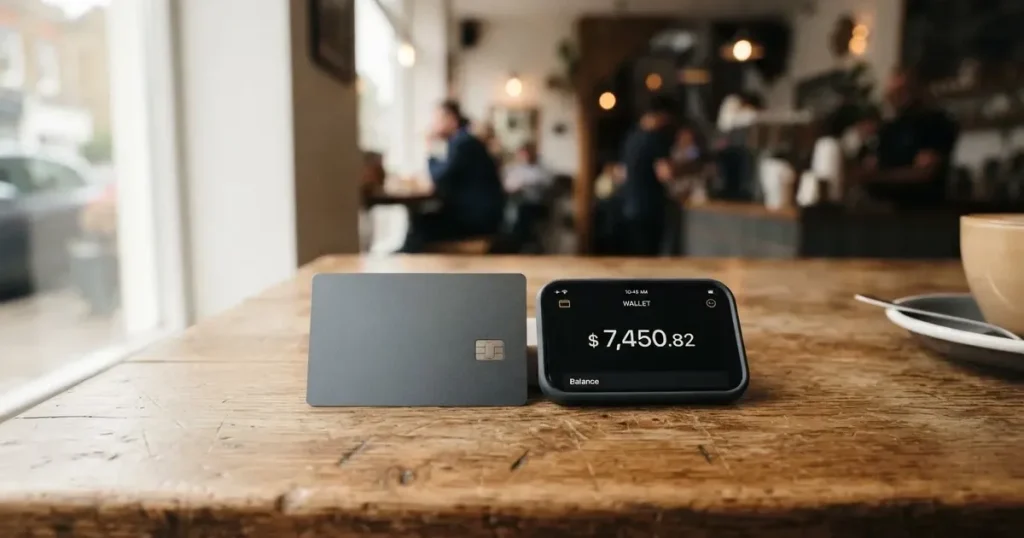
Confidopay is a Lithuania-based crypto card platform that converts your crypto into a spendable balance and hands you a Visa or Mastercard for everyday use. The card costs nothing to issue, charges 0.1% plus €1 on conversions, and tops up from BTC, ETH, USDC or BNB. But it only goes to people who already live in the EEA, has gaps in its public fee schedule, and keeps its higher verification tier deliberately vague. Here is who it suits, who it does not, and what I found when I read the terms.
The conditions described below are current as of October 28, 2026.
Verdict: 7.6 / 10 — Good Card, Narrow Door
Confidopay scores 7.6 out of 10. It is a competent, no-nonsense crypto card for one specific group: EEA residents who want to fund a payment card from a crypto balance without paying issuance fees or surrendering a percentage on every conversion. It earns its marks through free card creation, transparent 0.1% + €1 exchange pricing, broad crypto network support for funding, and a clean two-tier verification structure.
It loses points for the same reason it gains them — it is built for a narrow audience. EEA residency is mandatory; non-EEA citizens need a residence permit, Russians are excluded unless they also hold EU/EEA or Swiss citizenship, and onboarding in Hungary is suspended. The public pages also leave several numbers unstated: the monthly fee, the FX spread, the ATM fee, the card currency, and the exact trigger for the higher KYC tier’s full-access review.
Who it suits: EEA residents who hold crypto, want a card that converts at a flat 0.1% + €1, do not mind Apple Pay and Google Pay on both virtual and physical cards, and want ATM access with €3,000 monthly limits. Who it does not suit: anyone outside the EEA or Switzerland, anyone whose income or crypto flows would push them into the €15,000 monthly verification tier without warning, and anyone who needs to know the exact FX or ATM fee before they start.
Here is the score by criterion, as marked:
| Criterion | Mark | Why |
|---|---|---|
| Who can get it | 5 / 10 | Citizenship or residency in EEA or Switzerland; cards only to EEA residents; Hungarian onboarding suspended |
| Cost | 8 / 10 | Free physical and virtual issuance; 0.1% + €1 crypto exchange; monthly fee and FX fee not stated |
| Top-up options | 7 / 10 | BTC, BTC Lightning, ETH, USDC (ERC-20), USDC on Polygon, BNB on BNB Smart Chain; USDT not listed |
| Reliability and complaints | 9 / 10 | Issuer Wallester AS (Estonia); crypto services via Lightspark Payments Europe AS with VASP licence FVT000546; no incidents or complaint pages found |
| Everyday use | 10 / 10 | Virtual card instantly after verification plus a physical one; Apple Pay and Google Pay on both; €3,000/month and €350/day ATM |
| Total | 7.6 / 10 | A fair crypto card for EEA residents funding from crypto |
Who Can Get the Card
Eligibility here is narrower than the marketing suggests, and this is where most applicants stop. Natural persons need citizenship or residency in an EEA state or Switzerland. For the card itself, only EEA residents qualify — a Swiss citizen living in Switzerland cannot get a Confidopay payment card even though they can open an account. Onboarding in Hungary is suspended at the time of writing.
Nationality is screened separately from residence, which catches many applicants out. Russian citizens are excluded unless they also hold EU/EEA or Swiss citizenship. Card payments are blocked in a listed set of jurisdictions including Russia, Belarus, Ukraine (partial), the UAE and Türkiye.
If you are reading this from outside the EEA, the short answer is: this is not your card. If you are an EEA resident holding a non-EU passport — say, a UK, US or Canadian passport — you are in scope, provided you also hold a residence permit (see the verification section below).
How to Get One
Getting a Confidopay card starts with identity verification. The process is tiered.
Tier 1 (most applicants): You upload an ID card or passport if you are an EEA or Swiss citizen, a passport if you are a citizen of a third country, plus a selfie. Third-country citizens living in the EEA or Switzerland also need a residence permit. The company may ask for proof of address. Once your tier clears, you get a virtual card immediately and a physical one in the post.
Tier 2 (higher limits): This tier is triggered when you receive €15,000 in virtual-asset inflow or have €25,000 in total. At that point you must supply proof of address — a utility bill or bank statement from within three months, and mobile bills do not count — plus a source-of-funds document. You have 30 days to complete this, and you keep full access in the meantime.
There are only two KYC tiers and no paid tiers, so you either qualify at Tier 1 or you are moved to Tier 2 after you start. What the public pages do not say: how long processing takes, why an application might be refused, which countries’ physical cards ship to, how long delivery takes, whether delivery costs anything, or how to get a replacement card. If any of that matters to you, ask support before you commit — the details are simply not published.
Fees and What You Actually Pay
The headline is good: the physical card costs €0 to create and the virtual card costs €0 to create. There is no listed monthly or annual fee. Crypto exchange — converting your crypto into the balance the card spends — is priced at 0.1% plus €1. Bank transfers in cost the same 0.1% + €1, as do crypto deposits. Withdrawals are 0.1% + €1 plus the underlying network fee for crypto, and 0.1% + €1 for a bank transfer out.
Here is every fee and limit the public pages actually state. Where something is not listed, I say so rather than guess:
| Fee or limit | Value |
|---|---|
| Physical card creation | €0 |
| Virtual card creation | €0 |
| Monthly or annual fee | Not listed |
| Crypto exchange (card-spend conversion) | 0.1% + €1 |
| Crypto deposit | 0.1% + €1 |
| Bank transfer in | 0.1% + €1 |
| Crypto withdrawal | 0.1% + €1 + network fee |
| Bank transfer out | 0.1% + €1 |
| FX fee | Not listed |
| ATM fee | Not listed |
| Tier 1 card payments | €10,000/month and €10,000/day |
| Tier 1 overall outbound | €10,000/month |
| Tier 2 card payments | €15,000/month and €10,000/day |
| Tier 2 overall outbound | No overall limit |
| ATM limit (both tiers) | €3,000/month and €350/day |
Fees are quoted in euros. The card currency itself is not stated.
What three everyday payments look like
Paying a €30 grocery bill from a crypto balance. You spend €30 from the loaded balance. The card-spend conversion costs 0.1% + €1 — call it €1.03 on €30 — so roughly €31.03 leaves your crypto. The network fee for getting the crypto into Confidopay was charged earlier, at deposit. This is the cleanest use case: no monthly fee, a small flat conversion charge.
Paying a €200 subscription while travelling in a non-euro country. Your €200 hits the balance, plus 0.1% + €1 in conversion. Then the card network converts the purchase from the local currency to euros. Because the card currency and the FX fee are not disclosed, you cannot compute the final amount in advance. This is the scenario where you should email support and ask what the FX margin is before you rely on the card abroad.
Withdrawing €100 from an ATM in the eurozone. The ATM limit allows it easily (€350/day, €3,000/month). The withdrawal itself is covered by the card’s own terms, but the ATM fee is not listed, so the true cost of the cash is unknown until you read the terminal receipt.
Top Up and Funding
The good news: Confidopay supports a broad set of networks and assets. You can deposit BTC, BTC Lightning, ETH, USDC (ERC-20), USDC on Polygon, and BNB on BNB Smart Chain. Then you either convert to fiat or spend directly. USDT is not listed, which is a gap if your balance is held there.
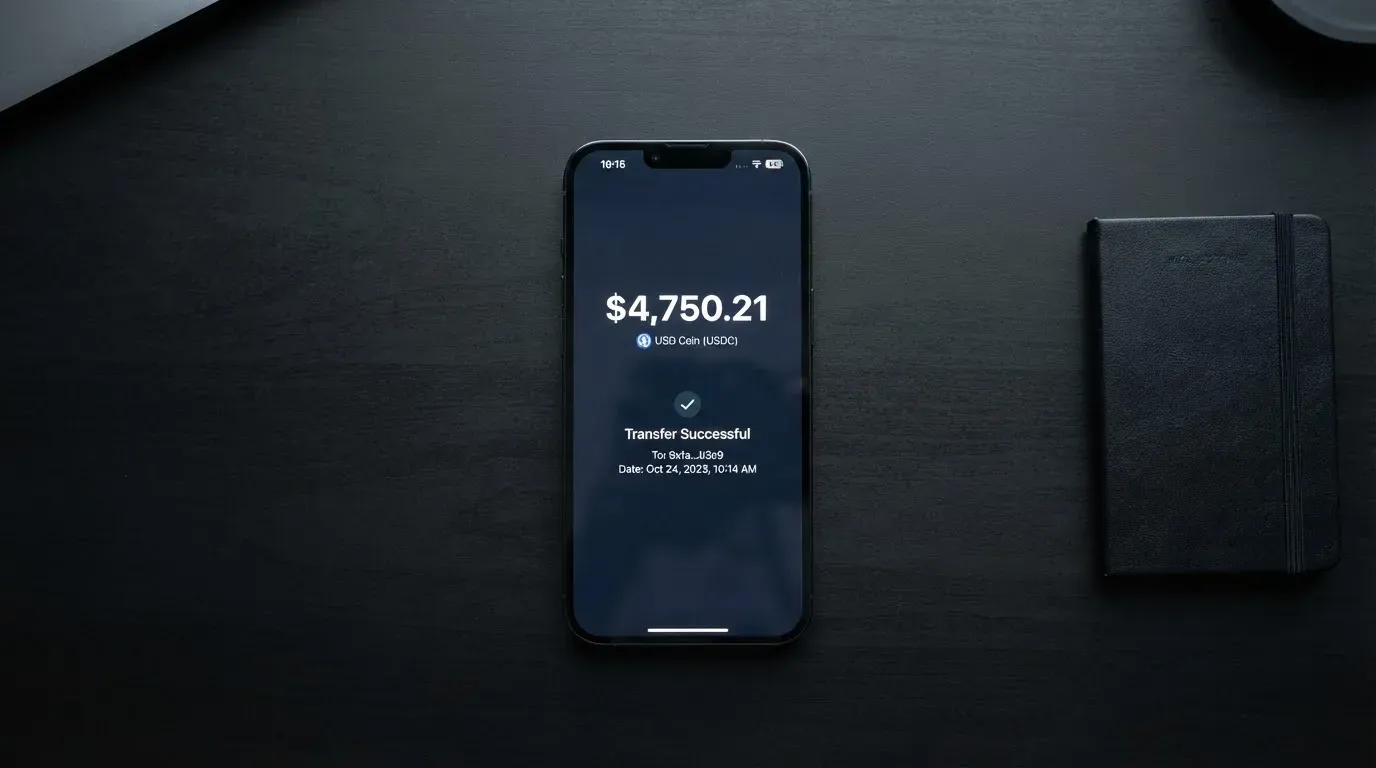
Every funding route carries the same headline charge: 0.1% plus €1 for a crypto deposit, and 0.1% plus €1 for a bank transfer in. No minimum deposit is stated.
A few things to keep in mind about funding specifically:
- Network fees are separate. On-chain gas or bandwidth for your deposit is charged by the blockchain, not by Confidopay, so the true cost of a small crypto deposit is the 0.1% + €1 plus whatever the network charges.
- Getting the network wrong is expensive. Blockchain transfers are irreversible. If you send on a network the provider does not support, or to an address belonging to a different network, the funds can be lost or need manual support recovery — with no guarantee.
- Getting the asset wrong is also a problem. If you hold a token but no gas token on that chain (for example USDT with no ETH on Ethereum), you cannot send at all.
- Withdrawals cost money too. Crypto withdrawal is 0.1% + €1 plus the third-party network fee; bank transfer out is 0.1% + €1. If you close your account, the company does not describe what happens to your remaining balance, and it can close accounts with 30 days’ notice (immediately for suspected fraud).
Once money is in, converting it to your card balance or spending it is where the 0.1% + €1 conversion fee applies.
Paying With It Every Day
This is where Confidopay scores full marks, and it is the strongest part of the offer.
- Two forms. A virtual card available immediately after verification, plus a physical card for the contactless and ATM world.
- Mobile wallets. Apple Pay and Google Pay are supported for both card types, so you can add the card to your phone’s wallet and pay without touching the physical card.
- ATM access. Available with the physical card, with limits of €3,000/month and €350/day on both verification tiers.
- No cashback. The reward angle is not mentioned, so do not expect money back from spending.
Two everyday-use details are worth planning around. First, card payments on Tier 1 cap at €10,000/month, and overall outbound also caps at €10,000/month — so a big month of spending will hit the ceiling. Tier 2 raises card payments to €15,000/month but keeps the daily card-payment limit at €10,000 and removes the overall outbound cap. Second, merchant category rules are not published: blocked categories are not stated, so you cannot tell in advance whether a given purchase type will go through.
If something goes wrong with a payment, the dispute path is documented but modest. Chargebacks are not addressed directly, though the support team acknowledges complaints within 2 business days and aims to resolve them in 7–10 business days.
There are mobile apps on Google Play and the App Store, though the badge links were not resolved and the store ratings were not read.
What Can Go Wrong
No official incidents were found for Confidopay, and no Trustpilot or Reddit page turned up in a single search. That is mildly reassuring, but it is thin evidence — a young product with a small footprint can look quiet simply because it is quiet.
The more concrete risk signals are structural:
- Custody is unstated. Confidopay lists encryption, multi-factor authentication, PCI DSS processing, real-time monitoring and instant notifications as its safeguards, but it does not say whether your crypto is held in custody and how it is safeguarded. If it is custodial, you are trusting the provider, and custodial platforms have a real history of failures — Mt. Gox (about US$350 million reported stolen, 2011–2014), Coincheck (about US$400 million, 2018), and the Ronin Network bridge hack (US$625 million, 2022).
- Foreign BIN friction. The card number identifies the issuing institution and country, and a shop can look that up. A card issued in one country can look “foreign” to a merchant in another, and some merchants decline prepaid or foreign BINs or apply extra scrutiny when the issuer country differs from your billing address.
- Address verification gaps. AVS compares the billing address a buyer types against issuer records, but it is mainly a US, Canada and UK service and is generally unavailable for foreign-issued cards — which can cause declines.
- Holds on declined payments. A declined authorisation can leave a hold on your funds for several days, typically up to 7.
- Programme-closure history. Cards in this category can be wound down. Visa terminated its global agreements with FTX in November 2022, and WaveCrest, a Visa issuer that supplied several crypto card brands, was suspended by Visa in Europe in 2018, closing all its Visa programmes. Confidopay itself can close accounts with 30 days’ notice.
- Regulatory dependence. Confidopay’s crypto services run through Lightspark Payments Europe AS under an Estonian VASP licence, and the card is issued by Wallester AS in Estonia. The platform also mentions a Virtual IBAN. It sits inside the EU’s MiCA framework — the transitional period for existing providers runs until 1 July 2026 or until a MiCA authorisation is granted or refused, whichever comes first — so the licensing picture is still maturing.
The company behind it is Confidopay UAB, Lithuania, no. 306414477, Mėsinių g. 5, Vilnius. Support runs on [email protected], with live chat Monday to Friday 9:00–17:00 CET and email replies in 24–48 business hours.
Alternatives to Consider
If Confidopay’s EEA restriction or its unlisted fees rule it out for you, these are the cards I compared it against. All three are different products solving partly the same problem.
| Alternative | Score | Card | Key fee facts | Eligibility note |
|---|---|---|---|---|
| International Visa Card | 6.7 / 10 | U.S.-issued Platinum Visa, virtual (physical “coming soon”), pays in USD | $5 one-time issuance; plans Classic free, Pro $9.00/month, Max $19.00/month; USD use free; foreign currency at “Visa exchange rate + 2% FX fee”; deposits free | Not available to residents/registrants of Belarus, mainland China, North Korea, Cuba, India, Iraq, Iran, Israel, Myanmar, Nepal, Nicaragua, Russia, Syria, Turkey, Ukraine, Venezuela, Vietnam; by residence/registration |
| UNi Card | 6.1 / 10 | Multicurrency Mastercard, spends from the UNi.Global balance | “No annual fee”; “no foreign transaction fee”; converted at live OTC rates with “no hidden exchange fees”; Spend-to-Earn up to 3% | Eligibility not stated on the pages reviewed |
| Morse | 7.5 / 10 | Fully virtual Visa prepaid debit, spends from Morse Balance “in any currency” | Paying online and contactless is free; “zero foreign exchange fees or markups” at the real Visa rate; issuance/monthly fee not stated (see Cardholder Agreement) | By residence, 18+, “supported country”; closed-beta countries need an invite code (incl. UK, Switzerland, Singapore, Japan, Australia, New Zealand, Serbia, Türkiye); cannot serve US/UK/EU/UN-sanctioned persons |
A few comparisons worth naming. Morse is the closest competitor for a virtual-only card and it advertises zero FX fees, which beats Confidopay’s unlisted FX — but its eligibility-by-residence model and invite-only list rule out many EEA applicants for now. UNi Card markets the cleanest fee story (“no annual fee or foreign transaction fee”) and offers up to 3% back, but its eligibility terms are not stated on the pages I could see, so verify before relying on it. The International Visa Card has the broadest explicit exclusion list by far (16 named countries including India and Israel), which is a much tighter geographic filter than Confidopay’s EEA-only rule. Its 2% FX fee, however, is the worst of the three for travel.
None of the three publishes its FX spread as vaguely as Confidopay does; and only Confidopay publishes its ATM limits (€3,000/month, €350/day). So the comparison cuts both ways: Confidopay is transparent on some things and silent on others.
Who I Would Recommend It To
I would recommend the Confidopay card to an EEA resident who:
- already holds crypto and wants to spend it through an ordinary payment card,
- values free card issuance and a transparent 0.1% + €1 conversion over a percentage-heavy spread,
- tops up from BTC, ETH, USDC or BNB across the supported networks,
- pays mostly in the eurozone and uses Apple Pay or Google Pay rather than cash,
- and can keep their monthly card spend under €10,000 or accept the move to Tier 2 verification.
I would steer away from it — or at least push you to ask hard questions first — if you are outside the EEA or Switzerland, if your income or crypto flows regularly exceed €15,000 a month (because that triggers the second verification tier and its documentation burden), if you plan to rely heavily on travel spending abroad (the FX fee is unlisted), if you need to know the ATM fee in advance, or if you hold your balance mainly in USDT (not supported for top-up).
Frequently Asked Questions
What is Confidopay?
Confidopay is a crypto card platform based in Lithuania (Confidopay UAB) that lets you deposit crypto, convert it to a spendable balance, and pay with a virtual or physical card. The card is issued by Wallester AS in Estonia, and the crypto and Virtual IBAN services run through Lightspark Payments Europe AS. It is designed mainly for people living in the EEA who want to fund a payment card from crypto.
Who can get a Confidopay card?
You need citizenship or residency in an EEA state or Switzerland. Payment cards specifically are only available to EEA residents, so Swiss residents do not qualify for the card. Onboarding in Hungary is currently suspended. Russian citizens are excluded unless they also hold EU/EEA or Swiss citizenship, and card payments are blocked in several listed jurisdictions.
Is Confidopay a bank?
No — Confidopay is not a bank. It is an EU-licensed crypto and payments company (Confidopay UAB in Lithuania) working with licensed partners: Wallester AS issues the card, and Lightspark Payments Europe AS provides virtual-asset services under an Estonian VASP licence. Your funds are held in a payment/e-money structure, not a bank deposit, so deposit-guarantee schemes may not apply.
How much does the Confidopay card cost?
Issuing either the physical or the virtual card is free (€0). The cost is in usage: converting crypto for card spend is 0.1% + €1, as are crypto deposits, bank transfers in, crypto withdrawals (plus network fee) and bank transfers out. No monthly or annual fee is listed, but the FX fee and ATM fee are not disclosed either.
What crypto can I use to top up?
The supported assets are BTC, BTC Lightning, ETH, USDC (ERC-20), USDC on Polygon, and BNB on BNB Smart Chain. USDT is not listed as supported. Each crypto deposit costs 0.1% + €1, on top of the blockchain’s own network fee. You can also fund by bank transfer at 0.1% + €1.
Is Confidopay card safe?
There is no official scandal on record and no Trustpilot or Reddit page surfaced, which is mildly positive but thin evidence. Confidopay lists encryption, MFA, PCI DSS, real-time monitoring and instant notifications. However, it does not disclose whether your crypto is custodial or how funds are safeguarded, so the usual counterparty risk of holding crypto with a provider applies.
How do I apply for a Confidopay card?
Verification is tiered. Tier 1 asks for an ID or passport plus a selfie (third-country citizens in the EEA/Switzerland also need a residence permit); Tier 2, triggered by €15,000 inflow or €25,000 total, additionally asks for proof of address and source of funds within 30 days. A virtual card is available immediately after verification; a physical card follows. Processing time is not stated.
What are the Confidopay card limits?
On Tier 1, card payments are limited to €10,000 per month and €10,000 per day, with a €10,000 overall monthly outbound cap. Tier 2 raises card payments to €15,000 per month and removes the overall outbound cap. ATM withdrawals are €3,000 per month and €350 per day on both tiers.
Can I use the Confidopay card abroad and with Apple Pay?
Apple Pay and Google Pay work with both the virtual and physical card, so mobile-wallet payments are straightforward. You can spend wherever Visa or Mastercard is accepted, but the FX fee is not listed, so the true cost of a foreign-currency purchase is not published. Card payments are blocked in certain listed jurisdictions including Russia, Belarus, Ukraine (partial), the UAE and Türkiye.
What happens if I need to withdraw or close my account?
Crypto withdrawal costs 0.1% + €1 plus the third-party network fee; a bank transfer out costs 0.1% + €1. What happens to a remaining balance on closure is not described. Confidopay can close an account with 30 days’ notice, and immediately if fraud is suspected — a pattern worth knowing, since crypto card programmes have been wound down before.
App and neobank cards: when one suits you – cryptocardpicker
Content created by the «cryptocardpicker» team