
OrbitX card, written for someone who wants to spend USDT or USDC from a wallet they own
 Available in US
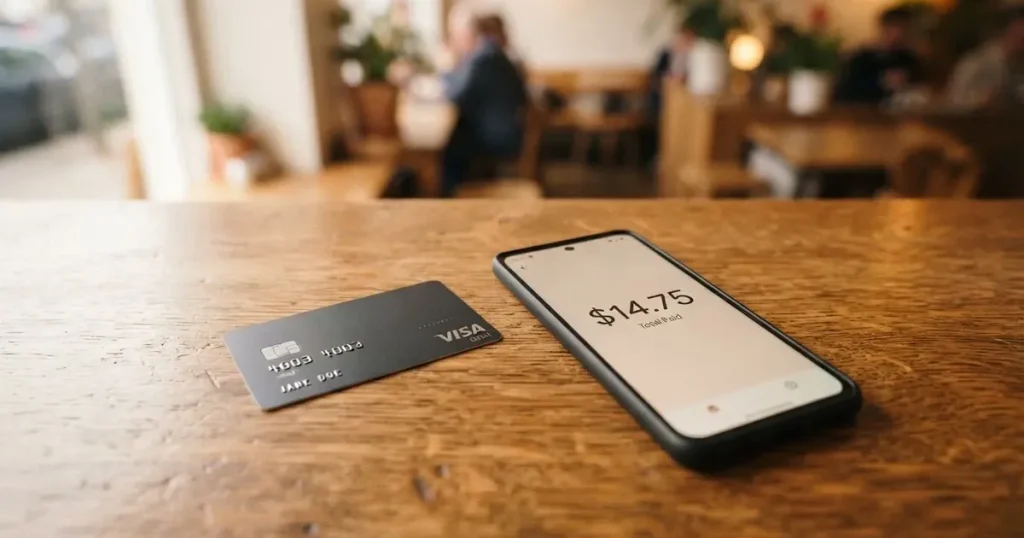
OrbitX is a Visa card built on a self-custody model: you keep your USDT or USDC in your own wallet, post it as collateral, and the card spends against that collateral. The promise is appealing if you already hold stablecoins and you do not want a card provider to hold your balance. The execution, on the other hand, leaves a lot of detail for the user to work out for themselves. The card is issued by a small Singapore company, the public fee page is partially garbled, the app has only two reviews on the App Store, and many of the things a cardholder would normally check — supported networks, KYC documents, KYC tiers, FX for consumer cards, balance withdrawal — are simply not stated.
OrbitX works as a payment card spent from a crypto balance. The following review examines the OrbitX card based on its public terms and product disclosures. What follows is a walk-through of the card’s design, its documentation, and its operational model.
The conditions described here are current as of October 28, 2026.
Verdict
OrbitX earns 5.7 out of 10 in my scoring. That is a middling mark, and it reflects a real tension in the product: the self-custody design is the most interesting thing about it, and the surrounding card programme is underdeveloped.
| Criterion | Mark | Why |
|---|---|---|
| Who can get it | 7 / 10 | International terms for most of the world; separate US terms for Americans; no published country list |
| Cost | 4 / 10 | Annual fees on the tiers; plastic and metal card prices are high; consumer FX not stated; ATM fee structure is murky |
| Top-up options | 5 / 10 | Self-custody wallet with USDT or USDC collateral; networks not named |
| Reliability and complaints | 5 / 10 | Card issuer is a small Singapore company, explicitly “not a bank”; only two App Store reviews; one user report of a stuck transfer |
| Everyday use | 8 / 10 | Virtual Visa available now; Apple Pay and Google Pay terms published; physical card listed as “coming soon” |
The card suits a narrow reader. If you already self-custody stablecoins, if you want the card to draw directly from your wallet at the moment of payment, and if you are comfortable with very sparse public information, OrbitX is worth a serious look. If you want a polished, well-documented card with clear FX, clear networks and a track record of support, this is not it.
It is also not a card for US citizens unless you specifically accept the separate US consumer terms, and the application itself asks you to confirm you are not a United States citizen for the international version. Sanctions screening under OFAC applies, as you would expect. I will get to all of that below.
Will they give you the card
OrbitX splits its users into two tracks. If you are not a US citizen, the card runs under what the company calls “International Consumer Terms”, and you sign up against those. If you are a US consumer, you fall under separate US terms. The application itself asks you to confirm that you are “not a United States citizen” when you take the international route, so do not assume the two are interchangeable.
Sanctions screening under OFAC is part of the deal in both cases. If your name or country of residence sits on a sanctions list, the card is not for you, and that part is not negotiable.
What the company does not publish is a country list. There is no “we operate in X, Y, Z” page, and there is no obvious way to check your eligibility before downloading the app and starting KYC. That is a real downside: a reader in a smaller market, or in a country whose treatment of crypto is changing quickly, has to apply just to find out. The international terms describe the company as a Singapore entity serving an international user base, but that is as specific as it gets.
The card itself is a Visa. OrbitX has two tiers: Neo, mapped to Visa Platinum, and Lux, mapped to Visa Signature, although the fee page’s table is partially garbled in places I have seen, so the mapping is not crisp. Neo allows up to 10 add-on cards; Lux allows unlimited add-on cards. Beyond that line, the difference between tiers is not well explained.
One more point that matters in this section: OrbitX explicitly says it is “not a bank or regulated financial institution”. The card is issued by a third party called Third National, under licence from Visa. So when you read the terms, you are reading two layers — the programme manager (OrbitX) and the regulated issuer (Third National). Both are real, but the boundary between them is where most regulatory weight sits.
How to get it
The signup flow lives in the OrbitXPay iOS app. Google Play does not show a listing at the time of writing, so Android users should check the company’s site for a direct download or a later release.
The app is rated 18+, which is the standard age bar for a financial product. The application process involves KYC — identity verification. App release notes reference a KYC process and resubmissions, so the company is being honest that you may be asked to re-submit documents after an initial review. What is less clear is exactly which documents are accepted and whether proof of address is required. The terms mention neither, and the public pages do not list them.
A few practical things to know:
- The virtual card is available immediately after the account is set up and KYC passes. That is the entry point most readers will use first.
- The plastic and metal cards are listed on the fee page, but the app describes the physical card as “coming soon”. I would not budget around a plastic card arriving in a specific week.
- Delivery, once the physical card is live, is described as 1 to 4 weeks depending on user location. Replacement cost is not stated.
- KYC “tiers” — for example, whether a higher spending limit requires a fuller document set — are also not stated. You may find that out only by hitting a limit.
If you are the kind of reader who likes to know the full document list and the full fee schedule before clicking “apply”, OrbitX will frustrate you. The honest version of the signup is: download the app, see what it asks, and be prepared to send follow-up documents.
Fees: what it really costs
This is the section where OrbitX loses the most points, and the reason is not that the fees are outrageous. The reason is that so much of the schedule is either garbled, not stated, or only described for the corporate product.

Here is what the company does publish, in roughly the order you would encounter each line:
| Fee or limit | Value |
|---|---|
| Annual fee, Neo | $12 (paid annually only) |
| Annual fee, Lux | $30 (paid annually only) |
| Plastic card, Neo | $100 |
| Metal card, Lux | $350 |
| Consumer FX on non-USD spend | Not stated |
| Corporate FX on non-USD spend | 1.50% |
| Corporate deposit fee | 0.50% |
| Corporate transaction fee | $0.20 |
| ATM withdrawal | “Base ATM charges + 2% + $2” (tier mapping unclear) |
| Daily and monthly spending limits | Not stated |
| Replacement card cost | Not stated |
Three things stand out.
First, the consumer FX fee is not on the public page. The corporate fee is, and it is 1.50% on non-USD spend. For a USD-collateralised card that you might use to buy coffee in a different currency, the absence of a published consumer FX number means you cannot predict the cost of a trip abroad or a foreign-currency online purchase. The Visa exchange rate is not the same thing as the issuer’s fee, and the issuer’s fee is what makes a difference at the end of the month.
Second, the card prices are steep for what you get. $100 for a plastic card and $350 for a metal card, on top of annual fees, are not unusual at the premium end of the market but they are at the high end of crypto cards. If the card’s everyday use is mostly virtual, the metal price is rarely worth it.
Third, the ATM line is genuinely confusing. “Base ATM charges + 2% + $2” reads cleanly, but it is not clear which tier it applies to, or whether the “Base ATM charges” is the operator’s fee (which is what most readers would expect) or some other base. Combined with the daily and monthly spending limits being unstated, anyone planning cash withdrawals should think carefully.
A few everyday scenarios to make these numbers concrete:
- Buying a €40 lunch in Berlin with USD-collateralised card. The Visa exchange rate is applied. The issuer FX fee for consumers is not stated. You do not know, before swiping, what the markup will be.
- Withdrawing $200 from an ATM in Mexico City. You pay the ATM operator’s fee (variable, the “Base ATM charges” line) plus 2% plus $2, which on $200 is $4 + $2 = $6 plus whatever the operator charges. That is high compared with most bank cards.
- Paying a $15 streaming subscription monthly in the US. No FX to worry about. The $12 or $30 annual fee is the largest single cost relative to the spend.
If you mostly spend in USD, on virtual, the fees are mostly the annual fee plus any card purchase. If you spend abroad or use the ATM, the absence of a published consumer FX is the real risk.
Top up: how it works
The funding model is the part of OrbitX that actually has a point of view. You do not load a fiat balance. You keep USDT or USDC in your own self-custody wallet, you post some of that as collateral against the card, and when you pay, the card liquidates the stablecoin at the point of sale to settle the transaction.
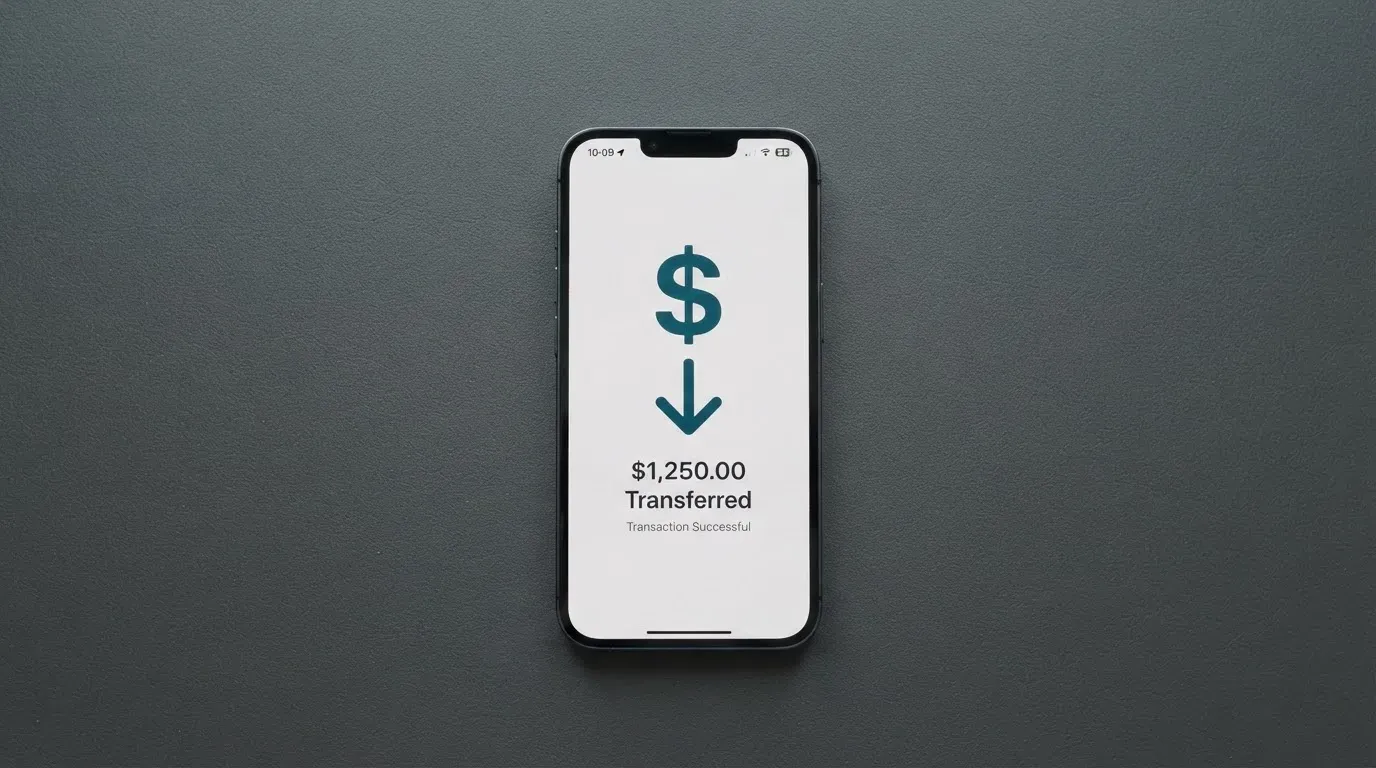
This is meaningfully different from most crypto cards. On a typical card, the provider holds your crypto or your stablecoin, converts it to fiat, parks the fiat in a card account, and you spend the fiat. With OrbitX, the funds stay in your wallet, and the conversion happens at the moment of purchase. The card does not overdraw because the spend is matched against collateral that you have already posted.
What is missing is the network. The terms and the fee page say USDT and USDC, but they do not list the blockchains on which those tokens are accepted. This matters more than it sounds. USDT and USDC exist on Ethereum, Tron, Solana, Base, Polygon, Avalanche, Arbitrum, and many others. If you send on a chain OrbitX does not support, the deposit is at risk — blockchain transfers are irreversible, and a deposit sent to a deposit address on the wrong network, or to an address of a different network, can be lost or stranded and require manual support to recover, with no guarantee of success.
Two other things in the same area:
- A “Cash Account” and a “Card Account” appear in the app, but the public pages do not explain how they relate to the collateral model. I would treat the app as the source of truth and the public pages as the backstop.
- For consumer cards, the top-up method beyond the collateral flow is not stated in the public material. If you are used to buying stablecoins inside an app and parking them, that flow is not documented for the consumer card.
On the way out, the public terms say: “Any unencumbered Collateral balances shall remain freely accessible”. There is no documented “return collateral” button or process. In practice, the unencumbered portion of your wallet is your wallet. The encumbered portion is what backs the card. The lack of a written process is not the same as a lock-up, but it is also not the same as a clear answer.
If you are already comfortable with self-custody, the model is intuitive. If you are not, this is the section to slow down on, because the rest of the card assumes you are.
Paying with it every day
For virtual spending, the card is straightforward. You get a Visa number, you add it to your checkout flows, you pay. The card is denominated in USD at the collateral level, and non-USD transactions are converted by the card network. The actual rate you receive, plus any issuer fee, is the combined cost of using the card abroad.
For mobile wallets, the terms publish Apple Pay and Google Pay language, so the card is intended to work in both. Adding a card to Apple Wallet or Google Wallet follows the usual flow once you have the virtual card details; the device-specific token replaces the card number at the terminal, which is how tokenised card payments are designed to work.
For physical spending, the situation is less settled. The app describes physical cards as “coming soon”, so the plastic or metal card in your pocket is a future feature for most readers today. That is not a deal-breaker if you can get by with a virtual card and a phone wallet, but it does mean OrbitX is, in practice, a virtual card for now.
On the merchant side, the company lists prohibited categories that include cash-like transactions such as cryptocurrency purchases, wire transfers, and betting. “Internet gambling” may also be denied. These restrictions are common across crypto cards, and they are worth checking against your typical spend if gambling, crypto purchases, or money transfer are part of your normal use.
There is no published rewards or cashback programme. The card is a spend vehicle, not a points product. If you are optimising for cashback, the section on alternatives below is the more useful read.
On the operations side, the iOS app is the primary interface. App Store rating is 2.5 out of 5 from 2 ratings as of 21 October 2026, which is too small a sample to mean much, and it is a flag rather than a verdict. Google Play does not show a listing.
Disputes are handled on a 60-day window. You can report a disputed charge within 60 days of the charge posting, the company has 10 business days to respond to a Notice of Dispute, and unresolved disputes after 30 days may go to arbitration. That is a tighter clock than some bank cards, and it puts the burden on you to read your statements quickly.
What can go wrong
A few risks are specific to OrbitX, and a few are general to cards in this corner of the market. I will keep the company-specific ones here and lean on the broader ones in the FAQ.
Reliability of the funding path. The single user complaint I have seen in public is from the App Store, and it reports a bank transfer showing as failed in the app even though the sender’s side completed. Support replied from an email that the user did not recognise as official. With only two reviews, this is anecdotal. It is also the kind of incident that matters in a self-custody model, because the card’s whole pitch is that you can see your money, and a discrepancy at the funding layer erodes that.
Issuer and programme-manager separation. The card is issued by Third National, a third party licensed by Visa, and the programme is run by OrbitX Network Group Pte. Ltd, a Singapore company at 3 Fraser Street, #04-23A Duo Tower, UEN 202448623M. The OrbitX company explicitly says it is “not a bank or regulated financial institution”. For most readers that is fine — what matters is the issuer’s licence. It is worth knowing the layer cake before you assume a regulator stands behind the brand.
Liquidation risk. The terms say the card can liquidate collateral at the point of payment, and that if a payment is unpaid within one calendar day, or if collateral falls below charges, the position can be liquidated. The exact mechanics — at what price, with what slippage tolerance, with what notice — are not described in detail. In a stablecoin-funded card this is normally uneventful, but a depeg in either USDT or USDC, however brief, would change the math. Stablecoins can depeg. Circle stopped supporting USDC on Tron in February 2024, so not every network or token pairing is interchangeable. Tether has stated that it disables tokens in wallets on the OFAC sanctions list and has frozen funds tied to illicit activity, so even holding stablecoins does not put you fully outside the reach of compliance actions.
Lack of stated security controls. The terms describe the non-custodial model — “OrbitX and Issuer will not, in any circumstance, be holding custody of your Collateral” — which is the headline safety story. What is not stated is whether the app supports 2FA, instant card freeze, spending limits, or 3-D Secure challenge by default. These are common features on competing cards, and their absence on the public page is not the same as their absence in the product, but it is a gap.
Support. Support is reachable at [email protected] and through a contact form. Hours, languages and response-time commitments are not stated. The user complaint above about a non-official-looking reply email is the kind of small signal that compounds when the support structure is not documented.
No published track record of incidents. I did not find an official incident notice, a Trustpilot page, or a regulatory action. That is mildly reassuring, but it is also a function of how small and new the product appears to be in public.
Operational drift. The fee page table is partially garbled in places I have seen, which is a small thing but also a tell. If a card provider cannot keep its public fee page coherent, the burden of double-checking falls on you.
What to take instead
OrbitX is not the only crypto card with a stablecoin-collateral design, and the alternatives are worth a look.
| Card | Score | Who can get it | What it costs | What it earns |
|---|---|---|---|---|
| Sponge | 4.9 / 10 | Country list not stated; service minimum age 13 | Fees not stated | Rewards not stated |
| Xplace | 7.7 / 10 | Country list not stated; services “not available in all jurisdictions”; Visa accepted in 160+ countries | Annual fee: Basic free, Silver $99, Gold $249, Platinum $999; “0% FX on Platinum” | Tiered cashback paid in USDC: Basic 0.5%, Silver 1%, Gold 1.5%, Platinum 2% |
| ether.fi | 6.7 / 10 | Listed jurisdictions only, e.g. Andorra, Argentina, Australia, Austria, Brazil, Canada, Cyprus, Czech Republic, France, Germany, Hong Kong, Hungary, Italy, Japan, Mexico, Poland, Portugal, Singapore, Spain, Switzerland, UAE, UK, plus 31 US states; Belgium and Ireland eligible without physical delivery | First virtual card $10 in regional-pricing countries, otherwise free for Core members; physical card fee not stated | Cashback in ETHFI, locked 7 days: Core 3% to $2,000/mo, then 1% to $3,000, then 0.5% |
A few words on each so the comparison is fair.
Sponge is a virtual card funded by USDC collateral, moved from the Sponge wallet with the card fund command. The chain example shown is Base, and the SDK mentions Base or Solana as optional chains. The card is described on the homepage as a credit card issued by Rain, a Visa Principal Member. Country availability, fees and rewards are not stated on the card pages. If you want the simplest possible read on the card, that is the simplest possible answer: not much is published.
Xplace is closer to a full bank-style product, with virtual and physical cards (Silver live, Gold and Platinum “coming soon”, delivery 7–14 business days), a Cash mode that spends a stablecoin balance, a Credit mode that borrows against holdings, and a tiered cashback programme paid in USDC. The Platinum tier advertises “0% FX”, which is a meaningful differentiator against OrbitX’s not-stated consumer FX. Country list is not stated, but Visa acceptance in 160+ countries sets a practical ceiling.
ether.fi has the most transparent country policy of the three: a published list of eligible jurisdictions, and an explicit “if your jurisdiction is not listed, you will not be able to apply”. It also has the most elaborate rewards programme, with tiered cashback in the ETHFI token, locked for seven days and then claimable. FX is by tier: Core 0.5%, Luxe 0.25%, Pinnacle and VIP none, and a 0% FX article for EUR purchases. ATM, cash advances, P2P and gambling MCCs are excluded from rewards. If you live in one of the listed countries and you want cashback, ether.fi is the obvious place to look.
For a self-custody holder specifically, the OrbitX model is more direct than any of these: you hold the keys, you post collateral, you spend. Sponge and Xplace are stablecoin-funded, but with custodial moving parts. ether.fi uses a Safe for collateral in Credit mode. None of the three is identical to OrbitX; all three are more documented.
Who I would recommend it to
After working through the public material, my honest recommendation is narrow.
OrbitX is worth considering if you:
- Already self-custody USDT or USDC, and you want a card that draws from your wallet without the provider holding your balance.
- Are comfortable with sparse public information, including no published country list, no consumer FX number, no named supported blockchain for collateral, and no documented collateral-withdrawal flow.
- Spend mostly in USD, on virtual cards and via Apple Pay or Google Pay, and you are not relying on the physical card arriving in a specific week.
- Are not a US citizen, or you are a US citizen willing to sign under the separate US consumer terms.
- Are not on an OFAC sanctions list, and you do not expect to be.
OrbitX is not for you if you:
- Want a fully transparent fee schedule with a published consumer FX rate and a clear list of supported networks.
- Need a physical card now, today, with a known delivery window.
- Want a card with a published rewards or cashback programme.
- Want 24/7 live support, multi-language, with stated hours and response times.
- Are a heavy ATM user, because the fee stack on withdrawals is high and the tier mapping is unclear.
- Want the protections of a deposit guarantee scheme, which OrbitX explicitly is not.
The product has a clear thesis — self-custody, stablecoin collateral, point-of-sale liquidation — and the thesis is sound. What it does not yet have is the documentation, the operating history, and the consumer-fee transparency to match the more established programmes in the same space. Read the terms, ask the support team the questions I have flagged, and only then commit funds.
Frequently asked questions
What is the OrbitX card?
The OrbitX card is a Visa card linked to a self-custody wallet. You keep USDT or USDC in your own wallet, post some as collateral, and the card spends against that collateral by liquidating the stablecoin at the point of sale. The card is issued by a third party under a Visa licence.
How does the OrbitX card work?
You hold stablecoins in your own wallet, post collateral against the card, and each card payment is settled by selling the collateral at the moment of the transaction. The card itself is a standard Visa, virtual today, with plastic and metal listed as “coming soon” in the app.
Is OrbitX a bank?
No. OrbitX states in its own terms that it is “not a bank or regulated financial institution”. The card is issued by a third party called Third National under a Visa licence, while the programme is run by OrbitX Network Group Pte. Ltd, a Singapore company.
Who owns OrbitX?
The publicly stated operator is OrbitX Network Group Pte. Ltd, registered at 3 Fraser Street, #04-23A Duo Tower, Singapore, with UEN 202448623M. Ownership beyond the corporate registration is not detailed in the public material.
Is the OrbitX card available in my country?
The card does not publish a country list. International consumers are served under “International Consumer Terms” and US consumers under separate US terms, with an attestation that you are not a US citizen for the international card. The honest answer is that you may need to start the application to find out.
How do I apply for the OrbitX card?
The application is in the OrbitXPay iOS app. You go through KYC, get a virtual card on approval, and can add it to Apple Pay or Google Pay. The plastic and metal cards are listed on the fee page but the app describes physical cards as “coming soon”.
Does the OrbitX card require KYC?
Yes. The app release notes describe a KYC process and the possibility of resubmission. The exact document list and whether proof of address is required are not stated in the public terms.
How do I top up the OrbitX card?
You do not top up in the traditional sense. You post USDT or USDC from your self-custody wallet as collateral against the card, and the card liquidates that collateral at the point of sale. The supported blockchains for the deposit are not named in the public material.
How do I add the OrbitX card to Apple Wallet?
The terms publish Apple Pay language, so the card supports it. Add the card through the Wallet app using the standard flow with the virtual card details, authenticate with your bank or card issuer as prompted, and the device will hold a tokenised version of the card.
Is the OrbitX card safe?
The headline safety story is non-custodial: “OrbitX and Issuer will not, in any circumstance, be holding custody of your Collateral”. Beyond that, published security controls such as 2FA, instant card freeze, and 3-D Secure are not stated. The public track record is thin, with only two App Store reviews and a single user report of a transfer-status discrepancy. Treat it as a young product and size your exposure accordingly.
Credit and cashback cards: choosing between them – cryptocardpicker
Content created by the «cryptocardpicker» team