
The crypto card that pays for groceries but does not tell you who issued it
 Available in US

The Kem card is a Visa payment card you load with USDT and spend like an ordinary debit card, aimed at people who live in Kuwait, Bahrain, the UAE or Qatar and find a normal bank card hard to get or hard to use. The idea is sound and the headline fees look excellent: no issuance fee, no monthly or annual fee, and no FX fee stated. Then you read further and find that a lot of what you actually need to know — which networks to send USDT on, what the limits are, who issues the card, what happens if you need to withdraw — is not on the company’s public pages at all. I scored it 5.8 out of 10. That is not a bad card. It is a card with a strong offer and a thin public record, and the gap between those two things is the whole review.
The conditions described here are current as of October 28, 2026.
Verdict: 5.8 out of 10
Here is where the score comes from, criterion by criterion, with the numbers exactly as I worked them out.
| Criterion | Mark | Why |
|---|---|---|
| Who can get it | 6 / 10 | Visa accepted in 150+ countries, sold to residents of Kuwait, Bahrain, UAE, Qatar; 13-country restricted list taken from the starting data, not from the company’s own page |
| Cost | 8 / 10 | No issuance fee, no monthly or annual fee, “No FX fees”; a 1% conversion figure comes from the starting data and is not confirmed on the page; unofficial sources list ATM and top-up as free |
| Top-up options | 4 / 10 | USDT from any wallet or exchange, plus gold and crypto swaps to USDT in the app; networks are not named |
| Reliability and complaints | 3 / 10 | Operator KEM TECHNOLOGIES HOLDING (ADGM), issuer and licences not named; Trustpilot 2.5 out of 5, complaints about failed withdrawals and unanswered support, KYC waits up to four weeks |
| Everyday use | 7 / 10 | Virtual card immediately, physical card on request; unofficial reports say Apple Pay works and Google Pay is unsupported |
| Total | 5.8 / 10 | A cheap card with an excellent fee headline and almost no published detail behind it |
Who this suits. If you live in one of the Gulf countries, you already hold USDT or buy it easily, you mostly spend rather than withdraw, and you have had friction with a regular bank card, this is worth trying. The cost structure is genuinely better than most cards in the category: no monthly fee, no annual fee, no FX fee as advertised. If your money is already in stablecoins and your spending is ordinary day-to-day purchases, that is the case the card was built for.
Who this is not for. If you need to know exactly who issued your card, which regulator licenses them, what your deposit insurance looks like, what your daily limit is, or what happens to a withdrawal when it goes wrong, this card will frustrate you. Those answers are not merely inconvenient to find here — they are absent from the public pages, and the people who post about using it report the exact problems you would worry about: money that does not arrive, support that does not answer, verification that takes weeks. If your financial life depends on predictable answers rather than low fees, choose a card that publishes them.
Will they give you the card?
The short answer is: probably, if you are in the right place and not on the wrong list, and probably slowly.
The card is Visa, so it works “wherever Visa is accepted” — the company puts that at 150+ countries. But who is *offered* the card is narrower than where it would work. It is marketed to residents of Kuwait, Bahrain, the UAE and Qatar. That is a Gulf-focused product, not a global one, despite the global-sounding “150+ countries” line, which describes acceptance, not eligibility.
The restricted-country list includes Belarus, China, Cuba, India, Iran, Iraq, Israel, Russia, Syria, Turkey, Ukraine, Venezuela and Vietnam. The company’s blog page does not state this list, so check the terms or contact support to confirm your country’s eligibility before you apply.
Then there is the KYC question, which is where most applications actually live or die. The app asks you to “provide your identity documents for KYC verification”. Which documents, whether proof of address is needed, what the age threshold is — the official page does not say. The card’s KYC tiers are not stated either. Unofficially, third-party reporting from 2026 describes the flow as requiring email, phone, ID, proof of address and a selfie, with setup claimed at under three minutes. The same source reports reviewers seeing delays of up to four weeks. I have not confirmed either half of that; the official page says nothing either way. Take the three-minute figure as marketing and the four weeks as the risk.
The important thing to understand about KYC is that it is not optional and not perfunctory. Regulated businesses are required to verify customers and assess risk under anti-money-laundering law, including ongoing transaction monitoring and reporting of suspicious activity. In the EU that due diligence covers name, address, date of birth, nationality and identity documentation, a sanctions check, the purpose of the relationship, and whether you are a politically exposed person. In the US the customer identification programme requires name, date of birth, address and an identification number, with electronic systems also validating proof-of-address documents.
Two consequences follow, and both matter for you. First, nationality is recorded and screened separately from residence, because sanctions screening is often applied to citizenship and country of birth as well as country of address — so a citizenship issue can block an application even when you live somewhere eligible. Second, if due diligence cannot be completed, rules require the institution to stop, not to improvise. That is why accounts get frozen pending documents rather than quietly approved. If you are in a Gulf country with a straightforward residence and no sanctions exposure, this should be routine. If your document situation is complicated, expect it to become a matter of evidence rather than a matter of time.
How to get it
The advertised path is short, which is not the same as easy. You sign up in the app, you upload identity documents, and once verification clears you get a virtual card immediately. A physical card is “available upon request” and supports tap-to-pay. That is the entire official description.
What is missing from that description is most of what people actually ask. Where the physical card is delivered, how long delivery takes, whether it costs anything beyond the free issuance, and what happens if it is lost or stolen — none of that is stated. If the physical card is the reason you are looking at Kem, you are buying it on trust.
So the practical sequence, as far as the public information supports: download the app, register, submit your identity documents for KYC, wait out verification, and use the virtual card in the meantime. That last point is the real reason to bother with the virtual one — you are not waiting a month with nothing. If your bank already declined you once, the honest comparison is not “card versus no card” but “a card that works in a week versus a card that works never”.
One thing worth checking before you commit: whether your app store account can reach the service, and whether the identity documents you have on hand are the ones it will accept. The company does not publish a document list, so this is a question for their support rather than one you can answer from this page.
Fees: what it really costs
This is the strongest part of the card, and also the part where I have to be most careful about what is official. The company states no issuance fee, no monthly or annual fee, and no FX fees. Everything beyond that is thinner than you would like.
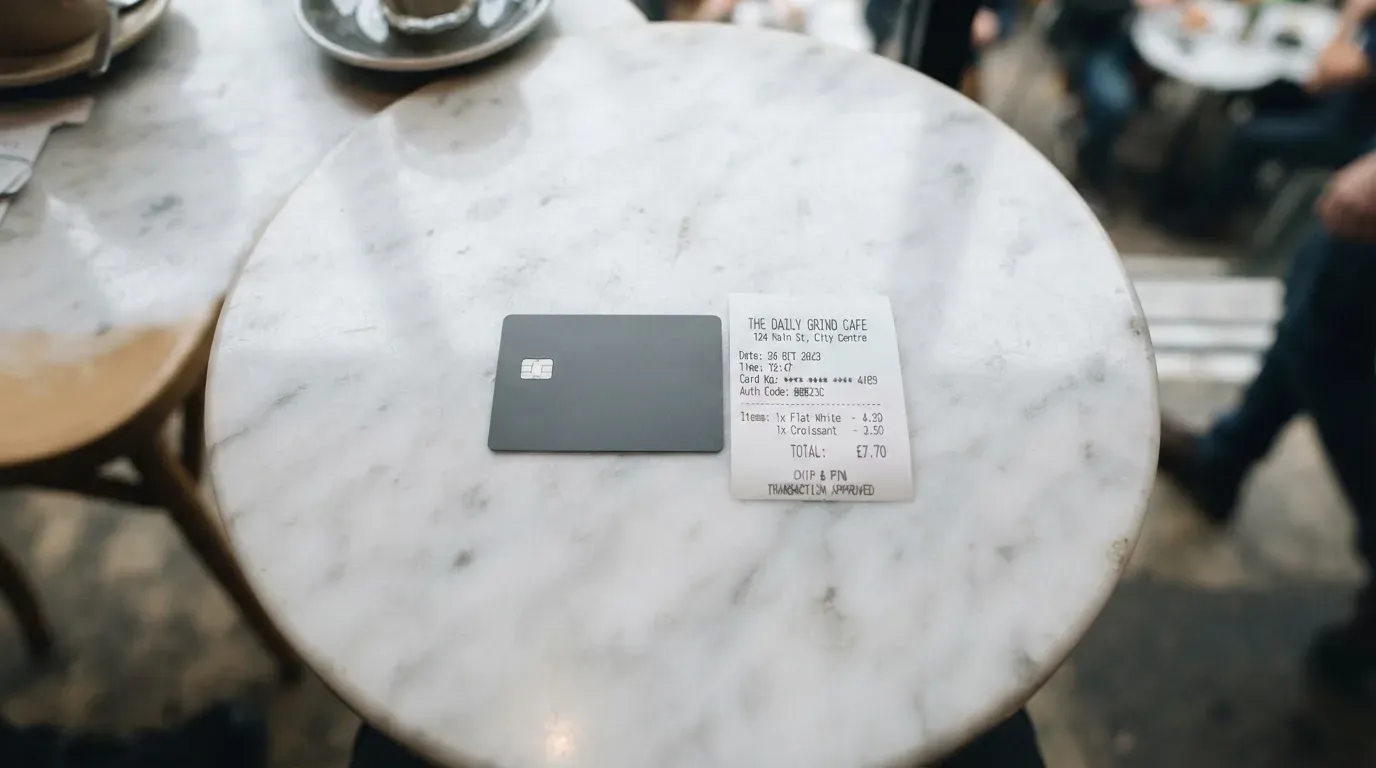
| Item | What the card says | Notes |
|---|---|---|
| Issuance | “No issuance fees” | Stated by the card |
| Monthly fee | “no monthly or annual fees” | Stated by the card |
| Annual fee | None | Stated by the card |
| Foreign exchange fee | “No FX fees” | Stated in the blog intro |
| Conversion fee | 1% on purchases | From the starting data; not confirmed on the page |
| ATM fee | Free | Unofficial (cryptocards.so, 2026) |
| Top-up fee | Free | Unofficial (cryptocards.so, 2026) |
| Withdrawal limits | Daily, monthly and ATM all “Unlimited” | Unofficial (cryptocards.so, 2026) |
| Declines | Free | Unofficial (cryptocards.so, 2026) |
| Card currency | Not stated | Official page is silent |
| Single card named | “Kem Infinity Card” | No tiers described |
| Currencies named in app | Swaps between crypto and Gold, KWD, SAR, AED | App Store listing |
Two things to notice. The first is that the card itself notes that public fee information is limited. That is the company telling you, in effect, that this table is as complete as it can be. The second is the 1% conversion figure. It is the number that most directly affects your day-to-day cost, because every purchase that converts crypto into fiat runs through it, and it is not confirmed by the card’s own page. If your spending is mostly in a currency the card holds natively, it may not apply; if you are converting, budget for it and check.
Now three everyday payments, to make this concrete.
Coffee, roughly 5 units in a currency the card holds. You tap, the authorisation goes through, and if the balance is already in the right currency this is the clean case — no FX fee stated, no conversion. The cost to you is whatever the merchant charges.
A weekly grocery run, larger, still in your local currency. Same mechanics at a different scale. The exposure here is not the fee but the merchant side: a prepaid-style card can be declined by some shops, and prepaid or foreign BINs are declined more often because the merchant’s system can look up the card’s type and issuing country. A card issued in one country can look “foreign” to a shop in another, and address verification, which is mainly offered in the US, Canada and the UK, is generally unavailable for foreign-issued cards, which can cause declines in those markets.
A purchase in a currency you do not hold, say a subscription billed in USD. Here the FX and conversion lines actually bite: the card states no FX fees, but a 1% conversion figure appears in the starting data and is unconfirmed. A declined authorisation can also leave a hold on your funds that stays for several days, typically up to seven — so a failed attempt is not always a no-op.
A useful category note before you sign up: gambling merchants sit under a merchant category code that many issuers block by policy rather than by law, and the blocked list varies by issuer. Kem does not publish a blocked-category list. So if that matters to you, it is an unanswered question, not a “no”.
Top up: how the balance gets there
You deposit Tether from any wallet or exchange to your Kem balance. That is the official sentence, and it is doing a lot of work.
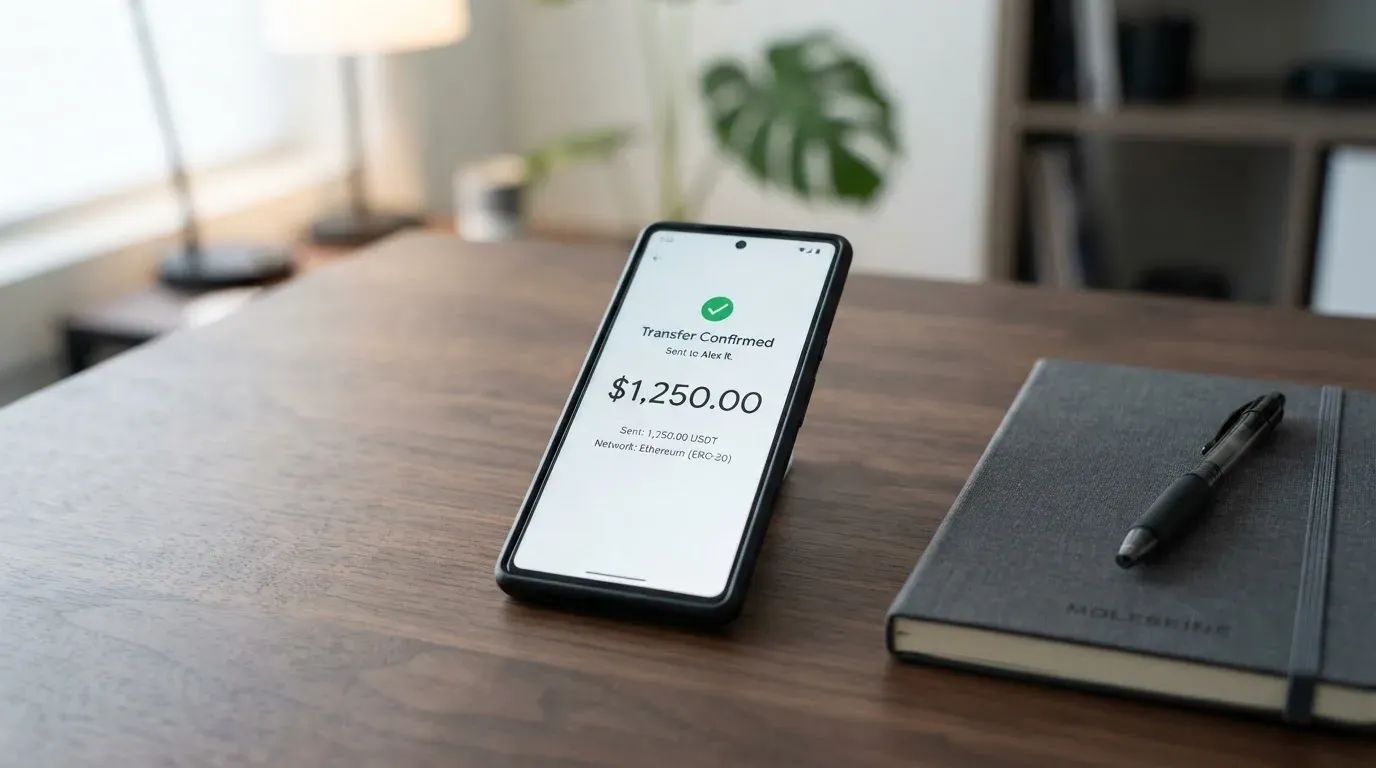
Inside the app you can swap gold or crypto into USDT before spending, which is the one genuinely distinctive feature here — the App Store listing describes swaps between crypto and gold and into KWD, SAR and AED. For someone with gold holdings, that is a real use case.
What is not stated is the part that causes the most damage: which networks. Fees, minimums, who pays the network fee, and whether fiat top-ups exist at all — none of that is on the card’s pages. A third party quoting the FAQ mentions variable network and administrative fees for external withdrawals, which is a hint rather than a schedule.
The network question matters more than it sounds, so here is why. Blockchain transfers are essentially irreversible. A deposit sent on a network the provider does not support, or to an address belonging to a different network, can be lost entirely, or need manual support recovery with no guarantee of success. This is not a rare edge case; it is the single most common way people lose money to crypto card providers. Tether has issued USDT on networks including Ethereum, Tron, Solana, Polygon and Avalanche, and the same token on the wrong network is a different thing from the right one.
Also relevant to the network choice: on Ethereum, fees are paid in ETH, so a wallet holding USDT but no ETH cannot send. Tron prices internally with bandwidth and energy, often burning TRX. If you are moving funds from an exchange, check what the exchange will let you send and what you hold to pay for it.
Two further gaps. Withdrawal is not described on the official pages at all, though the App Store listing warns that transfers and withdrawals “may be subject to review or network delays”. And the currencies you can hold are not officially stated — the app listing implies KWD, SAR and AED, and an unofficial source says the card supports those three, but the card itself does not confirm it. If you hold a balance in a currency you cannot spend, the conversion problem comes back to you.
My practical advice: make one small test deposit before you move anything meaningful, on a network you have verified rather than one the interface suggests. And keep the money you need this month somewhere other than the card balance.
Paying with it every day
In use, the card behaves like an ordinary prepaid Visa. Virtual card immediately, physical on request, tap-to-pay. You spend from the balance you have loaded, which means the card cannot overdraw past it — a real, if unglamorous, protection that people with unpredictable cash flow appreciate.
The mobile wallet story is worth knowing before you rely on it. The company’s blog says nothing about Apple Pay or Google Pay, and says nothing about blocked merchant categories either. Unofficially, third-party reporting from 2026 says Apple Pay is supported and Google Pay is marked unsupported, though one user reports Google Wallet works for them. In practice: expect Apple Pay to work, treat Google Pay as a gamble, and read that as “the evidence is thin” rather than “it is broken”. When a wallet token works, it works well — the card number is replaced with a device-specific number stored in the Secure Element rather than on Apple’s servers, and each payment uses a one-time dynamic code, which is genuinely safer than handing over the plastic.
Rewards, in the sense people usually mean it, do not appear. The official page states nothing about cashback or bonuses. Unofficially, there is reported to be no cashback and no welcome or referral bonus, with staking at 5.5% APR instead — which is a different thing, with different risk, and not a reason to apply.
The app exists on iOS and Android. On the App Store it sits at 4.2 out of 5 from 31 ratings, read on 2026-10-21. Thirty-one ratings is a very small base, so treat the number as a signal rather than a verdict; I did not read the Google Play listing.
One last everyday concern: disputes. The card does not state a chargeback process or what happens when goods do not arrive. In the US, debit card reversal rights come from Regulation E and credit card rights from Regulation Z, and prepaid-card coverage varies and should not be assumed. If you are outside the US, your protection depends on the issuer’s country and the network’s rules. I would spend small on anything I could not replace easily.
What can go wrong
This is where the score drops hardest, and I want to separate what I can verify from what I am relaying.
The company and the issuer. The operator is KEM TECHNOLOGIES HOLDING Ltd, registered in the Abu Dhabi Global Market, company number 000008598. The App Store seller is KEM Company for Electronic Payment and Settlement Services, the developer is KEM LLC. The company states plainly that “Kem is a crypto financial platform, not a bank”. And here is the gap: the card issuer and its licences are not stated. A Czech entity, Kemfinity s.r.o., appears in the starting data and third-party sources only — I could not confirm it from the card.
That matters more than it might seem, because of how these things are structured. A card payment passes through three parties: the network (Visa) routes the messages and sets the rules, the issuer — a bank or licensed e-money institution — holds the card programme, and the crypto brand is often only a programme manager and front end. So “it is a Visa card” tells you the network accepted it, not who is on the hook for your money. A card itself is regulated separately from the crypto side, which is why a crypto card often depends on two licences: one for the payment service and one for custody and exchange.
Custody. Your balance sits in a custodial app balance — the provider holds the credentials, so you have to trust them. Self-custody cards keep funds in your own wallet until the moment of payment; this is not one of those. Custodial platforms have a real record of failure: Mt. Gox, roughly US$350 million reported stolen between 2011 and 2014; Coincheck, about US$400 million in 2018; Ronin Network, US$625 million in 2022. And in this category specifically, programme closures happen — Visa terminated its global agreements with FTX on 13 November 2022 and the FTX US debit card was wound down by its issuer, and WaveCrest, a card issuer supplying crypto brands, was suspended by Visa in Europe in 2018 with all its programmes closed.
What safeguards are claimed. A PCI DSS compliance badge, assessed by ControlCase, and that is the extent of it. Two-factor authentication, instant card freeze, and any safeguarding or segregation of customer funds: not stated. This is worth weighing against the general rule for e-money providers, which must safeguard customer funds by segregating them in dedicated accounts or insuring them — and even then those funds are not bank deposits and may not be covered by a deposit guarantee scheme. Whether Kem is subject to that rule, as a company in the Abu Dhabi Global Market, is not something the card tells me.
The complaints. This is user-reported, gathered from Google Play and review aggregators in 2026, not an official record, and I have no official incidents to set against it. The reports: failed withdrawals and stuck funds; deductions on failed transactions; no support replies; KYC waits of up to four weeks; cards still pending after verification. On Trustpilot the score is 2.5 out of 5 from five reviews, all of them one-star, read on 2026-10-21. The dated specifics: failed withdrawals October to November 2025, unanswered support October to November 2025, scam allegations from October 2025 to April 2026, and a slow card application in December 2025.
Five reviews is five reviews, and a scam accusation is an accusation. But the pattern is consistent enough that I would plan around it rather than dismiss it: treat withdrawals as slow by default, keep a buffer, and do not treat a support silence as resolved.
On the company news. The blog says Tether “has invested directly in Kem”. I found no dated events to attach to that, so I am telling you it is stated without more, and I would not treat a strategic investment as a guarantee of anything.
What to check first. If you apply, check three things in this order: how long verification actually takes for someone like you, whether support answers when you write to the contact page, and what the card issuer is — ask directly, and treat a non-answer as an answer.
What to take instead
I compared Kem against three alternatives in the same category, on what each of them publishes.
| Kem | International Visa Card | UNi Card | Morse | |
|---|---|---|---|---|
| Score | 5.8 | 6.7 | 6.1 | 7.5 |
| Network | Visa | Visa (US-issued Platinum, virtual) | Mastercard | Visa prepaid, fully virtual |
| Who it is for | Residents of Kuwait, Bahrain, UAE, Qatar | Not residents/registrants of a 16-country list | Not stated | Residents of supported countries, 18+, 140+ countries via P2P |
| Issuance | Free | $5 one-time (virtual) | Not stated | Not stated |
| Monthly | None | None; Pro $9.00/month, Max $19.00/month | None | Not stated |
| FX | “No FX fees”; 1% conversion unconfirmed | “Visa exchange rate + 2% FX fee” | No foreign transaction fee | Zero FX fees or markups, real-time Visa rate |
| In-app payments | Free | Free in USD on all plans | Assets converted at live OTC rates | Paying online and contactless is free |
| Rewards | None stated; staking 5.5% APR unofficial | No cashback stated | Spend-to-Earn up to 3% | Not stated |
International Visa Card scores 6.7 and publishes more than Kem does, which is its advantage even where the numbers look worse. It is a U.S.-issued Platinum Visa, virtual, paying in USD; the physical card is “coming soon”. Eligibility is blocked for residents or legal registrants of Belarus, mainland China, North Korea, Cuba, India, Iraq, Iran, Israel, Myanmar, Nepal, Nicaragua, Russia, Syria, Turkey, Ukraine, Venezuela and Vietnam, with FATF grey-list countries reviewed case by case — and the rule is by residence or registration, not citizenship. But it charges a 2% FX fee on foreign currency where Kem advertises none, and it is virtual-only today. If predictable published terms matter more than headline cost, it is the safer of the two to read.
UNi Card scores 6.1. A multicurrency Mastercard that spends from the UNi.Global account balance, with no annual fee and no foreign transaction fee, assets converted at live OTC rates and “no hidden exchange fees”. Its one substantive advantage over Kem is the rewards: spend-to-earn up to 3%. Its weakness is silence where it counts — who can get it is not stated, as are the funding route, issuance fee, and physical/virtual availability.
Morse scores 7.5, the highest of the four, and on publishing detail it is ahead of Kem in every respect. It is a fully virtual Visa prepaid debit spending from a balance “in any currency”, with zero FX fees or markups at the real-time Visa rate and free online and contactless payments. Eligibility is by residence, not citizenship: 18+, resident in a supported country, and it cannot serve anyone subject to US, UK, EU or UN sanctions. Several countries are in closed beta and need an invite code, including Australia, Hong Kong SAR China, Japan, New Zealand, Serbia, Singapore, Switzerland, Thailand, Türkiye and the United Kingdom, so the list is not simply open. Its distinguishing structural feature: the wallet is self-custodial, which means the self-custody risk profile discussed earlier applies instead of the custodial one. Fees, deposits, tokens and blockchain support are all spelled out on its pages. The catch is that many of its strongest markets are invite-only.
So where does that leave Kem? It is not the worst card here. It is the one with the least published information, which for a card that holds your money is a real cost even when the fees are not.
Who I would recommend it to
Go ahead if you live in Kuwait, Bahrain, the UAE or Qatar; you already hold USDT and buy it easily; you spend far more than you withdraw; you have been declined a normal bank card or simply want one that works from a crypto balance; and you are comfortable checking the network yourself before every deposit. In that situation Kem is cheap and probably fine, and the virtual card means you are useful while the paper one is in transit.
Skip it if you need to withdraw money regularly; you cannot get a normal bank card and want the reassurance of a regulated bank behind the card; you are outside the Gulf and are guessing at eligibility; you hold gold and are tempted by the swap feature without knowing how the pricing and custody work; or you are the kind of person who needs a published fee schedule, a named issuer, and a dispute process before you hand over money. For those people, read the Morse and International Visa Card pages above and see which of them publishes what you need.
If you do apply, do three things. Make one small test deposit on a verified network before committing anything real. Keep a working balance somewhere other than the card, because withdrawal is the step people report failing. And write to the contact page and see how long the reply takes — before you need it, not after.
That is genuinely all I can recommend, because it is genuinely all the card tells the public. A 5.8 feels right for a product whose fee structure is unusually good and whose disclosure is unusually thin.
Frequently asked questions
What is Kem card?
Kem is a crypto payment card that turns a USDT balance into ordinary Visa spending. You deposit Tether from any wallet or exchange into your Kem balance, and the card pays out from that balance like a prepaid Visa. It is marketed to residents of Kuwait, Bahrain, the UAE and Qatar, and works wherever Visa is accepted. The company describes itself as a crypto financial platform, not a bank.
Is Kem a bank, and who actually issued the card?
No, it is not a bank — the company’s own words. The operator is KEM TECHNOLOGIES HOLDING Ltd in the Abu Dhabi Global Market, company number 000008598, and the app is listed under KEM Company for Electronic Payment and Settlement Services. The card issuer and its licences are not stated on the public pages, which is the single biggest gap I found in this review.
Does Kem require KYC, and how long does it take?
Yes. The app asks you to provide identity documents for KYC verification, which is standard under anti-money-laundering rules. The card does not state which documents, whether proof of address is required, or what the age threshold is. Unofficial 2026 reporting describes setup in under three minutes but also reviews mentioning waits of up to four weeks.
How much does the Kem card cost to hold and use?
The card states no issuance fee, no monthly fee, no annual fee, and no FX fees — that is the strongest part of the offer. A 1% conversion figure appears in the starting data but is not confirmed on the card’s page, and the card itself notes that public fee information is limited. Unofficial sources list ATM, top-up and decline fees as free.
How do I top up the Kem card?
You deposit USDT from any wallet or exchange, and you can swap gold or crypto into USDT inside the app before spending. The networks you can send on are not stated by the card, which is the risk: a transfer on an unsupported network can be lost or need manual recovery with no guarantee. Make one small test deposit first.
Can I use Kem in Apple Pay or Google Pay?
The card’s own pages say nothing about either wallet. Unofficial 2026 reporting says Apple Pay is supported and Google Pay is marked unsupported, though one user reports Google Wallet working for them. Expect Apple Pay to work, treat Google Pay as uncertain, and confirm in the app before you depend on it.
Are there limits on spending or ATM withdrawals?
The official pages state no limits. Unofficial 2026 reporting lists daily spend, monthly spend and ATM withdrawals as all “Unlimited”. Since that is not confirmed by the card, I would not plan around unlimited anything — especially withdrawals, which are also the step that user reports describe as failing most often.
Is the Kem card safe to use with my money?
It is a custodial setup: your balance sits with the provider, so you are trusting them rather than holding keys yourself. The card shows a PCI DSS compliance badge assessed by ControlCase but does not specify security features like 2FA, card freeze or fund safeguarding. Custodial platforms in this sector have a history of large failures, so treat the balance as money you could lose.
Is Kem card worth it?
Worth it if you live in the Gulf, already hold USDT, spend much more than you withdraw, and want cheap everyday card use without a monthly fee. Not worth it if you need regular withdrawals, a named issuer and licences, a published fee schedule, or a dispute process — for those, the cards that publish their terms in full are the better bet.
Can I withdraw money from Kem, and what about deleting my account?
Withdrawal is not described on the official pages, though the App Store listing warns that transfers and withdrawals “may be subject to review or network delays”. User reports from 2025 and 2026 describe withdrawals that failed or stayed stuck and support that did not reply. Treat a withdrawal as slow by default, and keep your working balance outside the card.
App and neobank cards: when one suits you – cryptocardpicker
Content created by the «cryptocardpicker» team