
Bitstack card, scored out of 10, with the full fee list and a honest look at who it actually works for
 Available in US
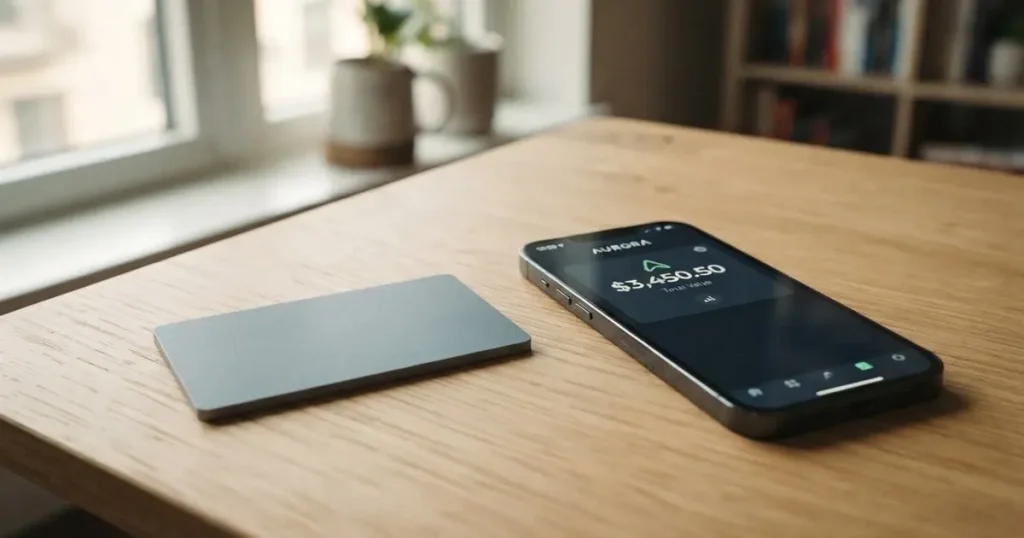
The Bitstack card is a Visa Classic debit card that lets you spend euros from a Bitstack cash account, with the money originally coming from selling bitcoin inside the app. It is built for people who already keep savings in bitcoin and want a normal-looking payment card on top of that balance, rather than a standalone crypto card with its own wallet and rewards scheme. In this review I go through who can actually get one, what it costs in everyday use, and where the limits sit, and I end with the alternatives if you do not live in France.
Conditions on this page are current as of October 28, 2026.
Verdict
The card lands at 5.5 out of 10. That score reflects a product that is well run on the regulatory and support side but narrow on the ground: it works only for residents of France, including the overseas territories, and the card itself is a fairly ordinary euro debit card. Where it stands out is the pricing for small, routine spending, where the absence of a monthly subscription and a 1,000 euro no-fee foreign-currency band make a real difference, and in the regulation stack behind it. Where it falls down is geography, the thin choice of top-up routes, and the very small euro caps on what you can actually move through the card in a month.
If you live in France, already hold bitcoin on Bitstack, and want a simple way to convert and pay in euros without a subscription, this card fits. If you want a multicurrency crypto card, a virtual card for online subscriptions, or anything you can use outside the EU, you will hit a wall early. The Standard plan is the most interesting offer; the Plus plan only earns its monthly fee if you are also using the higher international payment cap and the boosted bitcoin savings rate.
| Criterion | Mark | Why it scores that way |
|---|---|---|
| Who can get it | 2 / 10 | France only, including overseas territories, with a gradual rollout and a waitlist for other EU countries on the starting data. |
| Cost | 8 / 10 | Card is 9.99 EUR plus delivery, no monthly subscription, no FX fee up to 1,000 EUR a month, free ATM withdrawals up to 200 EUR or five a month, 0.70% to top up via Apple Pay and Google Pay. |
| Top-up options | 3 / 10 | The card spends euros from the Bitstack cash account, and you fund it by selling bitcoin in the app; other coins and the supported networks are not named on the card pages. |
| Reliability and complaints | 9 / 10 | Bitstack Digital Assets SAS, AMF registration A2025-003, agent of Xpollens (an ACPR-supervised e-money institution), card issued by BPCE, Trustpilot 4.3 from 1,417 reviews. |
| Everyday use | 5 / 10 | Physical Visa Classic, Apple Pay from 30 June 2026, ATM access; Google Pay in development, virtual card not yet available. |
| Total | 5.5 / 10 | A clean, well-regulated euro debit card for French residents who already hold bitcoin on Bitstack, with weak coverage outside that group. |
In short, the Bitstack card is well suited to French residents who save in bitcoin and want to spend euros. It is poorly suited to anyone who needs a multicurrency card, a virtual card, or a card they can use outside France.
Who the Bitstack card is available to
The card is offered exclusively to residents of France, and the French wording on the official pages makes the geographic limit the first thing you read. That includes the overseas territories, so a resident in Martinique or Réunion is on the same footing as a resident in Paris. The rollout is gradual: the order option appears inside the Cash tab of the app once the account is ready, which means not every French account will see it immediately. Other EU countries appear on a waitlist in the starting data the company has published, which is the closest signal to when the card might expand, but the card pages do not give a date.
A few things follow from this that are worth taking in before anything else:
- The eligibility rule is residence, not citizenship. If you are a French citizen living abroad you do not qualify; if you are a foreign citizen with French residence you do, subject to the gradual rollout.
- The KYC step is not spelled out on the card pages. There is no list of documents, no proof-of-address requirement and no stated minimum age. Trustpilot users have reported slow identity verification, including one rejection in July 2026 where the user said the reasons were not shared. Bitstack’s reply pointed to regulatory requirements without further detail, which is the right answer legally but leaves the user in the dark.
- The card is delivered only in France, including overseas territories. Production usually starts the day after confirmation, then metropolitan France takes up to 10 business days from production, and overseas territories up to three weeks. The delivery fee itself varies by address and the amount is not published.
If you fall outside this group, the card is not for you. There is no work-around: a French address is the entry condition.
How to get the Bitstack card
The order flow is simple and runs entirely inside the Bitstack app. You open the Cash tab, choose the card order, pick a PIN, enter the delivery address, see the total (the 9.99 EUR card price plus the variable delivery fee), and pay with your Bitstack cash account, a bank card, Apple Pay or Google Pay. There is no separate web form, and the steps you see in the app are the steps you take.
A few details matter in practice:
- The card you receive is a physical Visa Classic debit card. It is not a metal card and not a virtual card; a virtual card is planned but not yet available on the date this was checked.
- The card spends euros from the Bitstack cash balance, and that balance is funded by selling bitcoin inside the app. You do not transfer coins to the card, you sell them and the proceeds sit in the cash account.
- The card currency is euro. Fees are listed in euro, and the help centre states that foreign-currency payments go through at the Visa rate, with an FX fee only above 1,000 EUR per month.
- Multi-currency balances are not stated. If you wanted to hold pounds or dollars on the card, the card pages do not promise that.
If you do not already have a Bitstack account, the first step is the exchange account itself, which will go through the standard identity checks the company runs. Those checks are not described on the card pages, but they are the part users most often mention in complaints, so build time for them into your expectations.
Fees: what the Bitstack card really costs
This is the strongest part of the offer, and the part the score for cost reflects. The headline is that the card itself is 9.99 EUR plus a variable delivery fee, there is no monthly subscription, and the everyday fees are small or zero under modest limits. The 0.70% charge to top up via Apple Pay and Google Pay is the most important number, because that is the fee you pay to move money onto the card in the first place.
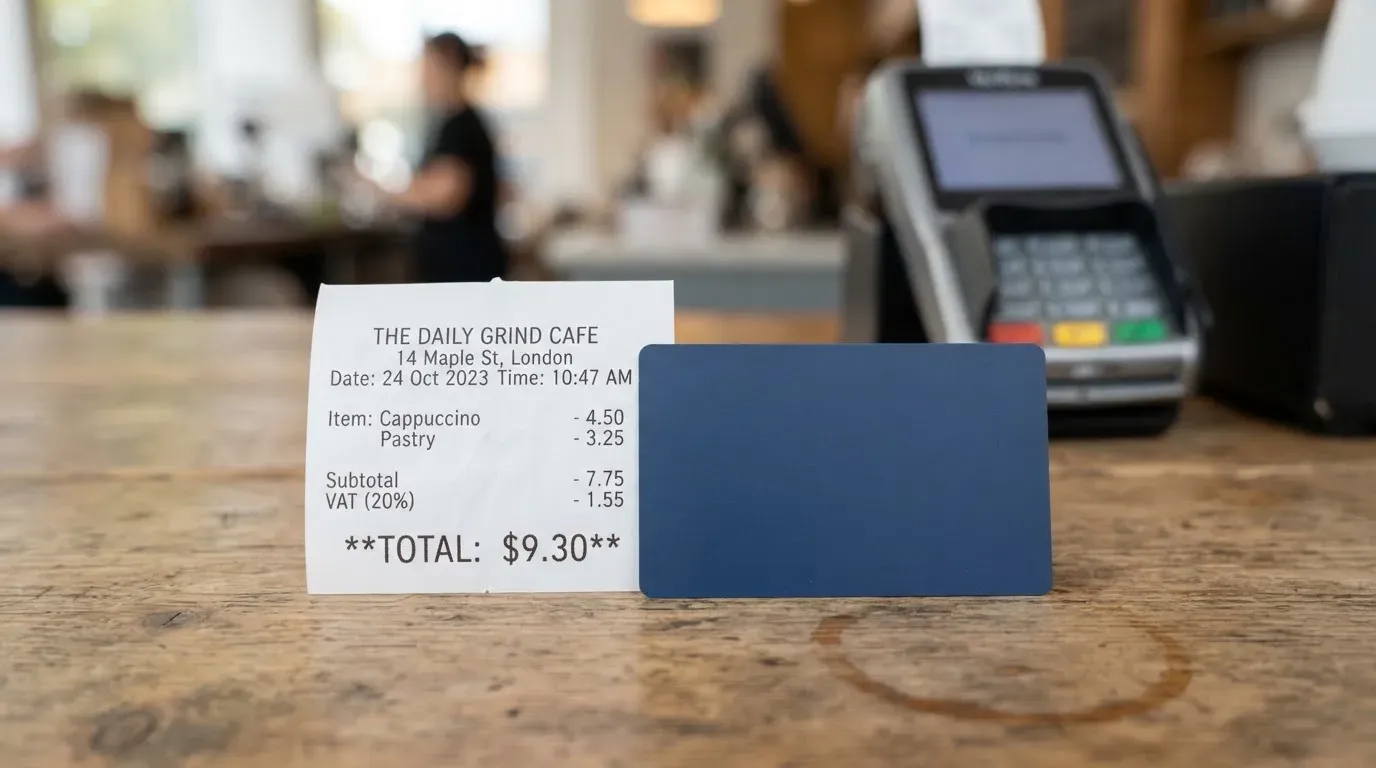
The Plus plan changes a few of these numbers for a 9.99 EUR monthly fee. It lifts the international payment cap to 3,000 EUR a month, lowers the bitcoin purchase fee to 0.75% flat, and raises the boosted Stackback rate to 1.5%. The Standard plan is the cheaper option for most users, since it carries no monthly fee at all; the Plus plan only earns its fee if you are regularly hitting the Standard caps.
| Fee or limit | Standard | Plus |
|---|---|---|
| Card issuance | 9.99 EUR plus delivery | Included with the monthly plan; Plus annual includes card and delivery at no extra cost |
| Monthly subscription | None | 9.99 EUR |
| Foreign-currency fee | None up to 1,000 EUR per month, then about 1% on the excess at the Visa rate | None up to 1,000 EUR per month, then about 1% on the excess at the Visa rate |
| Top-up via Apple Pay or Google Pay | 0.70% | 0.70% |
| Bitcoin purchase fee (cash account funded) | 1.5% under 250 EUR, 1.25% from 250 to 1,000, 1% over 1,000 | 0.75% flat |
| ATM withdrawal | Free up to 200 EUR or 5 withdrawals per month, then the higher of 1 EUR or 1% | Free up to 200 EUR or 5 withdrawals per month, then the higher of 1 EUR or 1% |
| International payment cap | 1,000 EUR per month | 3,000 EUR per month |
A few everyday situations are worth walking through, because the same payment can carry very different fees depending on how you set it up.
A 40 EUR lunch in Paris paid by tapping the physical card. There is no fee. The card is a euro debit card, the merchant is a euro merchant, and the spend falls inside every limit. This is the case the card is built for.
A 600 EUR hotel booking in Tokyo paid through Apple Pay. The 600 EUR sits inside the 1,000 EUR monthly no-FX band, so the conversion to yen goes through at the Visa rate with no extra fee. The only fee you paid was the 0.70% top-up via Apple Pay when you loaded the cash account, so 4.20 EUR on a 600 EUR load. That is the cheapest realistic way to use the card abroad, and it is competitive with mainstream travel cards.
A 1,200 EUR flight paid in dollars the same month. The first 1,000 EUR converts at the Visa rate. The remaining 200 EUR carries about 1% on the excess, so roughly 2 EUR on the extra, again at the Visa rate. The Apple Pay top-up fee still applies, so the all-in cost is about 8.40 EUR for the load plus 2 EUR for the FX excess. If you travel often, that 1,000 EUR ceiling is the line to watch.
Top up: how to fund the Bitstack card
The funding model is unusual and worth understanding before you order. The card does not have a wallet address for bitcoin or any other coin. The card spends euros, those euros sit in the Bitstack cash account, and the only way described on the card pages to put money into that cash account is to sell bitcoin inside the app. The deposit coins and the networks the app supports for those deposits are not named on the card pages.
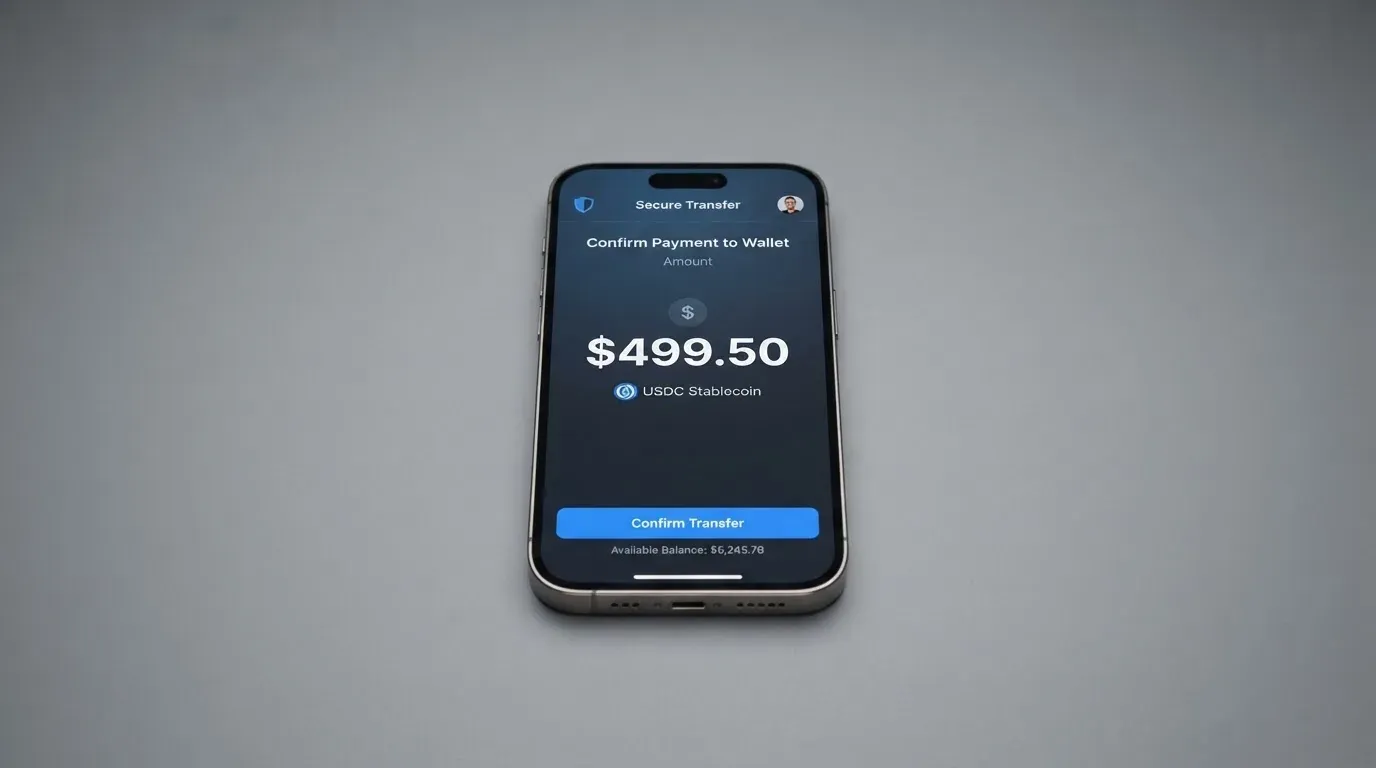
There is a second way to add money to the cash account: paying in from a bank card, Apple Pay or Google Pay, with a 0.70% fee on all plans. That is the path most users will use day to day, because it does not require selling bitcoin for a small grocery run. The fee is the same on Standard and Plus.
A few details to know:
- There is no stated minimum top-up. The card pages do not give a figure.
- The card pages do not say who pays the network fee on a bitcoin sale. In practice the fee is folded into the price you receive when selling, but the company has not published a rule.
- Apple Pay for the card itself went live on 30 June 2026 in app version 3.10.0. Google Pay for the card is in development and not yet available.
- Withdrawals from the cash account back to a bank are not described on the card pages. Trustpilot users mention bank-transfer withdrawals opened through support, but no fee or minimum is published. If you plan to move balances back out, build that as a support ticket rather than a self-service flow.
The practical effect is that the card is euro-first and bitcoin-second. The card never holds bitcoin. The card never holds pounds, dollars or stablecoins. Every payment is a euro payment that started life as a euro in the cash account.
Paying with the Bitstack card every day
In day-to-day use the card behaves like a plain Visa Classic debit card, and that is the point. You tap it at a shop, insert it at a restaurant, hand it over for a hotel deposit, or pull cash from an ATM. Apple Pay went live on 30 June 2026, so on iPhone you can also pay with the phone. Google Pay is in development; the iOS app on the France App Store sits at 4.79 from 11,152 ratings, read on 2026-10-21.
A few features shape the everyday experience:
- Stackback pays a small bitcoin reward once a purchase fully settles. The base rate is 0.1% on Standard and 0.15% on Plus, with a minimum of one satoshi. If you have automatic savings turned on, recurring buys and round-ups boost the rate: up to 1% on Standard and 1.5% on Plus, capped by the previous month’s savings, then falling back to the base rate. Round-ups have counted toward the Stackback tier since 10 August (2026). Excluded categories are P2P and top-ups, ATM, gambling and cash equivalents, loan repayments, government payments and some securities purchases.
- Blocked merchant categories for spending are not stated on the card pages, only the Stackback exclusions. In practice you should expect the usual set of gambling blocks; the card pages do not promise a specific list.
- Spending caps: card payments are capped at 5,000 EUR per month. ATM withdrawals are capped at 200 EUR per week and 1,000 EUR per month in total. Limits cannot be changed. The Standard plan international cap is 1,000 EUR per month, the Plus plan is 3,000 EUR per month.
- Disputes start with an optional freeze in the app, then a mandatory card opposition by phone at +33 9 69 32 00 61, telling the line the card was issued by BPCE, then a separate call to +33 9 69 39 03 49 to open a contestation case handled by BPCE. The time frame is 13 months from the payment settlement date. That is a lot of phone calls for a routine dispute, so it is worth knowing before you need it.
The everyday feel is conservative: a euro debit card, a modest cashback, a physical card that arrives in a few days, and a wallet that works on iPhone but not yet on Android. The planned virtual card would change the online-shopping experience; until it lands, every payment is the physical card or Apple Pay.
What can go wrong with the Bitstack card
The product is well regulated, but no card is risk-free, and the risks here fall into three buckets: company, market and operational.
The company side is the strongest. Bitstack Digital Assets SAS is registered in Aix-en-Provence under trade-register number 899 125 090, with offices in Meyreuil, France. The firm is licensed as an agent of Xpollens, an electronic money institution authorised by ACPR, and is registered with the AMF as a crypto-asset service provider under number A2025-003. The card is issued by BPCE, the retail-banking group behind Banque Populaire and Caisse d’Epargne. The card’s funds are not the same as bank deposits, and there is no built-in insurance, but the regulatory stack is real. Trustpilot reads at 4.3 out of 5 from 1,417 reviews on 2026-10-21.
The market side is the usual crypto risk. The card holds euros, not coins, but the euros came from a bitcoin sale, and the bitcoin price can move sharply between the moment you sell and the moment the merchant settles. The other market risk is exchange-rate risk on foreign-currency spending: the Visa rate is applied at the time of the transaction, and the FX fee above 1,000 EUR per month is about 1% on the excess.
The operational side is what users actually complain about. The themes on Trustpilot in 2026 are:
- Withdrawal-to-bank and support delays, reported in July 2026.
- An identity-verification rejection without explanation, reported in July 2026, with the company replying that decisions follow regulatory requirements and that specifics are not shared.
- Card delivery delays, reported in June 2026, mostly around the overseas-territory timelines.
- Low limits and the fact that Apple Pay was not accepted at some merchants, reported in June 2026, before Apple Pay went live at the end of that month.
These are typical of a regulated card programme in a single country, and the support tone on Trustpilot is generally professional. The lesson is to plan ahead: build in time for KYC, build in time for the card to arrive, and do not assume the support phone lines are open evenings and weekends, since hours are not published.
The safety features in place are standard: every payment needs strong authentication, the card can be frozen instantly in the app, limits are fixed and cannot be raised, and the funds are held through Xpollens, the regulated e-money partner. There is no built-in insurance beyond what the e-money framework requires.
What to take instead of the Bitstack card
If the geography or the limits rule the Bitstack card out, there are three alternatives worth a look. Each is a different shape: a US-based virtual Visa for stablecoin users, a multicurrency Mastercard, and a virtual Visa on a self-custody wallet. The scores are taken from the comparison research and are not compared head to head; they are starting points for your own check.
| Card | Score | Shape | Why you might pick it | Why you might not |
|---|---|---|---|---|
| International Visa Card | 6.7 / 10 | US-issued Platinum Visa, virtual, USD; physical coming soon | Card use in USD is free on all plans, no fee on any kind of deposit, USDC and USDT deposit free at 1:1, plus USD/EUR/SEPA/SWIFT/FedNow | Not available to residents of Belarus, mainland China, North Korea, Cuba, India, Iraq, Iran, Israel, Myanmar, Nepal, Nicaragua, Russia, Syria, Turkey, Ukraine, Venezuela or Vietnam; purchases blocked in North Korea, Cuba, Iran, Russia, Syria, Ukraine, Venezuela; 2% FX fee on top of the Visa rate |
| UNi Card | 6.1 / 10 | Multicurrency Mastercard on the UNi.Global balance | No annual fee, no foreign transaction fee, conversions at live OTC rates with no hidden exchange fees, up to 3% spend-to-earn rewards | Eligibility, funding and issuance fee not stated on the card pages |
| Morse | 7.5 / 10 | Virtual Visa prepaid debit, real-time Visa rate, no FX markups | USDC, USDG and EURC on Solana deposit free; Bitcoin, USDT, Ethereum and other tokens can be deposited; self-custodial wallet, app in 140+ countries | Card is fully virtual for now, fees not stated on the card page, several countries on a closed beta requiring an invite code |
The decision tree is short. If you are a French resident with bitcoin on Bitstack, stay on the Bitstack card. If you want a virtual card, a multicurrency wallet or a card that works outside the EU, pick the alternative that matches your location and your funding coin.
Who I would recommend the Bitstack card to
I would recommend the Bitstack card to a specific person. If you are an adult resident of France, including the overseas territories, you already have a Bitstack account, you hold bitcoin there and you want a way to convert and pay in euros without paying a monthly subscription, this is a sensible card. The 9.99 EUR one-off cost is small, the first 1,000 EUR of foreign-currency spending a month is free, and the ATM fee structure is friendly to occasional cash withdrawals. The Standard plan is the one to start on; the Plus plan is a step up only if you are regularly using the 3,000 EUR international cap and the boosted Stackback.
I would not recommend it to anyone who needs a virtual card for online subscriptions, since the virtual card is planned but not available. I would not recommend it to anyone outside France, since the card is residence-gated and the waitlist for other EU countries does not come with a date. I would not recommend it to anyone who wants to pay directly from a stablecoin balance, since the card spends euros and euros only. And I would not recommend the Plus plan as a default, since 9.99 EUR a month is a real cost and the benefits only matter if you push the limits.
The honest summary is that the Bitstack card is a well-run, well-regulated euro debit card wrapped around a bitcoin sale. It does that job cleanly for a narrow audience, and it does not pretend to be a multicurrency card or a global card. If you fit the audience, it is a clean way to spend the bitcoin you already hold; if you do not, the alternatives above are the places to look.
Frequently asked questions
What is the Bitstack card?
The Bitstack card is a physical Visa Classic debit card that spends euros from a Bitstack cash account. The cash account is funded by selling bitcoin inside the Bitstack app, and the card is offered to residents of France, including the overseas territories, with a gradual rollout.
How does the Bitstack card work?
You fund the cash account either by selling bitcoin or by paying in with Apple Pay, Google Pay or a bank card at a 0.70% fee. The card then spends that euro balance wherever Visa is accepted, with no foreign-currency fee on the first 1,000 EUR per month and an ATM allowance of 200 EUR or five withdrawals a month.
Is Bitstack a bank?
No. Bitstack Digital Assets SAS is registered as a crypto-asset service provider with the AMF under number A2025-003 and operates as an agent of Xpollens, an electronic money institution authorised by ACPR. The card itself is issued by BPCE, the Banque Populaire and Caisse d’Epargne group, and card funds are not bank deposits.
Who owns Bitstack?
Bitstack Digital Assets SAS is a French company registered in Aix-en-Provence under trade-register number 899 125 090, with offices in Meyreuil, France. The company operates as an agent of Xpollens for e-money services and is registered with the AMF for crypto-asset services.
Is the Bitstack card available in my country?
On the card pages, the card is available exclusively to residents of France, including the overseas territories. The rollout is gradual and other EU countries appear on a waitlist, with no published date for expansion. If you do not live in France, the card is not currently offered to you.
How do I get the Bitstack card?
In the app, open the Cash tab, choose the card order, pick a PIN, enter a delivery address in France, see the total of 9.99 EUR plus delivery, and pay with the cash account, a bank card, Apple Pay or Google Pay. The card is physical, not virtual, and a virtual card is planned but not yet available.
Does the Bitstack card require KYC?
The card pages do not list the documents needed. Bitstack runs the standard identity checks on its account, and Trustpilot users have reported slow verification, including a July 2026 case ending in rejection where the user said the reasons were not shared. Bitstack’s reply pointed to regulatory requirements without further detail.
How do I top up the Bitstack card?
You top up the Bitstack cash account by selling bitcoin in the app or by paying in with Apple Pay, Google Pay or a bank card at 0.70%. The card itself does not accept coins directly, and the supported networks for bitcoin deposits are not named on the card pages.
Is the Bitstack card free?
The card costs 9.99 EUR plus a variable delivery fee. The Standard plan has no monthly fee, while the Plus plan costs 9.99 EUR a month and adds a higher international cap, a lower bitcoin purchase fee and a higher Stackback rate. ATM withdrawals are free up to 200 EUR or five a month.
How do I add the Bitstack card to Apple Wallet?
Open the Bitstack app and follow the prompts to add the card to Apple Wallet. Apple Pay support for the card went live on 30 June 2026 in app version 3.10.0. Google Pay for the card is in development and not yet available.
App and neobank cards: when one suits you – cryptocardpicker
Content created by the «cryptocardpicker» team