
Orbi spends crypto through a Mastercard, but publishes almost no numbers
 Available in US
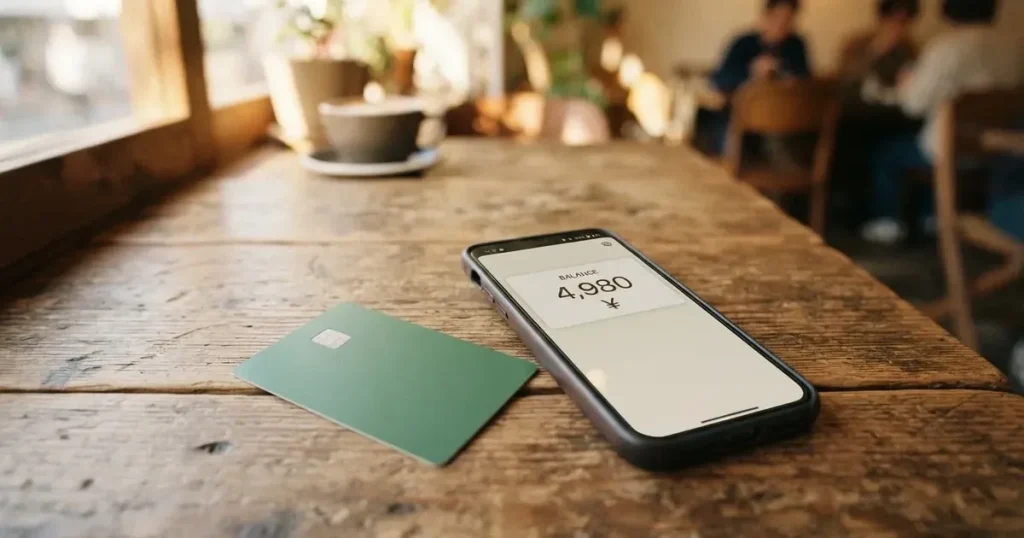
If you have been reading about crypto payment cards and trying to work out which ones are real enough to use, the Orbi card will probably not give you the reassurance you are looking for. That is not because I found anything wrong with it — it is because Orbi’s own public pages leave the most decision-relevant details unstated. The fees are not published. The networks your stablecoins need to arrive on are not named. The countries you can spend in are not listed. What is published is a solid, narrow proposition: a Mastercard you fund with stablecoins, available to people in Mexico, with a credit line secured against your digital assets.
The conditions described here are current as of October 28, 2026.
Who it is built for is fairly clear from the announcement of 8 Oct 2026, when SoFi Tech Solutions, Orbi and Mastercard announced a crypto-linked card programme in Mexico: Mexican residents who already hold stablecoins and want to spend them, and who want the option of borrowing against those holdings rather than selling them. If that is you, the concept is sound and the backing is real. If you are anywhere outside Mexico, or you want to see a fee schedule before committing, you will finish this page with the same question I have.
Verdict: 5.0 out of 10
The score is not a punishment. It reflects a card that appears competently built and plainly marketed at a specific audience, on top of a public information record that leaves a reader unable to check the economics.
| Criterion | Mark | Why |
|---|---|---|
| Who can get it | 2 / 10 | “Servicios disponibles únicamente en territorio mexicano” |
| Cost | 5 / 10 | Fees and card price are not disclosed; the terms link to a fees section without amounts |
| Top-up options | 6 / 10 | Works with USDG, USDT and USDC; credit line secured by digital assets; networks not named |
| Reliability and complaints | 7 / 10 | Orbi Payments, S.A.P.I. de C.V.; BIN sponsor and infrastructure SoFi Tech Solutions, with Mastercard; no complaints or reviews found; licences not named |
| Everyday use | 6 / 10 | Instant virtual Mastercard, cash withdrawal at ATMs; Apple Pay and Google Pay not disclosed |
| Total | 5.0 / 10 |
Two things drive this score more than anything else. The first is the country limit: services are available only in Mexican territory, and the terms go further, saying some services are limited to Mexican citizens or permanent residents. That is the narrowest eligibility of any card in this comparison, and it is the single biggest reason I would not recommend Orbi to someone reading this from outside Mexico. The second is cost transparency. The terms point you to a fees section on the website, and that is where the disclosure ends — no amounts appear on the pages I could see. A card that will not tell you what it charges cannot be value-judged, and I will not invent a judgement.
For a young product that is a neutral fact rather than a good one: there is no track record either way, and no user base has yet written one.
Who it does not suit: anyone outside Mexico; anyone who plans their spending around a rewards rate (the card page does not mention cashback at all); anyone who needs a physical card in the post; anyone who wants to add it to a phone wallet (Apple Pay and Google Pay are not disclosed); and anyone who needs to know the FX markup before their first purchase rather than after it.
Will they give you the card?
Only in Mexico. Orbi states that “Servicios disponibles únicamente en territorio mexicano” — services are available only in Mexican territory. The terms add a further layer: some services are limited to Mexican citizens or permanent residents. So there are two filters, not one. The territorial one decides where you must be; the citizenship or residence one decides who inside Mexico may use the restricted services. Which services fall into that restricted group is something the pages I saw do not spell out.
This is worth pausing on, because it inverts the usual crypto-card question. Most people ask “which countries does this card work in?” For Orbi the honest answer is one. There is no country list to check yourself against, no EU-wide licence route, no “available worldwide except…” wording. If you are not in Mexico, the honest answer is that there is no next step on Orbi’s own site — and I am not going to invent a workaround, because using a Mexican address you do not hold is both a terms breach and a good way to have an account frozen during identity checks.
For a Mexican resident, your age also matters: users must be at least 18. One thing Orbi does not tell you is whether proof of address is required, or which specific documents will be accepted — the verification description names email, mobile number, data and documents, without listing them. I also could not find stated identity-verification tiers or a step-by-step application flow. The help centre does have a “Verificación de Identidad” section with five articles, which suggests the process exists in some detail; it just is not summarised on the page I read.
The company behind the card is Orbi, with SoFi Tech Solutions as BIN sponsor and Mastercard as the network. Licences are not named on the pages I checked. That is not a disqualifier — naming a regulator is not the same as holding a licence, and plenty of legitimate programmes describe themselves in exactly these terms — but it does mean you would be taking the regulatory picture on trust.
How to get it
The card itself is a Mastercard managed by Orbi, not issued in its own name, which is the normal arrangement for a programme manager. The virtual card is issued instantly, according to the page. That is genuinely useful if you need something to pay with today.
What I could not find is any mention of a physical card on the card page. News around the programme says physical and virtual cards are planned, but “planned” is not the same as available, and I will not count a physical card in your plan until I see it on the page. Card currency is not stated. Delivery timing, obviously, is also not stated, because there is no physical card whose delivery could be timed. Activation steps are not laid out in what I found, and neither is the verification sequence beyond the general statement about email, phone, data and documents.
So the honest shape of the answer is: if you are in Mexico and over 18, the on-ramp described is an email, a mobile number, personal data and documents, then an instant virtual Mastercard. Everything else about the sequence — how long it takes, what happens if a document is rejected, whether you get a physical card in the same flow — I could not confirm from the public pages, so you would be finding out by attempting it.
What it really costs: Fees
This is the weakest part of the picture, and I want to be precise about what “weakest” means. It is not that the fees are high. It is that I cannot see them, so I cannot tell you whether they are high.

| Fee or limit | What Orbi publishes |
|---|---|
| Issuance | Not stated |
| Monthly fee | Not stated |
| Conversion | Not stated |
| FX | Not stated |
| ATM withdrawal | “Retiro de efectivo en cajeros” listed as a use; fee and allowance not stated |
| Daily and monthly limits | Not stated |
| Card currency | Not stated |
The terms say fees are listed in the fees section of the website — and no amounts appear there on the pages I could read. Cost gets 5 out of 10 for exactly that reason. A card with transparent costs you can argue with is worth more to you than a card with costs you discover later, even if the later costs turn out to be low.
One term does stand out, and it cuts both ways. Orbi may set or change limits per transaction and per day, week or month without prior authorisation. That is a legitimate commercial right, and it is also a changeable variable in your budget: a limit that moves without warning is a limit you cannot plan around. On a card whose whole premise is spending a crypto balance you control day to day, that flexibility cuts deeper than it would on an ordinary bank card.
I could not find any tiers — the page shows a single card — so there is no free-versus-paid structure to compare, and nothing resembling an annual fee line.
Let me walk through three ordinary payments, because that is where unknown fees actually hurt.
Coffee in Mexico City. You tap the virtual card, the merchant bills you, and Orbi converts your stablecoin balance to fiat at the point of sale — the terms confirm funds are converted to fiat at the point of sale, and news around the programme notes merchants receive fiat. What you cannot do is cost that coffee. Whether the conversion is quoted as a spread or as a separate line, and whether the card currency differs from the peso price on the till, are both unstated. In practice this payment will succeed; you simply will not know its cost in advance.
An online subscription from outside Mexico. This is where the unstated FX rate becomes the whole story. The page does not name a currency for the card and does not publish an FX fee or a conversion fee. Paying a foreign site means a dollar amount is converted once into the card’s currency and the stablecoin backing it may be converted again. Some cards charge a percentage on top of the rate; some bake the margin into the rate itself and publish nothing, which is far harder to notice; Orbi publishes neither. Expect this to work, expect the merchant to see a foreign BIN, and expect to learn the cost from your statement rather than in advance.
Cash from an ATM. “Retiro de efectivo en cajeros” is listed as one of the card’s uses, so ATMs are intended to work. The fee and the allowance are not stated — not the per-withdrawal fee, not the daily count, and not whether any ATM operator surcharge is refunded. This is the classic place where an unstated percentage quietly applies, because ATM pricing is almost always percentage-based and almost never flat. I would treat this as the least predictable use of the card.
Worth knowing about the broader category: on-chain network fees for your deposit are charged by the blockchain, not by the card provider. Whatever network you send on, the cost of getting there is separate from anything Orbi charges.
How to Top up
The card works with three stablecoins: USDG, USDT and USDC. That is the entire funding menu as published. The second half of the funding story is more interesting: a credit line “se garantiza con activos digitales” — secured with digital assets. In practice that means you can borrow against what you hold rather than selling it, which is a real difference in how the card can be used, and the clearest reason to look at Orbi even if you could get a simpler prepaid card elsewhere.
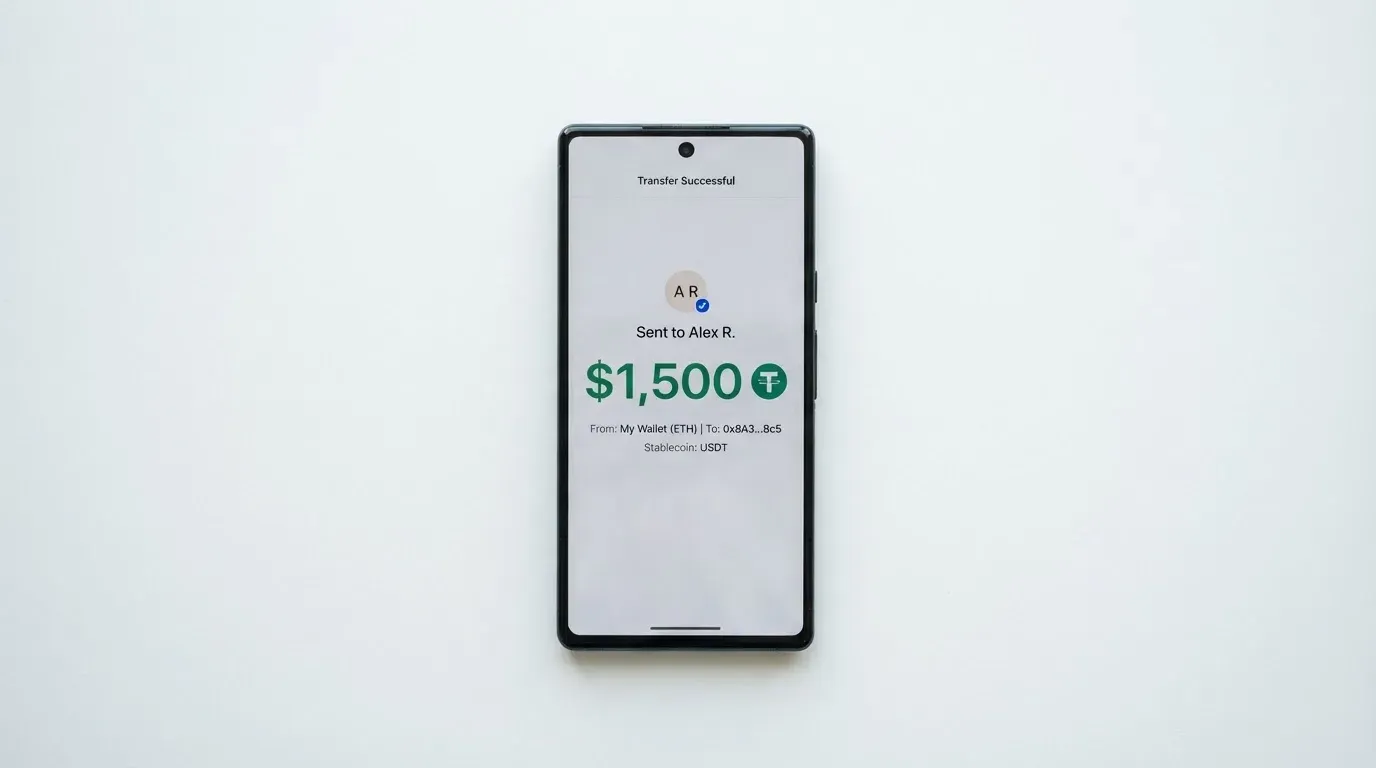
Here is the part that would stop me, and it is a small sentence with large consequences: the networks are not named. If you send stablecoins on a network Orbi does not support, or to an address belonging to a different network, the transfer can be lost or need manual recovery with no guarantee — blockchain transfers are irreversible. This is the single most common way people lose money with crypto cards, and it is entirely avoidable, but only if you know which network to use.
So the practical position is that you cannot fund this card from what Orbi has published. You would need to ask, before you send anything:
- Which networks do you accept for USDG, USDT and USDC deposits?
- Is there a minimum or maximum per deposit, and what is the credited amount after any deduction?
- How long does a deposit take to appear, and what happens to a transfer that arrives on an unsupported network?
- If the credit line is secured against digital assets, which assets count as collateral, at what valuation, and what happens to the line if their price falls?
Those are not pedantic questions. The first one determines whether your money arrives at all.
On the way out: withdrawal terms are not stated. What is stated is the closure condition — closing the account requires no active obligations and no positive crypto balance. In other words you cannot close with funds still sitting in the account, which is sensible anti-money-laundering behaviour and also means closure is an active process, not a click. If that matters to you, find out the withdrawal route and timing before you ever need it.
Paying with it every day
The daily picture is simple in structure and vague in detail. You get an instant virtual Mastercard that works online and in shops, and you can take cash out at ATMs. That covers most things. Everything beyond that is unstated.
Wallets are not disclosed. Apple Pay and Google Pay are not mentioned, and the app exists on Google Play and the App Store with links on the page — but I did not read the ratings, and app presence is not the same as wallet support. If adding the card to a phone is part of how you imagine paying, treat that as an open question rather than a feature. The generic safeguards an issuer might offer — instant freeze, app-based two-factor authentication — are not stated for this card either.
Rewards: the card page does not mention cashback. There is an Orbi Boost programme offering rewards for freezing digital dollars, and the page is careful to say it “no garantiza recompensas” — it does not guarantee rewards. So the fairest reading is that any Orbi reward scheme is separate from card spending, conditional, and not to be counted in a return calculation. If you are choosing between cards on cashback, Orbi is not in that conversation.
Disputes: the timeframe for raising one is not stated. The terms do allow Orbi to hold assets during a dispute. That is the clause to remember — if something goes wrong with a purchase, the possibility that your crypto balance is held while it is investigated is real, and it is not unusual in this category, but it does mean a dispute is not an inconvenience you can ignore.
Two category behaviours will shape your experience more than Orbi’s own settings. First, Mastercard — and Visa — do not issue crypto cards to consumers themselves; they license issuers, and they can suspend a programme. So your card depends on the network’s continued willingness to stand behind it. Second, merchants can look up the issuer’s identification number and country, and some decline prepaid or foreign-issued cards as a result. An overseas online purchase on Orbi is exactly the situation those merchant policies target. Address verification is mostly unavailable for foreign-issued cards, which can cause declines that look like your fault and are not.
What can go wrong
The risks here are mostly the ordinary ones of a new financial product, plus one unusual one.
The counterparty risk. Orbi holds your card programme and appears to hold or arrange your crypto. Where exactly your assets sit, the custody model is not stated. Custodial platforms have a real record: Mt. Gox (about US$350 million reported stolen, 2011–2014), Coincheck (about US$400 million, 2018), and Ronin Network (US$625 million, 2022). None of that predicts anything about Orbi specifically. It tells you that the category’s failure mode is someone else’s key compromise, and that your recourse afterwards is limited.
The credit line risk. This is the one that is specific to Orbi. If you borrow against digital assets and those assets fall in value, the position deteriorates quickly and mechanically. I found no liquidation threshold, no margin call process, no grace period — none of it stated. Borrowing against volatile collateral is a leveraged position, and the only published description is a single line of Spanish. I would not take that line until you know what happens at a given price.
The disclosure risk. Because the fees, networks, limits, custody model and licence names are all unstated, you are partly trusting rather than checking. For a product that handles money and crypto, that is a genuine risk even where the product is honest.
The programme risk. Cards in this category do get wound down. Visa terminated its global agreements with FTX on 13 November 2022 and the FTX US debit card was wound down by its issuer. WaveCrest, a Visa issuer that supplied crypto card brands, was suspended by Visa in Europe in 2018, closing all WaveCrest-issued Visa programmes. Closures typically run in a sequence: a notice period, then loading and spending stop, then you are asked to withdraw what remains. Any Orbi closure would follow that shape, which is a reason to keep only a working balance on the card rather than a large one.
The compliance risk. Identity checks are described but not enumerated, and licences are not named. If due diligence cannot be completed, the standard requirement is to hold or end the relationship — which is why accounts get frozen pending documents. Proof of address is not stated, so I cannot tell you whether that will be part of your checks.
The recovery risk. A blockchain transfer is irreversible. A stolen key has no recovery path. And a declined authorisation can leave a hold on your funds for several days — typically up to seven — which in a crypto balance model can mean your money is visibly there and not spendable.
On the other side of the ledger: I found no official incidents, no complaints, and no reviews of the card in search results or on Trustpilot, where no page was found. Support is available as chat in the app and on the website, 8:00 am to 8:00 pm, with a Spanish-language help centre. Support hours that start at 8 am are worth remembering if you are outside Mexico’s working day.
What to take instead
I want to be careful here. The three cards below are not better than Orbi for a Mexican user who wants to borrow against stablecoins — I could not verify that anyone of them offers that in the same way. They are alternatives worth comparing because they publish more.
Sponge scores 4.9 / 10, slightly below Orbi. It is a virtual card created in-app, described as a credit card issued by Rain, a Visa Principal Member, accepted wherever Visa is accepted. Funding is USDC collateral moved from the Sponge wallet, with base as the example chain and base or solana named as optional in the SDK — so it does name networks, which is the thing Orbi does not. Its country eligibility is not stated and there is no country list on its card pages; the platform terms set only a minimum age of 13 for the service, which is not the same as card age. Fees are not stated, and cashback is not stated.
Xplace scores 7.7 / 10, the highest here, and it is the most transparent of the three. It is a Visa card with instant virtual and physical versions — Silver live, Gold and Platinum coming, physical delivery 7–14 business days. Annual fees are Basic free, Silver $99, Gold $249, Platinum $999, and borrowing carries no origination fee. Platinum advertises 0% FX; FX for other tiers and the conversion fee are not stated, and stablecoin spending is described as having no hidden spread. Funding is a named list — BTC (cbBTC), ETH (wETH), SOL, JitoSOL, USDC, USDT, xStocks — on the Solana network, and Cash mode spends your stablecoin balance while Credit mode borrows against holdings, which is the closest analogue to Orbi’s model I found. Credit-mode cashback by tier: Basic 0.5%, Silver 1%, Gold 1.5%, Platinum 2%, paid in USDC to the wallet at settlement; Cash-mode cashback not stated. Its limitation is real: services are not available in all jurisdictions, though the card is accepted in 160+ countries.
ether.fi scores 6.7 / 10. Visa, virtual and physical, issued only in listed jurisdictions on a residence basis and subject to KYC and compliance — Andorra, Argentina, Australia, Austria, Brazil, Canada, Cyprus, Czech Republic, France, Germany, Hong Kong, Hungary, Italy, Japan, Mexico, Poland, Portugal, Singapore, Spain, Switzerland, UAE, UK, plus 31 US states, with Belgium and Ireland eligible without physical delivery. The line I would put in bold: if your jurisdiction is not listed, you will not be able to apply. Notably, Mexico is on that list, so ether.fi is reachable from Mexico where Orbi’s exclusivity is not a barrier. Citizenship rules are not stated. ATM withdrawals are blocked in North Korea, Iran and Myanmar. Core members normally get one free virtual card; the first virtual card costs $10 in regional-pricing countries including Mexico. FX fee on top of base rate by tier: Core 0.5%, Luxe 0.25%, Pinnacle and VIP none, with a 0% FX article for EUR purchases; crypto conversion fee not stated. Collateral goes to your own Safe in Credit mode, while Direct Pay spends the balance. Cashback is paid in ETHFI, locked 7 days then claimable: Core 3% up to $2,000 monthly, then 1% to $3,000, then 0.5%; Luxe 3% to $10,000; Pinnacle 3% to $50,000; Business 1%, with ATM, cash advances, P2P and gambling categories excluded.
| Orbi | Sponge | Xplace | ether.fi | |
|---|---|---|---|---|
| Score | 5.0 / 10 | 4.9 / 10 | 7.7 / 10 | 6.7 / 10 |
| Network | Mastercard | Visa | Visa | Visa |
| Where | Mexico only | Not stated | Not all jurisdictions | Listed jurisdictions |
| Card currency | Not stated | Not stated | Not stated | Not stated |
| Fees published | None | None | Annual fees and tier FX | FX by tier; conversion not stated |
| Funding | USDG, USDT, USDC | USDC | cbBTC, wETH, SOL, JitoSOL, USDC, USDT, xStocks | Any supported token to your Safe |
| Networks named | No | Yes | Yes | Not stated |
| Credit against holdings | Yes | Credit card (Rain) | Credit mode | Credit mode |
| Cashback | Not mentioned | Not stated | 0.5–2% in Credit mode | 3% in ETHFI, tiered |
The pattern across all four is worth naming: three of the four do not state a card currency. If you are comparing on cost, the currency question needs an answer from each provider before the comparison means anything.
Who I would recommend it to
If you live in Mexico, already hold USDG, USDT or USDC, and want a Mastercard that spends that balance — or borrow against it rather than sell it — Orbi is a reasonable card to investigate, and the SoFi and Mastercard involvement is a better foundation than most launches in this category. Go in knowing three things: ask which networks to send on before you send anything; ask what the conversion and FX costs are before your first purchase; and ask what happens to the credit line if collateral falls, because that answer is nowhere on the page.
If you are outside Mexico, this is not your card, and no amount of reading will change that. Read the comparison section instead — one of those alternatives may simply accept where you are.
If you are choosing mainly on rewards, on physical-card delivery, or on phone-wallet support, Orbi is not disclosing enough for you to decide, and I would pick a card that is.
Frequently asked questions
What is the Orbi card?
It is a Mastercard administered by Orbi, a Mexican crypto payments company, that spends a stablecoin balance and can borrow against digital assets held as collateral. Services are available only in Mexican territory, and some are limited to Mexican citizens or permanent residents. Orbi operates with SoFi Tech Solutions as BIN sponsor.
How does the Orbi card work?
You hold USDG, USDT or USDC, and when you pay, funds are converted to fiat at the point of sale — the merchant receives ordinary fiat, not crypto. The card also offers a credit line secured by your own digital assets, so you can spend without selling what you hold. Exactly which networks your deposits must arrive on is not stated.
Is Orbi a bank?
Not on the evidence available. Orbi is a Mexican company and the card runs on Mastercard’s network with SoFi Tech Solutions as BIN sponsor and infrastructure provider. No banking or payments licence is named on the public pages I checked, so I would not describe it as a bank. Accounts like this typically sit with an e-money or payment institution instead.
Who owns Orbi?
Ownership is not stated on the pages I checked. What is stated is the corporate entity: Orbi Payments, S.A.P.I. de C.V., incorporated in Mexico. SoFi Tech Solutions provides the BIN sponsor and fintech infrastructure, and Mastercard is the card network. An announcement on 8 Oct 2026 covered a crypto-linked card programme in Mexico involving all three parties.
Can I use the Orbi card in my country?
Only if you are in Mexico. Orbi states that services are available only in Mexican territory, and its terms say some services are restricted to Mexican citizens or permanent residents. There is no country list to check and no international availability. If you are not in Mexico, the realistic comparison is with cards that publish an eligible-country list.
How do I get the Orbi card?
You need to be in Mexico and at least 18. Orbi verifies your email, mobile number, personal data and documents — though it does not name the specific documents, and proof of address is not stated. Approval brings an instant virtual Mastercard. A physical card is not mentioned on the card page; news says physical and virtual are planned.
Does Orbi require KYC?
Yes, in the ordinary way: email, mobile number, data and documents are verified, and the help centre has a “Verificación de Identidad” section. The tiers of verification and the exact step sequence are not stated. Standard practice means ongoing monitoring and, where due diligence cannot be completed, holding or ending the relationship — which is why accounts can be frozen pending documents.
How much does the Orbi card cost?
The public pages do not say. The terms point to a fees section of the website, but no amounts appear there on what I could read: no issuance fee, no monthly fee, no conversion or FX fee, and no ATM allowance or charge. Card currency is also unstated. That is why cost scores 5 out of 10 — not because the fees are high, but because you cannot check them.
How do I top up the Orbi card?
With USDG, USDT or USDC. The networks you can send on are not named, which matters because transfers are irreversible and a deposit on the wrong network can be lost. Ask which networks are supported, what the minimum and credited amounts are, and how long crediting takes before you send anything. On-chain network fees are charged by the blockchain, not by Orbi.
Is the Orbi card safe?
I would not promise safety. The custody model for your crypto is not stated, and the credit line is secured by digital assets with no published liquidation threshold. No complaints or reviews surfaced in my search, and no Trustpilot page exists — which means no track record either way. Support runs as in-app and web chat from 8:00 am to 8:00 pm, and the help centre is in Spanish.
Credit and cashback cards: choosing between them – cryptocardpicker
Content created by the «cryptocardpicker» team