
A virtual Visa funded by crypto, with gaps in the paperwork
 Available in US

If you cannot get an ordinary bank card — because of where you live, because of your status, because of a banking history you would rather not explain — then a crypto-funded Visa is one of the few doors left, and Freedomia is one of the companies selling it. The pitch is blunt: a virtual Visa card, funded in Bitcoin, Lightning or stablecoins, with no verification and no approval. The reality is more interesting than the pitch, and more mixed. Freedomia does things that are genuinely rare in this category, including accepting Lightning and Monero, and it works in countries where most rivals draw a line. It also leaves a lot unsaid: the issuing bank is not named, no licences are named, the fees page is thin, and there is not a single review site with a presence worth reading. So this is a review that ends with conditions attached.
The conditions described here are current as of October 28, 2026.
My score for the card is 6.1 out of 10. That is not a rounding of “fine” or “avoid”. It is a card with a very strong top-up section and a very weak everything-else section, and you should know which is which before you touch it.
Here is the breakdown, criterion by criterion.
| Criterion | Mark | Why |
|---|---|---|
| Who can get it | 8 / 10 | Described only as “Global”; no country list or restrictions on the home page, and the FAQ answer on restricted countries was not readable |
| Cost | 4 / 10 | Founder tier $5 per month or $60 per year; top-up fee 1.3 %, standard FX 2.5 %, spending in USD 0 %; the issuance fee is not disclosed |
| Top-up options | 9 / 10 | Lightning, BTC, XMR, ETH, LTC, SOL, TRX, BNB, USDT (Polygon), USDC (Polygon) “and more”, plus exchange to USD |
| Reliability and complaints | 5 / 10 | Freedomia Digital Group LLC, Delaware; issuer and licences not named; unofficial reports describe a custodial, closed-code service; no Trustpilot reviews found |
| Everyday use | 5 / 10 | Digital Visa only, instant issuance, 3DS; Google Wallet works, Apple Pay is “coming soon”; no plastic and no ATM |
The card is built for privacy-minded users who want to fund a virtual Visa with BTC or Lightning and not be asked to explain themselves for the first five thousand dollars a month. If that is you, the top-up breadth here is better than almost anything else I have read about. If you are picking a card for a salaried account, a subscription stack you never want to miss, or anything that needs a physical card or cash withdrawal, this is the wrong tool and the gaps will cost you.
Will they give you the card
Short answer: probably yes, because the card asks almost nothing of you — and it never publishes the list of places where that answer becomes no.
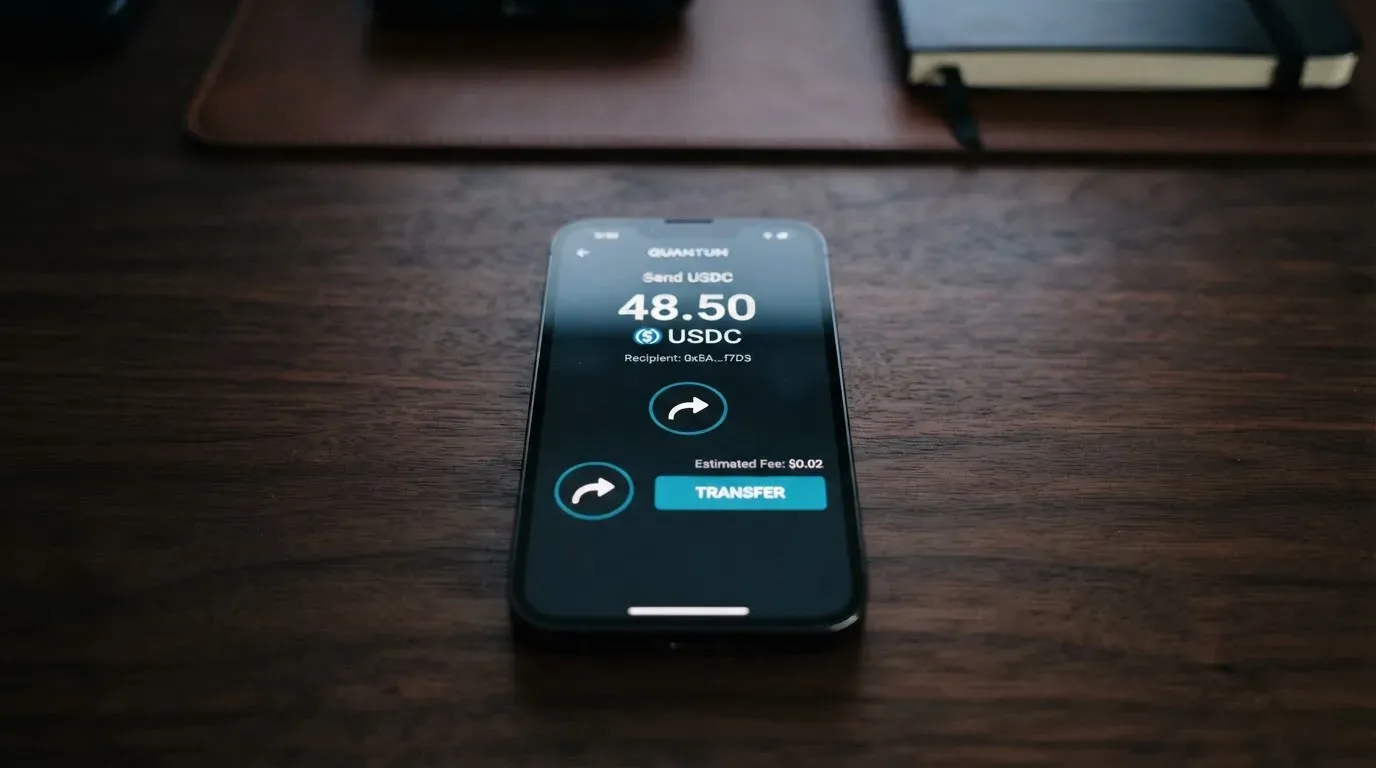
Freedomia describes the card only as “Global”. There is no country list and no statement of restrictions on the home page. There is a FAQ question, “Which countries are restricted?”, and the answer to it was not readable to me. That gap matters more than it sounds. “Global” is not a promise that the card works everywhere; it is the absence of a promise. Until you read that FAQ answer yourself, you are assuming eligibility rather than reading a policy.
What the card does tell you is how little standing between you and the card. It is marketed as “No verification. No approval.”, and signup is by email. The card itself is a digital (virtual) Visa with instant issuance, re-issuable at any time, and 3-D Secure, and its currency is USD. No physical card is mentioned; delivery details are simply not stated, which is consistent with a virtual-only product.
One thing to be careful about, and I want to be precise about where it comes from. Unofficial reporting — a CriptoNoticias piece from September 2026, not the card’s own pages — describes Freedomia as a pseudonymous card with no KYC at or below USD 5,000 in monthly spend, and says that section 4.3 of its terms allows KYC and AML checks above that monthly figure. So the “no verification” line has a shape to it: below the threshold it is no verification, above it the terms reserve the right to check. Officially, the level of verification at each tier is not stated. Treat the $5,000 line as well-sourced third-party reporting, not as a guarantee printed on the card’s site.
None of this tells you how the company handles a sanctions match. Nobody’s card page does, and this one is less forthcoming than most.
How to get it
Signup is by email, and that is genuinely the whole flow as described. No documents, no video call, no branch, no interview. If you are someone for whom an ordinary application would be a problem, that simplicity is the product.
Here is the sequence as the card presents it:
- Sign up with an email address in the web account.
- Get a digital Visa issued instantly, in USD.
- Add it where you want to pay — Google Wallet works today, Apple Pay is listed as “coming soon”.
- Fund it from crypto, and let the balance auto-swap to USD.
- Re-issue the card whenever you need to, straight from the account.
Three small features sit behind that flow and matter more than they look. You can freeze the card at any time. You can set card limits inside the interface. And the card supports Tor and onion access, according to the card’s own material. For a user who chose this card because the alternative was not having one, those three things are the difference between a product you use and a product you leave dormant.
What the card does not describe is a standalone app. There is no app; the account is a web interface with Freeze Card, Card Data and Card Limits. That means no app-store ratings to read, and no second-hand user reports to mine — which loops back to a theme I will keep hitting: there is very little outside commentary on this company.
Fees: what it really costs
The headline price is $5 per month, or $60 per year, on the Founder tier. That is not the cost, because the real cost sits in the conversion line, and for a card whose whole job is to move value across currencies, conversion is the cost.
Here is every price and limit the card actually publishes:
| Fee or limit | Founder | HODL (coming soon) | MOON (coming soon) |
|---|---|---|---|
| Monthly fee | $5 | $9.99 | $17.99 |
| Annual fee | $60 | $119.88 | $215.88 |
| Issuance fee | not stated | not stated | not stated |
| Top-up fee | 1.3 % (all tiers) | 1.3 % | 1.3 % |
| Standard FX fee | 2.5 % | 2.5 % | 2.5 % |
| Spending in USD | 0 % | 0 % | 0 % |
| Monthly limit | $5,000 | $5,000 | $10,000 |
| Annual limit | $60,000 | $60,000 | $120,000 |
| Support | priority | standard | priority |
Only Founder is available now. HODL and MOON are listed as “coming soon”, so if you are comparing tiers you are comparing a live product against two announcements. Prices are quoted in dollars, and the card’s currency is USD.
Now the part that actually determines what you pay. Funds are swapped to USD, so your crypto becomes dollars before you spend them, and spending those dollars costs 0 %. Spend in any other currency and you meet the standard FX fee of 2.5 %. Add the 1.3 % top-up fee and a foreign-currency purchase costs you both fees before anyone else’s cut of the transaction. If you mostly spend where you live, in dollars, the card is cheap. If you mostly spend somewhere that is not the dollar zone, 2.5 % is the number that decides whether this card is right for you, and it is the number I would check before anything else.
Three ordinary payments, so this stops being abstract:
- A $30 subscription in USD. You top up $31.30-worth of crypto, the 1.3 % fee comes out of that, and the $30 payment itself carries 0 % FX. Cost of the fee: the top-up, once.
- A $60 evening out in a euro-zone city. Same 1.3 % top-up, then a 2.5 % standard FX fee on the conversion of the $60 into euros. The FX fee is the number in your head; it is charged because the payment is not in dollars.
- A $400 month of groceries in USD, with two smaller purchases abroad. Limits are not the issue here — $400 sits well inside the $5,000 Founder monthly cap. The cost is still one 1.3 % top-up plus 2.5 % on whichever part of the $400 is not in dollars, and every bit of it arrives in your account already converted.
Three things are simply not stated, and you should treat them as real costs you cannot yet price. The issuance fee is not stated — unusual, because for a virtual card most of the cost sits there. ATM fees are not stated, which fits a virtual-only card, but the absence of the word is not the same as a no. And the HODL and MOON tiers, which double and triple the monthly cap for nearly triple the monthly price, are the ones to watch if you ever exceed $5,000 a month.
How to top it up
This is where the card earns its best mark, and it is not a close win. Ten listed routes, two networks most competitors simply do not touch, and an automatic conversion to USD on arrival.
| Route | Detail as stated |
|---|---|
| Lightning Network | to a personal Lightning Address |
| BTC | listed |
| XMR | listed |
| ETH | listed |
| LTC | listed |
| SOL | listed |
| TRX | listed |
| BNB | listed |
| USDT | Polygon |
| USDC | Polygon |
| Exchange to USD | available |
| Fiat (bank transfer, card) | not listed |
Monero and Lightning are the two names worth stopping on. Lightning is fast and cheap for small amounts, which is exactly the shape of a coffee purchase funded from bitcoin. Monero is private by design, and a card that accepts it is making a different argument from its competitors.
What you should know before your first transfer:
- The deposit fee is 1.3 %, on all tiers. There is no tier that tops up cheaper.
- There is no minimum stated.
- Whether the network fee is on you or on them is not stated. And on-chain network fees are charged by the blockchain, not by the card company — so on a chain like Ethereum, the gas cost of getting your funds there is a separate bill.
- Crypto only. No fiat route is listed, which is the card’s way of saying: to use this card with no verification, you go through crypto.
- Withdrawal is not stated. I could not find a described way to take money back off the balance, and if that matters to you, ask before you rely on the card.
- Balances are auto-swapped to USD, so what lands on the card is dollars, not crypto.
One warning that belongs here, because it is the most common way people lose money in this category. Blockchain transfers are irreversible. Send on a network the provider does not support, or to an address belonging to a different network, and the funds can be gone — recovery through support is possible but never guaranteed. Check the network before you press send, every time. Note in particular that the card lists USDT and USDC on Polygon: send either token over Tron instead and it is a different asset as far as your balance is concerned.
Paying with it every day
Everyday use is the card’s weakest suit after paperwork. It is a digital Visa with instant issuance and 3-D Secure, Google Wallet is enabled for tap-to-pay, and Apple Pay is “coming soon”. There is no plastic card and no ATM. Rewards are not stated — there is no cashback scheme described anywhere.
So the day-in-the-life is: you pay with your phone, or you paste card details into a checkout, and that is the entire repertoire. If you are the person who needed this card, that is likely enough. If you are comparing crypto cards generally, note how much thinner this is than rivals with cashback tiers and physical metal.
The controls you do get are worth using from day one. Freeze Card, Card Limits and Card Data all live in the web account, so you can cut the card off the moment it misbehaves and cap what a compromised card can take. Card limits are settable in the interface on top of the tier caps, which means you can set a per-card ceiling far below your $5,000 monthly tier limit and sleep better.
Three practical notes on acceptance. A card number starts with an issuer identification number of six or eight digits, and any merchant can look it up and see which institution and country issued it — some then apply extra scrutiny when the issuer country differs from the billing address, which is why a Delaware-issued Visa can look “foreign” in a shop in another country. Address verification, which compares the numeric parts of your billing address with issuer records, is mainly offered in the US, Canada and the UK and is generally unavailable for foreign-issued cards, which is a common cause of declines at US checkout. And a declined authorisation can leave a hold on your funds that lingers, sometimes up to seven days.
One real gap for your own peace of mind: the terms contain a section called “Returns, disputes and chargebacks” — section 19 — and I could not read its text. Chargeback rights are not something to assume. In the US, debit card reversal rights come from Regulation E and credit card rights from Regulation Z, and prepaid-card coverage varies. If a chargeback route matters to you, read section 19 yourself.
What can go wrong
The honest list starts with the absence of things rather than the presence of problems. I found no official incidents involving the card. I also found no Trustpilot page and no Reddit reviews — for a live financial product, that silence is itself a signal: there is no body of user experience, good or bad, to check your instincts against.
The company behind it is Freedomia Digital Group LLC, with a registered address at Newark, New Castle, Delaware 19713. The issuing bank is not named. No licences are named. That is the core structural risk, and it is not a criticism so much as a description of what you are signing up for. A Visa card is issued by a licensed institution under a network licence — Visa and Mastercard do not issue crypto cards to consumers themselves, they license issuers and can suspend a programme. When the issuer is unnamed, you cannot check that licence. Visa said in November 2022 that it had “terminated our global agreements with FTX”, and the FTX US debit card programme was wound down by its issuer. WaveCrest, a Visa issuer that supplied crypto card brands, was suspended by Visa in Europe in 2018, closing all its Visa programmes. Programmes close. When they do, you get a notice period, then spending and loading stop, then you are asked to withdraw your balance. A 2026 closure reported by a single secondary source had new loads ending 8 July 2026 and spending stopping 8 August 2026 — I mention it only as the shape such a closure takes, and that report is unconfirmed.
The second risk is custody. Unofficial reporting from CriptoNoticias in September 2026 describes the service as custodial and closed-source. If that is right, you are trusting a private Delaware company with the keys. That is not unique to this card, and the track record of custodians in this industry is not encouraging: Mt. Gox reported about US$350 million stolen between 2011 and 2014, Coincheck about US$400 million in 2018, and the Ronin Network US$625 million in 2022. A seed phrase is typically 12 to 24 words in unencrypted form, and anyone who has it can restore the wallet and spend the funds; transfers are irreversible and the network cannot freeze or return anything.
The third is the stablecoin layer, because USDT and USDC on Polygon are how most people will actually fund the card. Stablecoins aim to hold a steady value against a fiat currency, but as the BIS put it in July 2025, about 90 % of stablecoin market capitalisation sits in USDT and USDC, and “despite the name, stablecoins are not necessarily stable”. TerraUSD collapsed in May 2022; USDC temporarily lost its peg in March 2023 during the US banking crisis. If the peg breaks between your deposit and your next payment, your balance moves with it.
The fourth is the category’s regulatory churn, and it cuts both ways. In the EU, the markets-in-crypto-assets regulation (MiCA, Regulation (EU) 2023/1114) took legal effect in June 2023, with the rules on asset-referenced and e-money tokens applying from 30 June 2024 and the remaining provisions, including crypto-asset service provider rules, from 30 December 2024. E-money tokens may be issued only by a credit institution or an electronic money institution. A transitional period lets providers already operating under national law continue only until 1 July 2026, or until they are authorised or refused authorisation under MiCA, whichever comes first — and ESMA keeps a public interim register of authorised providers, white papers and non-compliant entities that you can check a company against. Note the shape of this: a card is a payment service regulated separately from the crypto side, so a crypto card often depends on two licences. Freedomia names none of them.
Two smaller things. KYC and AML rules apply to regulated businesses everywhere, including ongoing monitoring and suspicious-activity reporting, and where due diligence cannot be completed, EU rules require the institution to refrain from the transaction or end the relationship — which is why accounts freeze pending documents. And the card does have genuine protections: 3-D Secure confirmation on online payments, instant freeze, spending limits, tokenised mobile wallets, and Tor support. Support is by email at [email protected] and Telegram at @Freedomiaio, with priority support on Founder and MOON.
What to take instead
If the reasons you are here are privacy, access, or funding in BTC and Lightning, Freedomia may be hard to beat and this section is short. If your reasons are cost, acceptance or day-to-day convenience, compare it against these three before you commit.
| Freedomia | CardFlow | HyperCard | Card.fi | |
|---|---|---|---|---|
| Score | 6.1 / 10 | 4.9 / 10 | 4.7 / 10 | 6.6 / 10 |
| Card | Digital Visa, instant | Virtual USD Mastercard, ~3 minutes | Prepaid “HyperCard”, network not stated | Virtual and physical Classic, Premium, metal |
| Fee to start | not stated | “completely free” | not stated | $49 Virtual Classic, $249 Virtual Premium |
| Ongoing | $5/month or $60/year (Founder) | monthly fee not stated | fees not stated | no monthly, annual, inactivity or minimum-balance fee |
| Top-up fee | 1.3 % | not stated | not stated | 1.5 % + $1.00 Classic, 1 % Premium |
| FX fee | 2.5 % | not stated | not stated | 3.5 % Classic, 2.5 % Premium |
| Funding | Lightning, BTC, XMR, ETH, LTC, SOL, TRX, BNB, USDT and USDC on Polygon, exchange to USD | Bitcoin, USDT, ETH or Naira transfer | crypto such as USDT, BTC, ETH, converted to USD or EUR | 32 coins across 5 networks |
| Reach | “Global”, no list published | aimed at Nigeria and global users | App Store says works in “more than 176 countries” | ships to “200+ countries” |
| Rewards | not stated | not stated | not stated | cashback on spending: 0.8 % Classic to 2 % Metal, tiered caps |
CardFlow is aimed at Nigeria — “Nigeria’s smartest fintech card platform” — and at Nigerians and global users, with no country list or exclusions stated. Its virtual USD Mastercard is created in 3 minutes, and creating a virtual card is, in its own FAQ, “completely free”. Nothing is stated about a monthly fee or any other fee, and networks for its Bitcoin, USDT, ETH or Naira funding are not stated. Pick it if a free start and a three-minute card matter more to you than knowing your FX cost in advance, because you cannot.
HyperCard is a prepaid card with a balance in USD or EUR, funded by crypto such as USDT, BTC or ETH in the app and converted on the card; networks are not stated, and neither is the network of the card itself on the App Store page, where no fees are listed either. Its one concrete geographic claim is acceptance — the card works in “more than 176 countries” — which is a different thing from being eligible for it. The official pages state no country list.
Card.fi scores highest of the four at 6.6. It ships to “200+ countries” and its terms bar residents of, or orders from, “a country subject to sanctions that would prohibit the service” — which is the clearest eligibility rule anyone in this group has published. It offers the broadest range physically and financially: virtual and physical Classic and Premium plus a stainless steel metal card, every physical order including a virtual one, cards issued “under licence from the relevant card schemes” without naming Visa or Mastercard. It costs $49 one-time for Virtual Classic and $249 for Virtual Premium, with no monthly, annual, inactivity or minimum-balance fee, but its FX fee is higher on Classic (3.5 %) than Freedomia’s 2.5 %, and it has no Lightning route. Its 32 coins across five networks carry a specific, stated risk: the deposit address is per card, conversion happens at market rate on arrival, and the wrong chain risks permanent loss. Its rewards are the richest here — cashback on spending from 0.8 % Classic (capped at 10 USDT a month) up to 2 % on Metal tiers, with a headline 10 % at coffee shops capped at 10 USDT a month and a variable “up to 18%” on balances.
The pattern across all four: everyone publishes fees differently, no one publishes an issuer, and only Card.fi publishes a rule for who cannot sign up.
Who I would recommend it to
Freedomia to a person who holds Bitcoin or Lightning, is comfortable sending crypto to a card, and has decided that the amounts involved are ones they could lose without changing their life. I would recommend it to someone in a country where the alternatives have drawn a line, because “Global” with no list on the home page is, for them, the most inclusive eligibility statement on offer. I would recommend it to someone who needs to pay in dollars and lives in the dollar zone, where the 0 % FX rate makes it cheap, and to someone who values Monero or Lightning deposits enough to accept a thin public record.
I would not recommend it to you if you are choosing on trust, because there is no issuer name and no licence name to check, and no Trustpilot page to read. I would not recommend it if you need a physical card or cash. I would not recommend it if your spending is mostly outside the dollar zone and 2.5 % FX is a number you would not accept elsewhere. I would not recommend it as your only card, and I would not put savings on it — partly because custodial, partly because withdrawal is not stated.
Before you decide, check four things yourself, in this order. Read the FAQ answer to “Which countries are restricted?”, since the card does not put that list on the home page. Read section 19 of the terms, “Returns, disputes and chargebacks”, which I could not read. Ask support what happens to a balance if the programme is wound down, and ask how to withdraw. Then send a small test amount first, on the network the card actually lists, before you move anything you care about.
Frequently asked questions
What is the Freedomia card?
Freedomia is a crypto-funded payment card: a digital Visa you load with Bitcoin, Lightning, Monero or stablecoins, and spend as ordinary dollars. It is instant-issued, re-issuable at any time, uses 3-D Secure, and its balance is USD. It is virtual only — no physical card is mentioned — and it comes with a Founder tier at $5 a month or $60 a year, with HODL and MOON tiers listed as coming soon.
Does the Freedomia card require KYC?
Officially, no: the card is marketed as “No verification. No approval.” and signup is by email. Unofficial reporting from CriptoNoticias in September 2026 describes a pseudonymous service with no KYC at or below USD 5,000 in monthly spend, and says terms section 4.3 allows KYC and AML checks above that. So expect a threshold rather than a blanket exemption. The verification level at each tier is not stated officially.
Is Freedomia a bank, and who owns it?
No. The company behind it is Freedomia Digital Group LLC, registered at Newark, New Castle, Delaware 19713. Neither the issuing bank nor any licences are named on the card’s pages. That matters because in this category the licensed issuer is the party that actually holds the card programme, and without its name there is no licence for you to look up.
Where can I use the Freedomia card?
Anywhere a Visa is accepted, with the usual caveats about prepaid and foreign-issued cards. A merchant can look up the issuer identification number at the start of your card number and see which country issued it, and some apply extra scrutiny when that differs from your billing address. Address verification is mainly offered in the US, Canada and the UK, so expect declines at some US checkouts.
How do I top up the Freedomia card?
By sending crypto to the address the card gives you: Lightning to a personal Lightning Address, plus BTC, XMR, ETH, LTC, SOL, TRX, BNB, USDT and USDC on Polygon, “and more”. The balance is auto-swapped to USD on arrival. The deposit fee is 1.3 % on all tiers, the minimum is not stated, and whether you pay the blockchain’s own network fee is not stated. No fiat route is listed.
What does the Freedomia card cost to use?
The Founder tier is $5 a month or $60 a year, and the issuance fee is not stated. Top-ups cost 1.3 %. Spending in USD costs 0 % in FX; anything else meets a 2.5 % standard FX fee. ATM fees are not stated, which fits a virtual-only card but is not the same as a no. Limits are $5,000 a month and $60,000 a year on Founder, and card limits can be set lower in the interface.
Is the Freedomia card safe?
The card has real protections: 3-D Secure, instant freeze, adjustable spending limits, tokenised mobile wallets and Tor support. But unofficial reporting describes the service as custodial and closed-source, so you would be trusting the company with the funds rather than holding keys yourself. I found no official incidents, and also no Trustpilot page and no Reddit reviews — no track record either way.
Can I add the Freedomia card to Apple Wallet?
Not yet. Google Wallet is enabled for tap-to-pay today; Apple Pay is listed as “coming soon”, and a CriptoNoticias review published on 20 September 2026 also described it as coming soon. If your phone is iPhone-only and you want tap-to-pay rather than pasting card details, that is a real limitation right now.
Is the Freedomia card worth it?
Worth it if you spend mainly in dollars, you fund from Bitcoin or Lightning, and small losses would not hurt you. Not worth it if you need plastic, cash, cheap foreign-currency spending, or a named issuer you can verify. The card’s own price is not the deciding factor: the 2.5 % FX fee and the unnamed issuer are, and you should weigh both before you fund it.
Virtual cards: picking one for online use – cryptocardpicker
Content created by the «cryptocardpicker» team