
Zambulay in plain English: a virtual card you fill with USDT, priced for ad spend
 Available in US

The Zambulay card is a virtual, prepaid payment card aimed at people who want to pay for things with a stablecoin balance and who cannot get an ordinary bank card to do it. On paper it is simple: an issuance fee from $3, a 0% fee to top up the account, and top-ups in USDT on the TRC-20 network that arrive instantly. In practice it is two virtual cards — one for Google and Meta ad accounts, one that connects to iPhone and Apple Watch — with no card network or currency named on the public pages, no monthly fee stated, and a Trustpilot picture that is not encouraging. I gave it 6.2 out of 10.
The conditions described below are current as of October 28, 2026.
Verdict: 6.2 / 10 — a focused tool for ad spend, not a general card
Zambulay is built around one specific job: paying for advertising and subscriptions out of a USDT (TRC-20) balance. The Black card is described as having “no country or spend limits” and is compatible with Google and Meta ad accounts. The Platinum card is described as “works worldwide” and connects to iPhone and Apple Watch in seconds. That is a narrow but real usefulness. If you run ad accounts and your funding already sits in USDT, this does something ordinary cards in that situation often will not.
It is not a general-purpose everyday card. There is no plastic, no ATM, no physical delivery to think about, Google Pay is not mentioned at all, and the conversion fee — the one number that decides what a swipe actually costs you — is not disclosed. The company’s own site says it is “not a bank, credit institutions, financial intermediary or financial advisor” and that offers are “provided by third-party companies.” The card issuer is not named.
| Criterion | Mark | Why |
|---|---|---|
| Who can get it | 9 / 10 | Black: “no country or spend limits”; Platinum: “works worldwide”; no country list published |
| Cost | 7 / 10 | Issuance from $3; 0% account top-up; card top-up from 1.5%; conversion fee not disclosed; Trustpilot reports fees several times higher than competitors |
| Top-up options | 4 / 10 | USDT (TRC-20) only, instant — one rail, one network |
| Reliability and complaints | 4 / 10 | 3-102-944750 SRL (Costa Rica), issuer unnamed; Trustpilot 4.1 out of 5 from 10 reviews; complaints about fees and a first card that did not work |
| Everyday use | 5 / 10 | Virtual only: Black for ad accounts, Platinum with Apple Pay; Google Pay not named; no plastic, no ATM |
Total: 6.2 / 10.
Will they give you the card?
Short answer: probably, because the card states almost no restrictions. The Black card is described as having “no country or spend limits” and the Platinum as “works worldwide.” There is no country list published and no exclusion list published either.
That sounds good, and for the stated use case it probably is. But “no country or spend limits” is a marketing phrase, not a policy document. It tells you what the card is not restricting, not who the issuer will actually work with, what the underlying BIN will be accepted by, or what the anti-money-laundering screening will do when a payment arrives from an unexpected country. Nobody has published the kind of country table you would want before committing money to a balance.
Here is the context that matters more than the absence of a list. A payment card number starts with an issuer identification number (BIN/IIN) of 6 or 8 digits that identifies the issuing institution; the rest is an account identifier and a check digit. Merchants can look up the BIN to see which institution and country issued a card, and may apply extra scrutiny if the issuer country differs from your billing address. This is why a card issued in one country can look “foreign” to a shop in another. Since Zambulay is a Costa Rica-registered company with an unnamed issuer, the “worldwide” claim should be read as: it will probably work at most ordinary merchants, not that it will never be declined.
Also worth knowing, because it applies to every prepaid card in this category: prepaid and debit cards are generally available to adults (18+); some issuers set higher limits.
How to get it
The signup process as described on the public pages is a contact-details form. That is genuinely all that is stated. KYC is not mentioned anywhere in the card’s own pages — no identity document, no selfie, no proof-of-address step is described. The verification level is not stated either.
To be fair to the platform: a Trustpilot reviewer praises quick sign-up and no complicated verification (unofficial, third-party, not confirmed by the card). That is a user’s experience, not a policy, and it is worth weighing against what it means for you later.
- KYC is not mentioned on the card’s public pages.
- Only a contact-details form is described.
- The verification level is not stated.
- A third-party reviewer reports quick sign-up with no complicated verification (unofficial).
Fees: what a Zambulay payment really costs
The published numbers are good at the top and silent at the bottom. Issuance is “from $3.” Topping up the *account* is “0% fee.” Loading money onto the *card* is “from 1.5%.” What is not stated: the monthly fee, the conversion fee, the foreign-exchange fee, and any ATM fee (there is no ATM to speak of — virtual only, so ATM fees are moot).
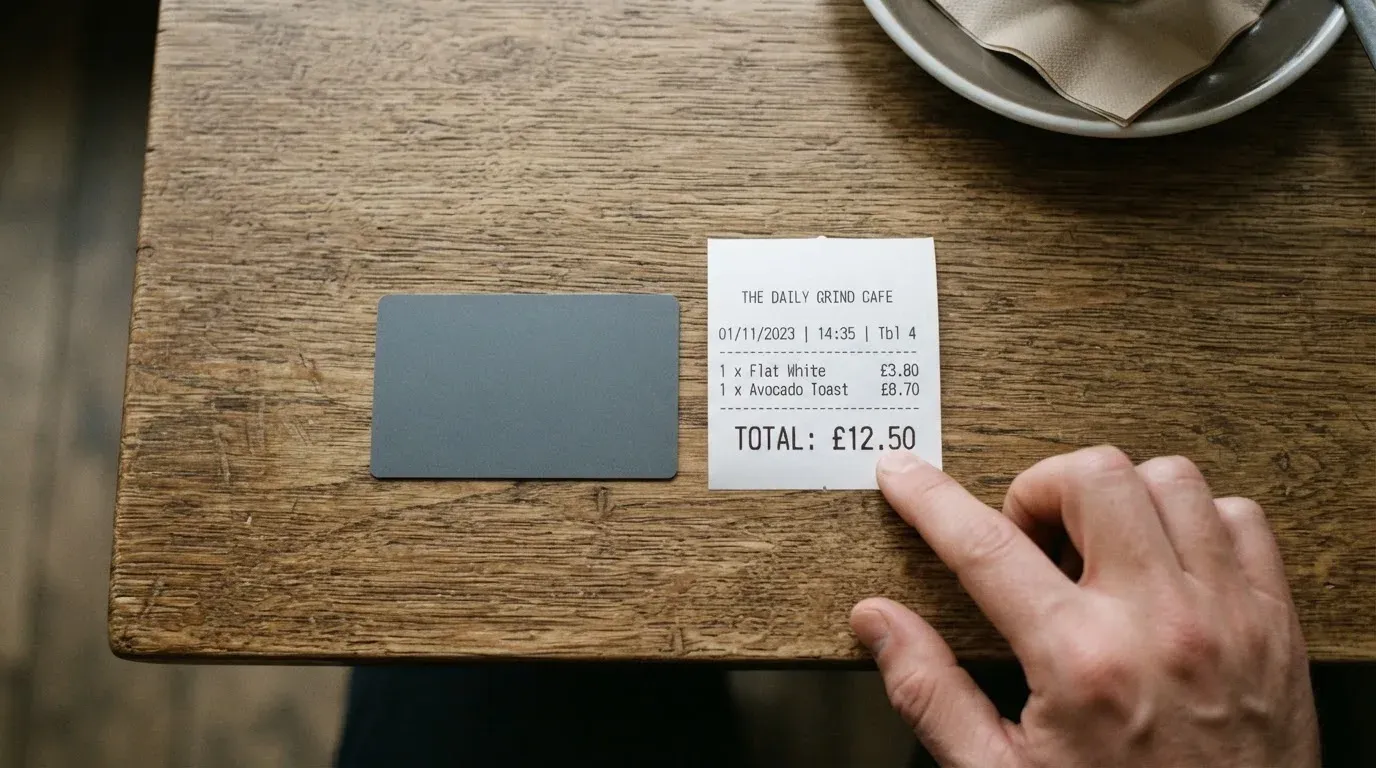
The single most important omission is the conversion and FX fee. A 0% account top-up tells you almost nothing about what happens when you swipe $50 of USDT. If you are depositing a dollar-pegged stablecoin and spending it, some spread or conversion charge is what the issuer takes. “From 1.5%” is the floor, not the typical case — and a Trustpilot reviewer (May 2026, 2 stars) describes paying about $20 on a $100 top-up, a commission “several times higher than that of competitors,” which is well above anything the published floor suggests.
| Fee or limit | What the card says |
|---|---|
| Issuance | “Issuance fee from $3” |
| Monthly fee | Not stated |
| Account top-up | “0% fee for account top-up” |
| Card top-up / load | “from 1.5% for card top-up” |
| Conversion fee | Not stated |
| FX fee | Not stated |
| ATM fee | Not stated (virtual card, no ATM) |
| Spend limits (Black) | “No country or spend limits”; no numeric limits given |
| Card currency | Not stated |
Three everyday payments, and which fees actually bite:
- A $30 subscription paid from a USDT balance. You top up the account at 0%. You load the card at “from 1.5%.” The conversion/FX fee, unstated, applies on top if the card currency is not the dollar. This is the payment where the missing conversion number matters most.
- A $200 ad spend on Google or Meta. Account top-up 0%, card load from 1.5%, conversion unstated. If your USDT is already dollars in value you may pay close to the floor; if you are converting from another asset first, the exchange rate you get is your own problem, not the card’s.
- A small $5 purchase. The percentage fees dominate. A “from 1.5%” load on $5 plus any unstated conversion is a meaningful fraction of the purchase. Percentage-based fees punish small transactions.
Top up: USDT on TRC-20, and nothing else
Top up via USDT (TRC-20), instant. That is the entire funding story. The account top-up is “0% fee”; loads onto the card are “from 1.5% on card loads.” The minimum top-up is not stated, and who pays the network fee is not stated.
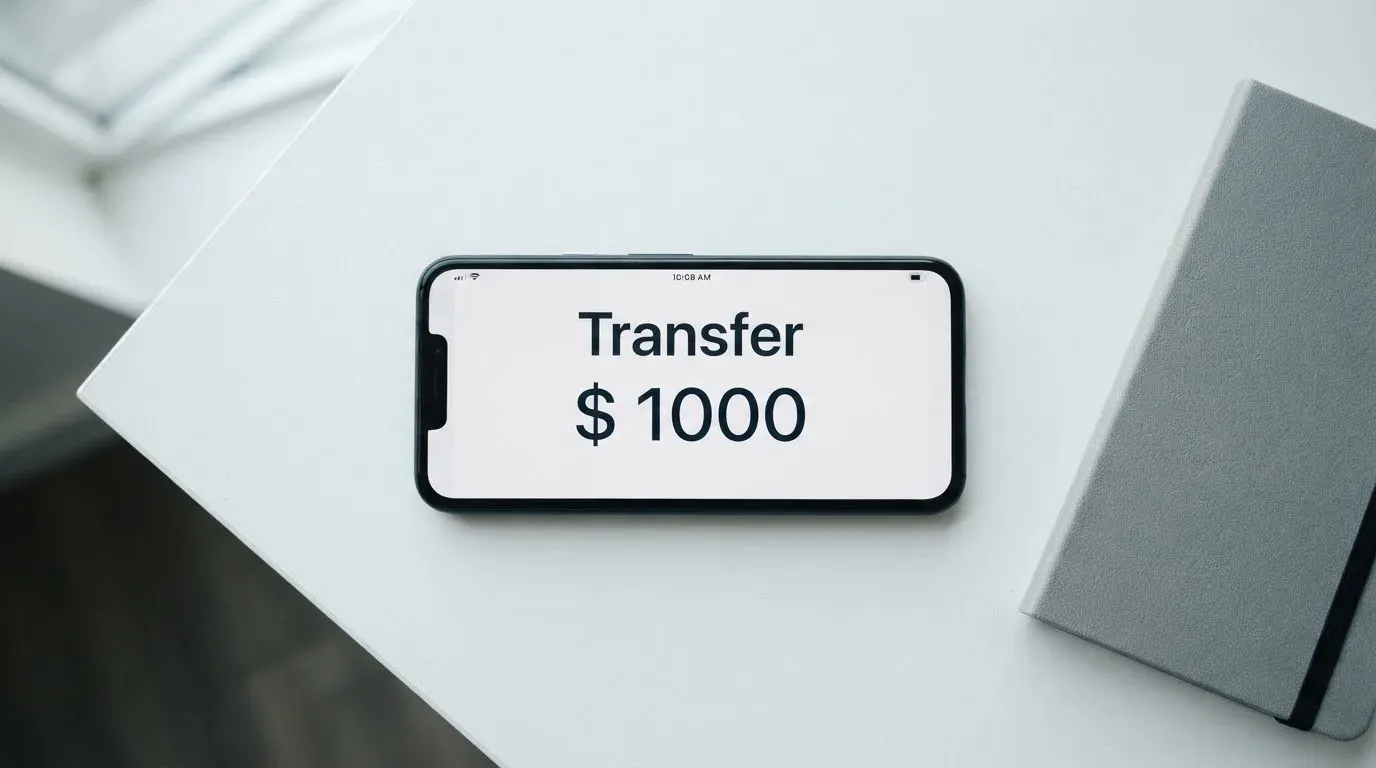
One rail is both the strength and the weakness. It is simple to understand and instant to arrive. It also means you must hold USDT specifically on the Tron network. If your USDT is on Ethereum or elsewhere, you are making a second transfer, paying a second network fee, and carrying the risk of getting the network wrong.
Getting the network wrong is not a small mistake. Blockchain transfers are irreversible, so a deposit sent on a network the card provider does not support, or to an address of another network, can be lost or need manual support recovery with no guarantee. On Tron, fees are paid via bandwidth and energy resources, often burning TRX — so a “0% fee” top-up still has a network cost attached that you, not Zambulay, pay. And a detail worth knowing if you are weighing up stablecoins generally: Circle stopped supporting USDC on Tron in February 2024, so “USDC over TRC20” is not a native option — if you want USDC you are on a different network and a different card.
Withdrawals are stated as “within 30 minutes” as a platform feature, with fees not stated.
Paying with it every day
The everyday picture is thin, and the thinness is by design rather than by defect. There are two virtual cards and no physical ones:
- Black — compatible with Google and Meta ad accounts. Described as having “no country or spend limits.”
- Platinum — connects to iPhone and Apple Watch in seconds; Apple Pay use is its stated purpose.
There is no standalone app; the web workspace is at client.zambulay.com. Google Pay is not mentioned. Blocked categories are not stated. Rewards are not stated. Disputes — what happens when a charge goes wrong and how you challenge it — are not stated.
Apple Pay is the one genuinely convenient piece. When you add a card to Apple Pay, the card number is replaced with a device-specific Device Account Number stored in the phone’s Secure Element, never on Apple servers, and each payment uses a one-time dynamic security code. That is a real security benefit over typing a card number at a website.
What you give up for that convenience is the ability to present a physical card. Some merchants simply do not take virtual cards. A merchant category code (MCC) is a four-digit number classifying a business by goods or services, specified in ISO 18245; many issuers block categories such as MCC 7995 (gambling — casinos, betting, lotteries) by policy rather than by law, and the blocked list varies by issuer. Zambulay does not publish its blocked list, so you cannot know in advance whether a given merchant will work.
A useful expectation-setter for any card funded from crypto: a declined authorisation may leave a hold on funds that can remain for several days, typically up to 7.
What can go wrong
I found no official incidents — no regulator action, no publicised enforcement, no documented outage. That is not the same as the card being safe, and it is worth reading alongside the softer signals.
The company behind the card is 3-102-944750 SRL (Costa Rica), address Provincia Puntarenas 06, Canton 11 Garabito, Jaco, 61101, with UBO Stanislav Mickevic. The site says it is “not a bank, credit institutions, financial intermediary or financial advisor” and that offers are “provided by third-party companies.” The card issuer is not named.
The user complaints are the part I keep coming back to. On Trustpilot (unofficial, third-party — not confirmed by the card), the page showed 4.1 out of 5 from 10 reviews; a separate reading of the page showed 5/43 reviews, and the sources disagree. Either way the review count is small enough that a single bad month moves the number a long way. The themes: high fees (a May 2026 report describing commission several times higher than competitors, and a first card that did not work so a second was bought), and slow support — one 4-star reviewer notes support is sometimes slow.
Now the honest, uncomfortable question: if a virtual card does not work, and the issuer is unnamed, and the provider is not a bank — what is your recourse? None of the ordinary protections are confirmed here. A chargeback is a refund ordered by the card issuer to settle a dispute, with reason codes such as fraud, duplicate billing or goods not received; but the issuer is not named, so you would be chasing the provider for a remedy that sits with a third party. Prepaid-card coverage varies by country and should not be assumed. Security safeguards (2FA, instant freeze, spending limits, 3-D Secure confirmation) are not stated. Fraud protection is not stated.
Support is live chat 10:00–19:00 MSK, “handled within 1 minute,” plus Telegram and email [email protected]. The stated one-minute handling is the response time to your first message, not the time to a resolved irreversible transfer.
Two more structural points that apply whatever the reviews say. First, holding a balance with a provider is holding it with that provider: custodial platforms have a history — Mt. Gox (about US$350 million reported stolen 2011–2014), Coincheck (about US$400 million, 2018), Ronin Network (US$625 million, 2022). Second, Visa and Mastercard do not themselves issue crypto cards to consumers; they license issuers and can suspend a programme. Visa said it had “terminated its global agreements with FTX” in November 2022, and WaveCrest — a Visa issuer that supplied crypto card brands — was suspended by Visa in Europe in 2018, closing all WaveCrest-issued Visa programmes. Programme closures follow a pattern: a notice period, then spending and loading stop, then users are asked to withdraw remaining balances. I am not saying Zambulay is heading anywhere near that. I am saying that when a product has an unnamed issuer and no published wind-down terms, that is the shape of the risk you are carrying in the balance.
What to take instead
If Zambulay’s niche does not fit you, these are the same-category options I compared it against, with their own trade-offs. I am not endorsing any of them.
CardFlow — score 4.9 / 10. Aimed at Nigeria (“Nigeria’s smartest fintech card platform”) and “Nigerians and global users”; no country list or exclusions stated. Virtual USD Mastercard created in about 3 minutes. Creating a virtual card is “completely free” (site FAQ, “Create Free Card”); monthly fee not stated; other fees not stated. Funding in Bitcoin, USDT, ETH or Naira bank transfer; networks not stated. No rewards stated. Cheaper to create, but built around a single market and with even less published.
HyperCard — score 4.7 / 10. Official pages state no country list; the App Store says the card works in “more than 176 countries” (that is acceptance, not eligibility — note the difference). Prepaid “HyperCard,” network not stated on the App Store page; balance in USD or EUR. Cost not stated; the App Store page lists no fees. You deposit crypto such as USDT, BTC or ETH in the app, converted to USD or EUR on the card; networks not stated. The flexibility of depositing several coins and holding two currencies is the appeal; the absence of any published fee schedule is the drawback.
Card.fi — score 6.6 / 10, the highest-scoring of the four. The banner says cards ship to “200+ countries”; the terms bar residents of, or orders from, “a country subject to sanctions that would prohibit the service.” Virtual Classic and Virtual Premium, physical Classic and Premium, and a metal (stainless steel) option; every physical order includes a virtual card; cards issued “under licence from the relevant card schemes” (Visa/Mastercard not named); card currency not stated. One-time cost: Virtual Classic $49, Virtual Premium $249; physical and metal prices not listed; no monthly, annual, inactivity or minimum-balance fee. Fees: top-up Classic 1.5% + $1.00, Premium 1%; FX Classic 3.5%, Premium 2.5%; conversion fee shown before each top-up (terms). Funding: 32 coins across 5 networks (Ethereum, Base, BNB Chain, Solana, Kaanch), e.g. USDT, USDC, ETH, BNB, SOL, KAANCH; a deposit address per card; converted at market rate on arrival; wrong chain risks permanent loss. Rewards are cashback on card spending only — Classic 0.8% (cap 10 USDT/month), Premium 1%, Metal 1.2% (cap 100 USDT/month, 5,000 USDT) or 2% (cap 250 USDT/month, 20,000 USDT); a headline 10% at coffee shops capped at 10 USDT/month; and you can earn on balances “up to 18%” on Metal, variable.
Where Card.fi wins: it names its fee schedule, supports five networks and 32 coins, and offers physical cards. Where Zambulay wins: the entry cost is from $3 rather than $49, and the account top-up is 0% rather than 1.5% + $1.00. If your priority is cost of getting in and you already hold USDT on Tron, Zambulay is cheaper. If your priority is not having to guess what a swipe costs you, Card.fi’s published numbers are the more comfortable position — even though its FX fee is higher on paper.
Who I would recommend it to
I would recommend Zambulay to one specific person: someone whose money already sits in USDT on the Tron network, and whose main need is a virtual card to fund Google or Meta ad accounts, who does not need a physical card, an ATM, Google Pay, or a card in a second currency, and who is comfortable that the provider is a Costa Rica company with an unnamed issuer and no published conversion fee. For that person, the value is real — a $3 entry, a 0% account top-up, instant USDT funding, and a card built to work with ad platforms.
I would not recommend it to you if any of these are true:
- You want a physical card, or you need cash from an ATM. Neither exists here.
- You plan to spend in a currency other than dollars. The card currency is not stated and there is no FX schedule.
- You are comparing fees carefully. The conversion fee is the number that decides your real cost, and it is not published — and at least one user reports paying several times what competitors charge.
- You want to know who stands behind the card if something goes wrong. The issuer is unnamed and the provider says it is not a bank.
- You hold your crypto in a self-custody wallet and want the funds to stay there until the moment of payment. Zambulay’s model is pre-loaded balance: the card can only spend what you have already converted and loaded.
- You need a wide choice of funding coins or networks. USDT on TRC-20 is the only rail.
That last point deserves a word, because it cuts both ways. With a pre-loaded balance model, the card cannot overdraw — you are spending a stored balance, not drawing on a linked bank account. That is a genuine comfort. But it also means every dollar you load is a dollar already exposed to the provider, and the mistakes that get made on the way in (wrong network, wrong address) are the kind that cannot be undone.
Frequently asked questions
What is the Zambulay card?
Zambulay is a virtual prepaid payment card funded with cryptocurrency rather than a bank account. Two virtual cards are described: a Black card for Google and Meta ad accounts, and a Platinum card that connects to iPhone and Apple Watch. It is aimed at paying for ads and subscriptions out of a USDT balance. The card network and the card currency are not stated on the public pages, and no physical card is offered.
Is Zambulay a bank?
No, and the company says so. Zambulay is operated by 3-102-944750 SRL (Costa Rica), address Provincia Puntarenas 06, Canton 11 Garabito, Jaco, 61101, with UBO Stanislav Mickevic. The site states it is “not a bank, credit institutions, financial intermediary or financial advisor” and that offers are “provided by third-party companies.” The card issuer is not named anywhere on the public pages.
How do I top up the Zambulay card?
Top up via USDT on the TRC-20 (Tron) network, and the funds arrive instantly. The account top-up is listed at “0% fee,” while loading money onto the card is “from 1.5%.” USDT on TRC-20 is the only funding route described. Get the network right: blockchain transfers are irreversible, and a deposit sent on the wrong network can be lost or need manual recovery with no guarantee.
Does Zambulay require KYC?
The card’s own public pages do not mention KYC at all — the signup described is a contact-details form. The verification level is not stated. A Trustpilot reviewer reports quick sign-up with no complicated verification, but that is a third-party user account, unofficial and not confirmed by the card. Note that many services can request documents later, especially around funding.
Is the Zambulay card free?
Not quite. Issuance is “from $3” for the card, so the entry cost is low. The account top-up is 0% and the card load is “from 1.5%.” The monthly fee, the conversion fee and the foreign-exchange fee are not stated, so the true cost of a given purchase cannot be calculated from what is published. One user reports paying about $20 on a $100 top-up.
Can I add the Zambulay card to Apple Wallet?
Yes, that is the Platinum card’s stated purpose. It is described as connecting to iPhone and Apple Watch in seconds and being used with Apple Pay. When a card goes into Apple Pay, the card number is replaced by a device-specific Device Account Number stored in the phone’s Secure Element, never on Apple servers, with a one-time dynamic security code per payment. Google Pay is not mentioned anywhere.
Where can I use the Zambulay card?
The Black card is described as having “no country or spend limits” and the Platinum as “works worldwide.” No country list is published. But a merchant can look up the card’s BIN to see the issuer and country, and may apply extra scrutiny when the issuer country differs from your billing address. Some merchants decline prepaid or foreign-issued cards. Treat “worldwide” as “most places,” not “everywhere.”
Is the Zambulay card safe?
There are no official incidents I could find, and no regulator action or publicised enforcement. But the issuer is unnamed, the provider says it is not a bank, security safeguards are not stated, and chargeback protection depends on an issuer you cannot name. Trustpilot (unofficial) shows 4.1 out of 5 from 10 reviews, with complaints about high fees, a first card that did not work, and slow support. Load only what you can afford to have tied up.
How do I withdraw money from Zambulay?
Withdrawals are stated as “within 30 minutes” as a platform feature of the web workspace at client.zambulay.com. The fees for withdrawals are not stated. Support runs as live chat 10:00–19:00 MSK, with Telegram and email at [email protected]. A one-minute handling time refers to first response on chat, not to how fast an irreversible transfer is resolved.
How do I delete my Zambulay account or get help?
The public pages describe a web workspace at client.zambulay.com and support channels — live chat 10:00–19:00 MSK, Telegram, and [email protected]. A specific account-deletion procedure is not stated on the pages I could read. If deleting your account matters to you, ask support directly in writing before you load any balance, and keep the reply.
Virtual cards: picking one for online use – cryptocardpicker
Content created by the «cryptocardpicker» team