
The 5.0 card that spends USDT in tenge, but only in Kazakhstan
 Available in US
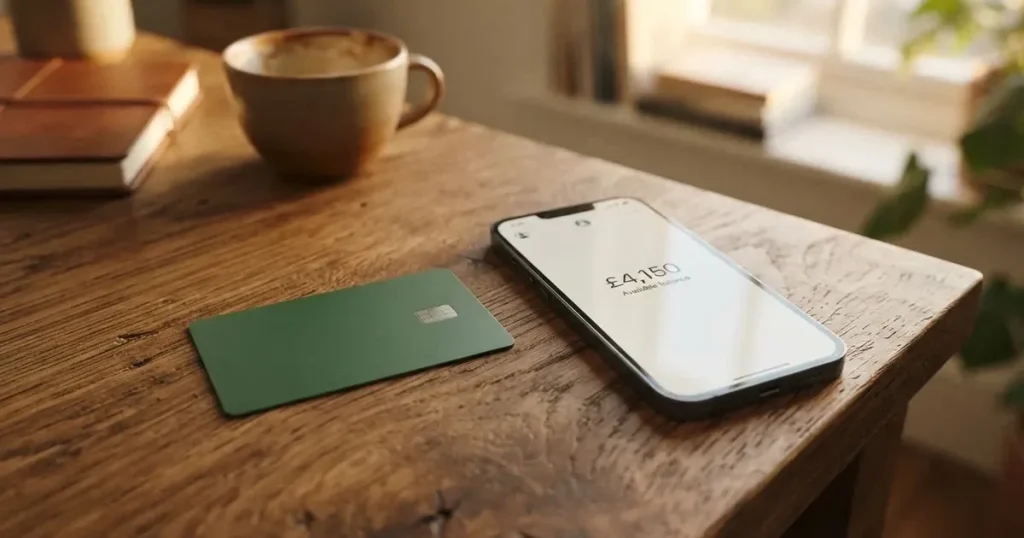
There is no such thing as a crypto card issued by a crypto exchange alone. What sits behind this one is an ordinary Kazakh bank, Bank CenterCredit, holding a banking licence, and an exchange, ATAIX Eurasia, holding an AFSA licence it received on 15 October 2025. The card is a Mastercard World Black Edition debit card, it spends only in tenge, and it is fed by USDT sitting in an ATAIX wallet. That combination is the whole product in one sentence, and almost every question people bring to it follows from it.
I scored it 5.0 out of 10. The number is not a shrug. Underneath it sit a 2 for who can get one, because the product is narrow, and a 9 for reliability and complaints, because a licensed bank issues it and a licensed exchange operates the crypto side. Those two marks pull hard in opposite directions, and the honest reading is that this is a well-built instrument for one specific job — spending USDT in physical shops, offline, in Kazakhstan — offered to a very short list of people.
The conditions described here are current as of October 28, 2026
Verdict: 5.0 out of 10, and a very specific kind of useful
The single sentence that describes this card best is: Kazakhstan residents paying offline in tenge from USDT. If that is your life, this is a sensible tool and the fees on the crypto side are genuinely low. If you want a card that works online, that gives you cash at an ATM, that accepts any coin, or that you can open from outside Kazakhstan, this is the wrong instrument, and no amount of reading will change that.
The score table breaks the total down. Read the two ends of the table first — a 2 and a 9 — because the middle explains what kind of person the card was built for.
| Criterion | Mark | Why |
|---|---|---|
| Who can get it | 2 / 10 | Issued for Kazakhstan residents, and only against an ATAIX Eurasia account already at “Investor” or “Premium” status |
| Cost | 4 / 10 | Issue 10,000 ₸, servicing 5,000 ₸; crypto-to-fiat conversion 0%, top-up without a fee; no FX fee published |
| Top-up options | 6 / 10 | USDT only, on BSC, ETH and TRON, deposit fee 0.00, minimum deposit 0.01 USDT |
| Reliability and complaints | 9 / 10 | Issued by Bank CenterCredit, bank licence 1.1.856.145; exchange ATAIX Eurasia licensed AFSA-A-LA-2025-0022; no complaint pages found |
| Everyday use | 5 / 10 | Digital Mastercard World Black only, Apple Pay, Google Pay and Samsung Pay; no ATM, no online payment, POS terminals only |
| Total | 5.0 / 10 | A specialist tenge card for a narrow set of users |
What “who can get it” is worth saying plainly: the answer is not “people with USDT.” It is “people resident in Kazakhstan who have already cleared identity checks at a crypto exchange.” The second condition does most of the narrowing. A 2 here is not a judgement about you; it is a statement about the funnel.
Who they will give the card to
They will give it to residents of Kazakhstan. That is what the bank’s tariff table says — card issue is priced as “10 000 ₸ for Kazakhstan residents” — and the card is opened inside the bcc.kz app rather than on a form you can fill in from abroad. The citizenship rule is not stated on the pages I read, so I am not going to invent one; residence is the published condition and that is the line you should check against your own situation.
There is a second gate, and it matters more than the first. You need an ATAIX Eurasia account with “Investor” or “Premium” status before the card will open at all. So the order is: exchange first, card second. If you were hoping to skip the exchange and treat the card as a bank product, that is not how it is built.
One more thing belongs in this section. ATAIX Eurasia has reported policy restrictions related to Russian sanctions. This is a reminder that crypto account access can change with policy in a way a normal bank account rarely does. Residency and citizenship rules are applied by the issuer and vary; check the specific requirements for your situation.
For you, the practical test is narrow: resident in Kazakhstan, willing to complete exchange-side identification, and spending offline in tenge. If any of those three is false, stop reading the card details and look at the alternatives later on this page instead.
How to get it
The route is four steps, and the exchange-side check comes first every time:
- Register on ATAIX Eurasia and pass identification (KYC) to reach “Investor” or “Premium” status.
- Install the bcc.kz app and go to “New product or account” → #CryptoPay → “Open card”.
- Confirm the card by e-mail sent to the address you used at ATAIX — the ATAIX page says this arrives within 2 hours.
- Add the card to Apple Pay, Google Pay or Samsung Pay.
Yes, identification is required, and there is no way around that — it is a regulated bank’s card attached to a licensed exchange, so KYC is not a formality here. It is also worth knowing what is *not* published: which documents are needed, whether proof of address is required, and what minimum age applies are not stated on the pages I read. If those specifics decide your case, you will have to ask support directly, which I cover under risks.
What you end up with is a digital, virtual card: a “Mastercard World Black Edition debit card” with tenge as its base currency and eight years of validity. A plastic card can be ordered in advance and collected, or reissued by power of attorney — notarised, valid up to three years — but the delivery time, delivery cost and replacement cost are not stated, so I cannot tell you what that option costs in practice.
The status on your exchange account is not cosmetic. “Investor” confirmation raises the card’s monthly limit from 500,000 ₸ to 45,000,000 ₸, which is the difference between a coffee-and-groceries card and a card that can actually function. What each ATAIX status requires, how long approval takes and why an application can be refused are all not stated. Unofficial figures circulate about withdrawal limits at different KYC levels, but they come from an undated 2023 news summary, so treat them as background rather than as current rules.
What it really costs, including Fees
Fees are this card’s best argument. The crypto-to-fiat exchange fee is 0%, the wallet top-up is without a fee, and payment itself is without a fee. USDT converts to tenge at the exchange rate at the moment of payment. That is genuinely better than most of the category.

What eats into it is the fixed side. Issuing the card costs 10,000 ₸ and servicing it costs 5,000 ₸ — the ATAIX page spells out “5,000 tenge / month” while the bank tariff table lists only “Card servicing 5,000 ₸”. There is a single card and no tiers. One FX fee is not published, so if you are ever charged a conversion margin on the tenge side, it will not be documented anywhere I can point you to.
| Item | Value |
|---|---|
| Card issue (Kazakhstan residents) | 10,000 ₸ |
| Card servicing | 5,000 ₸ |
| Crypto–fiat exchange fee | 0% |
| Wallet top-up | No fee |
| Card payment | No fee |
| FX fee | Not stated |
| ATM withdrawal | Not available |
| Base monthly limit | 500,000 ₸ |
| Monthly limit after “Investor” confirmation | 45,000,000 ₸ |
| Transfers inside the bank / to other banks | Not available |
Three everyday payments, and which fees actually touch them:
- A grocery shop, offline. The strongest case for this card. Payment carries no fee, the crypto conversion is 0%, and the money comes out of your USDT balance at that day’s rate. Add cashback and you are close to break-even on the 5,000 ₸ monthly servicing fee — but only if you spend most of the month.
- A 25,000 ₸ laptop repair, offline. Same mechanics, same zero fee, but it eats 5% of your base monthly limit in one go. Without “Investor” status, four of these a month is your ceiling.
- A hotel booking online. This does not work. Online payment is not available on the card. No fee is charged because no payment happens — and that is the point: half of what most people spend money on is simply outside this card’s reach.
One limit deserves emphasis because it is easy to miss. ATM withdrawal is not available — the bank’s own wording is “No, cash withdrawal at ATMs unavailable”. And the balance is tenge, single-currency; the account is debited in KZT with USDT converted automatically. No multi-currency balance is offered. Transfers, both within the bank and to other banks, are unavailable. So this is not a bank account you can move money out of; it is a spending instrument attached to a crypto wallet.
How to Top up the card
Top-up runs through the ATAIX wallet balance, and only one asset is currently accepted: USDT. The bank states plainly that USDT is the only option available for card payment at present. Three routes into it:
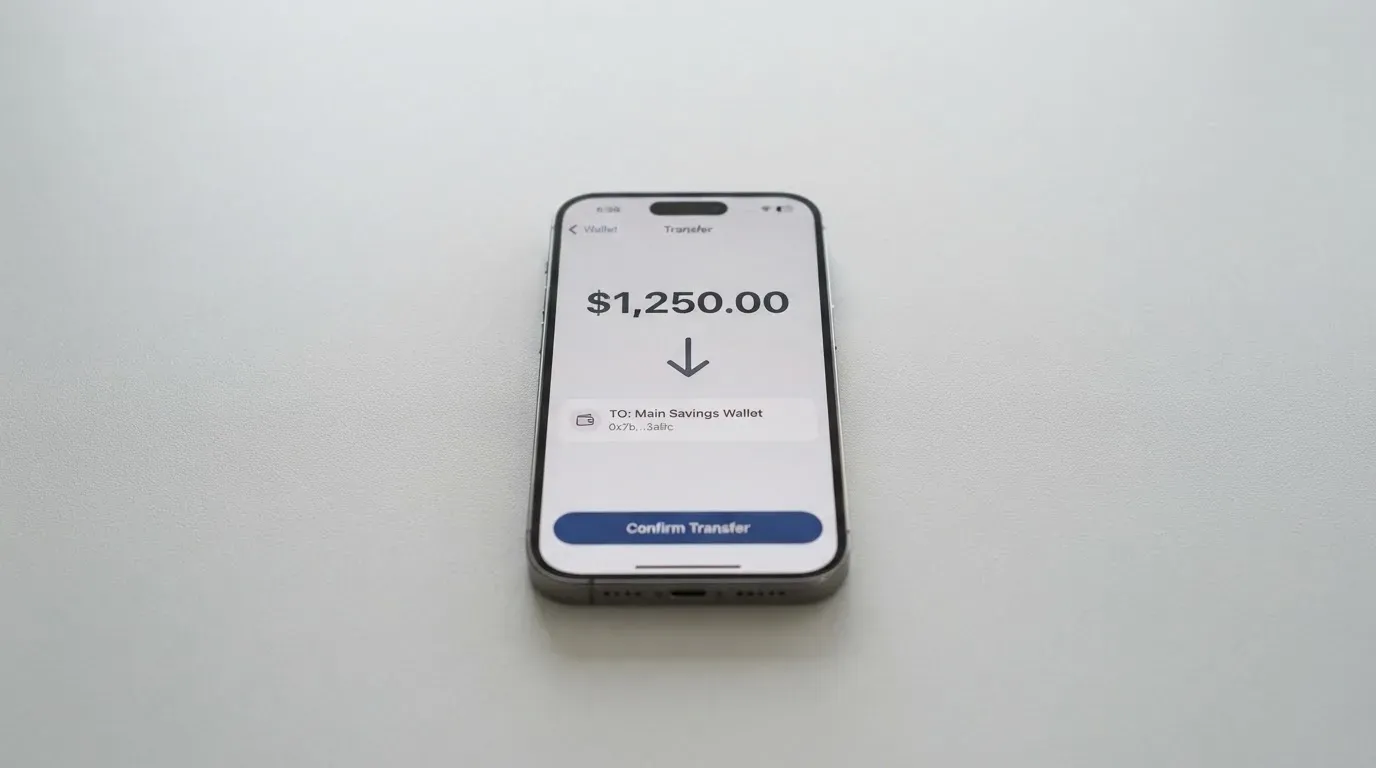
- Crypto into the wallet directly, then use the balance for the card.
- A fiat transfer to the exchange, then convert that fiat to USDT.
- The “Cryptocurrency” section of the bcc.kz app.
On the exchange side, USDT is listed on three networks — BSC, ETH and TRON — with a deposit fee of 0.00 and a minimum deposit of 0.01 USDT. That minimum is very small, which is good for testing; it also means there is no stated floor worth speaking of, so the practical constraint is the network fee, not the exchange’s.
Here is the part that catches people out. The ATAIX deposit fee of 0.00 is not the same thing as the cost of sending. On-chain network fees — gas on Ethereum, bandwidth and energy on Tron — are charged by the blockchain, not by the card provider or the exchange, and what you pay depends on the network you pick. Network fees for the sender are not stated. Sending USDT on Ethereum when the network is busy can cost more than the deposit was worth.
Which is exactly why the network list matters. Sending on a network the provider does not support, or to an address belonging to a different network, can lose the deposit or require manual support recovery with no guarantee — blockchain transfers are irreversible. Read the network list twice, match it to what your sending wallet actually supports, and check the address character by character before you confirm. Nobody on the support line can undo a wrong-network transfer.
Paying with it every day
Daily use is narrow and best described by what is missing. The card is digital only, works at POS terminals, and supports Apple Pay, Google Pay and Samsung Pay. Online payment is not available. Blocked merchant categories are not stated, so I cannot tell you whether gambling or similar categories are declined by policy — that varies by issuer and is not published here.
In practice you tap or insert at a physical terminal, in tenge, and the app shows the result. That is the whole loop.
The perks attached to Mastercard World Black are the part that feels generous for a digital card: up to 10 Lounge Key visits per year, up to 10 Fast Track passes, and travel insurance up to $1.5 million per the bank’s page. Cashback is 0.5% on all purchases, capped at 20,000 ₸ per month, and the currency of that cashback is not stated. Whether 0.5% cashback clears the 5,000 ₸ monthly servicing fee depends entirely on how much you spend — at low volume it will not, at high volume it partly will.
Two things to check yourself. The apps: the bank side runs through bcc.kz, and the exchange app on the Kazakhstan App Store showed 3.5 from 8 ratings when I read it on 21 October 2026 — a very small sample, but not a strong signal. And refunds: a purchase refund is credited to your crypto wallet, from which you can then convert to USDT in the ATAIX app or website. Withdrawal to a bank account or ATM is not available, and the dispute or chargeback procedure and its time frames are not stated. If a purchase goes wrong, the published path takes you back to crypto, not to your tenge.
What can go wrong
The structural risks, and how they land on you:
- Access risk. A crypto account is a regulated relationship that can be frozen or closed. If due diligence cannot be completed, EU rules require the institution to refrain from the transaction or relationship and, where necessary, end existing relationships. That is why accounts get closed. The 2023 case where ATAIX asked Russian residents to close accounts is the concrete example, and the card dies with the account.
- Custody risk. Your crypto stays in the ATAIX Eurasia wallet, and ATAIX is licensed to provide custody — meaning the provider holds the credentials and you must trust it completely. Holding funds with a custodian carries counterparty and hack risk, and the sector has a record of it: Mt. Gox, Coincheck and Ronin Network are the names that come up.
- Transfer risk. Deposits are irreversible. Wrong network, wrong address, unsupported network — the money is gone or becomes a support ticket with no guarantee.
- Merchant risk. Some merchants decline prepaid or foreign BINs, because the BIN lookup reveals the card type and the issuer country. A Kazakh-issued card can look foreign to a shop in another country, and a declined authorisation can leave a hold on your funds for several days, typically up to 7.
- Scope risk. No cash, no online payments, no outbound transfers. If your day contains any of those three, you carry a second instrument.
On the positive side, no official incident notices were found, and searches for reviews of CryptoPay or ATAIX turned up no Trustpilot or Reddit pages at all. Read that carefully: it is an absence of published complaints, not a record of satisfied customers, and for a product this new that is what you would expect. Details of card freeze, two-factor authentication and safeguarding for this specific product are not stated on the pages I read — ask.
Who to ask, and when. Bank side: a 24-hour line 505 for individuals, a Telegram chat, [email protected], and branches. Exchange side: the ATAIX support page, Telegram t.me/ataixeurasia, and +7 (727) 356 11 70. The bank’s site runs in Russian, Kazakh and English, and Russian is supported on support.
The timeline is short and recent, which cuts both ways. On 3 March 2026 Forbes Kazakhstan reported BCC launching the first premium crypto card with ATAIX Eurasia — digital, Mastercard World Black Edition. On 15 October 2025 AFSA granted ATAIX Eurasia a full licence, out of the regulatory sandbox. On 5 December 2023 came the account-closure request to Russian residents. So: young product, newly licensed operator, real bank behind it.
What to take instead
Three cards came out of the same review process with higher marks. None is a like-for-like replacement for a tenge card, and pretending otherwise would help nobody — but if your situation is not “resident in Kazakhstan spending USDT offline”, one of these may fit better.
| Card | Score | Availability | Card type | Cost | Rewards |
|---|---|---|---|---|---|
| #CryptoPay | 5.0 / 10 | Kazakhstan residents, ATAIX Investor or Premium | Digital Mastercard World Black, KZT | 10,000 ₸ issue, 5,000 ₸ servicing | 0.5% cashback, cap 20,000 ₸ per month |
| Young Card | 5.7 / 10 | Not stated | Not stated officially | Not stated officially | Cashback in YNG tokens: Essential 0.1%, Gold 1.8%, Platinum 3.6% (Bronze and Silver not stated) |
| OKX | 6.2 / 10 | EU plus Norway, launched 28 January 2026; Iceland and Liechtenstein excluded | Virtual Mastercard in euro, linked to OKX Pay, issued via an unnamed European licensed payment provider | No card fee | Cashback on USDG purchases only: Regular 2% cap 10, VIP1 4% cap 300, VIP2 4.5% cap 450, VIP3 5% cap 1,000, VIP4+ 10% cap 1,000 (promos vary) |
| Coinbase Card | 6.4 / 10 | All US states except Hawaii; no other countries | Visa prepaid debit, virtual or physical | Zero spending fees, no annual fees | Optional crypto rewards, US users only, variable rate shown in the app |
Notes on each, because the table flattens important differences:
- OKX is the closest in spirit for a European reader: a virtual Mastercard in euro, no card fee, no transaction fee, no OKX FX fee. You fund it with USDC or USDG held in OKX Pay and other coins must be converted first; there is no auto top-up and a payment is declined if the balance is insufficient. Cashback only counts on USDG purchases — USDC earns none. Its own materials disagree on the conversion spread: 0.1% in a May 2026 explainer against 0.4% market spread in the launch press release, and the reward tiers are internally inconsistent (text says 2–5%, the table shows 10%). I would take the newest figure and expect you to be told the spread, not the tier cap, in practice.
- Coinbase Card is the broadest by country count but the US is its world: all states except Hawaii, and no other countries. It is a Visa prepaid debit card, virtual or physical, and all crypto is converted to US dollars for purchases and ATM withdrawals. No Coinbase transaction fees, but a spread applies when Coinbase buys, sells or trades. Zero spending fees, no annual fees.
- Young Card scores above #CryptoPay but its public detail is thin — who can get it, the card itself and the fees are not stated officially. Its one clear feature is rewards paid in YNG tokens at tier-dependent rates, which is a different proposition from cashback in your spend currency.
One category note, since it explains why #CryptoPay scores where it does: Visa and Mastercard do not issue crypto cards to consumers themselves. They license issuers and can suspend a programme — Visa terminated its global agreements with FTX in November 2022, and WaveCrest, a Visa issuer that supplied crypto card brands, was suspended by Visa in Europe in 2018. A card running on a real bank with a real licence, like this one, is on the sturdy side of that arrangement.
Who I would recommend it to
I would recommend it to one person: a resident of Kazakhstan who already holds a verified ATAIX Eurasia account at “Investor” or “Premium” status, holds USDT, and spends in physical shops in tenge — taxis, groceries, coffee, small shops — and wants to spend without paying a conversion fee each time. For them it is a well-backed instrument with a licensed bank, a licensed exchange, 0% conversion and no payment fee, and the monthly servicing cost is recoverable if their volume is decent.
I would not recommend it if any of these are true: you need cash from an ATM; you pay online; you send money to another account; you hold coins other than USDT; you want more than one currency balance; you live outside Kazakhstan or travel regularly; or you would rather not have your spending tied to an exchange account that a policy change can close.
And I would add two checks before you commit. First, ask the bank what happens to the balance and the KZT if the card is frozen or your ATAIX account is closed — that is not stated, and it is the single gap that would change my recommendation. Second, price your own volume against 5,000 ₸ a month. If you spend less than roughly a million tenge a year, the servicing fee eats most of what the 0.5% cashback gives back, and a plain prepaid card or a no-fee virtual card is simply cheaper.
Frequently asked questions
What is the #CryptoPay card?
It is a digital Mastercard World Black Edition debit card issued by Bank CenterCredit, a licensed Kazakh bank, and funded from USDT held in an ATAIX Eurasia wallet. It spends in tenge only, at POS terminals, and converts USDT to KZT at the exchange rate when you pay. The exchange, ATAIX Eurasia, holds AFSA licence AFSA-A-LA-2025-0022 dated 15 October 2025.
How does the #CryptoPay card work in practice?
You hold USDT in ATAIX, and the card converts it to tenge at the moment of payment, debiting the card account in KZT. The crypto-to-fiat exchange fee is 0% and payment itself carries no fee. Online payments are not available, ATM withdrawals are not available, and transfers are not available, so the card only spends.
Who can actually get the #CryptoPay card?
Residents of Kazakhstan who already hold an ATAIX Eurasia account at “Investor” or “Premium” status. The card is opened in the bcc.kz app, and card issue is priced at 10,000 ₸ for Kazakhstan residents. Citizenship rules are not stated on the pages I read, so check directly if your case is unusual.
Does the card require KYC, and what does that mean for me?
Yes. You register on ATAIX Eurasia and pass identification before you can reach “Investor” or “Premium” status, and only then open the card. Which documents are needed, whether proof of address is required and the minimum age are not stated, so if those specifics matter you need to ask support. Without the “Investor” status the monthly limit stays at 500,000 ₸.
How do I top up the card?
Through the ATAIX wallet balance, and USDT is currently the only asset accepted. You can deposit crypto directly, send fiat to the exchange and convert it to USDT, or use the “Cryptocurrency” section of the bcc.kz app. Deposits are listed on BSC, ETH and TRON with a 0.00 deposit fee and a 0.01 USDT minimum — but network fees are paid to the blockchain, not to the provider.
Is the #CryptoPay card free?
Not quite. Issuing it costs 10,000 ₸ and servicing is 5,000 ₸ per month, and there is a single card with no tiers. Against that, the crypto-to-fiat exchange fee is 0%, wallet top-up is free and payment is free. No FX fee is stated, so if you are charged one, it is not documented.
Can I use the card online or take cash out?
No to both. Online payment is not available — only offline purchases at POS terminals — and ATM withdrawal is not available, in the bank’s own words. Transfers within the bank and to other banks are also unavailable. Refunds from purchases go back to your crypto wallet rather than to tenge.
What do I do if a purchase goes wrong or I need to freeze the card?
Purchase refunds are credited to the crypto wallet, but the dispute or chargeback procedure and its time frames are not stated, as are card freeze and two-factor authentication details for this product. Support is a 24-hour line 505 for individuals, a Telegram chat, [email protected] and branches; ATAIX runs its own support page and +7 (727) 356 11 70.
Is the card safe, and where are my crypto held?
Your crypto stays in the ATAIX Eurasia wallet, which is custodial — the provider holds the credentials, so you are trusting the operator entirely. Card payments run through a licensed Kazakh bank, Bank CenterCredit, licence 1.1.856.145. No official incident notices were found for the product, and no Trustpilot or Reddit pages exist for ATAIX or CryptoPay, which is an absence of complaints rather than evidence of a good record.
Is the #CryptoPay card worth it, compared with the alternatives?
Only if you are a Kazakhstan resident spending USDT offline in tenge at a decent monthly volume. Against OKX (6.2 out of 10, EU and Norway, virtual Mastercard in euro, no card fee) and the Coinbase Card (6.4 out of 10, US states except Hawaii, Visa prepaid debit, no annual fees), #CryptoPay scores 5.0 out of 10 because it is narrower. Those alternatives serve other countries and other currencies, so the real question is geography before it is features.
Exchange cards: choosing by where your coins sit – cryptocardpicker
Content created by the «cryptocardpicker» team