
AnomaCard promises a Visa Platinum card you can load with BTC, ETH, SOL and stablecoins in under a minute with no ID check. The fee table is friendly and the acceptance is global. But no issuer, no licence and no country of registration are named, and its own terms and FAQ pages return 404 — so this is a card you can try with money you can afford to lose, not a card to build a month around.
 Available in US
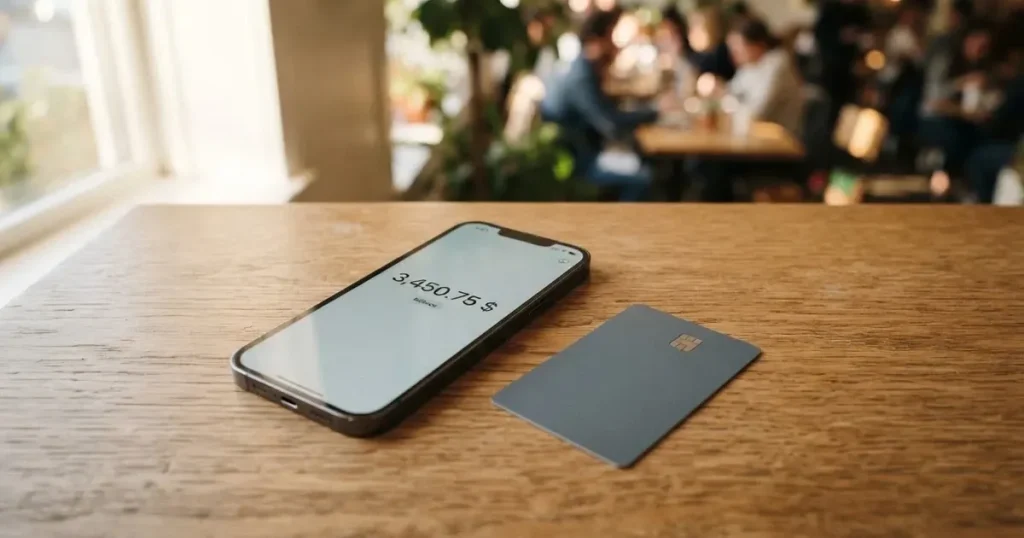
AnomaCard is one of those crypto cards that promise to solve a very specific problem: you want a normal-looking payment card, you hold your money in BTC, ETH, SOL or stablecoins, and you would rather not send a passport photograph to anybody to get one. AnomaCard says it will issue a Visa Platinum virtual card in under sixty seconds, load it with crypto, and let you spend it wherever Visa is accepted — including Apple Pay and Google Pay in 180+ countries. On paper that is exactly what a lot of people in restricted or under-banked countries are looking for. On paper it also costs $120 for a physical card, with a minimum $50 deposit, which is where the first eyebrow goes up.
I scored it 7.8 out of 10. That is a genuinely usable product on fees and reach, held back almost entirely by one thing: nobody will tell me who is behind it. The operator is named as “AnomaCard Protocol” and nothing else. No issuer, no BIN sponsor, no licence, no country of registration. The card’s own terms and FAQ pages are currently unavailable. That absence matters more than any fee, because a card is a promise made by an institution, and this one does not say which institution.
The conditions described here are current as of October 28, 2026.
Verdict: 7.8 out of 10
Let me walk you through the score first, criterion by criterion, because the number is only as useful as the reasons behind it.
| Criterion | Mark | Why |
|---|---|---|
| Who can get it | 9 / 10 | Advertised as “Global”; no excluded-country list and no citizenship or residence rule is stated anywhere I could find; Apple Pay and Google Pay tap-to-pay described as working in 180+ countries |
| Cost | 8 / 10 | Activation 0%, monthly $0, top-up from 0.60% (Starter) down to 0.30% (Elite), no FX markup claimed — but a $120 one-time physical card fee and a $50 minimum deposit |
| Top-up options | 8 / 10 | BTC, ETH, SOL, USDT (ERC-20 and SPL), USDC (ERC-20 and SPL); Arbitrum, Polygon and BNB Chain are “coming soon” |
| Reliability and complaints | 5 / 10 | Operator is “AnomaCard Protocol”; issuer, licences and country of registration are not named; the terms and FAQ pages are unavailable; no complaint history found — good and bad in equal measure |
| Everyday use | 9 / 10 | Virtual Visa Platinum plus an optional physical card, Apple Pay and Google Pay, ATMs worldwide |
| Total | 7.8 / 10 | A strong product shell wrapped around an unverified company |
The single highest-scoring thing about this card is who it is open to. AnomaCard’s stated starting point is “Global”, and I could not find an excluded-country list, a citizenship requirement, or a residence test anywhere in its material. That is unusual. Most crypto cards publish a long list of countries they will not ship to, and many of them quietly reserve the right to refuse anyone whose citizenship their acquirer objects to. AnomaCard simply does not say. For a reader in a jurisdiction where a conventional bank card is genuinely hard to obtain, that silence is worth something — though it is also worth noticing that a card that publishes no eligibility rules is a card that reserves the right to make them up later.
The cost score is good but not clean. There is no monthly fee, no inactivity fee, no foreign-exchange markup claimed, and a deposit fee that falls as you climb the VIP tiers — 0.30% at the top. Against that sits $120 for the physical card, charged once, taken straight out of your crypto balance, and a $50 minimum to switch the card on at all. If you want a card that lives in your wallet and never leaves it, the economics are excellent. If you want something you can slide into a reader at a shop, you are paying a hundred and twenty dollars for the privilege.
The everyday-use score is where AnomaCard does best and, honestly, where most of its competitors tie it. A virtual Visa Platinum that appears instantly, Apple Pay and Google Pay for tap-to-pay, and a physical card for cash — that is the modern standard for this category, not a differentiator. It is also, I want to be honest, the part I am least worried about. A card that works everywhere and charges nothing monthly is not hard to build if you have an issuing bank willing to back you. The hard part is everything AnomaCard does not say.
The reliability score of 5 is where the honesty lives. I found no official incidents. I also found nothing at all from users — a search for reviews turned up no Trustpilot page and no Reddit discussion, which for an actively promoted card is itself unusual. No complaints can mean a good product; it can also mean nobody has used it long enough, or has used it at all, to complain. I am not willing to read a five as “fine, ship it”. I read it as “unproven”, and I would rather tell you that than suggest that the missing terms and FAQ pages are a minor detail.
So who does this card suit, and who does it not? It suits you if your money is already in crypto — BTC, ETH, SOL, USDT or USDC — you want a card that loads in a minute with no ID check, you mostly pay online or by phone, and you are comfortable treating the balance as money you might not get back. It does not suit you if you need a card you can defend to your landlord, if you need a named issuer you can hold accountable, if you need chargeback protection you can be confident about, or if $120 for a physical card makes the numbers not work. It also does not suit you if you are in a hurry to spend real money in a real shop this week.
Will they give you the card?
Short answer: probably yes, because almost nobody is being turned away as far as anyone can tell. But that is precisely the problem, and it deserves unpacking.
AnomaCard’s stated starting data is “Global”. The card’s marketing says you can use the virtual card online “wherever Visa/Mastercard is accepted”, and that Apple Pay and Google Pay tap-to-pay work in 180+ countries. There is no published exclusion list, no citizenship test, no residence requirement, and no statement about which legal entity assesses you. That is what you get; I want to be clear that “no rule stated” is not the same as “no rule exists”. It means the card has not published one.
The reason this is unusual is worth understanding, because it explains the whole design. In the ordinary banking world, KYC — identity verification — is not bureaucracy for its own sake. Anti-money-laundering rules require regulated institutions to verify who you are and screen you, including against sanctions lists. Under EU rules that due diligence covers your name, address, date of birth, nationality and identity documents, plus a sanctions check and a politically-exposed-person check. In the US, the customer identification programme requires your name, date of birth, address and an identification number, with electronic systems cross-checking proof of address. Nationality is screened separately from residence precisely because sanctions and issuer risk policy often follow citizenship and country of birth, not just where you live. If due diligence cannot be completed, rules require the institution to decline the transaction or relationship, and where necessary end it — which is the everyday reason accounts get frozen “pending documents”.
A crypto card that says “No ID scans, no passports, no utility bills” is therefore stepping outside that frame, and the reasons it can do so are worth being clear about, because they are not all reassuring. It may be issuing through a partner in a lighter-touch jurisdiction. It may be deliberately structured so the crypto side and the card side sit under different entities with different obligations. Or it may simply be operating in a grey zone where nobody has yet asked it the question. You cannot tell which from the outside, and that is the honest state of affairs.
The card describes itself as a virtual Visa Platinum debit card, with an optional physical version. AnomaCard does not state the card’s currency, so you do not know which fiat currency it uses for payments — something worth considering if you want to avoid unexpected exchange rates.
Note also that there is no minimum age stated. Ordinary prepaid and debit cards are generally available to adults 18 and over, and some issuers set higher limits, so if you are reading this and you are under 18, the card’s own pages do not tell you either way — which is its own answer.
How to get it
AnomaCard’s signup is among the shortest I have seen, and that brevity is the product.
There is no KYC: “No ID scans, no passports, no utility bills.” You sign in either with a Web3 wallet — MetaMask or Phantom are the ones named — or with a username and password, with optional two-factor authentication. Issuance is advertised as taking under 60 seconds. There are no KYC tiers to climb, because there is no KYC at all; the tier system is about spending, not identity, and I will come back to it below.
So the practical sequence is short: connect a wallet or pick a username, get the virtual card, load it, spend it. There is no application form, no document upload, no waiting period, no selfie. That is a real advantage over cards that take a week and three photos, and it is the single thing AnomaCard does more confidently than anyone else in this category.
Two things I would want you to notice. First, “no KYC” cuts both ways: the same absence that lets you in fast is the absence that would make a stolen account hard to reclaim, because there is no verified identity behind it to prove you are you. Second, the choice of login method matters more than it looks. A Web3 wallet login means the wallet is the account, and whoever holds the keys holds the card — fine, if you are careful. A username-and-password login with optional 2FA means your card’s security rests on a password held by a company that has not named its jurisdiction. Choose the option that matches your own threat model, and if you are not sure which that is, the wallet option is the one that at least has a clear answer when something goes wrong.
Fees: what it really costs
This is the section where AnomaCard looks best, and also the section where the $120 catches up with you. Here is every cost the card’s pages actually list.

| Fee or limit | What it says |
|---|---|
| Activation | 0% |
| Monthly fee | $0.00, no inactivity fee |
| Physical card | $120.00 one-time, issuance and shipping, deducted from crypto balance |
| Minimum deposit | $50 to unlock the full card |
| Deposit (top-up) fee | 0.60% (Starter) to 0.30% (Elite), by VIP tier |
| Conversion / FX | No hidden FX markup and no foreign transaction fees claimed |
| ATM withdrawal | Physical card advertised for worldwide ATM withdrawals; no ATM fee listed, allowance not stated |
| Daily limit | $5,000 |
| Monthly limit | $20,000 |
| Limits by KYC level | Not applicable — there is no KYC |
Now the part people actually care about: what happens when you pay for something. AnomaCard’s fee structure is a deposit fee plus a conversion that it says carries no markup. So the number that matters for a given purchase is your top-up fee — the one set by your VIP tier — plus whatever the underlying conversion gives you, plus the network fee for moving the crypto in, which is charged by the blockchain and not by the card.
Three everyday payments, and which fees apply to each:
- A £30 online subscription paid from a card you topped up with USDT on Solana. Your top-up fee applies — 0.60% at Starter, down to 0.30% at Elite — plus the Solana network fee for the transfer. No FX markup is claimed and no foreign transaction fee is listed, so in principle this is the cheapest kind of spend on the card.
- A coffee bought in a shop with the physical card, in a currency that is not your card’s. Your top-up fee applies. No FX markup is claimed and no foreign transaction fee is listed. What does apply is the Mastercard/Visa network’s own conversion on the day, plus whatever the merchant or their acquirer adds on top of it — that part is not the card’s to control, and no card can promise you the perfect rate in a shop.
- A cash withdrawal at an ATM abroad with the physical card. Worldwide ATM withdrawals are advertised. No ATM fee is listed on the card’s pages, and no allowance is stated — which is not the same as “free”. The ATM operator sets its own charge, the Visa network sets a conversion, and the card’s own withdrawal terms are one of the things not stated. I would not plan a holiday on this assumption.
The VIP tiers are worth a look because the deposit fee is the main lever you control. Starter pays 0.60% with cashback up to $500; Explorer 0.50% up to $5,000; Voyager 0.40% up to $10,000; Elite 0.30% on volumes over $10,000. So the fee falls by half from bottom to top tier. Whether climbing tiers is worth it depends entirely on how much you move — the cashback caps are high enough that most people will never reach them, and I would not chase a tier purely for the fee unless your monthly volume is genuinely large.
Top up: how the money gets in
Live today: BTC, ETH, SOL, USDT on ERC-20 and SPL, and USDC on ERC-20 and SPL. On the way, and labelled “coming soon”: Arbitrum with ARB, Polygon with POL, and BNB Chain with BNB.
That is a decent spread — the two major stablecoins on both Ethereum and Solana, plus the three big-native coins. If your money is in USDT on Tron, though, you have a problem: AnomaCard does not list Tron, and Circle itself stopped supporting USDC on Tron in February 2024, so “USDC over TRC20” is not a native option for anyone. Check what network your tokens are actually on before you send anything.
The mechanics are simple. Each deposit goes to a generated address specific to the network you chose, and the funds unlock after one blockchain confirmation. That last part is the good news: one confirmation on a major chain is fast, and this is not the multi-hour limbo of some systems.
There are two fees here and they are different things. The card’s own deposit fee is 0.30–0.60% by tier. On top of that, the network charges its own fee — gas on Ethereum, and similar costs elsewhere. That network fee is set by the blockchain, not by AnomaCard, and it is the reason a small top-up on a busy network can be surprisingly expensive relative to its size. The card’s own withdrawal terms, per its FAQ section, carry only standard blockchain network fees.
Now the warning that matters more than any of the above. Blockchain transfers are irreversible. If you send on a network the provider does not support, or to an address belonging to a different network, the money can simply be gone — or need manual recovery through support with no guarantee of success. This is not a theoretical warning; it is the most common way people lose money to cards like this. Check the network twice. Check the address twice. If the transfer looks unusual to you, stop and ask support first.
Fiat top-up is not stated. If you do not already hold crypto, this card does not currently describe a way in from your bank account, which narrows its audience considerably compared with the “Global” headline suggests.
Paying with it every day
Day to day, AnomaCard is a well-equipped card. You get a virtual Visa Platinum for online use, Apple Pay and Google Pay for both online and tap-to-pay, and a physical card if you want one. A web dashboard stands in for a native app — there is no iOS or Android app of its own — and the mobile wallets do the heavy lifting on the phone side.
The rewards are the best number on this card: 2% cashback on purchases, and the page is explicit that there is “no staking or lockup”. That last phrase matters more than it sounds. Cards that pay 2% by asking you to lock your tokens for months are not actually giving you 2%. AnomaCard appears to mean it. What you are paid in is not stated, which I would want to know before budgeting around it.
Some things you will not find anywhere, and their absence is worth a line each:
- Blocked merchant categories are not stated. This matters because a merchant category code is a four-digit number classifying a business by goods or services, and codes like 7995 for gambling are commonly blocked by issuers as policy rather than by law — with a different list for every issuer. AnomaCard does not publish its list, so you cannot know in advance whether it will work in a given shop.
- Dispute and chargeback procedure is not stated. A chargeback is a refund ordered by your issuer to settle a dispute, with reason codes for fraud, duplicate billing or goods not received. In the US, debit card reversal rights come from Regulation E, and prepaid-card coverage varies and should not be assumed. Without a published dispute process, I would treat every purchase on this card as one you cannot easily get back.
- Card currency is not stated, so you do not know what balance you are actually spending.
- Freeze and spending controls are not stated, so you cannot verify that the common safety features exist.
The Apple Pay part deserves a specific note, because it is genuinely good news. When you add a card to Apple Pay, the card number is replaced with a device-specific Device Account Number stored in the Secure Element, never on Apple’s servers, and each payment uses a one-time dynamic security code. In practice that means a stolen phone is a much smaller problem than a stolen card, and your actual card number never travels. One caveat: your issuer can restrict a tokenised number — blocking it on magnetic-stripe use, on phone, or on website — and since AnomaCard does not publish such controls, you do not know what it might restrict.
What can go wrong
This is the section I would read twice if I were you.
The first risk is the unnamed company. The operator is “AnomaCard Protocol”, and that is the full extent of what the public pages say. The issuer is not named. The BIN sponsor is not named. No licence is named. No place of registration is named. This is not a technicality. A card payment involves several parties: the card network routes the messages and sets the rules, the issuer is the bank or e-money institution licensed to issue under that network’s licence and holds the card programme, and the crypto brand is often only a programme manager or a front-end. When things go wrong, you need to know which of those three you are dealing with. AnomaCard tells you it is the brand. It does not tell you who the issuer is.
Which is also why the missing pages matter. AnomaCard’s conditions page and its FAQ page are currently unreachable. A card’s terms are not marketing collateral — they are the document that tells you who is liable, what your rights are, and what happens to your balance if the operator stops. If those pages do not load, you are signing up for something whose legal frame you cannot read at the moment you sign up. These pages are unavailable.
The second risk is that programmes end. It happens in this category, and it has happened to big names. In November 2022 Visa said it had “terminated our global agreements with FTX”, and the FTX US debit card programme was wound down by its issuer. In 2018 Visa suspended WaveCrest in Europe, closing all WaveCrest-issued Visa programmes. A secondary source has reported one 2026 closure on a schedule of new loads ending 8 July 2026 and spending stopping 8 August 2026 — single source, unconfirmed, and I mention it only as an illustration of the pattern, not as news about any particular card. The shape of these endings is usually the same: a notice period, then loading and spending stop, then you are asked to withdraw your remaining balance. On a card with no named issuer, you cannot tell who would be running that process.
The third risk is the stablecoins themselves. AnomaCard’s top-up list leans on USDT and USDC, and while stablecoins aim to hold a stable value, “despite the name, stablecoins are not necessarily stable”. The BIS in July 2025 put about 90% of stablecoin market capitalisation in USDT and USDC. They have both broken: TerraUSD collapsed in May 2022, and USDC temporarily lost its peg in March 2023 during the US banking crisis. Also worth knowing: Tether says it disables tokens in wallets on the OFAC sanctions list and has frozen funds tied to illicit activity — stablecoins are not censorship-proof, and a depeg is a loss you absorb personally.
The fourth risk is transactions failing in ways that surprise you. Merchant category codes may be blocked by the issuer’s policy. 3-D Secure can add a step at checkout you were not expecting. Address Verification Service compares the numeric parts of your billing address with issuer records, is mainly offered in the US, Canada and the UK, and is generally unavailable for foreign-issued cards — which can cause declines on a card issued from an unnamed jurisdiction. Some merchants simply decline prepaid or foreign BINs, because the BIN lookup reveals the card type and the issuer country. And a declined authorisation can leave a hold on your funds for several days, typically up to seven.
The fifth risk is support, and here the news is mixed. AnomaCard publishes [email protected] and states an average response under two hours, which is a good claim; the languages it covers are not stated. If the answer under two hours is a reply from someone who cannot tell you who the issuer is, speed does not help you much. I would test the support channel with a small question before I loaded a large balance.
On complaints: I found no official incidents, and I found no Trustpilot page and no Reddit discussion for AnomaCard — the searches came back empty. I am reporting that as a fact about the search, not as a clean bill of health. The honest reading is that this card has a thin public footprint, which cuts both ways.
The sixth risk is regulatory drift. Under MiCA — the EU’s markets-in-crypto-assets regulation, which ESMA says took legal effect in June 2023 — the rules on stablecoins applied from 30 June 2024 and the remaining provisions, including crypto-asset service provider rules, from 30 December 2024. E-money tokens may be issued only by a credit institution or an electronic money institution. Transitional “grandfathering” lets providers operating under national law continue only until 1 July 2026, or until they are authorised or refused under MiCA, whichever comes first. ESMA keeps an interim register of authorised providers that you can check. A card is also a payment service regulated separately from the crypto side, so a crypto card often depends on two licences. With AnomaCard naming neither, I cannot tell you where it stands in that process — and the register is public, so if the issuer ever does become named, you can check it in one search.
The seventh is the one that should worry you least and still is real: the card security model is fine. It describes a non-custodial wallet address model, which means your funds stay in your own wallet until the moment of payment — you bear sole responsibility for key loss, phishing, and clipboard-hijacking malware that silently swaps a copied address. It offers optional 2FA at login, and there is a “Privacy & Zero-Log Architecture Policy” page. Freeze and spending controls are not stated. If you use self-custody, that trade is usually worth it, but it is a trade, not a free win.
What to take instead
If AnomaCard’s gaps worry you — and they should — there are other cards, and being specific about how each compares helps more than a vague recommendation.
| Card | Score | Card | Key cost | Top-up | Who it targets |
|---|---|---|---|---|---|
| CardFlow | 4.9 / 10 | Virtual USD Mastercard, created in about 3 minutes | Creating a virtual card is completely free; monthly fee not stated | Bitcoin, USDT, ETH or Naira bank transfer; networks not stated | Nigeria (“Nigeria’s smartest fintech card platform”) and “Nigerians and global users” |
| HyperCard | 4.7 / 10 | Prepaid “HyperCard”, balance in USD or EUR; network not stated on the App Store page | Not stated; App Store page lists no fees | Crypto such as USDT, BTC, ETH in the app, converted to USD or EUR; networks not stated | Official pages state no country list; App Store says the card works in “more than 176 countries” (acceptance, not eligibility) |
| Card.fi | 6.6 / 10 | Virtual Classic and Premium; physical Classic and Premium; metal (stainless steel); every physical order includes a virtual card; issued “under licence from the relevant card schemes” | One-time: Virtual Classic $49, Virtual Premium $249; no monthly, annual, inactivity or minimum-balance fee | 32 coins across 5 networks (Ethereum, Base, BNB Chain, Solana, Kaanch), e.g. USDT, USDC, ETH, BNB, SOL, KAANCH; deposit address per card; converted at market rate on arrival | Banner says cards ship to “200+ countries”; terms bar residents of, or orders from, “a country subject to sanctions that would prohibit the service” |
| AnomaCard | 7.8 / 10 | Virtual Visa Platinum, optional physical | Activation 0%, monthly $0, physical card $120 one-time, top-up 0.30–0.60% | BTC, ETH, SOL, USDT and USDC on ERC-20 and SPL; Arbitrum, Polygon, BNB Chain “coming soon” | Advertised as “Global”; no country or citizenship rule stated |
CardFlow’s pitch is narrow and clear — a Nigeria-focused fintech card with a free virtual Mastercard and Naira bank transfer as an alternative to crypto. Its own pages do not state fees beyond the free card creation, so the score reflects what is published rather than what is charged.
HyperCard is the closest in spirit to AnomaCard: a prepaid card, no country list on the official pages, crypto deposited in-app and converted to USD or EUR. Its low score reflects thin disclosure — the network is not even named on the App Store page, and no fees are listed anywhere I could read.
Card.fi is the one I would actually put next to AnomaCard. It has the most complete published fee structure in this group — top-up fees of 1.5% plus $1.00 on Classic and 1% on Premium, FX fees of 3.5% and 2.5% respectively, with the conversion fee shown before each top-up — which is exactly the transparency AnomaCard lacks. It also names a licence basis (“under licence from the relevant card schemes”, with Visa and Mastercard not named) and publishes a sanctions-related restriction on countries. On the other hand, its entry prices are steep for what you get: $49 for a Virtual Classic, $249 for a Virtual Premium, and physical and metal prices are not listed at all. Its cashback is tiered and capped — 0.8% on Classic up to 10 USDT a month, 1% on Premium, 1.2% or 2% on Metal against caps of 100/250 USDT a month — and it advertises 10% at coffee shops capped at 10 USDT a month, plus “up to 18%” on balances for Metal holders, variable. And it carries a real operational warning of its own: because it converts at market rate on arrival, sending on the wrong chain risks permanent loss.
Who I would recommend it to
I would recommend AnomaCard to someone who already lives in crypto. Someone whose balance is in BTC, ETH, SOL or stablecoins, who is used to the idea that a transfer can be gone in a second if they fat-finger an address, and who wants a card that appears in a minute without submitting a passport to a stranger. Someone who mostly pays online or by phone, where Apple Pay and Google Pay do the work and the 2% cashback with no staking or lockup is a genuine perk. And someone who is honest with themselves that this is a convenience product on money they can afford to lose — not a savings account, not a place for a year’s rent.
I would not recommend it to someone who needs to trust their card issuer. Not because AnomaCard is doing anything wrong that I can point to, but because it has not told me who its issuer is, where it is registered, or under what licence, and its terms and FAQ pages do not load. If you are the kind of person who needs to read the legal framework before you hand over money, that absence is disqualifying, and no fee schedule makes up for it.
I would not recommend it to someone whose money is not in crypto. Fiat top-up is not stated, so there is no described way to get from a bank account to this card. And I would not recommend it to anyone planning a trip around ATM withdrawals — worldwide withdrawals are advertised, but no ATM fee and no allowance are stated, and no withdrawal procedure or closure balance is published.
And the physical card is the decision point I would ask you to be honest with yourself about. $120, once, for a card that some people will use for years and others will never take out of a wallet. If you are certain you will use it in person, it is a fair price for a global Visa Platinum that costs nothing to keep. If you are not, add the wallet to Apple Pay or Google Pay, spend nothing, and see whether the card earns its keep before paying for the plastic.
Frequently asked questions
What is the AnomaCard card?
AnomaCard is a crypto payment card that converts and loads cryptocurrency as a spendable balance. You get a virtual Visa Platinum debit card immediately, or an optional physical card for $120. It is marketed as “Global”, with online use wherever Visa or Mastercard is accepted, plus Apple Pay and Google Pay tap-to-pay in 180+ countries. The core idea is a card that skips identity checks entirely.
How does AnomaCard actually work?
You sign in with a Web3 wallet (MetaMask or Phantom are named) or with a username and password and optional two-factor authentication. You receive a virtual card in under 60 seconds, deposit crypto to a generated per-network address, and the funds unlock after one blockchain confirmation. Your card then spends that loaded balance, behaving like a prepaid card rather than a bank debit card tied to an account.
Does AnomaCard require KYC?
No. AnomaCard states “No ID scans, no passports, no utility bills,” and there are no KYC levels because there is no KYC at all. There are VIP tiers instead, but those govern deposit fees and cashback caps rather than identity. Note that minimum age is not stated, while prepaid and debit cards generally go to adults 18 and over.
Who owns AnomaCard, and is it a bank?
The operator is named “AnomaCard Protocol” with a 2026 copyright. Beyond that, the public pages do not say: the issuer, the BIN sponsor, the licences and the place of registration are all unnamed. AnomaCard describes a non-custodial wallet address model rather than a bank balance, so treat it as a crypto programme front-end, not a bank.
What does AnomaCard cost to use?
Activation is 0% and the monthly fee is $0.00, with no inactivity fees. Deposit fees run 0.60% at Starter down to 0.30% at Elite by VIP tier, and the card claims no hidden FX markup and no foreign transaction fees. The catch is the $120.00 one-time physical card fee, deducted from your crypto balance, and a $50 minimum deposit to unlock the full card.
How do I top up an AnomaCard card?
Live assets are BTC, ETH, SOL, USDT on ERC-20 and SPL, and USDC on ERC-20 and SPL. Arbitrum, Polygon and BNB Chain are “coming soon”. You send to a generated address for the network you pick, and funds unlock after one confirmation. Your own deposit fee applies by tier, and the blockchain charges its own network fee on top.
Is AnomaCard safe to use?
It uses a non-custodial wallet address model, so your funds stay in your wallet until payment, optional two-factor authentication at login, and it publishes a “Privacy & Zero-Log Architecture Policy”. Against that: the issuer and licences are unnamed, terms and FAQ pages are unavailable, no dispute procedure is published, and freeze and spending controls are not stated. Send only what you can afford to lose.
Can I add AnomaCard to Apple Pay or Google Pay?
Yes. Both mobile wallets are supported for online purchases and tap-to-pay, described as working in 180+ countries. Adding to Apple Pay replaces your card number with a device-specific number stored in the Secure Element, so the real card number never reaches Apple’s servers. Note that issuers can restrict tokenised numbers on phone, website or magnetic-stripe use.
What are AnomaCard’s limits?
The card states $5,000 per day and $20,000 per month. Per-KYC-level limits do not apply, since there is no KYC. A $50 minimum deposit is needed to unlock the full card. For ATM withdrawals the physical card is advertised for worldwide use, but no ATM fee and no allowance are stated.
Is AnomaCard free, and is it worth it?
The virtual card is free to create and free to keep, and 2% cashback on purchases is paid with no staking and no lockup. The physical card is $120.00 once, which only makes sense if you will genuinely use it in person. Whether the card is worth it comes down to whether having crypto spendable like ordinary money is worth more to you than knowing who issued it.
Virtual cards: picking one for online use – cryptocardpicker
Content created by the «cryptocardpicker» team