
A USDC-backed Visa card built for AI agents, with almost none of the pricing published
 Available in US

Sponge is one of those crypto cards that does not look like the others. There is no consumer app to download, no card in the post, and no page listing the countries it works in. What there is, on the card’s own pages, is a virtual Visa issued by Rain, created through a command line interface or SDK, and funded with USDC collateral that lives in a Sponge wallet. The people it is built for, plainly, are developers who are giving AI agents a card to spend from.
That shape is the whole story, and it cuts both ways. If you are that person, this review should be useful to you: the mechanics are real, the funding path is documented, and the security notes on the card number are unusually careful. If you are looking for an everyday card to pay for groceries with, or you are outside the countries this card serves and hoping nobody will check, you will find that nearly every practical question — who can have it, what it costs, what the limits are — is answered by silence.
My score for Sponge is 4.9 out of 10. That is not a verdict on the engineering; it is a verdict on a product that publishes almost nothing a normal customer needs, and that ships no physical card, no app and no disclosed pricing.
The conditions described below are current as of October 28, 2026.
The score, criterion by criterion
| Criterion | Mark | Why |
|---|---|---|
| Who can get it | 5 / 10 | No countries named on the card pages; the platform terms set only a minimum age of 13 |
| Cost | 5 / 10 | Issuance, fees and servicing are not disclosed |
| Top-up options | 5 / 10 | USDC collateral moves from the Sponge wallet via card fund, on base or solana; no other coin |
| Reliability and complaints | 6 / 10 | Sponge Inc. (YC W26), card issued by Rain, a Visa Principal Member; issuing bank and licences not named; no complaints found |
| Everyday use | 3 / 10 | Virtual card only, created through CLI/SDK for AI agents; Apple Pay, Google Pay and ATM not disclosed |
| Total | 4.9 / 10 | A working mechanism wrapped in an absence of published detail |
Two things about that table deserve your attention before we go further. The Everyday use mark of 3 is the lowest score on the page, and it is the one that will matter most if your goal is a normal payment card. The 5s elsewhere are not zeros — they are the score for a product that could not tell me what it does, so I cannot tell you either. That is a different problem from a bad product, and it is fixable, but only by Sponge.
Who will they give the card to
The short answer is: the card’s public pages do not say. There is no country list on the card pages at all, and no statement about citizenship or residence requirements. What the platform terms do say is a minimum age of 13 for the service. That is the only eligibility statement I could find, and it is worth pausing on, because 13 is an age for a software service, not obviously an age at which you can be issued a payment card.
So the honest position is this: I cannot tell you whether Sponge will issue you a card, because Sponge does not publish a jurisdiction list, a supported-countries page, or an eligibility test. If your country is on some internal allowlist, you will find out by applying. If it is not, you will find out by being refused. There is no published way to check in advance, and there is no published way to appeal.
Two related questions people ask me constantly. Is Sponge a bank? The card pages say the card is issued by Rain, described as “a Visa Principal Member” — that is a membership status in Visa’s structure, not a banking licence, and the issuing bank itself is not named. Does Sponge have a licence? Not stated anywhere on the public pages. The footer names Sponge Inc., and the starting data describes it as Sponge (YC W26), which tells you it is a Y Combinator company and roughly when it was funded, but nothing about its regulatory status. For anyone whose decision depends on the licence — and for many readers that is the entire decision — that absence is the finding.
How to get it
The application path is real, and it is the clearest part of the whole product. It runs through the CLI (npx spongewallet), the SDK or MCP, and it is built for a program rather than a person filling in a web form.
The sequence is a hosted KYC flow started from the CLI or SDK with a redirect URI, and then, after approval, an application to the issuer. Along the way the flow collects your occupation or SOC code, and asks you to consent to a list of things: E-Sign, the account-opening privacy notice, the Sponge Card terms, confirmation that what you have entered is accurate, and a non-solicitation acknowledgement.
Creating the card itself needs a billing address — line 1, city, region, postal code and country code — plus an email address and a phone number. That is the data set. What is not stated anywhere: which documents are accepted, what age the KYC flow verifies, and how many KYC levels exist. The docs describe a single hosted KYC followed by an issuer application, which suggests one path rather than a tiered ladder, but that is an inference from the absence of tiers, not a published statement.
You will also want to know what arrives at the end. A virtual card, created by the createSpongeCard call, described on the homepage as a credit card issued by Rain and accepted wherever Visa is accepted. Virtual only in the docs. Whether a physical card exists, and whether one can be ordered, is not stated. The card’s currency is not stated either, which matters a great deal in the cost section below.
Fees and what a payment really costs
Here is where I have to be blunt: Sponge publishes no numbers. Issuance cost: not stated. Monthly or annual fee: not stated. Conversion fee: not stated. Foreign exchange fee: not stated. ATM: not stated. Daily limits: not stated. Monthly limits: not stated. Tiering: not stated, and the docs describe a single Sponge Card rather than a range.
| Item | What Sponge publishes |
|---|---|
| Card issuance | Not stated |
| Monthly or annual fee | Not stated |
| Conversion fee | Not stated |
| Foreign exchange fee | Not stated |
| ATM withdrawals | Not stated |
| Daily spending limit | Not stated |
| Monthly spending limit | Not stated |
| Tiers | Not stated (a single Sponge Card is described) |
| Card currency | Not stated |
| Withdrawal fees | Not stated |
| Top-up fees and minimums | Not stated |
What Sponge does publish is a mechanism: spending is backed by USDC collateral, and “collateral determines spending power” — getSpongeCardStatus returns how much you can spend. So the limit on this card is your own money, not a number the issuer grants you.
Let me take three ordinary payments and walk through what can and cannot be answered. I am not inventing figures; I am naming the places where a number is missing.
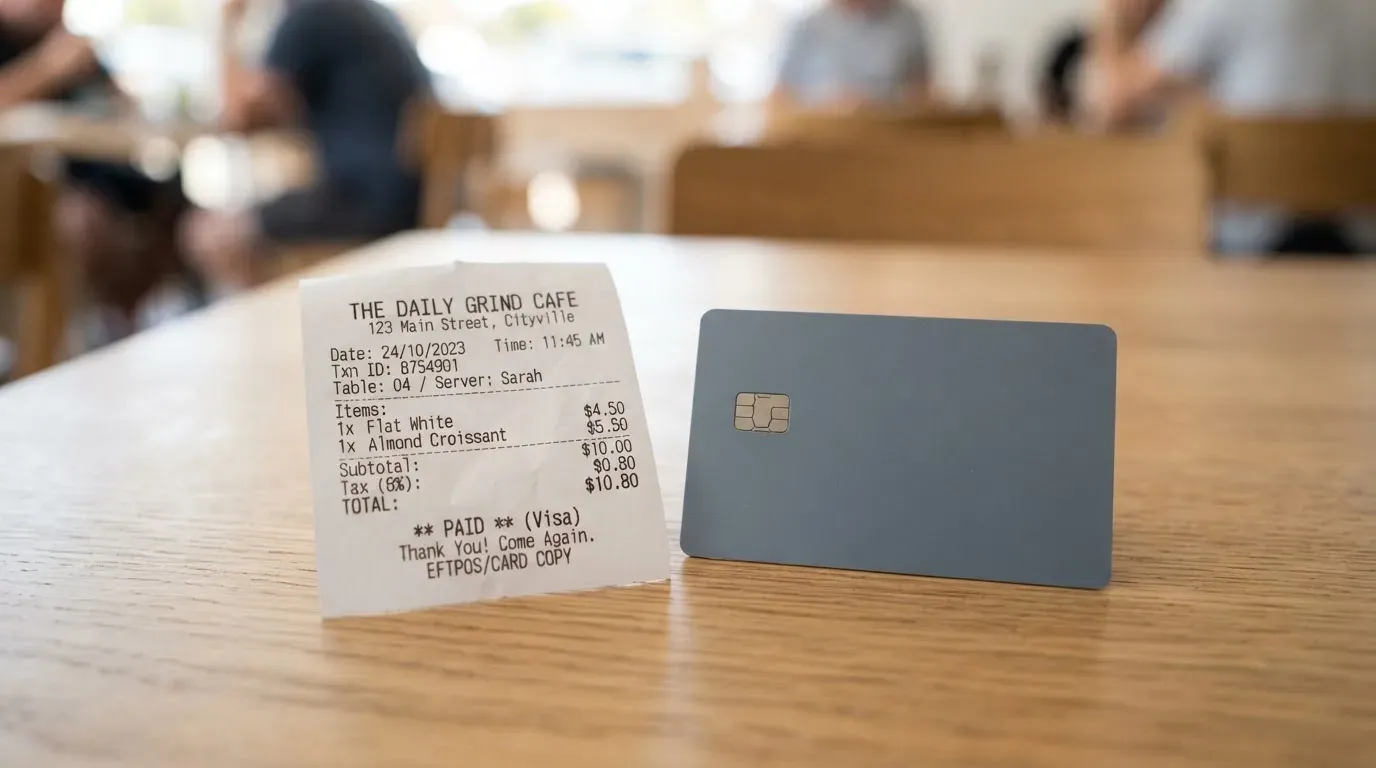
A coffee abroad. You are in a country where the euro is not your card’s currency, if the card even works there. Two separate things happen: the merchant charges in their local currency, and the card network converts it into the card’s currency and hands the result to Rain. What you pay depends on the FX rate applied and on whether Sponge or Rain takes a percentage on top. Both numbers are absent. Address verification can also matter here: AVS compares the numeric parts of the billing address you typed with the issuer’s records, it is mainly offered in the US, Canada and the UK, and it is generally unavailable for foreign-issued cards, which can cause declines.
A subscription. Say a software service that bills monthly in USD. If your card currency is not USD, the same two unknowns apply. If it is USD, you at least remove the FX question and are left with whether there is a conversion or markup on the top-up side, and whether the merchant’s category code is on any block list — many issuers block MCC 7995, gambling, on some cards by policy rather than by law, and the blocked list varies by issuer. Sponge publishes no blocked categories.
A purchase that gets declined. A declined authorisation may leave a hold on your funds that can remain for several days, typically up to 7. With no published limits and no published holds policy, a declined payment on Sponge is a thing you will only understand after it happens to you.
The comparison I would draw for a reader in your position: this is not a card you can cost in advance. Anyone quoting you a number would be guessing, and you should treat a guessed number as a warning sign rather than a convenience.
Top up: one coin, one command, two networks
The funding path is the part of Sponge that is genuinely well documented, and it is narrow by design. USDC collateral moves out of the Sponge wallet with the card fund command. The example chain given is base; the SDK mentions base or solana as optional chain. No other coin is supported. There is no bank transfer, no card-to-card top-up, no cash, and no exchange listed on the card pages — top-up fees and minimums are not published either.
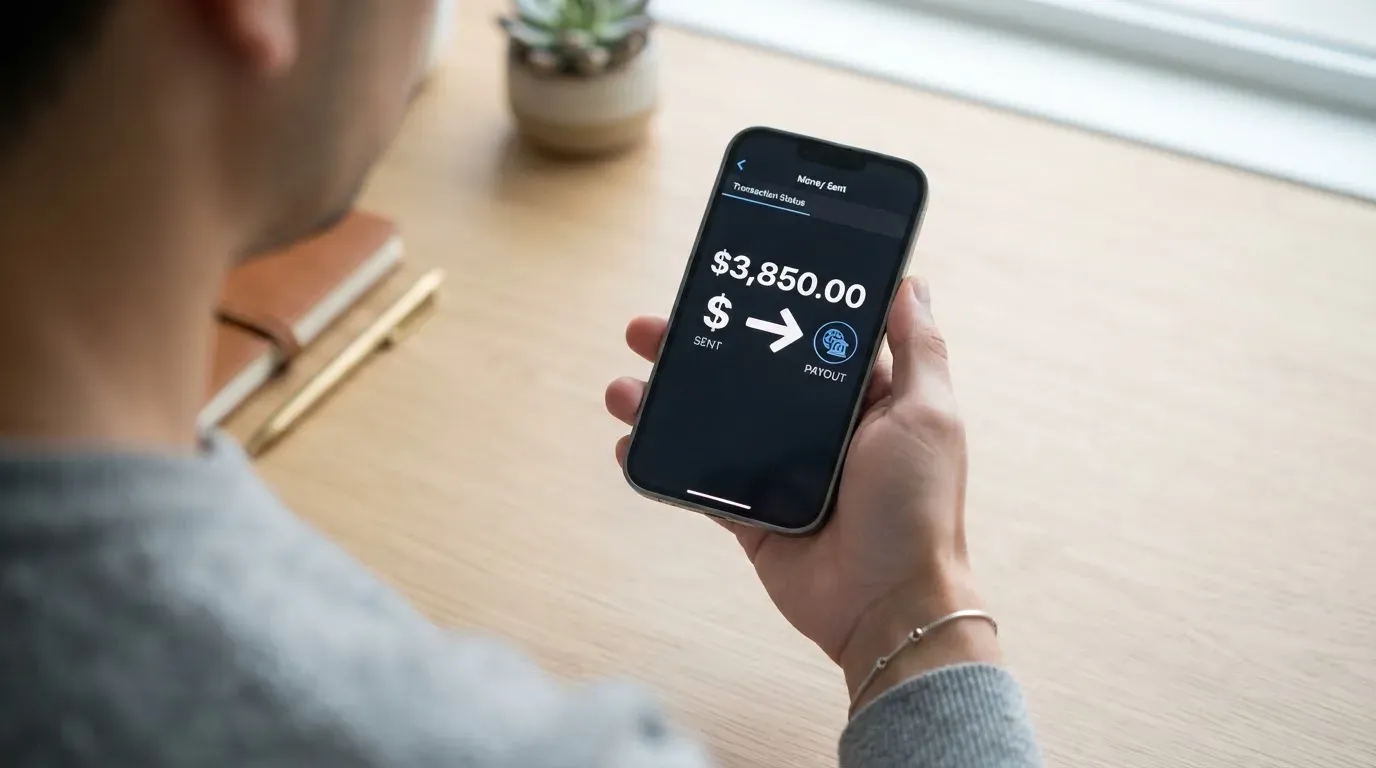
So the working model is: hold USDC in a Sponge wallet, move it into the card as collateral, spend down to whatever limit that collateral implies. The reverse movement exists too — card withdraw, or withdrawSpongeCard, returns USDC collateral to the wallet, with an amount specified up to two decimal places. Withdrawal fees are not stated.
Two practical warnings about this narrowness. First, network choice is not cosmetic. Blockchain transfers are irreversible, so a deposit sent on a network the card provider does not support, or sent to an address belonging to a different network, can be lost outright or need manual support recovery with no guarantee. Getting the network wrong here is not a fee, it is a loss. Second, USDC itself: Circle says USDC is redeemable 1:1 for USD and 100% backed by cash and cash equivalents, mostly in an SEC-registered government money market fund, with monthly reserve attestations by a Big Four firm — but stablecoins can and do depeg. USDC temporarily lost its peg in March 2023 during the US banking crisis, and TerraUSD collapsed in May 2022. “Backed” is a claim about reserves, not a guarantee that the peg holds on any given day.
There is also a cost that is not the card’s. On-chain network fees for your deposit are charged by the blockchain, not by the card provider — so the cost of topping up Sponge includes a network fee you have no control over and no contract with.
Paying with it every day
Everyday use is where this card is weakest, and I want to describe the shape before the details. Sponge has no consumer app: nothing to find in a store, no ratings to read. It is used via the CLI (npx spongewallet), the SDK and MCP. That is a coherent choice for a developer audience and an incoherent one for anyone who just wants to tap a card at a till.
Wallets: not stated. Apple Pay, Google Pay: not stated, and since these are tokenised numbers rather than plastic, there is nothing to point at. ATM withdrawals: not stated. Rewards or cashback: not stated — no loyalty scheme of any kind is described. Card currency and multi-currency: not stated, even though spending is backed by USDC, which makes it reasonable to expect a US dollar card and an expectation the pages do not confirm. Disputes: not stated, which is the one I would think hardest about. A chargeback is a refund ordered by the card issuer to settle a dispute, with reason codes such as fraud, duplicate billing or goods not received. In the US, debit card reversal rights come from Regulation E and credit card rights from Regulation Z, and prepaid-card coverage varies and should not be assumed. Sponge describes the card as a credit card, so the credit-card frame is the relevant one — but nobody reading the public pages could tell you how to raise a dispute or where the complaint route starts.
And then acceptance, which is more conditional than “wherever Visa is accepted” sounds. Merchants can look up the BIN to see which institution and country issued a card, and may apply extra scrutiny if the issuer country differs from the billing address. That is why a card issued in one country can look foreign to a shop in another. Some merchants decline prepaid or foreign BINs because the lookup reveals the card type and issuer country. With no card currency and no issuing bank published, a Sponge card is not obviously distinguishable from any other virtual card at the till — and in the one market where address verification works, AVS is generally unavailable for foreign-issued cards, which can cause declines.
What can go wrong
Let me separate the things Sponge actively documents from the things it leaves open, because they deserve different amounts of your worry.
The security handling is good and worth copying. The card number and CVC are returned encrypted with a one-time secret key, and the docs tell you to treat the result as a secret, not to log it and not to persist decrypted values. That is a sensible default for a card meant to live inside an agent’s toolchain, where card details would otherwise end up in logs. What is not stated: the custody model, two-factor authentication, and freeze. There is no published answer on who holds your USDC between card fund and the purchase, and a self-custody-linked arrangement is a materially different risk profile from a custodial one.
Complaints: there are none to read, in either direction. Sponge publishes no incident reports. A search on 2026-10-21 for user reports or news found nothing, and there is no Trustpilot page or review collection. That is genuinely ambiguous. A card with almost no users produces almost no complaints, and a card with no published complaints because nobody looked is the same picture. Do not read the empty result as a clean record; read it as an empty record.
Counterparty risk is the one I would price. Sponge Inc. is the company behind the card, with the card issued by Rain. Licences: not stated. Visa and Mastercard do not issue crypto cards to consumers themselves; they license issuers and can suspend a programme. Visa terminated its global agreements with FTX on 13 November 2022 and the FTX US debit card was wound down by its issuer. WaveCrest, a Visa issuer that supplied crypto card brands, was suspended by Visa in Europe in 2018, closing all WaveCrest-issued Visa programmes. Programmes do close. The typical sequence is a notice period, then spending and loading stop, then users are asked to withdraw remaining balances — and a 2026 closure reported by a single secondary source, which I could not confirm elsewhere, ended new loads on 8 July 2026 and spending on 8 August 2026. If a crypto programme is being wound down while your USDC collateral is sitting in it, “withdraw your balance” becomes a deadline rather than an option, and the network fee to get it out is charged to you on the way.
Irreversibility cuts both ways. Blockchain transfers cannot be reversed by the network, and a stolen private key has no built-in recovery — the network cannot freeze or return the funds. Custodial platforms have a record of failures: Mt. Gox (about US$350 million reported stolen, 2011–2014), Coincheck (about US$400 million, 2018), Ronin Network (US$625 million, 2022). And stablecoins are not censorship-proof in the other direction either: Tether says it disables tokens in wallets on the OFAC sanctions list and has frozen funds tied to illicit activity. A card that sits between a wallet and a payment network inherits edges of both worlds.
Identity, and what I will not help you with. KYC is not optional in this product: the flow collects occupation or SOC code, a billing address, email, phone, and a list of consents, and it is a hosted flow followed by an issuer application. Nationality is recorded and screened separately from residence, because sanctions screening and issuer risk policy are often applied to citizenship and country of birth as well as to country of address. I am not going to describe any way around that, and neither should anyone selling you one. If a provider’s pitch to you depends on evading checks, that is the signal to walk away.
Taxes I will not advise on, but you should not ignore. The IRS treats digital assets as property, so exchanging them for goods, services or dollars generally produces a taxable gain or loss, measured in local fiat currency at the fair market value on the date of the transaction — which means each card payment funded from crypto may be a separate disposal. Whether that applies to you, and how, is a question for a qualified professional in your own jurisdiction, not for a card review.
What to take instead
If the appeal of Sponge is a crypto-backed Visa with a spend limit tied to your holdings, you are not short of options — and the alternatives below publish considerably more. Scores are mine on the same scale as Sponge’s 4.9.
| Card | Score | Card form | What it charges |
|---|---|---|---|
| Xplace | 7.7 / 10 | Visa, virtual (instant) and physical (Silver live; Gold/Platinum coming, delivery 7–14 business days) | Annual fee: Basic free, Silver $99/y, Gold $249/y, Platinum $999/y; borrowing has no origination fee; 0% FX on Platinum; FX for other tiers and the conversion fee are not stated |
| ether.fi | 6.7 / 10 | Visa, virtual and physical | First virtual card $10 in regional-pricing countries for core members (normally one free virtual card); FX fee by tier: Core 0.5%, Luxe 0.25%, Pinnacle and VIP none |
| Anodos Card | 7.2 / 10 | Physical or virtual, under licence from Visa | Free $0; Pro $9.99/mo or $99.90/yr; Elite $29.99/mo or $299.90/yr; card FX fee 1.50% / 1.25% / 1.00% by tier |
| Sponge | 4.9 / 10 | Virtual only | Not stated |
Xplace is the most conventional of the three, with a real tier ladder and a stated fee schedule. Its country list is not stated either — the terms only say services are not available in all jurisdictions — while Visa acceptance is 160+ countries. It accepts BTC (cbBTC), ETH (wETH), SOL, JitoSOL, USDC, USDT and xStocks on Solana, which is a far wider top-up menu than Sponge’s single coin. Cash mode spends a stablecoin balance, Credit mode borrows against holdings, and credit-mode cashback runs 0.5% to 2% by tier, paid in USDC to the wallet at settlement. Card currency is not stated — the same gap as Sponge.
ether.fi is the strictest on eligibility and the most explicit about it. It issues only in listed jurisdictions, residence-based and “subject to KYC and compliance” — Andorra, Argentina, Australia, Austria, Brazil, Canada, Cyprus, Czech Republic, France, Germany, Hong Kong, Hungary, Italy, Japan, Mexico, Poland, Portugal, Singapore, Spain, Switzerland, UAE, UK, plus 31 US states, with Belgium and Ireland eligible without physical delivery. The blunt line is worth quoting: if your jurisdiction is not listed, you will not be able to apply. Citizenship rules are not stated, and ATM withdrawals are blocked in North Korea, Iran and Myanmar. Its cashback is the richest of the three — up to 3% in ETHFI by tier, locked seven days then claimable, with lower ladders for euro purchases and Business at 1% — though ATM, cash advances, P2P and gambling categories are excluded and no payout cap is stated.
Anodos Card has the broadest stated reach and the most explicit sanctions posture. It is available in 150+ countries “with a few exceptions”, and it names what those exceptions are: cards cannot be issued to residents of Belarus, China (Mainland), Cuba, India, Iran, Iraq, Israel, Myanmar, Nepal, Nicaragua, North Korea, Russia, Syria, Turkey, Ukraine, Venezuela or Vietnam; Chinese and Hong Kong passports are not eligible; Nigeria, Sri Lanka and South Africa only with “enhanced review + explicit approval”; spending is blocked in Cuba, Iran, North Korea, Russia, Syria, Ukraine and Venezuela. Terms also require users to attest they are not US citizens, because the international programme is for people outside the United States — there is a separate US programme in 30 states. Foreign-currency transactions are converted to USD by the card network. Collateral sits in your own wallet on a supported blockchain: Ethereum, Polygon, Optimism, Arbitrum, or others the issuer adds.
Two observations. Every one of these three publishes a fee number, and Sponge does not. And every one of them publishes an eligibility rule, and Sponge does not. That is the difference between 4.9 and everything above it.
Who I would recommend it to
I would recommend Sponge to a developer who is already working in the Sponge ecosystem, whose software needs to hand an AI agent a USDC-backed Visa without a human tapping a card, and who is content to manage that card through the CLI or SDK rather than an app. In that specific job the design is coherent: one coin, one funding command, two networks, an encrypted card number that never has to be written down, and spending power that tracks collateral rather than an issued credit line. If you are building that, the narrowness is a feature.
I would not recommend it to you if any of the following is true. You want a card for ordinary daily spending and Apple Pay, Google Pay or ATM access matter to you — none of those are documented. You are outside the United States and cannot tolerate an undisclosed eligibility rule — there is no country list. You want to know what a payment costs before you make it — the fees are not stated. You want to raise a dispute when something goes wrong — the process is not stated. Or you are simply curious about crypto cards and would rather read one that publishes its prices: in that case Xplace, ether.fi or Anodos Card will answer questions Sponge leaves open.
If you are still considering Sponge, the one thing I would do first is not sign up for anything but ask, in writing, the four questions the site does not answer: which countries you can be served from, what each transaction costs, what the limits are, and who holds your USDC. A provider that answers those clearly has earned the rest of your trust. One that does not has told you something useful too.
Frequently asked questions
What is the Sponge card?
The Sponge card is a virtual Visa credit card issued by Rain, described as a Visa Principal Member, and accepted wherever Visa is accepted. Spending is backed by USDC collateral held in a Sponge wallet, and the collateral determines your spending power. There is no physical card in the documentation and no consumer app; the card is created through the CLI or SDK, primarily so that software and AI agents can hold and spend from it.
How does the Sponge card work?
You hold USDC in a Sponge wallet, move it into the card as collateral with the card fund command on base or solana, and the card spends against that collateral. The card number and CVC are returned encrypted with a one-time secret key, and the docs tell you not to log or persist the decrypted values. When you withdraw, card withdraw returns USDC collateral to your wallet. Fees at each step are not published.
Is Sponge a bank?
No, not on the evidence available. Sponge Inc. is the company behind the card, and the card itself is issued by Rain, which holds Principal Member status in Visa’s structure — that is a network membership, not a banking licence. The issuing bank is not named and Sponge’s own licences are not stated anywhere on its public pages. Its terms are governed by US law.
Can I use the Sponge card in my country?
Nobody outside Sponge can tell you, because the card pages publish no country list. The platform terms set only a minimum age of 13 for the service and say nothing about residence or citizenship, so eligibility is decided by an internal rule you cannot read or check in advance. By contrast, ether.fi lists its eligible jurisdictions and states that unlisted ones cannot apply.
Does the Sponge card require KYC?
Yes. The application runs a hosted KYC flow started from the CLI or SDK with a redirect URI, then an issuer application after approval. It collects your occupation or SOC code, a billing address, email and phone, and asks you to consent to E-Sign, the account-opening privacy notice, the card terms, an accuracy confirmation and a non-solicitation notice.
What does the Sponge card cost?
The card’s public pages do not state issuance cost, monthly or annual fee, conversion fee, foreign exchange fee, ATM fees, or any spending limit. Card currency and multi-currency support are also not stated. The only published cost item is implicit: on-chain network fees for your deposit are charged by the blockchain, not by Sponge.
How do I top up the Sponge card?
You move USDC collateral out of the Sponge wallet using card fund, with base shown as the example chain and the SDK mentioning base or solana as optional chains. No other coin is accepted, and there is no published bank transfer, card load or cash option. Top-up fees and minimums are not published, so check the network carefully before sending: transfers are irreversible.
Is the Sponge card safe?
The card-data handling is genuinely careful: the number and CVC come back encrypted with a one-time secret key, and the documentation tells you to treat them as secrets and never log or persist them. But the custody model, two-factor authentication and freeze features are not stated, and no user complaints or incident reports have been published — so the clean record reflects very few users as much as it reflects safety.
Is the Sponge card worth it?
For a developer wiring a USDC-backed Visa into an AI agent, probably yes: one funding command, two networks, spending power tied to collateral, and no card to lose. For an ordinary customer, no — with no app, no physical card, no published fees, no limits and no country list, you would be adopting the card without knowing what it costs or whether you qualify.
What should I check before choosing a crypto card?
Check four things that Sponge leaves open: which countries you can be served from, what a transaction costs in total, what your limits are, and who holds your funds. Then compare with cards that publish these — Xplace lists annual fees by tier, ether.fi lists jurisdictions and FX fees by tier, and Anodos Card lists both its fee schedule and its excluded countries.
Credit and cashback cards: choosing between them – cryptocardpicker
Content created by the «cryptocardpicker» team