
BingX Visa Debit Card: what the public terms tell you, and what they don't
 Available in US
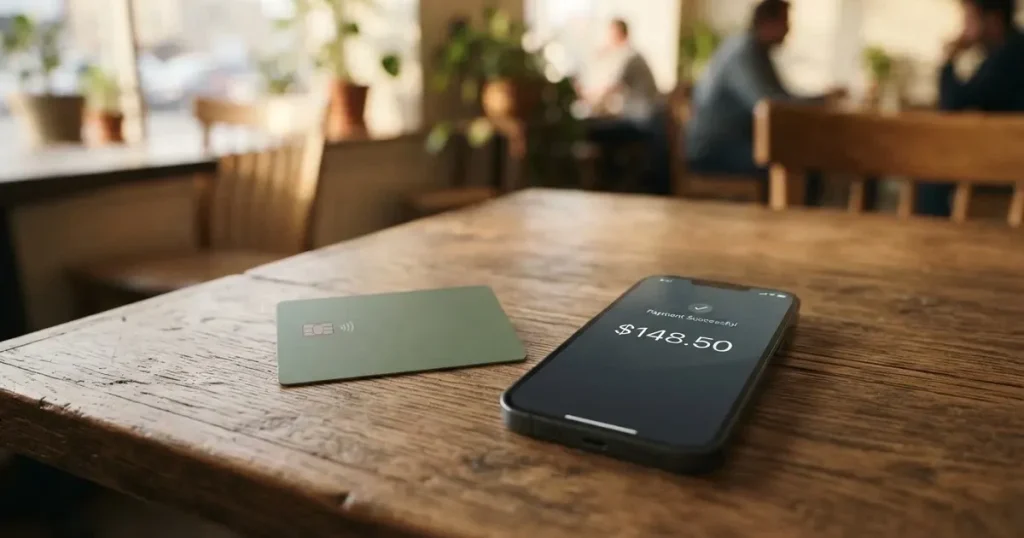
The BingX card is a Visa debit that spends the USDT sitting in your BingX Funding Account. The exchange launched it in July 2026 with Wirex as the named issuing partner in its own blog, and it comes in two versions: a free virtual card and a $180 metal card that adds ATM access and higher cashback. Because the card settles in USD, anything you buy in another currency goes through Visa’s conversion path, and the published terms leave several of the everyday numbers a careful user would want to see unstated.
Conditions are current as of October 28, 2026. Data checked against the BingX programme terms and card guide.
Verdict
The BingX card sits in an unusual spot. It is built directly on top of an exchange balance, the kind of arrangement that makes sense if you already keep USDT on BingX and want to spend it without first selling to a bank. In that narrow use case it works, and the metal card’s 3–5% cashback with a 5% tier-3 monthly cap is genuinely competitive. The trouble is everything around the edges: the card’s own terms page never names the issuer, the country list is loose (“other selected regions”), and a lot of the numbers a reader would normally check — the FX margin, the spending fee, the top-up fee — are simply not published.
For a BingX exchange user who already holds USDT and is comfortable with the platform, the metal card is a reasonable way to turn that balance into everyday spending. For anyone who does not already live inside the BingX app, the case is much weaker, because the same job can be done by cards with fuller public terms and wider stablecoin support.
| Criterion | Mark | Reason |
|---|---|---|
| Who can get it | 7 / 10 | Europe (EEA), APAC, LATAM and “other selected regions” — no full country list |
| Cost | 5 / 10 | Virtual is free, $0 annual fee, Metal is $180; ATM first $200/month free then 2%; purchase and FX rates not disclosed |
| Top-up options | 4 / 10 | USDT only from the Fund Account; no other coins or external rails published |
| Reliability and complaints | 4 / 10 | Issuer partner named only in the launch blog, not the terms; Trustpilot for BingX overall is 1.5/5 across 766 reviews with complaints about frozen funds |
| Everyday use | 9 / 10 | Virtual and metal Visa, Apple Pay and Google Pay on both, ATM on the metal card |
| Total | 5.8 / 10 |
Who will they give you the card
The card page describes the supported geography as Europe (EEA), APAC, LATAM and “other selected regions,” and explicitly tells prospective applicants to contact support to confirm whether their country is on the list. That is unusual phrasing for a card product: most issuers publish a country list, and the absence of one here means you cannot tell from the website whether you qualify. An older BingX support page for the previous Euro Mastercard programme listed KYC as unavailable in several countries, including Cuba, Iran, Russia, Ukraine, Pakistan, Nigeria and mainland China, but that list was for a different programme and the company does not say it still applies to the current Visa card.
The terms require the applicant to be at least 18 years old, to live in a supported country, and to hold a BingX account. Beyond that, identity verification must meet the local rules where you live, and the company says physical cards are offered only to select customers, without defining what “select” means. Neither the KYC tiers for the Visa card nor the typical processing time is stated in the materials I could read.
If you live in a country the support team confirms, and you can complete the verification the platform asks for, the path is open. If you are in a borderline jurisdiction, or in one of the countries the older programme excluded, the only reliable answer will come from a direct question to BingX support before you sign up.
How to get it
The application itself is not fully described in the public materials. The card is offered in two versions: a virtual card, which is issued instantly and requires no activation step, and a metal card, which is mailed out and is described in the guide as taking about 15 to 30 business days to arrive at the address you give. Both are Visa debit cards that settle in USD, and the guide says shipping is free for both versions.
What the public pages do not spell out is the document set required to get to that point. A separate guide for the card confirms that identity verification is required and that the information collected must meet the country’s rules, but it does not list the documents (passport, national ID, proof of address) or the order in which they are asked for. The older Euro Mastercard programme page described an automated review usually completing within one workday, but again, that was a different product.
A practical reading of the gap: anyone applying should expect to upload a government-issued ID and a selfie or short video at minimum, and to wait for the verification step to clear before a virtual card number appears in the app. The metal card adds a wait of about 15 to 30 business days for delivery, and the cost is $180 for non-VIP, non-agent users. The replacement cost for a lost or damaged card is not stated.
What it really costs
The headline cost picture is friendly: the virtual card is free to issue, the annual fee is $0, and the guide says there is no stated inactivity or closure fee. The metal card costs $180 and is the only one with ATM access — it sets a four-digit PIN at activation, waives the first $200 of ATM withdrawals in any month, and then charges a 2% service fee above that. The metal card’s ATM allowance is capped at $500 per day and five transactions per day. Transaction limits across both cards are stated in the unofficial third-party information as $10,000 per transaction or per day and $30,000 per month.
What is harder to pin down is what you pay when you actually use the card. The card spends USDT from your BingX Funding Account and converts at the real-time rate, but the spread, the retail purchase fee and the FX margin on non-USD purchases are not stated in the current terms. An older Euro Mastercard programme page described a 1% deposit fee, free in the EEA, and a 2% fee with a EUR 0.06 minimum outside the EEA, but that programme is no longer the one being marketed, and the company does not say those numbers carry over.
| Fee or limit | Amount |
|---|---|
| Virtual card issuance | Free |
| Metal card issuance | $180 (non-VIP, non-agent) |
| Annual fee | $0 |
| Card shipping | Free (both versions) |
| ATM fee | First $200/month free on Metal, then 2% |
| ATM daily limit (Metal) | $500 per day, 5 transactions |
| Per-transaction / daily limit | $10,000 (third-party figure) |
| Monthly limit | $30,000 (third-party figure) |
| Retail purchase fee | Not stated |
| FX margin on non-USD purchases | Not stated |
| Top-up fee | Not stated |
| Inactivity or closure fee | Not stated |
| Replacement fee | Not stated |
Cashback is the one place the BingX card does publish numbers, and they are the strongest part of the value story. The virtual card pays 2–3% monthly cashback, the metal card pays 3–5%, and the tier rises with how much you spend in a month. The tier-3 monthly cap is $100 on the virtual card and $150 on the metal card, and eligible subscriptions earn 20% inside that same cap. These tiers are separate from BingX’s VIP status, so a high-volume retail user is not automatically upgraded; they progress through the card’s own spend tiers.
In everyday terms, three patterns cover most readers:
- A domestic USD purchase on the virtual card. The card converts USDT to USD at the real-time rate and settles in USD. The retail purchase fee and the conversion spread are not stated, so the only number you can predict is the cashback (2–3%) minus whatever the platform takes in the conversion. If the spread is in the 0.5–1% range typical of on-platform conversions, the net is still positive at the low tier and clearly so at the high tier.
- A non-USD purchase abroad on either card. The card settles in USD, so Visa handles the currency conversion and BingX may add an FX margin on top. The FX margin is not stated. A 1% gap between the interbank mid-rate and what you are charged is common in this category, and without a published number the cashback benefit is partly offset by an unknown cost.
- An ATM withdrawal on the metal card. The first $200 in a month is free, anything above that is 2%, and you also eat any FX margin the ATM operator applies if you are abroad. Withdrawals on the virtual card are not supported at all.
The honest summary: the issuance and annual-fee picture is unusually clean, the cashback is genuinely competitive, and the per-transaction cost picture is opaque. A user who spends mostly in USD, in modest amounts, will probably come out ahead. A user who spends heavily in other currencies, or who pushes close to the monthly cap, will want to check the actual rates the app shows on a test payment before treating the cashback as pure profit.
How to top it up
The card is funded exclusively in USDT, and that USDT has to be in your BingX Funding Account before you can spend it. The card itself does not accept deposits from a bank card or a bank transfer; the top-up path runs through the exchange.
In practice, the documented route is one of two. Either you deposit USDT into your BingX Funding Account from an external wallet, on a network the platform supports, and the card draws down that balance; or you buy USDT inside the BingX app, either through Quick Buy or through P2P, transfer the resulting USDT to the Funding Account, and the card picks it up from there. The published top-up fee and the minimum top-up amount for the Visa card are not stated.
A few practical consequences flow from this design:
- Other coins are not supported. If you hold BTC, ETH, SOL or anything else on BingX, you have to convert it to USDT (and to the right network) before the card can use it. The cost of that conversion is a separate fee charged by the exchange, not by the card.
- The blockchain network you send on matters. USDT exists on several networks, and a deposit on the wrong one can be lost or stranded in manual recovery. There is no “send on any chain” button; the deposit address you get in the app is for a specific network, and you have to match it on the sending side.
- The Funding Account and the card are not the same thing. The Funding Account is an exchange balance; the card is a payment instrument that draws from that balance. If you transfer USDT into, say, a BingX futures account by mistake, the card will not see it.
A user closing the card down follows a separate process: the terms say you end participation by contacting Customer Support and completing whatever closure, verification, repayment or cancellation steps the platform asks for. There is no published timeline for balance return and no published fee for the closure.
Paying with it every day
The card behaves like a standard Visa debit in most respects. Both versions support Apple Pay and Google Pay, which means the card number can be tokenised into a phone wallet and used at a contactless terminal with a device-specific number. The metal card also works in physical form at ATMs and at in-store terminals, and the virtual card is meant for online and wallet use. The metal card’s ATM PIN is set at the activation step.
Beyond that, several everyday details are either unstated or loosely defined:
- Blocked merchants. Some countries, regions or industries may be declined for compliance reasons, but no list is published. If a payment is refused, the merchant’s BIN lookup or the issuer’s policy is the most likely reason, and the cardholder has no way to predict it in advance.
- Disputes. The terms ask you to report unauthorised or incorrect transactions as soon as you become aware of them. BingX says it will investigate and may credit the account “within a reasonable period,” without specifying day counts, and reserves the right to reverse a refund. If a direct dispute with BingX does not resolve, the terms refer the matter to 30 days of negotiation followed by SIAC arbitration. Whether a chargeback through Visa is available is not stated.
- Authorisation holds. The terms allow authorisation holds to last up to 30 days, which is longer than the 7 days typical of card networks. A held amount can affect what the card “shows” as available even after the original merchant has settled.
- Card management. The card is managed inside the BingX app, where you can freeze a lost or stolen card. The guide mentions app-based card management but does not detail whether spending limits, merchant-category controls, or per-transaction caps can be set by the user.
The integration with Apple Pay and Google Pay is the part that is most likely to “just work,” because tokenisation hides the card number from the merchant and from most decline logic. The 3-D Secure flow for online payments is also supported, which means an online checkout will sometimes ask for an extra confirmation in the app.
What can go wrong
Two risks sit on top of the usual category risks, and both come from the public information itself rather than from third-party complaints.
The first is the issuer question. BingX’s launch blog names Wirex as the issuing partner under a Banking-as-a-Service arrangement, with Wirex holding the Visa principal membership. The card terms page, however, refers only to “the applicable card issuer” under a Visa licence and does not name Wirex. If you ever need to escalate a problem, knowing which entity actually issues the card matters: it determines the regulator, the complaint scheme, and the path to a chargeback. The blog and the terms are not the same document, and a user relying on the terms alone would not know who the issuer is.
The second is the review profile of the wider BingX brand. The Trustpilot page for BingX as a whole reads 1.5 out of 5 across 766 reviews, with 64% of those rated one star, on a snapshot dated 2026-10-20. The recurring themes in 2026 reviews are restrictions and frozen funds blocking withdrawals, deductions for alleged improper gains or promotion violations, repeated ID and video verification requests, slow or generic customer support, forced liquidations, and a missing fiat deposit. None of these complaints is specifically about the card, but they describe the platform whose balance the card spends. A cardholder who cannot get USDT out of the Funding Account in the first place will not be able to top up the card.
Beyond those, the standard category risks apply. The card is custodial: the USDT sits on BingX, not in your own wallet, so the platform’s solvency and security posture are the determining factor. BingX publishes a Shield Fund, two-factor authentication, end-to-end encryption, 3-D Secure and instant transaction alerts as safeguards, and the card can be frozen inside the app if it is lost or stolen. The company names no email, no Telegram channel and no support hours on the card pages; the Help Center at bingx.com/uk/help is the only published entry point.
Two further structural risks are worth noting. First, a card programme can be suspended by the network or closed by the issuer with relatively little warning — the FTX Visa programme was wound down after Visa terminated its global agreements in November 2022, and WaveCrest was suspended by Visa in Europe in 2018, closing every programme that ran on it. If that happens to a BingX card, the typical pattern is new loads stop first, then spending stops, then a notice period for balance withdrawal. Second, stablecoins themselves can depeg: USDC lost its peg briefly during the US banking turmoil in March 2023. USDT’s peg has held through more stress, but it is not contractual, and the card’s spending power is only as stable as the token it converts from.
What to take instead
If the BingX card’s gaps — the unnamed issuer on the terms page, the USDT-only top-up, the unstated FX margin, the parent brand’s review profile — are deal-breakers, three cards cover similar ground with different trade-offs.
| Card | Score | Who can get it | Cost picture | Top-up | Rewards |
|---|---|---|---|---|---|
| BingX | 5.8 / 10 | EEA, APAC, LATAM, “other selected regions” | Virtual free, Metal $180, $0 annual, FX and purchase fees not stated | USDT from BingX Funding Account only | 2–3% (Virtual) or 3–5% (Metal) monthly cashback, tier-3 cap $100 / $150 |
| Coinbase Card | 6.4 / 10 | All US states except Hawaii | Zero spending fees, no annual fees, conversion spread applies at payment | Cash, any crypto on Coinbase, or paycheck deposit | Optional variable crypto rewards, US users only |
| OKX | 6.2 / 10 | EU plus Norway (Iceland and Liechtenstein excluded per the explainer) | No card fee, no OKX FX fee, conversion spread 0.1% (May 2026 explainer) vs 0.4% (launch press release) | USDC or USDG in OKX Pay; other coins must be converted first | 2–10% cashback on USDG purchases, monthly caps in EUR |
| Young Card | 5.7 / 10 | Not stated | Not stated officially | Not stated for the card itself | YNG-token cashback, 0.1–3.6% by Club tier |
The Coinbase Card is the most obvious alternative for a US-based reader: it is widely available, has a cleaner fee disclosure, accepts any crypto held on Coinbase (not just one stablecoin), and converts to USD at the time of payment. The catch is the geographic limit — outside the US it is not offered.
The OKX card, in the EU plus Norway, is the closest peer to the BingX card in mechanics. It also spends from a stablecoin balance (USDC or USDG) and converts at the point of sale, and it has published a conversion spread, although the two official figures (0.1% in the explainer and 0.4% in the launch release) disagree. Cashback is on USDG purchases only, with monthly caps that vary by VIP tier, and physical card availability is not mentioned in the materials I read.
The Young Card is the more speculative option, with several cost and eligibility numbers not officially stated and a cashback paid in the YNG token rather than in fiat or a major stablecoin. The token’s value is the main risk; the cashback rate ranges from 0.1% at the Essential tier to 3.6% at the Platinum tier, and rates for the Bronze and Silver tiers are not stated.
For a reader who is already a BingX user and wants to spend USDT specifically, the BingX card is still the most direct path. For a reader who can take a step back and pick on fee transparency, geographic reach, or stablecoin choice, Coinbase (US) or OKX (EU) are the cleaner options.
Who I would recommend it to
I would recommend the BingX card, and specifically the metal version, to a reader who already keeps a meaningful USDT balance on BingX, lives in a region the support team confirms, and spends mostly in USD. In that case, the 3–5% cashback on the metal card, the free first $200 in monthly ATM withdrawals, and the Apple Pay and Google Pay integration cover the common cases, and the cost you cannot see (the conversion spread) is paid on a balance you already hold. The $180 issuance fee on the metal card is worth it only if your monthly spend is enough to put you into the higher cashback tier or to use the ATM allowance regularly.
I would not recommend it to a reader who is not already a BingX user, who wants to spend BTC, ETH or any other coin without first converting to USDT, who plans heavy use in non-USD currencies, or who is uncomfortable with the issuer being named only in the launch blog and not in the terms. The Trustpilot picture of the parent brand, and the gaps in the published fee schedule, both push me toward suggesting Coinbase in the US or OKX in the EU for those readers.
Two final checks before signing up: ask BingX support to confirm your country is currently supported, and run a small test payment in your most common currency to see the actual conversion rate the app charges. If the spread is in line with the rest of the market, the cashback carries the card; if it is meaningfully higher, the value story collapses.
Frequently asked questions
What is the BingX card?
The BingX card is a Visa debit card that spends the USDT in your BingX Funding Account. It comes as a free virtual card or as a $180 metal card, and was launched in July 2026 with Wirex named as the issuing partner in BingX’s launch blog.
How does the BingX card work?
When you pay, the card converts USDT from your BingX Funding Account to USD at the real-time rate and settles the payment in USD. For non-USD purchases, Visa handles the currency conversion, and the platform may add an FX margin on top, although the rate is not stated in the public terms.
Is BingX a bank?
No. BingX is a cryptocurrency exchange, and the card is issued by a licensed partner under a Visa principal membership. The card terms page refers to “the applicable card issuer” without naming the partner, although the launch blog identifies Wirex.
Who owns BingX?
The card materials do not disclose BingX’s ownership, and that information is not in the card terms. Trustpilot reviews and exchange listings are the usual places to look, but neither was treated as authoritative for this review.
Is the BingX card available in my country?
The card page says Europe (EEA), APAC, LATAM and “other selected regions” are supported, and asks prospective applicants to contact support to confirm. A country list is not published, and an older Euro Mastercard page excluded several countries including Russia, Ukraine, Pakistan, Nigeria, Iran, Cuba and mainland China.
Does the BingX card require KYC?
Yes. The terms require you to be at least 18, live in a supported country, and complete identity verification that meets local rules. The exact documents, KYC tiers and processing time for the Visa card are not stated.
How do I top up the BingX card?
You top it up by putting USDT into your BingX Funding Account — either by depositing USDT from an external wallet on a network BingX supports, or by buying USDT in the app via Quick Buy or P2P and transferring it. Other coins have to be converted to USDT first, and the top-up fee is not stated.
How do I add the BingX card to Apple Wallet?
The virtual and metal cards both support Apple Pay and Google Pay. Adding the card is done inside the BingX app’s card management section, where the card is tokenised for the phone wallet and confirmed in Apple Wallet or Google Wallet.
Is the BingX card safe?
The card uses 3-D Secure, two-factor authentication, end-to-end encryption and instant transaction alerts, and the card can be frozen inside the app. The wider risk is that the balance is custodial on BingX, and BingX’s overall Trustpilot rating is 1.5 out of 5 across 766 reviews, with complaints about frozen funds and slow support.
Is the BingX card worth it?
It is worth it if you already hold USDT on BingX, live in a supported region, and spend mostly in USD, because the 3–5% cashback on the metal card is competitive. It is harder to justify if you would be opening a BingX account just for the card, if you want to spend non-USDT coins without first converting, or if FX margin matters to you and is not published.
Exchange cards: choosing by where your coins sit – cryptocardpicker
Content created by the «cryptocardpicker» team