
A virtual card for rubles that leaves too much unanswered
 Available in US
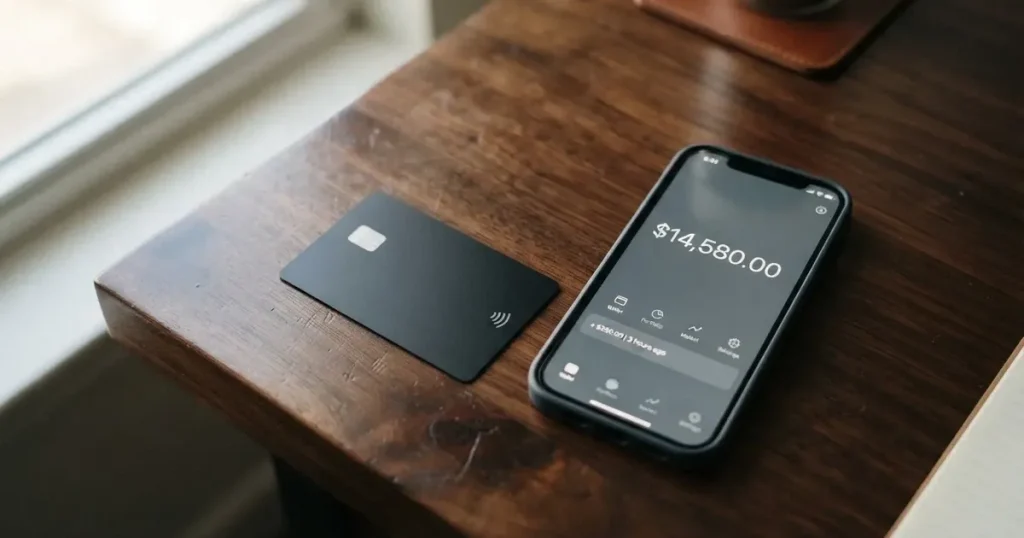
The Worldwide card is a virtual Mastercard you order and top up inside a Telegram mini-app, aimed squarely at people whose ordinary bank card does not work where they need it to pay. On paper the proposition is simple and the price is low: operations are listed at 0.00 USD, top-ups by SBP carry no transfer fee, and the entry tier starts at 2,900 RUB a year. What stops me recommending it is not the price. It is how much of the important stuff the card’s own pages decline to say: which countries will issue it, who the licensed issuer is, what the conversion markup is, what the spending limits are, and whether withdrawing money is possible at all.
The conditions described here are current as of October 28, 2026.
I gave it 4.2 out of 10. That is not a hostile score; it is the arithmetic of a card that is easy to obtain and cheap to hold, but thin on the disclosures a person is entitled to before they put money on it. Read on, and you will see exactly which gaps cost you money and which ones are merely untidy.
Who the Worldwide card suits, and who it does not
The card suits one reader in particular: an individual who already has a working bank card and account, who wants a second, disposable spending line denominated in dollars or euros, and who is comfortable running everything through a Telegram mini-app rather than a bank portal. If that is you, the fit is real — top-ups arrive in minutes, and the annual cost is low enough that you are not really deciding anything serious.
It does not suit anyone shopping for a bank substitute, a card with a real support department behind a regulator, or a way to hold money for weeks without asking questions. It also does not suit the person who plans to withdraw cash from an ATM, or who needs a physical card in the post, or who wants to receive salary or refunds onto it. None of those are available here.
There is a second audience for this card that the marketing never names, and it is worth naming yourself: someone with a USDT balance in a self-custody wallet who needs dollars to spend. The iOS app takes USDT on TRC-20. But the card’s own top-up page says crypto top-up is “not offered”. Those are two different products with two different top-up methods, and the marketing uses one name for both.
| Criterion | Mark | Why |
|---|---|---|
| Who can get it | 5 / 10 | Eligibility rules and issuing countries are not described; the “150+ countries” marketing is not matched by anything on the site |
| Cost | 5 / 10 | Standard from 2,900 RUB a year, Premium from 3,900, Promo 2,390 RUB issuance and 0 RUB maintenance in year one; operations 0.00 USD, top-up 0%; conversion markup undisclosed |
| Top-up options | 3 / 10 | Site: SBP only, crypto “not offered”. App: USDT TRC-20 |
| Reliability and complaints | 3 / 10 | Issuer described only as a “licensed foreign issuer”; developer URUS – FZCO; one App Store rating of 1.0 out of 5, flagged scam, unverified |
| Everyday use | 4 / 10 | Virtual Mastercard only; Apple Pay and Google Pay on Premium and Promo; no physical card, no ATM |
| Total | 4.2 / 10 | Cheap and quick to hold; too much of the substance is unstated to lean on it |
Will they give you the card?
Short answer: the site does not say. There is no eligibility test, no country list, no statement about citizenship versus residence.
What the site does say is that the card is ordered and topped up “from Russia without a VPN”, which tells you the intended user is inside Russia rather than telling you who may hold it. It is a Russian-language product: the site is in Russian, and the App Store app lists Russian among nine languages.
Then there is the claim that the card works “where Russian cards are not accepted” and in “150+ countries”. Both are marketing lines. They describe where the card can be spent, not where it can be issued. Nowhere on the public pages is there a list of countries whose residents may hold it, and citizenship requirements are not stated.
The App Store app is listed in many storefronts — the US, Canada, the UK, Turkey among them — but its listing says nothing about where the card is issued. Downloadable is not the same as available to you.
The distinction that matters most to a reader weighing this: no residency rule is stated at all. You are being asked to trust that a check exists somewhere, rather than being able to read it. When you cannot see the rule, you cannot know whether you are inside it.
How to get it
The process is short. You open the Telegram mini-app, register, and activate. The site stresses that it is fully online: “no queues or courier meetings”, no visits and no paperwork. It describes no passport requirement.
That last point deserves care rather than enthusiasm. “No visits, paperwork or passport are needed” is marketing wording, and it is not the same statement as “no identity verification exists”. The card’s pages do not describe KYC steps or accepted documents at all. Verification levels are not stated, and neither are the reasons a person might be rejected. What is stated is the absence of a process, not the presence of an exemption.
What you actually get is a virtual card, Mastercard by the site’s own FAQ, in one of four tiers: Standard, Premium, Promo or Business. Promo runs on a USD account. The App Store app lists a “virtual card” for top-up without naming the network.
There is no physical card anywhere in the materials — not unavailable at extra cost, simply not mentioned. If a plastic card in an envelope matters to you, this is not that product.
Fees and what a payment really costs
Here is the honest summary: the fees that are published are genuinely attractive, and the fee that would bite you hardest is the one that is not published at all.
| Item | What the card publishes |
|---|---|
| Issuance, Standard | from 2,900 RUB/year |
| Issuance, Premium | from 3,900 RUB/year |
| Issuance, Promo | 2,390 RUB; 0 RUB maintenance in the first year; 0% top-up |
| Issuance, Business | from 12,900 RUB/year |
| Card operation | 0.00 USD per operation |
| SBP top-up transfer | 0% |
| Crypto top-up | 0% on the Promo tier, as published |
| Currency conversion | at the Central Bank rate plus a markup — the markup is not stated |
| Payment in another currency | not stated |
| ATM withdrawal | not stated; no ATM function described |
| Spending limits | no numeric limits published |
Note the asterisk that is not there. The conversion markup is the difference between what the exchange rate says and what lands on your balance, and the card gives you the rate before you transfer but never the percentage. On a heavy-spending balance that is not a rounding detail; it is the largest number in this review.
Two everyday payments, so you can see which fees actually apply:
- A 2,400 RUB grocery shop purchase. You top up by SBP at 0% transfer cost, the rate is shown before you confirm, and the purchase is charged at 0.00 USD per operation. What you are exposed to is the undisclosed conversion markup — and the blog’s own warning that a foreign-currency charge may come out slightly above the ruble amount, which is why a small buffer is sensible rather than tidy.
- A 30 EUR subscription paid from a dollar balance. The operation fee is 0.00 USD. The rate on offer is described as “close to the exchange/central bank rate” — close is not a number. Whether a fee applies to spending in a third currency is not stated. This is the exact case where the missing disclosure hurts, because the currency conversion is the whole transaction.
A caution on the App Store side: one user review claims a 20 USDT card fee. That is a single unverified report in a listing with a single rating in it. I would not treat it as a price. I also would not treat the absence of published prices in that app as meaning there are none.
How to Top up the card
By SBP — Russia’s Fast Payment System — from any Russian card or account, credited in 1 to 3 minutes, sometimes up to 15. You can pay by QR or by entering the details in your banking app. Minimum 500 RUB, maximum 200,000 RUB per transfer, which the card attributes to the Central Bank’s SBP limit.
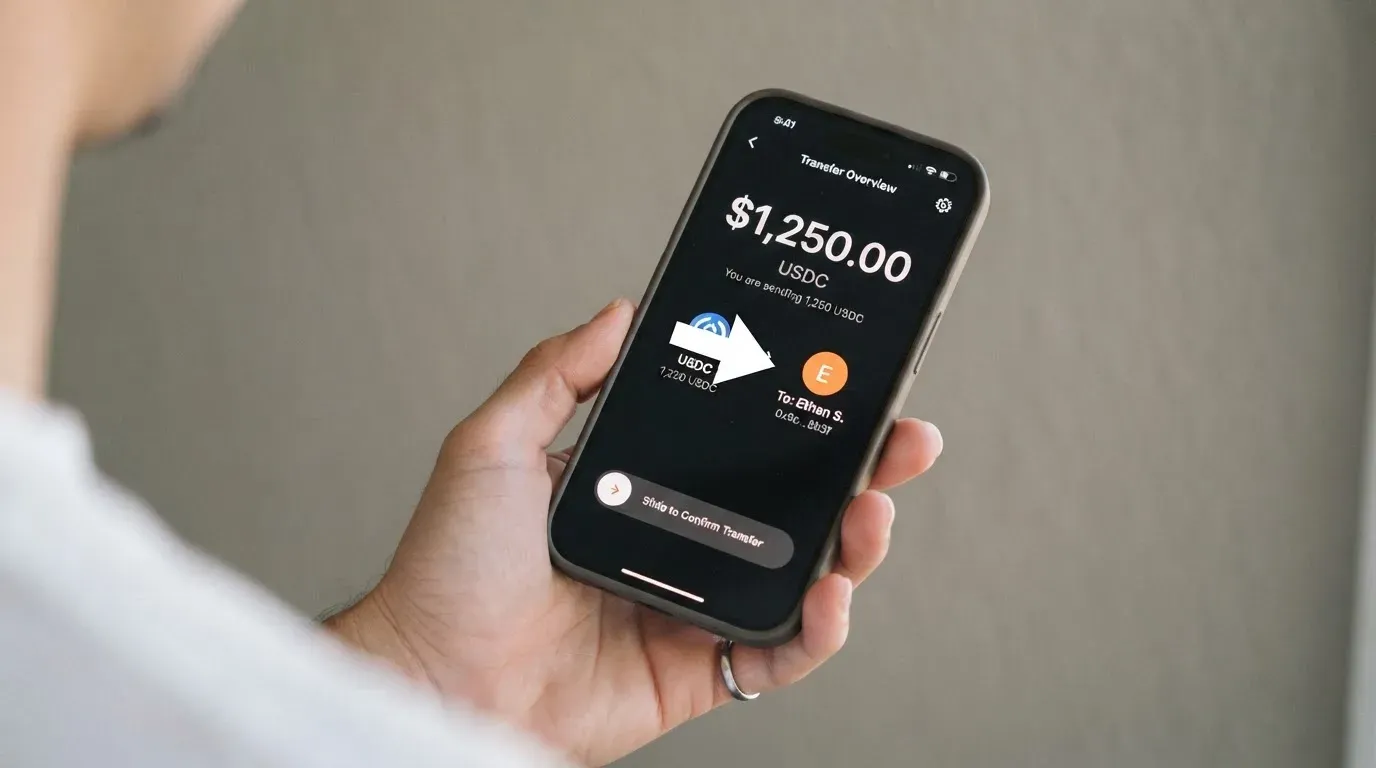
Crypto top-up on the site’s own top-up page: “not offered”. That is the site’s own sentence, and it is the reason this section feels thin.
The App Store app, “Worldwide: Wallet USDT Card”, does take USDT over TRC-20, plus top-ups from the existing account balance, with fee terms shown on the deposit and top-up screens. It also supports USDT withdrawals over TRC-20.
So there are two top-up worlds. If you use SBP, that is your route and it works well. If you hold USDT in a wallet, the iOS app is your route — and the app is where the crypto handling actually lives.
Two things you will not find here. Withdrawing money from the card balance is not stated, and neither is what happens to a balance if you close the account. If the second one matters to you — and if you are holding anything above pocket money, it should — that is an unanswered question, not an oversight I can excuse.
Paying with it every day
Apple Pay and Google Pay are listed for the Premium and Promo tiers only. If you are on Standard, your daily payment method is the card number pasted into a checkout form, which is exactly the situation where a merchant’s fraud systems are most likely to look twice.
The card’s blog claims Apple Pay and Google Pay work, and names the network as “Mastercard or Visa” — which contradicts the site’s FAQ, which says Mastercard. When the blog and the FAQ disagree, I go with the FAQ.
Other everyday-use facts, mostly absent:
- Blocked merchants and merchant category codes. Not stated. So you cannot tell in advance whether gambling, adult content, or any particular category is closed to you. Some issuers block categories by policy rather than by law, and the list varies by issuer.
- Rewards. Not stated. No cashback, no points, nothing. The referral angle is not described either.
- Google Play. Not found. The app exists on iPhone and iPad, iOS 16.0 or later, free, 18.3 MB, nine languages, versions from 1.0 on 30 June to 1.3.12 on 1 October. Its rating is 1.0 out of 5 from a single rating. If you are Android-only, that absence is decisive on its own.
- Failed payments. Funds return to the card balance automatically. If the failure is on the merchant’s side, Telegram support can help and return funds via SBP. A formal chargeback procedure is not described — worth noting, because chargebacks are the usual route to money back when a service does not deliver.
What can go wrong
The company picture is the part I keep returning to. The site names no operator. The card is described as issued by a “licensed foreign issuer” — unnamed. The App Store developer is URUS – FZCO, a UAE free-zone company form. No licences are stated. So the chain from your money to the card number ends at an institution you cannot identify.
On complaints: searches for reviews of this product found nothing. Trustpilot, Reddit and Otzovik had nothing. What exists is the single App Store rating of 1.0 out of 5, described as “not safe and probably a scam”, plus the unverified 20 USDT fee claim. Search results turn up an unrelated old Worldwallet complaint page and some Kazakh CardB news — neither is about this product, and services with similar names are not attributable to it.
One rating is not evidence of a scam. It is also not evidence of safety. It is evidence that there is no track record either way, and you should weigh it that way: not as a warning, but as an absence of reassurance.
On security, the good news is short. The card’s pages mention 3-D Secure and “modern encryption”. Beyond that: custody model not stated, card freeze not described, spending controls not described. The app offers biometric unlock, one account per user, and states that the “Assets” positions shown are internal products and that the company is “not an exchange, broker or investment adviser” — a disclosure, but not a custody answer.
Support is Telegram, described as 24/7 with live staff: chat on Standard, priority on Premium, a personal manager on Business. If a transfer does not arrive, support checks the receipt and credits it manually. That is a workable process. It is also manual, which means your recovery depends on a person responding.
Finally, the timeline is thin. The issuer is unnamed. The most recent dated item on the blog is 19 September 2026. The app’s first version is dated 30 June, with no year shown. For a product handling money, an unremarkable history is fine; a hard-to-date one is a question.
What to take instead
None of these is a recommendation — the scores are theirs, not mine — but you should see the field before you decide that thin disclosure is the price of admission.
| Card | Score | Cost | Top-up | Card type |
|---|---|---|---|---|
| Worldwide | 4.2 / 10 | from 2,900 RUB/year; operations 0.00 USD | SBP on the site; USDT TRC-20 in the app | Virtual Mastercard |
| Azul Card | 5.3 / 10 | $20 creation, refunded after $2,000 in spending; $5/month | Crypto to the card in Telegram; 4% | Virtual, anywhere Mastercard is accepted |
| Telecard | 6.1 / 10 | $5 one-time for Standard; VIP $49 setup then $19/month; $99 minimum deposit, stated as “NOT a fee” | USDT on Tron or Ethereum, USDC on Ethereum | Virtual Mastercard, USD |
| OnCards | 4.6 / 10 | not stated (“no hidden charges”) | USDT BEP20 only | Virtual Mastercard/Visa in Telegram |
A few differences are worth carrying in your head.
Azul publishes its country exclusions in full: not Russia, Belarus, North Korea, Iran, Syria, Cuba, Sudan, Venezuela, Ukraine, and the Crimea, Donetsk, Luhansk, Zaporizhzhia and Kherson regions — and it says the restrictions apply regardless of nationality. It names its fee percentages: 4% crypto top-up, $0.25 per transaction. What it does not publish is its FX fee. First top-up up to 10 minutes, later ones 1 to 5.
Telecard is the most transparent of the four about who may use it, in a different way: it bars only users blocked or sanctioned by the US Government, including OFAC, and offers identity check “in most major regions” without a list. It is the only one of the four that names its percentages: 1.5% currency conversion on non-USD payments, 0.5 USDT gas per successful card transaction, and FX and cross-border fees “up to 3% each”. It also names networks — USDT on TRC-20 or ERC-20, USDC on ERC-20, Polygon not supported — and has a referral scheme where 1 USDT equals 100 Fiorini. Its minimum deposit to activate is $99, which it explicitly says is not a fee because the money stays in your wallet.
OnCards says the least of all. No country list, no amounts, no fees, one funding route — USDT BEP20 — and no bank transfers.
The pattern across the whole category, which applies to Worldwide too: whoever publishes their numbers is making a different promise from whoever does not, and the difference is not in how good the card is but in how much you can plan around.
Who I would recommend it to
I would recommend Worldwide to the reader who has a Russian bank card that still works, wants a low-cost second line in dollars for ordinary spending, and is content to treat whatever sits on the balance as money already spent rather than money saved. To that person the SBP top-up is fast, the fee-free operation is real, and 2,390 RUB for a first year at 0 RUB maintenance is a fair deal for a virtual line that only exists on a phone.
I would not recommend it as the card you keep money in, because withdrawing is not stated and closure balances are not stated. I would not recommend it to anyone whose only funding route is crypto, because on the site’s own page crypto top-up is “not offered” — the USDT route lives in a separate iOS app with a single rating behind it. And I would not recommend it to anyone who needs a plastic card, an ATM, a chargeback procedure, or an answer to the question of who issued it.
Before you put money on it, ask three things, in this order: what is the conversion markup, because it is the fee you will pay most and it is not written down; what happens to my balance if I close the account; and which licensed institution issued this card. If any of the three answers surprises you, you have your answer.
Frequently asked questions
What is the Worldwide card?
It is a virtual Mastercard you order and top up inside a Telegram mini-app, positioned for people whose ordinary Russian bank card does not work where they need to pay. Operations are listed at 0.00 USD and SBP top-ups carry no transfer fee. Tiers run from 2,900 RUB a year. Its pages do not name the issuing institution, describe withdrawal, or publish spending limits.
Does Worldwide require KYC?
The card’s pages do not say. The site says no visits, paperwork or passport are needed, which is marketing wording rather than a statement that verification does not exist. No KYC steps, documents, verification levels or rejection reasons are described. The app offers biometric unlock, and one account per user is stated there. Ask support directly before funding.
How do I top up the Worldwide card?
On the site’s own top-up page, by SBP from any Russian card or account: 500 RUB minimum, 200,000 RUB maximum per transfer, credited in 1 to 3 minutes and sometimes up to 15. Crypto top-up is listed there as “not offered”. The separate iOS app instead accepts USDT over TRC-20, plus top-ups from account balance, with fees shown on screen.
Can I withdraw money from a Worldwide card?
Withdrawal from the card balance is not stated anywhere in the card’s public materials, and neither is what happens to a balance left on closure. The iOS app does support USDT withdrawals over TRC-20. If you plan to hold a balance rather than spend it steadily, treat both of these as open questions and ask support before you fund the card.
Is the Worldwide card free?
Not quite. Standard starts at 2,900 RUB a year and Premium at 3,900 RUB a year, while Business starts at 12,900 RUB. Promo charges 2,390 RUB for issuance with 0 RUB maintenance in the first year and 0% top-up. Operations are listed at 0.00 USD, so the running cost is low — the ongoing cost is what you spend and at what conversion rate.
Is Worldwide a bank, and who owns it?
No bank is named. The site names no operator, describes the card as issued by an unnamed “licensed foreign issuer”, and states no licences. The App Store developer is URUS – FZCO, a UAE free-zone company form. That is the full extent of what the public pages establish about the company behind the card, so treat the issuer question as unanswered.
Is the Worldwide card safe to use?
The listed safeguards are 3-D Secure, “modern encryption”, biometric unlock and one account per user. Not stated are the custody model, card freeze and spending controls. There is one App Store rating of 1.0 out of 5 calling it unsafe, which is not evidence of a problem, and there are no other reviews anywhere, which is not evidence of safety. No promise of safety or anonymity is possible here.
Can I add the card to Apple Pay?
On the Premium and Promo tiers, yes — Apple Pay and Google Pay are listed for those two. Standard is not listed as supporting either. Note that the card’s blog names the network as “Mastercard or Visa” while the site’s FAQ says Mastercard; I would rely on the FAQ. If a merchant’s checkout fails at the wallet step, the card number is the fallback.
Where can I use the card, and is it available in my country?
Spending is marketed as working “where Russian cards are not accepted” and in “150+ countries”, but no issuing-country or eligibility list is published, and no residency rule is stated. Citizenship versus residence is not addressed. Downloadability is also not availability: the iOS app is listed in many storefronts without saying where the card is issued.
Is the Worldwide card worth it?
Worth it if you want a cheap second spending line in dollars, funded from a Russian account through SBP, and treat the balance as spendable rather than savings. Not worth it if you need a physical card, an ATM, a chargeback route, crypto funding through the site itself, or a named issuer and regulator. The unmade disclosure that should decide it is the conversion markup.
Virtual cards: picking one for online use – cryptocardpicker
Content created by the «cryptocardpicker» team