
Toku pays your employer in stablecoins; the card spends what lands
 Available in US

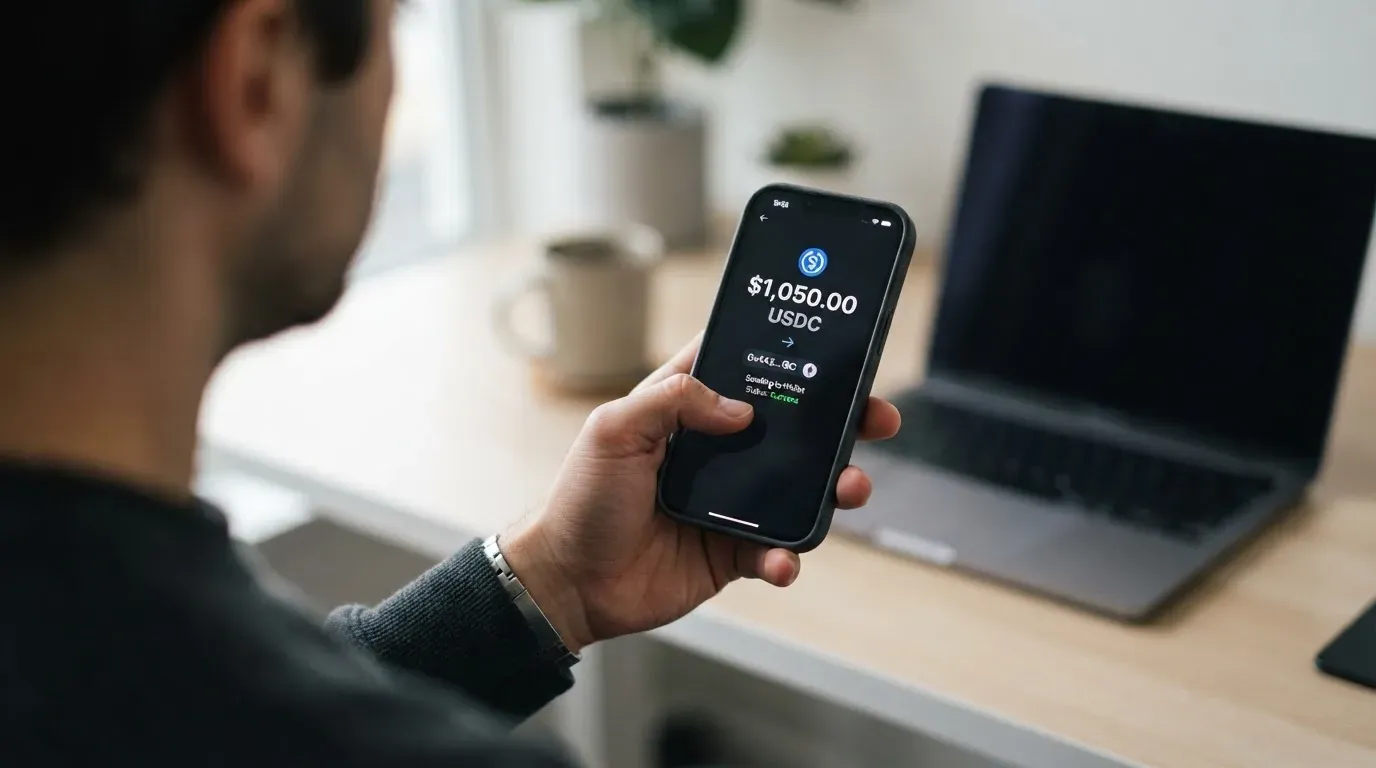
The first thing to understand about Toku is that it is not a card you load with your own money. It is a card you receive because a company on Toku’s platform decided to pay you in stablecoins. The payroll settles into a connected Rain wallet, and the Toku-branded Visa card draws on that settled balance. If you came here looking for a way to put your own crypto on a card and spend it anywhere, you will not find that here. If you want a card to receive wages from a Toku customer, this is a different and much narrower thing — and that narrowness is both the point and the limit of the product.
Conditions are current as of October 28, 2026.
That distinction drives everything below, including the score. I went through the card’s public pages and its stated terms, and I scored it 5.2 / 10. In plain terms: it does one thing clearly, discloses that thing thinly, and leaves the questions a normal cardholder would ask — what does it cost, what are the limits, which bank actually issues it — largely unanswered on the pages I could read. Once you understand who it is built for, the number makes sense. Contractors paid in stablecoins by Toku customers are the intended user. Everyone else should keep reading, because there are cards that do the general version of this better.
Score at a glance
| Criterion | Mark | Why |
|---|---|---|
| Who can get it | 5 / 10 | Issuance is available now for recipients in the US and Latin America (Mexico, Colombia, Brazil named); APAC listed as “APAC Q2 2026” |
| Cost | 5 / 10 | Issuance cost, conversion fees and ATM fees are not disclosed |
| Top-up options | 4 / 10 | You do not top up: the employer pays stablecoins into a connected Rain wallet, and the card spends the settled balance; Rain supports USDG, USDC, RLUSD |
| Reliability and complaints | 6 / 10 | Card issued by a partner under a Visa licence; for Rain, Cross River Bank is named, but whether it relates to the Toku card is not disclosed; Trustpilot 3.2 from one review |
| Everyday use | 6 / 10 | Virtual available immediately, physical “where applicable”; Apple Pay, Google Pay and ATM not disclosed |
Total: 5.2 / 10
The reliability mark deserves a word because a 6 there is not a complaint about broken service. It is a mark for thin evidence: no official incidents surfaced, no forum complaints surfaced, and exactly one Trustpilot review to go on. A single review at 3.2 out of 5 is not a signal in either direction — it is a rounding error dressed up as data. The higher score in that row reflects that nothing bad is documented, not that anything good is proven.
Will they give you the card?
Issuance is “available now” for recipients in the US and Latin America, with the page naming Mexico, Colombia and Brazil. Asia-Pacific is listed as “APAC Q2 2026”, which is a plan rather than an offer.
Read those country lists as a description of payroll reach rather than a list of places you can simply walk into and sign up. The card is for people who receive payroll through Toku. That means the gate is not really your passport or your address — it is whether a company runs its payroll on Toku’s infrastructure. If you are self-employed and hoping to sign up on your own, the page does not describe a route for you.
How to get it
There is a “standard KYC process at issuance”. You verify your identity once. What that process requires in practice — which documents, whether proof of address is needed, what age threshold applies — is not stated on the pages I read. The card is issued to payroll recipients of Toku customers, where the employer pays in stablecoins to your connected Rain wallet.
The card itself is Toku-branded Visa. The page names the Visa network only; Mastercard is not mentioned. The virtual card is available immediately. A physical card is shipped “where applicable”, with time and cost not stated. The card’s currency is not stated.
Two of the most common questions in this category — how to activate the card, and how to add it to Apple Wallet — have no stated answer, because Apple Pay and Google Pay are simply not disclosed on these pages. If being able to tap to pay at a terminal matters to you, that is an unanswered question you would need to put to Toku directly before you rely on the card.
Fees and what a payment really costs
This is the weakest section of the whole offer, and it is the one I would read twice before drawing a conclusion about any card like this. Issuance cost: not stated. Monthly fee: not stated. Conversion fees: not stated. ATM fees: not stated. Daily and monthly limits: not stated. There are no published tiers.
| Fee or limit | What the card states |
|---|---|
| Issuance | not stated |
| Monthly fee | not stated |
| Conversion | not stated |
| FX | not stated |
| ATM | not stated |
| Daily limit | not stated |
| Monthly limit | not stated |
| Card currency | not stated |
| Tiers | none published |
“not stated” is my phrase for these rows, meaning the card’s public pages do not say. It does not mean the fee is zero, and it certainly does not mean there is no fee. A Toku customer presumably negotiated the commercial terms of their own payroll arrangement; whether that negotiation produced a good retail fee schedule for you is a separate question, and one only Toku or your employer can answer.
Since the amounts are missing, let me at least walk you through which fees would bite on which everyday payment, so you know what to ask about.
Paying for something priced in your own country’s currency. If the balance you hold is a dollar stablecoin — USDG, USDC or RLUSD are the ones Rain supports — and you spend at a shop that charges in pesos, reais or pesos colombianos, something has to convert between them. Whether Toku does that conversion itself and what it charges, or whether the settlement happens elsewhere, is not stated. This is the fee that would matter most to you if you live outside the US, and it is exactly the number the pages leave blank.
Paying in the same currency the balance is denominated. If a payment needs no currency conversion, you may still be exposed to whatever scheme fee the programme carries. Also not stated.
Withdrawing cash. The card’s ATM position is not disclosed at all, and I have seen no statement about whether the card works at cash machines. Do not assume it does, and do not assume the first ATM fee is the whole cost.
A declined payment. When an authorisation is refused, some programmes leave a hold on the funds that can sit for several days, typically up to seven. Nothing in Toku’s pages addresses holds, so treat that as a question rather than an assumption.
A last practical note about spending crypto-linked cards anywhere: merchants can look up the issuing institution and country from the card’s first six or eight digits. If that issuer country differs from your billing address, some shops apply extra scrutiny, and some decline the card outright. It is not a sign that anything is wrong with you; it is a common friction for cards issued in one market and used in another.
How to top it up
You do not top it up. That is the honest answer, and it is worth sitting with.
Funding is by employer payroll, not by user deposit. Payroll settles in stablecoins to a connected Rain wallet, and the card draws on the settled balance. Rain supports USDG, USDC and RLUSD. Top-up methods are not stated because there is no self-serve top-up to state, and withdrawal is not stated either.
This has one big consequence for how you plan your money. Your balance exists when your employer pays, not when you decide to fund it. If you want cash out, or want to move value somewhere else, whether that is even possible on this arrangement is not something the pages disclose. Anyone who describes the Toku card as a general-purpose crypto card is describing something that is not on offer.
Paying with it every day
What is disclosed is thin but usable. The virtual card is immediate, so you can start spending as soon as the setup is done. The physical card is “where applicable”. The spending layer sits on a connected Rain wallet.
What is not disclosed: which wallets are supported, what the app looks like — no dedicated card app is stated, and store ratings were not checked — whether Apple Pay or Google Pay work, whether it works at ATMs, what rewards exist (none are stated), and how disputes work. None stated, not zero.
So the honest picture of daily use: you get a virtual Visa immediately, backed by wages that have already been converted into a stablecoin balance, and you spend from that balance. Whether you can hold it in your phone’s wallet, whether you can pay in a café that only takes contactless, and what happens when a payment goes wrong and you need someone to sort it out — none of that is answered in public.
What can go wrong
No official incidents came up in what I checked, and the reviews search turned up no Reddit or forum complaints about the card. That is genuinely reassuring as far as it goes, and it is a small amount of reassurance.
The issuer relationship is unclear. Toku provides payroll and compliance infrastructure, and the page says the card is issued by a partner under a Visa licence. Rain’s general footer says Visa debit cards are issued by Cross River Bank, Member FDIC, under a Visa U.S.A. Inc. licence, and that Rain Products, Inc. is the programme manager rather than a bank. Whether that applies to the Toku card is not stated. This matters more than it sounds: the party that issues your card is the party that stands behind your money and handles disputes.
What Toku is. Toku (WorkCo Inc per starting data) is a payroll and compliance company. It is not presenting itself as a bank, and Rain says it is not a bank, an exchange or an asset custodian. Your balance sits in a spending layer on a connected wallet. Two-factor authentication and card freeze are not stated, so I cannot tell you what controls exist if your card goes missing.
Support is thin. Questions go through the Toku team — a demo call and a general support link. No card-specific channels, languages or hours are stated. If your card is declined at a till in another country, the path to a human being is not published.
Who you can get one from. In June 2025 Rain and Toku announced a stablecoin payroll partnership covering USDC, RLUSD and USDG across 100+ jurisdictions for payroll. Separately, a January 2026 user report describes a business applicant being told “we are not right fit for you business at this time” after a KYB inquiry — a business-side rejection, not a cardholder complaint, but a reminder that approval is not automatic on either side of the relationship.
Structural risk you inherit. Stablecoins are not what their name suggests. USDT and USDC are dollar-pegged and dominate the market, but USDC briefly lost its peg in March 2023 during the US banking crisis, and TerraUSD collapsed outright in May 2022. Blockchain transfers are irreversible: a deposit sent on an unsupported network can be lost outright or need manual recovery with no guarantee. And these tokens are not censorship-proof — Tether says it disables tokens in wallets on the OFAC sanctions list and has frozen funds tied to illicit activity. If your wages land as a stablecoin and the issuer’s compliance department has questions, your access to that balance is a matter of someone else’s policy.
What to take instead
If none of the above applies to you — if you are not being paid by a Toku customer — the comparison below is more useful than anything else on this page. Three cards that do the general version of the job.
| Card | Score | Card type | Cost | Top-up |
|---|---|---|---|---|
| MetaMask | 7.1 / 10 | Mastercard; virtual issued instantly, Metal pre-ordered after approval; one card per user | Virtual free, no annual or maintenance fee; Metal $199/year | Spends directly from the connected wallet on Linea, Base, Monad, Solana |
| KAST | 6.1 / 10 | Virtual and physical, up to 10 cards; Visa Platinum Standard, Infinite metal for Premium, Infinite gold plated for Private | Annual membership: Standard 0 USD; Premium 1,000 USD/year; Private 10,000 USD/year, billed annually upfront | Stablecoins USDT, USDC, PYUSD, RLUSD; no bank account needed |
| TokenPocket | 5.8 / 10 | Mastercard/Visa debit; runs on Arbitrum; Fiat24 cards virtual, no physical card mentioned | NFT creation fee partly covered, user pays “a small portion”; “Apart from these, TP Card does not charge any additional fees” | Crypto deposits from the TokenPocket wallet; specific coins and networks not listed in the FAQ |
| Toku | 5.2 / 10 | Toku-branded Visa; virtual immediately, physical “where applicable” | not stated | Employer payroll in stablecoins to a connected Rain wallet; Rain supports USDG, USDC, RLUSD |
MetaMask is the strongest of the three on the numbers, and its fee story is the clearest: the virtual card is free with no annual or maintenance fee, the Metal card is $199/year, and the card is a Mastercard with a stated “minimal fee for each transaction” and no additional MetaMask fees. Sign-up is open in 45 listed countries and territories, with proof of residency required; other regions join a waitlist, and US and UK sign-ups are temporarily closed. Cashback is 1% on Virtual, with the Metal headline at 3% limited by a footnote to the first $10,000 spent and 1% after that, paid in mUSD into the Money Account.
KAST publishes the most complete price list of anything in this category, which is why it is worth a look even though its entry tiers are steep. Stablecoin top-up 0%, card spend in USD 0%, transaction fee 0%, Apple and Google Pay 0%, non-USD FX between 0.5% and 1.75% depending on your country and the transaction country, non-USD transactions under $25 cost 0.10 USD, and a declined transaction for insufficient balance costs 0.50 USD. Standard is free; Premium is 1,000 USD/year and Private is 10,000 USD/year, billed annually upfront with no monthly option. Cashback runs 1.5% on the first 2,000 USD/month for Standard, 2% on the first 10,000 USD/month for Premium, and 3% on the first 40,000 USD/month for Private. Its eligibility rules are the strictest of the three — country of residence and the ID you hold both matter, a VPN does not bypass them, and you can create an account in an unsupported country with KYC simply locked.
TokenPocket charges 1% when depositing cryptocurrency into the card, which it says is later refunded through rewards and reduced transaction fees — worth reading carefully before you treat it as free. FX fee not stated, and extra fees can come from inter-institution settlement. It covers Visa debit for a list of European countries and territories and Mastercard debit for Australia, Canada, Hong Kong, Japan, Taiwan, New Zealand, Singapore, South Korea and the UK, with the Americas planned for Q2 2025.
None of these three is right for someone who specifically wants to be paid in stablecoins by a Toku customer. The comparison is here for the reader who arrived expecting a general crypto card.
Who I would recommend it to
I would recommend Toku to one person: a contractor or employee who is already being paid through Toku’s payroll platform in stablecoins and simply wants the money to land on a card they can tap. For that person the card does something obvious and useful, the virtual card is immediate, and the alternative inside the same arrangement is nothing.
I would not recommend it to anyone choosing a card on the strength of its fee schedule, its limits, its app or its support network, because none of those are published. I would not recommend it to someone in Europe, to someone who wants to manage their own crypto on a card, or to anyone who needs to know which institution stands behind the balance — the Toku-specific answer to that last question does not exist publicly.
And if you are in the US, Latin America or APAC with no Toku customer paying you, then this is not your card, and you should read the alternatives above instead. The single most useful question to ask Toku before you rely on this: what does it cost me to spend this balance in my own currency, and who issues the card. Both answers matter more than anything else on this page.
Frequently asked questions
What is the Toku card?
It is a Toku-branded Visa card issued to people who receive payroll through Toku’s platform. The employer pays in stablecoins, the money settles into a connected Rain wallet, and the card spends from that settled balance. It is a payroll card for contractors and employees, not a general-purpose card you load with your own money.
How does the Toku card work?
Rain supports USDG, USDC and RLUSD. Your employer’s payroll settles in those stablecoins into your connected Rain wallet, and the virtual card is available immediately, so you can spend the settled balance straight away. A physical card is shipped “where applicable”. The card currency is not stated.
Do I need to top up the Toku card myself?
No. Funding is by employer payroll, not by user deposit, so there is no self-serve top-up to find. Top-up methods are not stated because you do not top up — your balance simply exists when you are paid. Withdrawal is also not stated, so ask before you assume you can move value out.
Who is eligible for the Toku card?
Recipients of payroll from Toku customers. Issuance is “available now” for recipients in the US and Latin America, with Mexico, Colombia and Brazil named, and Asia-Pacific listed as “APAC Q2 2026”. Because the gate is a payroll relationship rather than an application form, self-employed applicants without a Toku customer have no described route.
Does the Toku card require KYC?
Yes — there is a “standard KYC process at issuance” and you verify your identity once. What that means in practice is not stated: documents, proof of address and the age threshold are all left unsaid. Separately, a January 2026 user report describes a business applicant rejected after a KYB inquiry, so approval on either side of the relationship is not automatic.
What does the Toku card cost?
The card’s public pages do not say. Issuance cost, monthly fee, conversion fees, FX fees and ATM fees are all not stated, as are daily and monthly limits, and no tiers are published. That is the main reason this card scores where it does. Treat “not stated” as “unknown”, not as “free”, and ask for the schedule in writing.
Is Toku a bank, and who issues the card?
Toku (WorkCo Inc per starting data) provides payroll and compliance infrastructure, not banking. The page says the card is issued by a partner under a Visa licence. Rain’s general footer names Cross River Bank, Member FDIC, as issuer of Visa debit cards, with Rain Products, Inc. as programme manager rather than a bank — but whether that applies to the Toku card is not stated.
Can I add the Toku card to Apple Pay or use it at an ATM?
Not stated, in either case. Apple Pay, Google Pay and ATM support are all undisclosed on the pages I read, so do not plan around contactless phone payments or cash withdrawals until Toku confirms them for your region. Virtual card details are available immediately, which is separate from whether mobile wallet tokenisation works.
Is the Toku card safe to use?
There is a small amount of evidence in its favour: no official incidents surfaced, no Reddit or forum complaints surfaced, and Trustpilot shows 3.2 out of 5 from a single review — far too little to draw themes from. Rain says it is not a bank, exchange or asset custodian, and the spending layer sits on a connected wallet. Two-factor authentication and card freeze are not stated, so ask.
Is the Toku card worth it?
For someone paid in stablecoins by a Toku customer who just wants those wages on a card, probably yes, because the alternative inside that arrangement is nothing. For anyone choosing a crypto card on fees, limits, app quality or support, no — pick one of the alternatives that publishes those numbers, such as MetaMask or KAST. And ask two questions first: what does spending this balance in my own currency cost, and who issues the card.
Wallet cards: who should pick one – cryptocardpicker
Content created by the «cryptocardpicker» team