
Tap card: free-spending crypto card with quiet gaps in its published terms
 Available in US
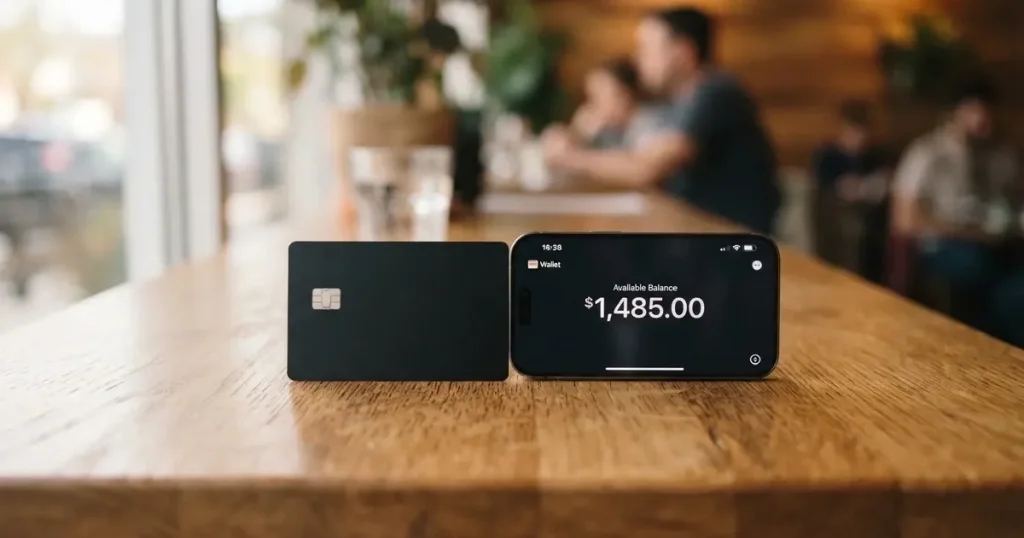
Tap is a crypto-linked payment card. You hold a balance in the app, and a Mastercard draws on that balance in the places Mastercard is accepted. On paper that is the whole idea, and it is a good one for anyone who has found ordinary banking slow, refused or simply unavailable. What you get on paper, though, is not what you get in practice. Tap’s public pages are strikingly quiet about the things that decide whether a card is usable: which countries it serves, what the fees are, which currencies the card itself carries, what the daily limits are. Almost every number a shopper would want is either absent from the site or comes from a third-party page that conflicts with the official one.
I spent my time on that gap. This review separates what Tap states from what outsiders report, because on this card the difference is not academic — it is the difference between a card you can plan around and one you cannot. The conditions described here are current as of October 28, 2026.
My score for Tap is 5.6 out of 10. That is not a rejection. It is a card with a genuinely good everyday-use profile sitting on top of a disclosure problem that pushes back hard against anyone who needs certainty before they load money.
Verdict: 5.6 out of 10, and the reason is disclosure, not design
If you already know how crypto cards work and you want a card that spends from an app balance with up to 8% cashback on qualifying purchases, Tap is worth a look. The company behind it is real, licensed, and — as of 5 October 2026 — swapping its euro card for a multi-currency Mastercard issued by Moorwand Ltd. The people the card is aimed at, on its own account, are users who want crypto, currency accounts and cashback in one place.
If you are anyone else — and that includes most people reading this who are simply trying to get a card that works — the missing country list, missing fee table and missing limit table are the problem. You cannot budget around a fee you cannot find. You cannot tell whether a declined payment was your limit, their risk system, or the shop deciding your card looks foreign.
Here is the score broken down, criterion by criterion.
| Criterion | Mark | Why |
|---|---|---|
| Who can get it | 6 / 10 | No country list published; the service “may not be available in all jurisdictions” |
| Cost | 6 / 10 | Not disclosed officially; unofficial sources report free monthly fee, issuance, top-up and ATM, FX 1.5%, plus reports of a $35 withdrawal fee and an inactivity charge |
| Top-up options | 5 / 10 | Coin list unpublished; stablecoins, USDT, BTC and SOL mentioned, plus a bank/crypto on-and-off ramp |
| Reliability and complaints | 4 / 10 | Tap Global Limited (Gibraltar), Gibraltar FSC DLT licence No. 25532, Moorwand Ltd as issuer for the new card; Trustpilot 3.4 out of 5, frozen accounts, withdrawal delays |
| Everyday use | 7 / 10 | Physical and virtual Mastercard; unofficial sources mark Apple Pay and Google Pay as supported while listing “No Apple Pay” as a con |
Total: 5.6 / 10
The shape of that table is the review in miniature. Everyday use scores highest because the card does the basic job well. Reliability scores lowest because the account-freezing and withdrawal complaints are the failure mode that costs a user the most when it happens.
Who they will give you the card
The honest answer is that Tap does not say, and that gap is itself the finding. There is no country list on the site. What appears instead is a disclaimer — “Services May Not Be Available In All Jurisdictions” — and an instruction to verify eligibility in your region.
I want to be plain about what that means for you. It does not mean the card is closed to you. It means you are being asked to do the issuer’s eligibility work yourself, in an age when the answer may differ by where you live, and that the service will not tell you what the answer is. Whether you are opening the app at midnight on a Friday or planning a subscription payment six months out, you have the same amount of information: none.
What that rules out, then, is any confident statement I could make about who gets approved in which country. It also means that if you are in a jurisdiction where you expect trouble — because of where you live, where you were born, or the nationality on your document — you should expect to find out at the verification stage rather than from a published policy.
One unofficial note that will matter to you if you are weighing identity checks: a third-party site reports that Tap’s verification uses an email address, a phone number and an identity document, and that proof of address and a selfie are not required. That is not confirmed by the card, and Tap’s own pages do not set out its verification levels either.
How to get it
Application is straightforward in principle — you register, verify, and get a card — but the card does not describe the steps, so treat the sequence as unknown until you are inside the app.
Here is what is stated and what is not, in one place, because this is where the not-stated items cluster:
- Verification requirements: not stated. Tap does not publish what it asks for, what levels it applies, or how long review takes.
- Card type: physical and virtual. Both exist. The physical card is a dark-finish Tap Mastercard. The card’s own currency is not stated.
- Delivery time: not stated. No shipping window is published for the physical card.
- Unofficial, and worth knowing: a third-party site lists the network as Visa, which contradicts Tap’s own Mastercard presentation. Two public sources disagree about the network of the same card. Treat the network as something to confirm in the app rather than something you have read.
That Visa-versus-Mastercard contradiction is small in itself. It matters because it is a clean example of the pattern across this review: where Tap is silent, a third party will fill the gap, and the fill may be wrong. Apple Pay and Google Pay show up later in exactly the same pattern.
Fees: what it really costs, and what nobody publishes
Officially, Tap publishes no fee schedule at all. No monthly fee figure, no issuance fee, no conversion percentage, no FX rate, no ATM terms, no daily or monthly spending limits. The card’s pages do not carry “Zero”-style claims either, so you are not being told the card is free either — you are being told nothing.
That is the core of the cost problem, and everything below it is context rather than reassurance.
The costs table
Every row here comes from research: either Tap’s own position, or a third-party report marked unofficial. The distinction matters more than usual on this card.
| Fee or limit | What Tap states | What third parties report (not confirmed by the card) |
|---|---|---|
| Issuance | not stated | Free |
| Monthly fee | not stated | Free |
| Top-up | not stated | Free |
| ATM withdrawals | not stated | Free and unlimited |
| Card decline | not stated | Free |
| Currency conversion / FX | not stated | 1.5% |
| Crypto withdrawal | not stated | A $35 fee reported by users |
| Inactivity | not stated | A fee reported by users |
| Daily spending limit | not stated | Listed as “Unlimited”, with a 15,000 EUR daily cap cited as a con |
| Monthly spending limit | not stated | — |
| Tiers | not stated on the site; cashback “up to 8%” | Cashback up to 8% with VIP tiers, entry level 0.5% |
Three everyday payments, and which fees bite
Since Tap gives us nothing to compute with, the useful thing I can do is show you where a fee *would* land if the unofficial figures hold. Consider a coffee bought in a country whose currency is not the euro, while your balance sits in another currency: on the unofficial 1.5% FX figure, the conversion cost sits directly on that purchase, and Tap’s announcement of a multi-currency card suggests this is a known pressure point rather than an edge case.
Now consider paying online in your own currency from a balance converted from crypto. Two unofficial claims meet here — that crypto must be converted before it loads to the card, and that FX is 1.5%. If both are right, the cost of a crypto-funded purchase is the spread between conversion rates plus the FX charge, and Tap does not publish the spread. That is the single largest unknown in your budgeting, and I cannot close it from public information.
Third, consider simply not being able to spend. If a 15,000 EUR daily cap exists alongside a promised “Unlimited” line on the same third-party page, then a large monthly bill could fail for a reason you were never told about. A decline, meanwhile, is reported as free — but a declined authorisation can also leave a hold on your funds for several days, typically up to 7, which is standard card-network behaviour and applies whether or not Tap charges a decline fee.
Two more things you should not assume from the silence: card currency is not stated, and although the site advertises “Use 80+ currencies” and loading in a currency of your choice, Tap has said the existing card is euro-denominated with other currencies converted at the point of sale. The multi-currency Mastercard announced on 5 October 2026 is the fix for that, but no launch date was given.
How to Top up: the step that decides whether Tap works for you
Topping up runs through a conversion step, and that step is where the unofficial sources place the friction: crypto has to be converted before it lands on the card.
Tap’s page gives you no coin list, no network list, no minimums and no top-up fees. What it does mention is stablecoins, USDT/BTC/SOL yields, a Bitcoin on-and-off ramp, and dedicated IBANs to hold seven national currencies. There is also a stated on-and-off ramp “between a bank account or wallet and crypto, available anytime” — though its fees and what happens to a balance at closure are not stated.
The unofficial picture is more specific and less comfortable. A third party lists that crypto must be converted before loading, shows the number of supported cryptocurrencies as 48 in one place and 0 in another on the same page, and lists withdrawal fees at $35. So the sequence a user describes is: hold crypto, convert it, load the resulting balance, spend it.
If you are the kind of person who reads that and feels the friction, Tap is telling you something about itself. A card that requires conversion before loading is not a card that spends directly from your wallet. If spending native crypto without an intermediate sale matters to you, this is the wrong shape of product.
One practical warning that applies to any stablecoin transfer, Tap or not: blockchain transfers are irreversible. A deposit sent on a network the provider does not support, or to an address belonging to a different network, can be lost or need manual support recovery with no guarantee. Tap does not publish which networks it supports, so you cannot check before sending — which puts the burden entirely on you to be certain.
Paying with it every day
Day-to-day spending is the strongest part of this card: a physical and virtual Mastercard, free ATM withdrawals per third-party reports, and up to 8% cashback on qualifying purchases.
Cashback is the headline number. Tap states “up to 8%” on qualified purchases. It does not state the payout asset, the tiers, or any caps — so 8% is a ceiling, not a rate you should build a budget around.
Mobile wallets are where the sources genuinely contradict each other. Tap does not state Apple Pay or Google Pay support. A third party marks both as supported in its pros while listing “No Apple Pay support” as a con. My read is that Apple Pay probably works in at least some form, that the con line is stale or region-specific, and that you should verify it yourself in the app before you rely on it — because if mobile wallet support is what makes a card tolerable day to day, discovering a gap after you have loaded money is a bad time to discover it.
Two other things you will hit in normal use. Merchant category blocks are not stated, so you do not know whether gambling or similar categories are refused. And online authorisation may challenge you through 3-D Secure, Mastercard’s version being Identity Check, where a one-time code or biometric decides the outcome. Address verification is the other classic decline cause: it compares the numeric parts of the billing address you type against the issuer’s records, is mainly offered in the US, Canada and the UK, and is generally unavailable for foreign-issued cards — which means a card issued in Gibraltar can fail a check a UK shop relies on.
The app is the piece of good news with numbers attached: Tap’s iOS app is rated 4.5 out of 5 from 25 ratings, version 3.8.8, requiring iOS 15.6 or later, as read on 2026-10-20. The Google Play listing exists under com.tapngo.tap but its rating was not read, so I will not characterise Android experience.
What can go wrong
The most serious risk here is not a fee — it is an account that stops working and stays that way, for days or weeks, without a clear explanation.
Let me start with the company, because it determines who you would be dealing with in a dispute. Tap Global Limited is registered in Gibraltar (No. 118724), Madison Building, Midtown, Line Wall Road, Gibraltar GX11 1AA, licensed by the Gibraltar FSC under the DLT Regulatory Framework, Licence No. 25532. Banking and e-money are provided by “Our Authorised Issuing Partners” — the specific provider is shown in the app and varies by region, currency and account type, and is not named on the site. Tap also states plainly that it is “not a bank”. On 5 October 2026, Tap Global Group PLC appointed Moorwand Ltd as issuer and BIN sponsor for the new multi-currency Tap Mastercard, citing 400,000 customers.
So: a licensed, non-bank operator, with the actual banking partner determined by your region and shown only in-app.
The complaint record is where this becomes concrete. Tap’s Trustpilot profile shows 3.4 out of 5 from 321 reviews, 36 in the last 12 months, read on 2026-10-20; a separate UK listing shows 3.5 out of 5 from roughly 309 reviews. Tap has issued no official complaint material of its own. The reports describe:
- Accounts frozen or locked for days to weeks without explanation, dated between December 2025 and February 2026, including one report of 13 days.
- Deposits and withdrawals not arriving, in January, June and September 2026.
- Inactivity or monthly fees draining a balance, April to June 2026. Tap says its fees are set out in its terms.
- Repeated KYC checks and slow onboarding, and support that is slower at weekends.
Then the two structural risks behind those complaints. First, frozen accounts: if due diligence cannot be completed, EU rules require the institution to refrain from the transaction or relationship and, where necessary, end existing relationships — which is precisely why accounts close or freeze pending documents. Second, custodial exposure: with a custodial wallet the provider holds the credentials, so you must trust it completely, and the sector has a record of that trust failing badly — Mt. Gox (about US$350 million reported stolen, 2011-2014), Coincheck (about US$400 million, 2018), Ronin Network (US$625 million, 2022).
What Tap does offer is real but modest: freeze your card or lock your account instantly, in-app reveal, freeze and PIN view, a Gibraltar FSC DLT licence, and support described as “Available 24/7” with no channels named, in app languages English, French, Greek, Italian, Spanish and Swedish. Two-factor authentication and any insurance are not stated.
I want to be clear about the shape of my judgement here. I am not telling you Tap is unsafe, and I am not telling you it is safe — I am telling you that its public disclosure does not let me answer that question, and that a frozen account holding your balance is a materially different experience from a declined coffee.
What to take instead
Three alternatives came up in my comparison set. I am not ranking them above Tap — on some dimensions they are clearly better specified, on others Tap’s everyday use scores higher. Read the rows against your own priorities.
| Tap | International Visa Card | UNi Card | Morse | |
|---|---|---|---|---|
| Score | 5.6 / 10 | 6.7 / 10 | 6.1 / 10 | 7.5 / 10 |
| Network | Mastercard (a third party says Visa) | U.S.-issued Platinum Visa, virtual; physical “Coming soon” | Mastercard | Visa prepaid debit, fully virtual for now |
| Who can get it | No country list published | Not available to residents or registrants of Belarus, mainland China, North Korea, Cuba, India, Iraq, Iran, Israel, Myanmar, Nepal, Nicaragua, Russia, Syria, Turkey, Ukraine, Venezuela, Vietnam; FATF grey-list countries case by case | Not stated | Residence-based, 18+, “over 140 countries”; closed-beta countries need an invite code |
| Cost | Not stated | $5 one-time virtual issuance; no maintenance; Classic free, Pro $9.00/month, Max $19.00/month | “No annual fee”; issuance not stated | Issuance and monthly fee not stated |
| Fees | Not stated; unofficial FX 1.5% | Card use in USD free; foreign currency “Visa exchange rate + 2% FX fee”; deposits free | “No annual fee or foreign transaction fee”; “live OTC rates”; “No hidden exchange fees” | “Zero foreign exchange fees or markups”; paying online and contactless is free |
| Funding | No list; crypto converted before loading, per a third party | USDC or USDT 1:1 into the USD account; also USD, EUR, SEPA, SWIFT, FedNow | Not stated | Debit card, stablecoin transfer, Account Details (USD, EUR, MXN, COP; BRL needs a Brazilian CPF); USDC, USDG and EURC via Solana free, other tokens carry a fee |
| Rewards | “Up to 8%” cashback | No cashback stated | Spend-to-Earn up to 3% | Not stated |
| Notably | ATM free and unlimited per third parties; support “24/7” | Purchases blocked in North Korea, Cuba, Iran, Russia, Syria, Ukraine, Venezuela; rule is by residence or registration | Spends from the UNi.Global balance | Self-custodial wallet; cannot serve customers subject to US, UK, EU or UN sanctions |
Three things stand out. Morse is the most specific of the four about who it serves and what it charges — and the most transparent about its limits, including that it is fully virtual for now. The International Visa Card publishes an actual price ladder and an actual FX formula, which is more than Tap does, but it comes with a long exclusion list applied by residence or registration rather than citizenship, and a physical card that does not yet exist. UNi Card publishes its headline fee promises clearly and offers spend-to-Earn up to 3%, but states neither its funding routes nor its eligibility.
Morse’s invite-code countries include the United Kingdom, Australia, Japan, Singapore, Switzerland, Türkiye and others — a useful reminder that “the card is open to me” is rarely a yes/no question in this category. If your country is on someone’s exclusion list, that answer is genuinely no, and it is better to learn it from a published list than from a declined verification.
Who I would recommend it to
I would recommend Tap to someone in this position: you already have a working relationship with crypto, you want a card that spends from an app balance, you value cashback up to 8% and a Mastercard, and you are comfortable treating your balance as money that might be temporarily inaccessible. That person gets a card that does its job well and costs, on the unofficial figures, nothing to hold.
I would not recommend it, for now, to someone whose priority is knowing exactly what a payment costs, or to someone who needs the card to work everywhere without surprises. Both of those needs are reasonable, and Tap’s public pages do not meet either.
My own checklist before loading money would be: confirm in the app which issuing partner you have and in which region; test a small load and a small purchase end to end; check the conversion figure you actually pay against the unofficial 1.5%; confirm mobile wallet support on your own device; and read the current terms for the withdrawal fee and any inactivity charge, because the users reporting them and the card’s silence are the gap you are standing in. Read them before you need them.
One last thing to hold onto: a card programme can end. Visa terminated its global agreements with FTX on 13 November 2022, and the FTX US debit card was wound down by its issuer; Visa suspended WaveCrest in Europe in 2018, closing all WaveCrest-issued Visa programmes. Closures typically run in stages — a notice period, then spending and loading stop, then you’re asked to withdraw what remains. A 2026 closure reported by a secondary source had new loads ending on 8 July 2026 and spending stopping on 8 August 2026; that is a single unconfirmed source, but the pattern is worth knowing.
Frequently asked questions
What is the Tap card?
Tap is a crypto-linked payment card: a physical and virtual Mastercard that spends from a balance held in your Tap app rather than from a bank account. You load the balance, typically by converting crypto or depositing money, and the card behaves as an ordinary Mastercard wherever it is accepted. Tap is operated by Tap Global Limited, a Gibraltar company licensed under the DLT Regulatory Framework.
How does the Tap card work?
You keep a balance in the app, and Tap converts that into spending power. Card payments go through the Mastercard network, so the shop sees an ordinary card payment and Tap sees an instruction to draw down your balance. Third-party reports indicate crypto has to be converted before it loads to the card, which means you are spending a converted balance rather than holding crypto at the point of sale.
Is Tap a bank?
No. Tap states plainly that it is “not a bank”. It holds a Gibraltar FSC licence under the DLT Regulatory Framework (Licence No. 25532), but banking and e-money come from “Our Authorised Issuing Partners”, with the specific provider shown in the app and varying by region, currency and account type. That distinction matters for what protections you can expect.
Who owns Tap?
Tap Global Limited, registered in Gibraltar (No. 118724), Madison Building, Midtown, Line Wall Road, Gibraltar GX11 1AA. On 5 October 2026, Tap Global Group PLC appointed Moorwand Ltd as issuer and BIN sponsor for a new multi-currency Tap Mastercard replacing the euro card, citing 400,000 customers.
Is Tap card available in my country?
Tap does not publish a country list. Its pages carry only “Services May Not Be Available In All Jurisdictions” and an instruction to verify eligibility in your region. So there is no honest way to answer this from public information — you have to open the app and find out. Note also that nationality and country of birth are often screened separately from residence.
Does the Tap card require KYC?
The card’s own pages do not state its verification requirements or levels. A third-party site reports that verification uses an email address, a phone number and an identity document, with no proof of address or selfie required — that is unofficial and not confirmed by Tap. Either way, card services like this are subject to anti-money-laundering checks, and that is why accounts sometimes freeze pending documents.
What are the Tap card’s fees?
Officially, none are published — no monthly fee, issuance, conversion, FX, ATM or decline figures appear on Tap’s pages. Unofficial sources report monthly fee, issuance, top-up, ATM and decline fees as free with FX at 1.5%, while users report a $35 crypto withdrawal fee and an inactivity charge. Because the official position is silence, budget nothing until you have checked the terms in-app.
How do I top up the Tap card?
Tap does not publish a coin list, network list, minimums or top-up fees. The site mentions stablecoins, USDT, BTC and SOL, dedicated IBANs holding seven national currencies, and an on-and-off ramp between a bank account or wallet and crypto available at any time. Critically, transfers are irreversible, so check the network is supported before sending anything.
Can I add the Tap card to Apple Wallet?
Tap does not state whether Apple Pay and Google Pay are supported. A third party marks both as supported in one place while listing “No Apple Pay support” as a con, so the sources contradict each other. Check it yourself in the app before you rely on it — if mobile wallet support is what makes a card usable day to day, find out before you load money.
Is the Tap card safe and worth it?
Worth it depends on what you want; safety cannot be fully judged from public information. Tap offers instant card and account freeze, in-app PIN view and a Gibraltar FSC licence, but two-factor authentication and insurance are not stated, and its Trustpilot score is 3.4 out of 5 from 321 reviews, with reports of accounts frozen for days to weeks and delayed withdrawals. Treat the balance as money that might be temporarily inaccessible.
App and neobank cards: when one suits you – cryptocardpicker
Content created by the «cryptocardpicker» team