
A Visa card for stablecoin holders on Solana, with a membership fee and a custody question left open
 Available in US
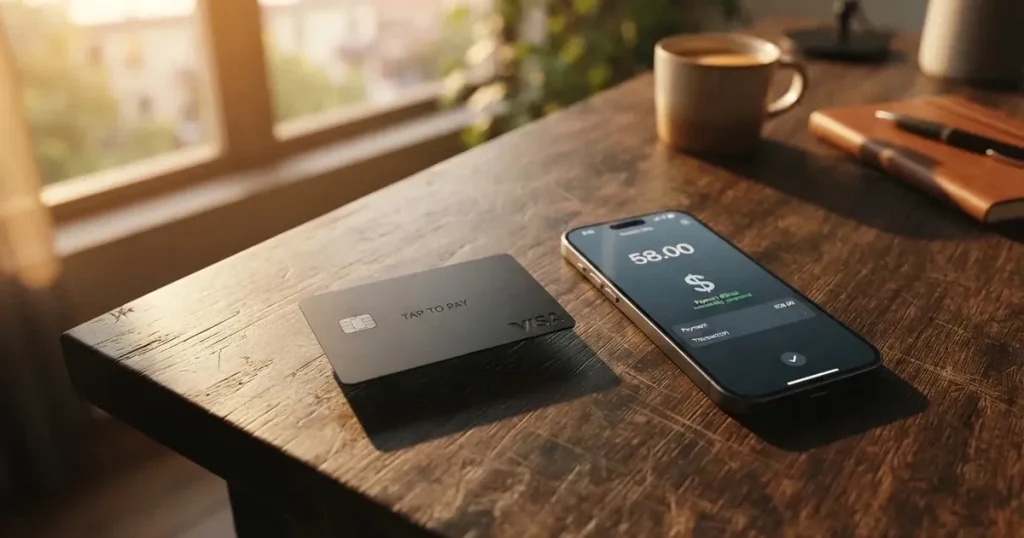
The Solayer card is a Visa you spend from a stablecoin balance, built mainly for people who already hold crypto and want to turn it into everyday purchases without a bank in the middle. It works. The parts I could not resolve are on the company’s side rather than yours: the legal entity behind Solayer is not disclosed on the public pages, the custody description in the documentation does not match the marketing, and the same fee appears at three different rates on three official pages. I scored it 6.2 out of 10 — above average for a young crypto card, below the point where I would call it a no-thought choice.
If you are reading this trying to work out whether *your* country can use it, stop early: the answer for a large part of the world is no, and it is decided by both your citizenship and where you live, not just by your address. The conditions below are current as of October 28, 2026.
Verdict: 6.2 out of 10
The score is not a rounding of one opinion. I broke it into the six things I think decide whether a card like this is worth your time, and each one is marked separately below. The reasoning in each row is mine, written out so you can argue with it.
| Criterion | Mark | Why |
|---|---|---|
| Who can get it | 7 / 10 | Closed to residents *and* citizens of a long list of countries, including most of the EU, the UK, Switzerland, Turkey, the UAE, India and China. Unofficial count from CryptoCardHub: 120 countries available, 94 restricted. Generous by crypto-card standards, but it is a wall, not a slope. |
| Cost | 5 / 10 | $20 a year membership, $24.99 or $59.99 for a physical card, $0.10 + 1.5% on non-USD spend, up to 3% cross-border, and a top-up fee the official pages state as three different numbers. |
| Top-up options | 5 / 10 | Stablecoins, on Solana, with other networks added at the issuer’s discretion. Which specific coins are accepted is not named on the pages. |
| Reliability and complaints | 6 / 10 | Issuer named as Third National. Solayer’s own legal entity and licences are not stated publicly. I found no complaint record at all — which is reassuring and also consistent with a product that has not been live long. |
| Everyday use | 8 / 10 | Virtual and physical Visa, Apple Pay and Google Pay, up to $250 per ATM withdrawal. The strongest category here, and the one where the pages contradict each other about whether the physical card and cash withdrawal exist at all. |
| Total | 6.2 / 10 | Solid for a stablecoin-on-Solana holder outside the restricted list. Not a card to move your salary on. |
The audience this suits is narrow and clear: people who already hold stablecoins, already live on or near Solana, and already cannot get a normal card, or simply do not want to touch a bank. If that is you, the daily-use mark of 8 is doing most of the work. If you want a card for ordinary spending, membership plus a foreign-exchange fee is the wrong shape for it.
Will they give you the card?
The honest answer is: it depends on two things at once, not one. Solayer states that residents or citizens of its listed countries are “not eligible to sign up for the Solayer Card, regardless of their current place of residence”. That sentence is doing a lot of work. Moving country does not help you if you hold a passport from a listed one. Holding a listed passport does not disqualify you if you live elsewhere — as long as the place you live is not itself listed.
The official eligibility list excludes, among many others: Russia, Belarus, Georgia, Turkey, Serbia, the United Arab Emirates, Ukraine, Moldova, Montenegro, most EU states, the United Kingdom and Switzerland. Armenia, Kazakhstan, Azerbaijan, Uzbekistan and Kyrgyzstan are not on the list, so they are not excluded — but the page is an exclusion list and says plainly that it does not publish the list of eligible countries, so not-excluded is not the same as confirmed. CryptoCardHub, a third-party site, counts 120 available and 94 restricted countries; treat those figures as unofficial.
Then there is the United States, where the card’s own documents disagree with each other. The eligibility list singles out a set of restricted US states — Arizona, Delaware, Georgia, Idaho, Louisiana, Maryland, Montana, Nevada, New Mexico, North Dakota, Ohio, Oregon, Rhode Island, South Dakota, Vermont, Washington, Wisconsin and Hawaii — while the card terms separately ask you to attest that you are not a US citizen and describe the card as “intended for those outside of the United States”. A US citizen living in Dubai reading this has to notice that one document says no and the other says yes.
One more thing the public pages do not say: which countries the card can be *shipped* to. That is not a restriction list, it is simply missing. If you are eligible and outside the US, nobody has published the delivery footprint.
How to get it
The route is ordinary KYC through a provider called Sumsub. You will be asked for your country of residence, address, occupation, annual salary, an email code, and one identity document: a passport, a driver’s licence or an Aadhaar card. You photograph both sides of it in JPG, PNG, HEIC, WEBP or PDF, up to 50MB, and then pass a face liveness check. You must be 18 or older.
What the pages do not tell you matters here too: whether a separate proof-of-address document is required, what the verification levels are, and what the rejection reasons are. If you have been turned down by another card for a document problem, you will not learn from these pages whether that would happen again.
After approval — and the stated review time is 3–5 business days after KYC — you choose between a virtual card and a physical one. The card is a Visa, issued by the Issuer under licence from Visa. The currency is USD, and any non-USD spend is converted to USD.
For the physical card, the delivery pricing is:
- US Express, $24.99 — 2–5 business days, tracked
- International Express, $59.99 — 5–11 business days, tracked, production included
Shipping is the only charge for the card itself. New users pay a one-time $20 account activation fee, which covers the virtual card for the first year. Two things to know before you order: the delivery address cannot be changed after the order, and if you lose the card or it is stolen you freeze it in the app and order a replacement — the replacement fee is not stated.
One wrinkle. The fee page says the cards are digital only, with a physical card “coming soon”, while a separate Physical Card page describes ordering one with the delivery prices above. Both pages are live. I would not be surprised if you reach the point of ordering and the option is not there.
Fees: what it really costs
Here is the honest picture, and it is patchier than it should be. The card’s own pages give different numbers for the same thing, so I have listed both where they conflict rather than picking one for you.
| Fee or limit | What the pages say |
|---|---|
| Membership | $20 per year, covering card access and maintenance for 12 months |
| Virtual card | Covered for the first year by the one-time $20 account activation fee for new users |
| Physical card | No card fee; shipping only — $24.99 US Express or $59.99 International Express |
| USD transaction | $0.15 |
| Non-USD transaction | $0.10 + 1.5% (fee page) or $0.10 + 1.75% (FAQ) |
| Cross-border fee | Up to 3% (terms) |
| Conversion to USD | At the card-network rate |
| Top-up fee | 1% per top-up (fee page), 0.5% (FAQ), or $0.10 per transaction (top-up tutorial) |
| Cash advance | Not available (terms) |
| ATM, physical card | Where Visa ATMs are available; up to $250 per withdrawal including surcharges; maximum three attempts per rolling 24 hours; standard ATM and network fees may apply |
| Spending limits | “Dynamic and may be modified at any time” — figures not stated |
| Cards per account | 10 in total, including cancelled |
| Late payment | Up to $40 |
| Returned payment | Up to $29 |
| Interest | APR 0% (may be introduced later) |
Let me run three ordinary payments through that, because that is how the fees actually behave.
Coffee in your own country, $4.50, card denominated in USD, merchant prices in USD. This is the cheapest case and it is not free: $0.15.
A $60 online purchase in a currency that is not USD. If your card and your statement are in USD and you are paying a euro-priced merchant, you get $0.10 + 1.5% from the fee page — $1.00 — plus conversion at the card-network rate, plus up to 3% cross-border if the terms apply to it. That is $1.60 before the exchange rate itself moves. If the FAQ rate of 1.75% is the one that gets applied, it is $1.15 on the fee line instead. This is the number that decides whether the card is worth using abroad at all.
Splitting a restaurant bill, or paying at a place that charges a surcharge. $0.10 + 1.5% still applies, and surcharges are passed on to you on top. Nothing in the table above caps the per-transaction fee in dollars.
Two things are missing entirely. The crypto conversion fee — what it costs to turn your holding into spendable balance — is not stated anywhere on the pages I read. And cash advances are not available while the terms also describe ATM use in detail; those two statements sit in the same document and cannot both be simple. A news site claims ATM withdrawals; that is not an official claim. If cash withdrawal matters to you, treat it as unconfirmed.
On limits, the terms say only that they are dynamic and may change at any time, with no figures. An undated Chinese-language listing on cryptocards.so gives $10,000 daily and $30,000 monthly spending and $500 ATM. That is a third-party page, it may predate the current structure, and I would not plan around it.
How to top up
Topping up is the part of this card that is straightforward, and it starts with a transfer on the right network. The supported chain is Solana, with other networks added at the issuer’s discretion. The assets are stablecoins — the specific coins are not named. Minimum top-up and any fiat on-ramp are not stated.
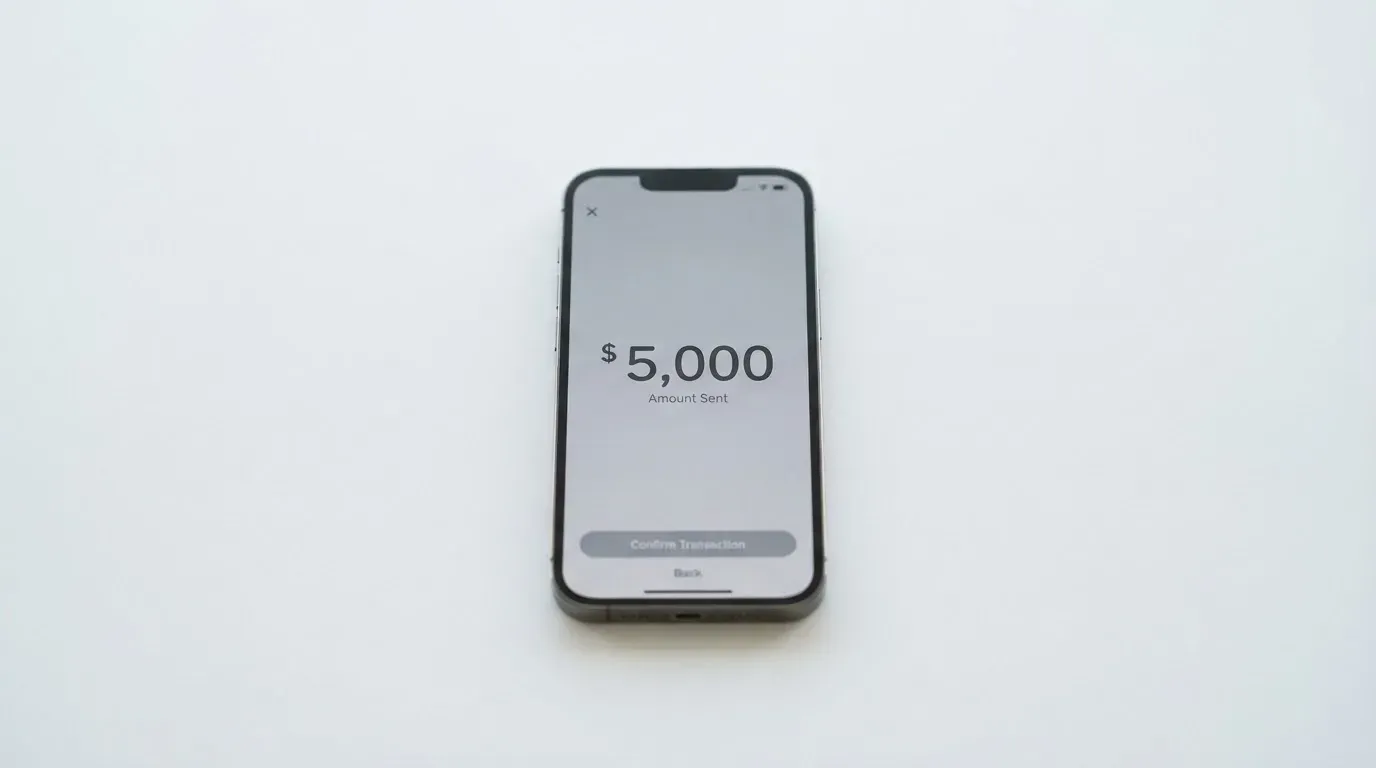
The sequence in the app: Card tab → Deposit → approve in your wallet. The top-up fee is the number to look at twice, because the official pages give it as 1% (fee page), 0.5% (FAQ) and $0.10 per transaction (tutorial). Which one you pay, I cannot tell you from outside.
The network point is not a formality. If you send on a network the provider does not support, or to an address belonging to another network, the transfer is irreversible and may need manual support recovery with no guarantee. So confirm the network in the app before you send, every time. And if the coin you hold is a token whose network charges gas in a different asset, a wallet holding USDT but no ETH cannot send — that is how ERC-20 fees work.
One rule with teeth: cards deactivate after 6 months of inactivity, and getting reactivated means a new card issuance. If you are not a regular spender, you should expect to pay to reactivate.
How you get money back off the card is not covered. The top-up page and the terms do not explain withdrawing the card balance to a wallet, though the terms do say the balance can be repaid anytime without penalty, that chargebacks resolved in your favour are credited to the Solayer Account, and that on termination the card must be surrendered. So the balance is treated as repayable in principle and unexplained in practice. For a card you may hold a meaningful balance on, that is a question worth asking support before you load it.
Paying with it every day
Everyday use is this card’s best category, and I mean that as a relative judgement among crypto cards rather than a comparison to a normal bank card.
You get a virtual Visa and a physical Visa, both working through Apple Pay and Google Pay for contactless. The Solayer Pay app is on the Apple App Store and Google Play. In the app you can freeze and unfreeze a lost card instantly from the Solayer Card Dashboard. That is the single most useful safety feature and it works the way you would hope.
Rewards are points, not cash. No cashback rate is stated. You earn points from spending and referrals, there are ecosystem perks, and yield is offered on eligible balances.
Two category restrictions to know before you are surprised. Gambling-related activity is restricted — that is the merchant category covering casinos, betting and lotteries, which many issuers block by policy rather than by law. And cash-like transactions are restricted: travellers checks, foreign currency, money orders, wire transfers, and cryptocurrency itself.
If something goes wrong with a payment, the route is: try the merchant first; if that fails or the charge was unauthorised, start a chargeback through the Solayer Account. Report within no more than 60 days after the charge posts on the periodic statement. The card network may ask for extra documents. The disputed amount may stay due while the dispute runs, and if you win, the money is credited to the Solayer Account.
A caution on the app’s reception. CryptoCardHub reported on 11 August 2026 an App Store US rating of 5.0 from just 2 ratings and 500+ Google Play downloads — I did not read the stores myself. A third-party report from 3 March 2026 showed 0.0. Two ratings is not a rating; it is a rounding error with a decimal point.
What can go wrong
The risks here fall into three groups, and the first is the one nobody can resolve from outside.
The company behind the card is not fully described. The issuer is named as Third National, per the card terms. Solayer’s own legal entity and its licences are not stated on the public pages. For a card holding your money, that is a real gap. You are being asked to trust an issuer you can read about and a brand you cannot.
The custody story contradicts itself. The documentation describes provider-operated *hybrid custody*: hot wallets holding a small operational balance, cold wallets holding most assets offline with multi-signature, and “circuit breakers that freeze suspicious activity”. The marketing calls the card non-custodial and fully on-chain. Those are not the same claim, and you should decide which one you believe before loading anything. If you are choosing between cards on custody grounds, this is the sentence that matters. Two-factor authentication, spending controls and insurance are not stated.
Programme-level risk sits behind every card. Card programmes close. Visa terminated its global agreements with FTX on 13 November 2022 and the FTX US debit card was wound down. WaveCrest, a Visa issuer that supplied crypto card brands, was suspended by Visa in Europe in 2018 and all its Visa programmes were closed. A closure typically means a notice period, then spending and loading stop, then you are asked to withdraw. Solana smart contracts and bridges have their own record: Wormhole, Ronin, Nomad and the 2022 Solana bridge-drain are all cases where a signature or an approval was the whole attack.
Compliance can freeze your access without anyone deciding you did anything wrong. Card issuers run sanctions screening, and nationality is screened separately from residence — citizenship and country of birth are checked, not just your address. Card terms set out who you must not transact with, including sanctioned persons and entities, and require you not to use the card for anything unlawful. Separately, “crypto is irreversible” is the rule that decides what happens to a mistake: a transfer to the wrong address, or on an unsupported network, generally cannot be clawed back. Ask in writing whether the issuer holds a licence, which entity is your counterparty, and whether balances are safeguarded — and keep the answers.
Practical failure modes you can partly control. Declined payments can leave a hold on your balance for several days, up to seven. Card-network rules apply, so some online payments need 3-D Secure confirmation. Addresses typed at checkout are checked against issuer records, which is why a foreign card or a prepaid card can be declined at a shop that would happily take a local one. The card terms are unusually harsh on the edges: late payment up to $40 and returned payment up to $29, on a product where the “credit” is really your own money.
And a tax note, offered as information rather than advice. Card spending funded from crypto is a disposal of an asset in most regimes. If you hold the tokens personally, each payment can be a separate taxable event, measured at the fair market value on the date of the transaction. There may be a de minimis or local exemption — that depends on where you live, and I am not going to guess at your situation.
What to take instead
None of these are a straight swap. The comparison is useful because each one resolves a different Solayer weakness.
| Solayer | TokenPocket | MetaMask | KAST | |
|---|---|---|---|---|
| Score | 6.2 | 5.8 | 7.1 | 6.1 |
| Card | Visa, virtual + physical | Mastercard/Visa debit, virtual | Mastercard; virtual free, metal $199/yr | Visa: Standard metal, Premium Infinite metal, Private Infinite gold |
| Stated market | 120 available / 94 restricted (unofficial) | EU list for Visa (DE, FR, ES, CH…); Mastercard for AU, CA, HK, JP, TW, NZ, SG, KR, UK; Americas “planned for Q2 2025” | 45 countries (Andorra, Argentina, Brazil, Canada, Mexico, Germany, France, Spain, Uruguay…) | Residence list not published |
| Main fee | $20/yr + top-up + FX | 1% crypto deposit, said to be refunded later via rewards | “Minimal fee”, amount not stated; no FX fee | $0 top-up and spend in USD; FX 0.5–1.75% |
| Notable weakness | Legal entity and licences not stated; custody docs conflict | Americas not live; physical card not offered | Metal is $199/yr; 3% cashback capped at first $10,000 then 1% | Tier fees: Premium $1,000/yr, Private $10,000/yr |
If top-up fees are what bother you, KAST is the cleanest structure on paper: 0% top-up, 0% USD spend, 0% transaction fee, 0% Apple/Google Pay, and a 0.5–1.75% FX fee depending on your residence and transaction country. It costs you a membership tier decision — Standard at $0, Premium at $1,000/yr, Private at $10,000/yr, all billed annually upfront — and cashback that is tier-shaped: 1.5% on the first $2,000/month (Standard), 2% on the first $10,000 (Premium), 3% on the first $40,000 (Private). Its own terms name only USDT and USDC as acceptable tokens while the app lists more, and a non-USD transaction under $25 costs $0.10.
If cashback actually matters, MetaMask pays it in mUSD into the Money Account: 1% on Virtual, a headline 3% on Metal that the footnote limits to the first $10,000 spent and then drops to 1%, plus a 5X or 7X dining multiplier through Blackbird. You spend directly from the connected wallet across Linea, Base, Monad and Solana — and note the rule that a Solana-only wallet cannot withdraw credit. Sign-up is open in 45 countries with proof of residency, while US and UK sign-ups were temporarily closed. Solayer, by comparison, states no cashback rate at all.
If your objection to Solayer is the closed country list, TokenPocket names its coverage in the open — Visa debit across European countries and territories, Mastercard debit across the Asia-Pacific set listed above — so you can check your own country against it without inference. The catch is the 1% crypto deposit fee and the fact that its Americas launch was a plan, not a shipping date.
Who I would recommend it to
I would recommend the Solayer card to someone who already holds stablecoins, already uses Solana, and is in a country outside the restricted list — specifically, someone for whom a normal card is not really available, or who has decided they would rather not route their spending through a bank account.
I would tell them three things before they load money: that the top-up fee is quoted three different ways on official pages, so check which one applied on your first deposit; that the crypto conversion fee is not published anywhere on the pages I read; and that the legal entity behind Solayer is not disclosed, while the documentation describes hybrid custody while the marketing says non-custodial. None of those is a reason not to try it. All three are reasons to load a small amount first and see how it behaves.
I would not recommend it as a primary everyday card, and I would not recommend it for large balances. The $20 a year and the $0.10 + 1.5% on non-USD spend add up quickly if you travel, the ATM terms contradict themselves, and a card deactivated after six months of inactivity is not a card you can leave parked. For someone whose problem is “I cannot get an ordinary bank card”, those are acceptable prices. For someone optimising a normal card, they are not competitive.
And for anyone in a restricted country or holding a restricted citizenship: this is a firm no, and the page is unusually clear about saying so.
Frequently asked questions
What is the Solayer card?
Solayer is a Visa card you spend from a stablecoin balance rather than from a bank account. It runs on the Solana network, offers virtual and physical cards with Apple Pay and Google Pay, and comes with a $20 a year membership plus a $20 one-time activation fee for new users covering the virtual card for the first year. Physical delivery is $24.99 US Express or $59.99 International Express.
How does the Solayer card work?
You transfer stablecoins to the card on the supported network — Solana, with others added at the issuer’s discretion — through the app: Card tab, Deposit, then approve in your wallet. The card holds that as a balance and spends it like a prepaid Visa, converting non-USD purchases to USD. Which specific stablecoins are accepted is not named on the public pages, and the crypto conversion fee is not published there either.
Is Solayer a bank?
No. The card is issued under licence from Visa by an issuer named as Third National in the card terms, while Solayer markets and manages the product. Solayer’s own legal entity and licences are not stated on the public pages I read. An e-money or payment licence and a crypto licence are separate things, so a card like this often depends on two authorisations — and I could not confirm either from these pages.
Who owns Solayer?
It launched in April 2025 as the Emerald Card and was later renamed Solayer Pay, with a physical card introduced by a press release dated 14 May 2026 from Palo Alto. Beyond that the public record is thin: no legal entity, no licence numbers. Reports also say the issuer has taken more than 15 million USD in cumulative top-ups and that top-ups were Solana-wallet-only early on.
Does the Solayer card require KYC?
Yes, you must be 18 or older and pass identity verification through Sumsub. You give country of residence, address, occupation, annual salary, an email code, and a passport, driver’s licence or Aadhaar card photographed on both sides, plus a face liveness check. Review and approval take 3–5 business days after KYC. Whether a separate proof-of-address document is needed is not stated.
How much does the Solayer card cost?
$20 a year for membership, plus shipping if you want the physical card: $24.99 for US Express or $59.99 International Express. On spending, a USD transaction is $0.15 and a non-USD transaction is $0.10 + 1.5% on the fee page, or $0.10 + 1.75% in the FAQ, with a cross-border fee of up to 3% in the terms. The top-up fee is stated as 1%, 0.5% or $0.10 depending on which official page you read.
Can I use the Solayer card in my country?
Only if both your residence and your citizenship avoid the excluded list, which includes Russia, Belarus, Georgia, Turkey, Serbia, the UAE, Ukraine, Moldova, Montenegro, most EU states, the UK and Switzerland. Certain US states are restricted, and the terms also ask you to attest you are not a US citizen — the two documents conflict. CryptoCardHub counts 120 available and 94 restricted countries, though that is unofficial. Which countries accept card delivery is not published.
Is the Solayer card safe?
That depends on what you were expecting. The card’s documentation describes hybrid custody with hot and cold wallets, multi-signature and circuit breakers that freeze suspicious activity, while the marketing calls it non-custodial and fully on-chain; those are different claims, and you have to pick one. Two-factor authentication, spending controls and insurance are not stated. Solayer’s legal entity and licences are not disclosed publicly. Balances sit behind a card programme, and programmes do close.
How do I withdraw money from Solayer?
Nobody has published this clearly. The top-up page and the terms do not cover withdrawing the card balance back to a wallet. The terms do say the balance can be repaid anytime without penalty, that chargebacks won are credited to the Solayer Account, and that on termination the card must be surrendered. If you plan to hold a real balance, ask support directly and get the answer in writing before you load.
Can I use Solayer with Apple Pay and Google Pay?
Yes — Apple Pay and Google Pay are both supported for contactless payments, per the product page, alongside virtual and physical Visa cards. Standard safeguards apply: tokenised card numbers stored on the device rather than in Apple’s servers, and a one-time security code per payment. You can also freeze and unfreeze a lost card instantly in the app, which is the most useful day-to-day feature here.
Wallet cards: who should pick one – cryptocardpicker
Content created by the «cryptocardpicker» team