
A thin virtual card from Hong Kong that will not tell you its prices
 Available in US
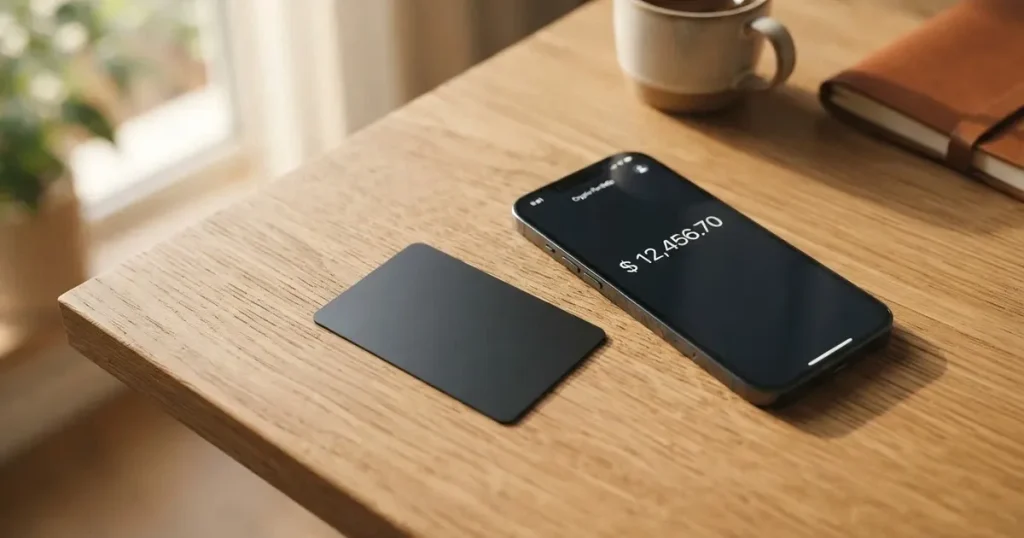
MothCard is not really a bank account with a card attached. It is a virtual payment card — no plastic, no branch — issued on Visa or Mastercard, settled in US dollars, and funded by loading a balance into an app wallet first. The pitch is simple enough to understand in a minute: put USDT in, get a card number you can drop into an online checkout, spend it wherever online card payments are accepted. Everything else about this product is less simple, because most of the numbers that would let you judge it — the issuance fee, the maintenance fee, the conversion rate, the spending limits — exist only inside the app.
That is the central fact of this review, and everything else follows from it. I scored MothCard 5.4 out of 10. It is a competent mechanism attached to an unusually opaque business. If you already know exactly how the card behaves because someone has walked you through it, the opacity costs you little. If you are deciding cold, you are being asked for trust in place of information, and that is a hard thing to extend to money.
Who it suits: people who already hold USDT, who only ever pay online, who are comfortable treating the balance as spending money rather than savings, and who live somewhere the app actually issues a card. Who it does not suit: anyone who needs a bank account, a physical card, published fees, published limits, a named issuing bank, a cash machine, or a support desk with published hours. If you cannot open the app and read the price list before you commit, you are being asked to sign up in order to find out what it costs.
The conditions described here are current as of October 28, 2026.
The score, criterion by criterion
| Criterion | Mark | Why |
|---|---|---|
| Who can get it | 6 / 10 | “Accepted worldwide”, but some countries or regions may have restrictions; the issuing region depends on the card and is visible in the app; the company sits in Hong Kong |
| Cost | 5 / 10 | Issuing and maintaining the card both cost money, amounts only in the app; transaction fees are not disclosed |
| Top-up options | 5 / 10 | Wallet topped up in USDT per the App Store listing; other coins and networks shown in the app, not disclosed |
| Reliability and complaints | 5 / 10 | Hong Kong Yunmo Technology Co., Limited; issuing bank and licences not named; App Store rating 5.0 from 1 rating; no complaints found |
| Everyday use | 6 / 10 | Virtual card, Apple Pay and Google Pay available; cash machine not disclosed |
| Total | 5.4 / 10 | A working mechanism wrapped around an undisclosed price list |
Two of those rows deserve a word, because they explain the shape of the whole card. “Accepted worldwide” is a statement about where the card is *accepted*, not about who can *have* it — that distinction trips up a lot of people, and the card’s own wording makes both halves explicit. And the App Store rating of 5.0 rests on a single rating, which is not a signal in either direction; it tells you almost nothing about reliability, and it should not be read as a recommendation.
Will they give you the card
The starting data the card gives is Hong Kong, according to section 3.1 of its Terms of Service. Alongside that, the site says “Accepted worldwide” — and then immediately qualifies it: “some countries or regions may have restrictions.” The issuing region varies depending on which card you pick, and the app shows which one you have.
That is the whole of the public eligibility picture, and you should read it twice. There is no country list, no list of blocked nationalities, and no statement about whether the test is your citizenship, your residence, or the country your phone number belongs to. Those are three different questions with three different answers, and a card that says “accepted worldwide” without naming any of them is telling you about acceptance, not about eligibility.
The company behind it is Hong Kong Yunmo Technology Co., Limited, registered in Tsim Sha Tsui, Hong Kong. I could not find an issuing bank or institution named anywhere in the public material, and no licences named either. Hold that thought for the risk section, because it is the single most consequential thing about this card.
If your instinct is to check the app before anything else, that instinct is right — and it is also the problem. The regions, the card options and the resulting limits are all visible only after you have the app and an account, which means the decision to sign up comes before the information you need to make it.
How to get it
It is a short process, and the shape of it will look familiar if you have signed up for anything in this category before. There is a one-time identity check, described by the company as being for anti-money-laundering and sanctions purposes: “Just one valid personal ID”, with the document types shown in the app according to your country, and a face scan in some cases. Proof of address is not stated. Age is not stated, though the App Store listing carries an 18+ age rating.
The steps the company describes are: sign in, choose a card, verify your identity, top up the wallet, and move funds onto the card. That last step matters more than it looks, because there are two balances in play — your wallet balance and your card balance are shown separately, and the card only spends what you have pushed onto it.
What you get is virtual. There is no delivery question here, because there is nothing to deliver: no plastic, no courier, no waiting. The card is described as a “crypto virtual card for global payments”, issued on Visa or Mastercard, with settlement in USD. Which of the two networks you end up with, and what your issuing region is, appears in the app.
What the company does not state is as notable as what it does. Identity verification tiers are not stated. Whether address documents are ever required is not stated. Which specific card variants exist beyond “several cards selectable in-app with differing issuing regions” is not stated. And this is a card about which a very common question goes unanswered in public: is MothCard a bank? The public material does not say it is. It names a Hong Kong technology company and does not name a bank.
Fees: what this card really costs
Here is the honest problem in one paragraph. The company says plainly that “There are fees for issuing and maintaining a card”. It does not publish either amount. It says the amounts are shown in the app only. And when you send money, there is a service fee and a minimum, both shown on the in-app confirmation page and nowhere else.
So I can tell you that fees exist, and I cannot tell you what they are. Neither can anyone outside the app. If you are weighing MothCard against another card, you are comparing one known number against an unknown one — and that asymmetry is the whole cost story.
| Item | What is published |
|---|---|
| Card issuance | A fee exists; amount not published, shown in app only |
| Monthly maintenance | A fee exists; amount not published, shown in app only |
| Sending money / top-up | Service fee and minimum exist; shown on the in-app confirmation page |
| Conversion fee | Not stated |
| Foreign exchange fee | Not stated |
| Cash machine / ATM | Not stated; the card is described for online payments |
| Per-transaction spending limit | Applies; exact amount not published, see the app |
| Daily spending limit | Applies; exact amount not published, see the app |
| Monthly spending limit | Applies; exact amount not published, see the app |
Settlement is in USD, and the wallet and card balances are shown separately — which means if you hold a balance and the dollar moves against it, that movement is yours to absorb, and there is no published spread to measure it against.
Three everyday payments, so this stops being abstract:
A €40 subscription renewal. You are spending USD-settled funds against a merchant billing in euros. Whatever happens to the conversion is happening on a card whose FX and conversion fees are not disclosed. If the card is Visa or Mastercard and the merchant prices in your local currency, the network conversion applies; on top of that, any fee the provider charges is a number only the app contains. This is the payment where opacity costs you the most, because it is the one that is not a round figure.
A $15 online order. The size of this payment makes the fixed component of the undisclosed sending fee and minimum most visible. A card with a flat monthly fee is cheap here; a card with a flat per-transaction fee is not. You cannot tell which one MothCard is from public information.
A $3 coffee. At this size, whether the spending limits are even comfortable matters more than the percentages. If the per-transaction minimum is small enough, this works; the app would know, and I do not.
One more thing you should not skip: the cash machine. ATM access is not stated and the card is described as being for online payments. If you expect to withdraw cash, treat that as unsupported until you have read it in the app.
How to Top up
Top up the wallet with USDT, per the App Store listing. That is the one funding route named in public. Other coins and networks: “you used the network shown in the App” — which is a sentence about a list that is not published, so you cannot check compatibility before you send anything.
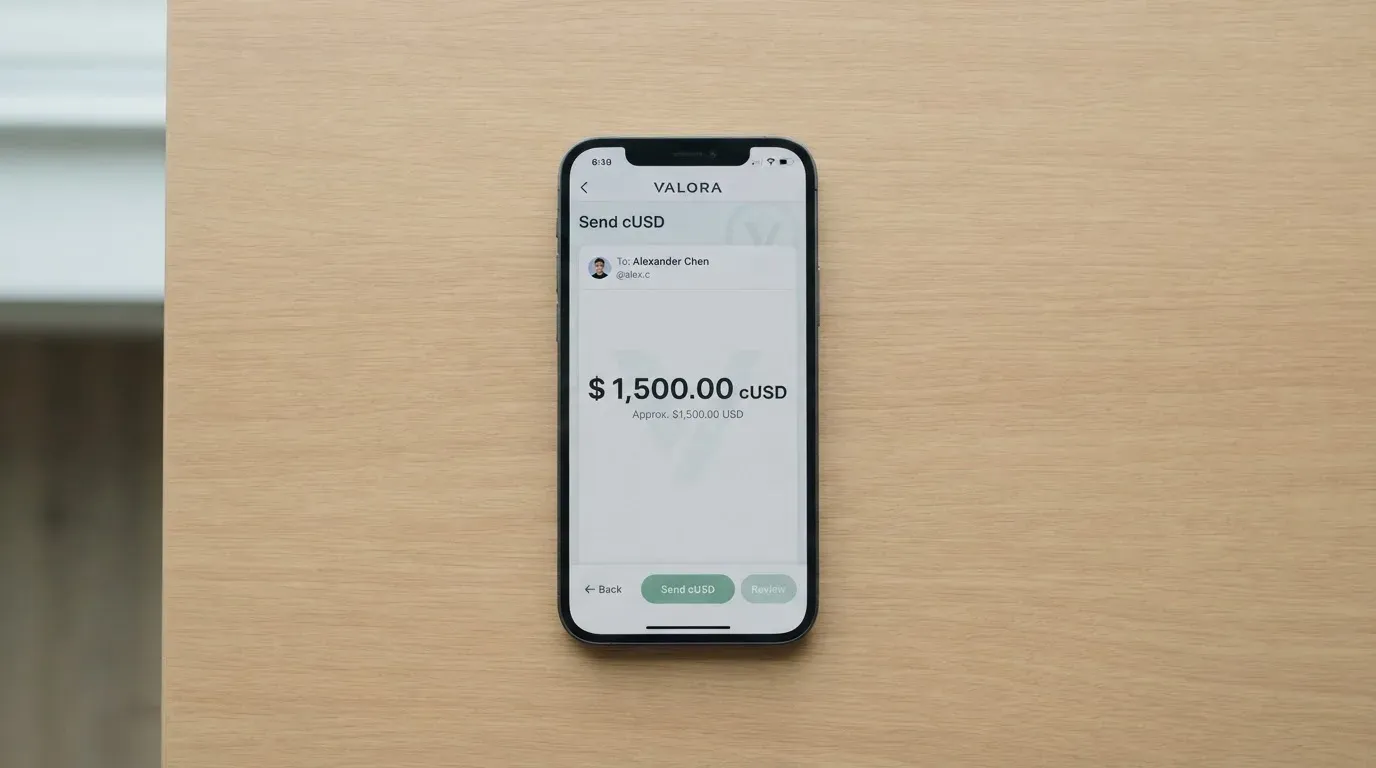
The sequence the company describes is: top up the wallet in the app, then move funds to the card. Two operations, two balances, and the deposit fee and minimum are not stated.
This is where a mistake becomes expensive rather than annoying, so a few background facts are worth having in your head — none of them MothCard-specific, all of them general to the category:
- Blockchain transfers are typically irreversible. A deposit sent on a network the provider does not support, or to an address belonging to a different network, can be lost or need manual recovery with no guarantee.
- Network fees (gas, bandwidth) for your deposit are charged by the blockchain, not by the card provider. You pay them either way.
- Fees on Ethereum are paid only in ETH, so a wallet holding USDT with no ETH cannot send.
- Tron prices fees through bandwidth and energy, often burning TRX.
- Circle stopped supporting USDC on Tron in February 2024, so “USDC over TRC20” is not a native option anywhere.
- USDT has been issued on networks including Ethereum, Tron, Solana, Polygon and Avalanche. Matching the network to the one the app expects is not a formality; it is the single thing most likely to cost you money if it goes wrong.
Withdrawing is not explicitly covered. What the FAQ does say is practical: move any remaining balance off a card before cancelling it, and move funds out of both the card and the wallet before deleting the account. Fees for those moves are not stated.
Paying with it every day
This is the part of the card that works, and it is worth being fair about that. You get a virtual card, and you can put it into Apple Pay and Google Pay. Which of those wallets your particular card supports is shown in the app.
Blocked merchant categories are not stated. That gap has teeth in this category: MCC 7995 covers gambling — casinos, betting, lotteries — and many issuers block it on specific cards by policy rather than by law, with the blocked list varying by issuer. Whether MothCard declines gambling, adult content, fuel, or anything else is something you can only learn from the app.
For online authentication, the relevant mechanism is 3-D Secure, which adds an identity check to an online card payment: the issuer assesses risk and either approves it without friction or challenges you with a one-time code or biometric. Visa’s brand is Visa Secure, Mastercard’s is Identity Check. Where you will feel this most is the app-based approval, which is also why adding the card to a phone wallet matters. Apple Pay replaces the card number with a device-specific number stored in the device’s Secure Element, never on Apple servers, and each payment uses a one-time dynamic security code.
Disputes and chargebacks are not stated — which is a real thing to weigh if you are spending meaningful sums. For context, a chargeback is a refund ordered by the issuer to settle a dispute, with reason codes such as fraud, duplicate billing or goods not received; US debit card reversal rights come from Regulation E and credit card rights from Regulation Z, and prepaid-card coverage varies and should not be assumed. Where a card is refused, a declined authorisation can leave a hold on funds for several days, typically up to 7.
The app itself is available on iOS (15.6 and later), on Google Play, and as a direct Android APK. Its App Store rating was 5.0 from a single rating when I read it on 2026-10-21; I could not obtain a Google Play rating.
What the app does give you is a transaction history listing payments, fees and merchant refunds. That is genuinely useful for watching where money goes when the fee schedule is invisible.
There is no rewards programme. The FAQ does not mention cashback at all — which, given how many cards in this category lead with cashback, is itself a piece of information.
What can go wrong
Let me separate what I verified from what I could not.
No complaints found — and that cuts both ways. I found no official incidents. A search for MothCard reviews on Trustpilot and Reddit returned nothing about MothCard at all. No Trustpilot or Reddit page was found in a search on 2026-10-21. For a young product with a small rating count, an absence of complaints is weak evidence: it usually means nobody has written them down, not that nothing has happened.
The company is named. The bank is not. Hong Kong Yunmo Technology Co., Limited, Tsim Sha Tsui, Hong Kong. No issuing bank or institution is named, and no licences are named. In this category that distinction matters structurally: the card network (Visa or Mastercard) routes the payments and sets the rules, the issuer holds the card programme, and the crypto brand is often only a programme manager or front-end that markets the card. MothCard’s public material names the front-end. It does not name the party actually holding your balance behind it.
The custody model is not stated. This is the question I most wanted answered and could not get. With a custodial wallet the provider holds the credentials, so you must trust the provider completely; with a self-custody-linked card your funds stay in your own wallet until the moment of payment. MothCard does not say which it is, so you cannot tell whether a seed phrase — typically 12 to 24 words, an unencrypted form of the private key that anyone who obtains can use to restore the wallet and spend its funds — is anywhere near your money.
That risk is not hypothetical in this sector. Custodial platforms have failed before: Mt. Gox (about US$350 million reported stolen, 2011–2014), Coincheck (about US$400 million, 2018), Ronin Network (US$625 million, 2022). Card programmes specifically have been wound down: Visa terminated its agreements with FTX on 13 November 2022 and the FTX US debit card was wound down by its issuer; Visa suspended WaveCrest in Europe in 2018, closing all WaveCrest-issued Visa programmes. The pattern in these cases is consistent — a notice period, then loading stops, then spending stops, then you are asked to withdraw what is left. One 2026 closure reported by a secondary source had new loads ending 8 July 2026 and spending stopping 8 August 2026; that is a single unconfirmed source and I would not lean on it, but it shows the shape of what you are exposed to.
Practical controls that do exist. You can freeze and unfreeze the card in the app. After identity confirmation, the full card number and CVV become viewable and are then hidden. Sign-in is by email, Apple or Google, with optional Face ID or fingerprint. Those are the standard safeguards for this kind of product, and they are better than nothing.
Identity and country rules. There is a one-time identity check for anti-money-laundering and sanctions purposes. In the EU, customer due diligence covers name, address, date of birth, nationality and identity documentation, a sanctions check, the purpose of the relationship, and politically exposed person status — and if due diligence cannot be completed, the institution must refrain from the transaction or relationship. In the US the customer identification programme requires name, date of birth, address and an identification number. Nationality is screened separately from residence, because sanctions screening is often applied to citizenship and country of birth as well as country of address. Prepaid and debit cards are generally available to adults 18+, and some issuers set higher limits. This is background on the rules that shape any card in this category; how MothCard applies them in your country is something the app and the support channel will have to tell you.
Support. In-app Support, a Telegram bot, and [email protected]. Hours are not stated. The site’s language menu has 12 languages; the App Store listing is in English, Indonesian, Portuguese, Russian, Simplified Chinese, Spanish and Traditional Chinese.
Age of the product. The App Store version history shows a first release of 1.0.0 on February 3 (the year is not shown in the history) and a recent version 2.1.0.
The uncomfortable category fact. Stablecoins can and do lose their peg. TerraUSD collapsed in May 2022; USDC temporarily lost its peg in March 2023 during the US banking crisis. “Despite the name, stablecoins are not necessarily stable.” Tether says it disables tokens in wallets on the OFAC sanctions list and has frozen funds tied to illicit activity. So the balance you load is not a bank deposit, it is not deposit-guarantee protected, and its value is not fixed by anything but the market.
If you want to know where a provider stands on the regulatory side, in the EU the reference point is MiCA (Regulation (EU) 2023/1114), which ESMA says took legal effect in June 2023: its rules on asset-referenced tokens and e-money tokens applied from 30 June 2024 and the remaining provisions, including crypto-asset service provider rules, from 30 December 2024. E-money tokens may be issued only by a credit institution or an electronic money institution. The transitional period runs until 1 July 2026 or until a provider receives or is refused authorisation, whichever comes first, and ESMA keeps an interim register of authorised providers you can check. Note also that a card is a payment service regulated separately from the crypto side, so a crypto card often depends on two licences. I am describing the framework, not assessing MothCard against it — the company has named no licence, which is exactly the problem.
What to take instead
I scored the alternatives on the same basis, and none of them is a slam dunk either. But each one publishes more of what you need to decide.
CardFlow — 4.9 / 10. Aimed at Nigeria (“Nigeria’s smartest fintech card platform” and “Nigerians and global users”), with no country list or exclusions stated. A virtual USD Mastercard, created in about three minutes. The standout detail: “Creating a virtual card is completely free”. A monthly fee is not stated and neither are transaction fees. Funded with Bitcoin, USDT, ETH or a Naira bank transfer, with networks not stated and no rewards programme mentioned. Cheaper entry than MothCard if you are in its market, less transparent once you are inside.
HyperCard — 4.7 / 10. No country list on the official pages, but the App Store says the card works in “more than 176 countries” — again acceptance, not eligibility. A prepaid card, network not stated on the App Store page, balance in USD or EUR. No fees listed on the App Store page at all, which is either good news or an absence of information. You deposit crypto such as USDT, BTC or ETH in the app and it is converted to USD or EUR on the card; networks not stated. Lowest score of the four.
Card.fi — 6.6 / 10, the highest here, and the only one that publishes a price list. A banner says cards ship to “200+ countries”, while its terms bar residents of, or orders from, “a country subject to sanctions that would prohibit the service”. It has Virtual Classic and Virtual Premium, physical Classic and Premium, and a metal card in stainless steel; every physical order includes a virtual card, and cards are issued “under licence from the relevant card schemes” — Visa and Mastercard are not named. One-time prices are published: Virtual Classic $49, Virtual Premium $249, with physical and metal prices not listed and no monthly, annual, inactivity or minimum-balance fee. Top-up fee 1.5% + $1.00 on Classic and 1% on Premium; FX fee 3.5% on Classic and 2.5% on Premium; a conversion fee is shown before each top-up. Funding covers 32 coins across 5 networks — Ethereum, Base, BNB Chain, Solana and Kaanch — including USDT, USDC, ETH, BNB, SOL and KAANCH, with a deposit address per card, converted at market rate on arrival; the terms warn that the wrong chain risks permanent loss. Rewards are cashback on card spending only: Classic 0.8% capped at 10 USDT per month, Premium 1%, Metal 1.2% capped at 100 USDT per month and 5,000 USDT, or 2% capped at 250 USDT per month and 20,000 USDT; the headline 10% at coffee shops is capped at 10 USDT per month, and balances can earn “up to 18%” on Metal, variable.
| MothCard | CardFlow | HyperCard | Card.fi | |
|---|---|---|---|---|
| Score | 5.4 / 10 | 4.9 / 10 | 4.7 / 10 | 6.6 / 10 |
| Card type | Virtual, Visa or Mastercard, USD settlement | Virtual USD Mastercard | Prepaid, USD or EUR | Virtual, physical and metal |
| Entry cost | Fee exists, amount in app only | Free to create | Not stated | $49 Virtual Classic, $249 Virtual Premium |
| Recurring fee | Exists, amount in app only | Not stated | None listed | None: no monthly, annual, inactivity or minimum-balance fee |
| Funding named publicly | USDT | BTC, USDT, ETH, Naira transfer | USDT, BTC, ETH | 32 coins across 5 networks |
| Rewards | Not stated | Not stated | Not stated | Cashback on spending, tiered by card |
| Issuing bank named | No | Not stated | Not stated | Licence holder stated, bank not named |
The pattern across all four is the same, and it is the pattern of the category: none of these cards names its issuing bank in a way you could verify from the marketing page, and all of them are vague about country eligibility. What separates them is how much of the price list is public. Card.fi publishes. MothCard does not.
Who I would recommend it to
I would recommend MothCard to exactly this person: someone who already holds USDT, spends online and only online, treats the balance as pocket money rather than savings, and is prepared to open the app, read the real fees and limits, and make their own decision before funding anything. If you can do that, the mechanism is sound — a virtual card on a major network, USD settlement, both phone wallets supported, freeze and unfreeze in the app, card details hidden until you re-confirm your identity, and support through three channels including email.
I would not recommend it to you if any of these are true:
- You need a bank account. This is not one, and no bank is named.
- You need a physical card. There isn’t one.
- You want to know what it costs before committing. You cannot.
- You plan to withdraw cash. ATM access is not stated.
- You are in a country where you suspect sanctions or residency rules may bite, and you would rather not find out mid-application. The card says some countries or regions may have restrictions and does not name any.
- You hold a large balance for any length of time. The custody model is not stated, and the underlying asset is a stablecoin that has demonstrably lost its peg before.
- You need published support hours, a dispute process, or a clear chargeback route. None of those is stated.
If you want the same function with a published price list, Card.fi is the more defensible starting point at 6.6 / 10, accepting that its entry cost is higher and its country rules are their own to work out. If you are in Nigeria and want a free virtual card, CardFlow is the cheaper door. If you simply cannot commit before you know the numbers, that is not indecision — it is the correct response to this card as published.
My own rule with a product like this: fund it with an amount I would not mind seeing stuck, read the in-app fee schedule first, do a small test payment, and move the rest out while it is working. That is not a workaround for anything. It is just what prudence looks like when the price list is behind the login.
Frequently asked questions
What is MothCard card?
MothCard is a virtual payment card issued on Visa or Mastercard, with settlement in US dollars, that spends a balance you load beforehand rather than money sitting in a bank account. The company describes it as a crypto virtual card for global payments. It has no plastic version and no named bank behind it. You fund a wallet in the app, move funds onto the card, and spend that balance online.
How does MothCard card work?
You sign in, choose a card, pass a one-time identity check, top up the wallet, and move funds onto the card. Two balances are involved — wallet and card — and the card only spends what sits on it. It behaves like a prepaid card: the balance is loaded first, so it cannot overdraw. Apple Pay and Google Pay are supported, with per-card wallet availability shown in the app.
Is MothCard a bank?
No, and the public material does not claim it is. The company named is Hong Kong Yunmo Technology Co., Limited, in Tsim Sha Tsui, Hong Kong. No issuing bank or institution is named, and no licences are named. In this category the brand is often only a programme manager in front of a licensed issuer — and MothCard’s own pages do not tell you who that issuer is.
Does MothCard require KYC?
Yes — a one-time identity check, which the company says is for anti-money-laundering and sanctions purposes. It asks for “just one valid personal ID”, with document types shown in the app per country, and a face scan in some cases. Proof of address is not stated, and identity verification tiers are not stated either. The App Store listing carries an 18+ age rating.
Is MothCard card free?
No. The company states that “There are fees for issuing and maintaining a card”, and the amounts are shown in the app only, not published. Sending money also carries a service fee and a minimum, visible on the in-app confirmation page. So there is an entry cost, a recurring cost and a transaction cost — I just cannot tell you what any of them are.
How much does MothCard cost to use?
The public pages do not give numbers. Per-transaction, daily and monthly spending limits all apply, and the exact amounts are referred to the app. Conversion and foreign exchange fees are not stated, and neither is ATM access. Because settlement is in USD, any conversion cost is yours to absorb. Open the app and read the fee screen before you load anything.
How do I top up MothCard card?
Top up the wallet with USDT — that is the one funding route named publicly in the App Store listing. Other coins and networks appear only in the app, under the line “you used the network shown in the App”. Then move funds from the wallet to the card. The deposit fee and minimum are not stated. Transfers sent on the wrong network can be lost, so match the network in the app before you send.
Is MothCard card safe?
That depends on things the company has not published, which is why I would not answer yes or no. The app has a one-time identity check, card freeze and unfreeze, card details hidden until you re-confirm your identity, and sign-in by email, Apple or Google with optional Face ID or fingerprint. But the custody model is not stated, no issuing bank is named, and no licences are named.
Can I add MothCard card to Apple Wallet?
Apple Pay is supported, and Google Pay too, though which wallets work for your particular card is shown in the app. When you add it, Apple Pay replaces the card number with a device-specific number stored in the phone’s Secure Element, never on Apple’s servers, and each payment uses a one-time dynamic security code. That is a genuine security improvement over typing the number in each time.
Why should I not just try it with a small amount?
Nothing stops you, and I would rather you did than guessed. The reason to start small is not distrust of you or of the product — it is that every number that would tell you whether this card works for you, from the issuance fee to the monthly fee to the conversion rate to the daily limit, sits behind the login. If you fund a small amount, read the fee screen, make one test payment and then move the rest out, you learn everything at a cost you chose.
Virtual cards: picking one for online use – cryptocardpicker
Content created by the «cryptocardpicker» team