
A no-KYC virtual Visa with undisclosed fees and a 1.9-star complaint record
 Available in US

KNGPay is one of a growing crowd of services that convert crypto into a prepaid Visa number you can spend online without handing over identity documents. On paper that sounds like a clean answer for anyone who cannot get an ordinary bank card. Read closely, though, and the picture gets thinner: the service describes itself as “Not a bank. Prepaid card services funded by crypto deposits”, it publishes no country list and no issuer or licence, its monthly fee and foreign-exchange fee are simply not stated, and the only card it offers is virtual — no plastic, no ATM. Add a Trustpilot score of 1.9 out of 5 from 13 reviews, all of them one star, and you get a service whose headline feature (no KYC) is also its main unresolved question (who stands behind the money?).
I scored it 5.2 out of 10. That is not a rejection. It is a warning that the things you would need to know before sending real money are the things this card does not publish.
The conditions described here are current as of October 28, 2026.
| Criterion | Mark | Why |
|---|---|---|
| Who can get it | 9 / 10 | “Worldwide Visa”; no country list or restrictions published |
| Cost | 3 / 10 | $15 one-time issue fee, 5% deposit fee, $10 refund processing fee; monthly fee and FX fee not stated |
| Top-up options | 8 / 10 | USDT (ERC20/TRC20), USDC (ERC20), BTC, XMR; minimum $50 per load |
| Reliability and complaints | 1 / 10 | Issuer and licences not named, “not a bank”; Trustpilot 1.9 from 13 reviews, all 1-star |
| Everyday use | 5 / 10 | Virtual Visa only; Apple Pay and Google Pay supported, addable to PayPal; no physical card and no ATM |
| Total | 5.2 / 10 |
Who this suits: someone who wants a no-KYC virtual Visa for online spending, needs it quickly, and can afford to treat the balance as money at risk rather than money in a bank. Who it does not suit: anyone for whom a published monthly fee, a known issuer, a card in the post or a documented complaint process matters more than anonymity. Those are the people I would send elsewhere.
Will they give you the card?
Yes — that is the strongest thing about this card. KNGPay calls it a “Worldwide Visa” and publishes no country list and no restrictions. If you can reach the site, nothing on the published pages says you are excluded. The terms do add one line that undercuts the headline: users must follow the laws of their own jurisdiction.
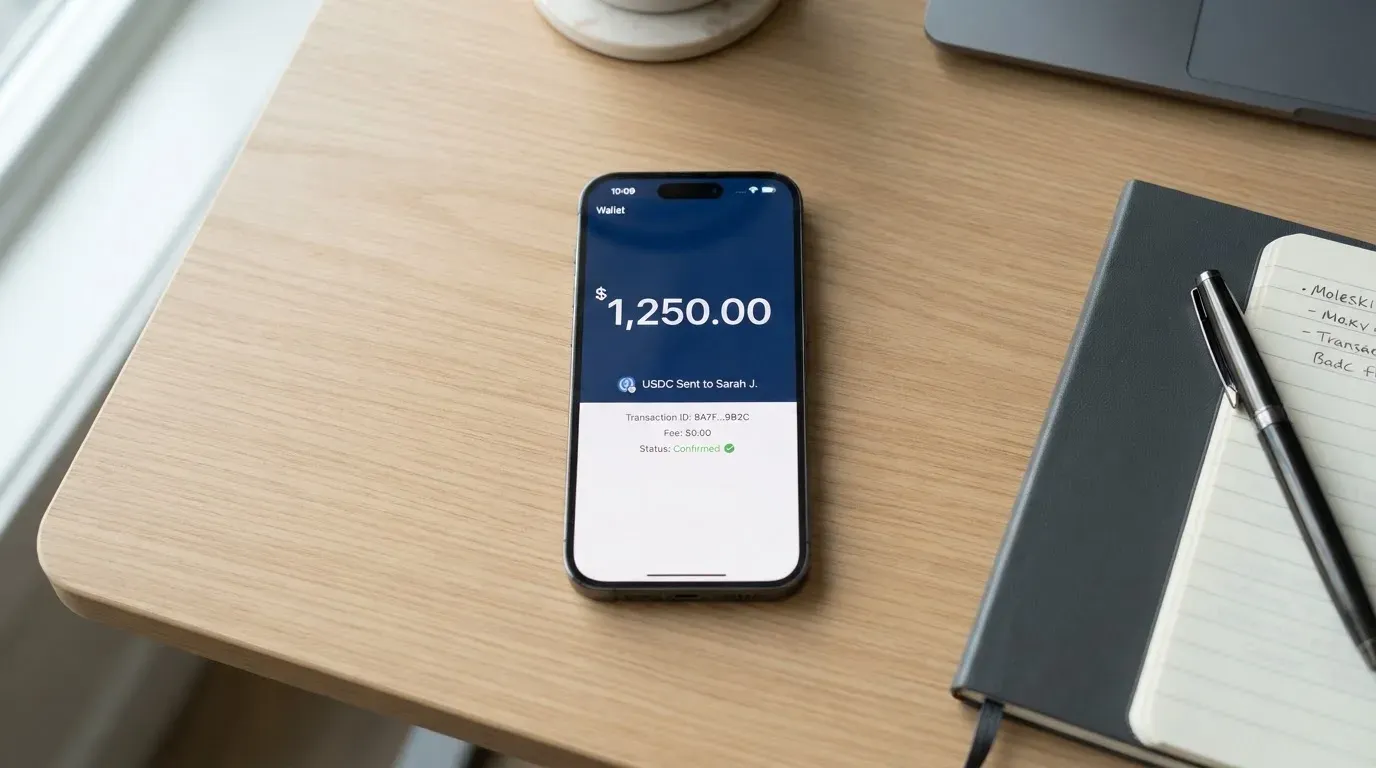
That is worth sitting with. “Worldwide” is a marketing phrase, not a licence, and the terms defer to your local law rather than promising to work everywhere. Countries differ sharply on prepaid cards, crypto services and payments from foreign issuers; where your local rules require identification or ban the service, a card that accepts you online will not make it lawful for you to use. The score of 9 out of 10 here is generous precisely because nothing is excluded — but “nothing is excluded on paper” and “this works for you in practice” are different claims, and only the first one is documented.
If you are asking about a specific country, that is the question to put to support before you fund anything.
How to get it
The signup is short, and deliberately so: the card requires no KYC. You order a balance in USD at kngpay.com/app or through Telegram, send crypto to a generated address, and the card is issued. That is the whole flow — no documents, no selfie, no proof of address.
One detail is genuinely useful. Each deposit is matched on-chain by a unique amount sent to your generated address, so the service can credit the right amount to the right person without asking who you are. That is a standard trick in crypto payments and it works.
What is not stated: proof-of-address requirements (there are none, since there is no KYC), any age limit, delivery terms (virtual only, so there is nothing to deliver), and any KYC tiers. The card is virtual, the balance is in USD, and no physical card is mentioned anywhere on the pages.
Read that list of unstated things as a feature of the design rather than a gap. A no-KYC virtual card is not a card that forgot to check; it is a card that chose not to. The cost is that you give up the layers — identity checks, chargeback rights tied to a real account, a card you can hold — that most payment users assume come with the number.
What it really costs: fees, limits and the price of getting money back
This is where I would slow down. KNGPay publishes some costs, does not publish others, and the ones it publishes add up faster than $15 suggests.

| Fee or limit | Value |
|---|---|
| Card issue (one-time) | $15 |
| Monthly fee | not stated |
| Deposit (top-up) fee | 5% |
| Refund processing fee | $10 |
| FX fee | not stated |
| ATM fee | not stated (no physical card) |
| Minimum load | $50 |
| Maximum per load | $100,000 |
| Spend limits | not stated |
Read the middle of that table again. There is a monthly fee that is not stated. There is an FX fee that is not stated. If you ever spend outside a dollar-denominated merchant or hold a balance that is not already in dollars, you are spending at a rate nobody has published to you. A card that says “not stated” where the money line would be is telling you, in effect, that the price is whatever the service decides at the time.
The 5% deposit fee is charged on the way in. On a $50 minimum load that is $2.50 before you have bought anything, plus whatever the blockchain charges to move the coins — on-chain network fees are set by the network, not by the card. The $15 issue fee is one-time. The $10 refund processing fee is one-time per refund but applies at the exact moment you most want your money back.
There is also a “Black tier” with lower fees mentioned on the reviews page. It is not detailed — no numbers, no requirements, no explanation of who qualifies. Treat it as something to ask about, not a discount you can plan around.
Here is what those fees mean in three ordinary payments:
- A standard online purchase. You already have the balance loaded, so you pay no deposit fee again. You pay the merchant the purchase price. What you do not know is whether a currency conversion is applied, because the FX fee is not stated.
- A $200 online purchase from a non-dollar merchant. The merchant’s amount is what leaves your USD balance, but any conversion between currencies is priced by an unpublished fee. This is the single largest unknown in the whole product.
- A refund. You would pay the $10 processing fee on the way back, and the terms say refunds are handled case by case, typically within 3 business days via support. That processing fee is a fixed cost regardless of the refund amount.
The deposit fee also means small, frequent top-ups are expensive. Two $50 loads to reach $100 cost $5 in deposit fees. A single $100 load costs the same $5 in deposit fees for twice the money — and even a single load also carries the $15 issue fee if the card is new.
How to top it up
The top-up options are the best part of this card: USDT on ERC20 or TRC20, USDC on ERC20, native BTC, and XMR. Each deposit gets a unique amount for on-chain matching, which is the mechanism that makes no-KYC crediting possible.
The rules are simple. The deposit fee is 5%. The minimum is $50 and the maximum is $100,000 per load. Two things are not stated: who pays the network fee for your deposit (the blockchain charges it, not the provider, so you need the native token on the right chain — USDT on ERC20 sent from an address holding no ETH simply cannot move), and whether there is any fiat top-up at all, meaning whether you can add money from a bank account rather than from crypto. If the answer to the second is no, you need crypto before you can use the card, which changes who this product is for.
One trap deserves a warning without turning into a how-to. Sending on a network the provider does not support, or to an address belonging to a different network, can lose the deposit or force a manual support recovery with no guarantee. Blockchain transfers are irreversible. Match the network and the address on screen before you confirm, and treat any support recovery as a favour, not a right.
Paying with it every day
Here is what daily use actually looks like: a virtual Visa, funded in USD, spendable in Apple Pay and Google Pay, and addable to PayPal. That is a real set of options for online spending, and it is more than some crypto cards offer.
It is also the entire list. There is no physical card and therefore no ATM and no card-present purchases outside a phone. Blocked merchant categories are not stated, which means you do not know in advance whether gambling, gift cards, crypto exchanges or adult sites are closed to you — those are policy choices that issuers make and lists they do not always publish. There is no cashback or rewards programme mentioned. And the app is a web app at kngpay.com/app; I found no App Store or Google Play listing.
Two consequences follow, and they are the ones that catch people out. First, Apple Pay and Google Pay replace your card number with a device-specific token, which is a genuine security benefit — but the issuer can restrict a tokenised number, for example blocking it for online or phone payments, and you would find out at the checkout. Second, declines leave holds: a declined authorisation can leave a hold on your balance for several days, typically up to seven. With a prepaid balance, a hold is money you cannot spend on something else.
Dispute handling is not stated. The terms say refund requests are considered case by case, and the complaints below describe exactly what that can mean in practice.
What can go wrong
Read this section before the top-up section, not after.
The service states plainly: “Not a bank. Prepaid card services funded by crypto deposits”, and “KNGPay is not a bank or financial institution”. It does not name its issuer and does not state any licences. Safeguarding of your balance is not described; what you have is a custodial prepaid balance, which means the provider holds the credentials to your money and you must trust it completely.
That trust is being tested. I found no official incidents involving KNGPay itself. What I did find is a user record on Trustpilot, read on 2026-10-21: 1.9 out of 5 across 13 reviews, every one of them a single star. The pattern across those reviews, dated February to July 2026, is consistent rather than scattered:
- Payment sent, no card and no credit (February–July 2026)
- Support unresponsive (February–July 2026)
- Refunds denied or blocked (February, May 2026)
- Scam allegations (January–July 2026)
I am not going to tell you those reviews prove fraud. Thirteen reviews, all one star, is a sample too small to be a verdict, and reviewers on an open platform are not a random sample of users. What I will say is that when the complaints cluster on one axis — you send money, you get no card, and you cannot get your money back — that is the specific failure mode a custodial prepaid card is exposed to, and it is also the failure mode the company’s own $10 refund fee and case-by-case refund terms do not answer for you.
Support itself is Telegram and a contact page or email, with languages and hours not stated. That is a thin channel to rely on in the exact scenario the reviews describe. No company news is available to put the service in context.
One more structural risk, which belongs to the category rather than to this provider: prepaid cards that depend on a sponsoring issuer can be closed. WaveCrest, a Visa issuer that supplied crypto card brands, was suspended by Visa in Europe in 2018, closing every WaveCrest-issued Visa programme. Visa terminated its global agreements with FTX on 13 November 2022 and the FTX US debit card was wound down. In both cases users were left with a balance to withdraw and no card to spend it with. The lesson generalises to every crypto card: your balance is only as durable as the programme behind it, and the programme behind this one is unnamed.
What to take instead
If the missing monthly fee and FX fee are what stop you, or if the complaint record is, these are the comparisons worth making. All three are scored on the same basis.
| Card | Score | Card type | Cost signal | Top-up |
|---|---|---|---|---|
| KNGPay | 5.2 / 10 | Virtual Visa | $15 issue, 5% deposit, monthly and FX not stated | USDT, USDC, BTC, XMR |
| Card.fi | 6.6 / 10 | Virtual and physical, metal option | Virtual Classic $49, Virtual Premium $249; FX 3.5% / 2.5% / 1.5%; no monthly or inactivity fee | 32 coins, 5 networks |
| CardFlow | 4.9 / 10 | Virtual USD Mastercard | Free to create; monthly and other fees not stated | BTC, USDT, ETH, Naira transfer |
| HyperCard | 4.7 / 10 | Prepaid card, network not stated | No fees listed; App Store page lists none | USDT, BTC, ETH, in-app |
CardFlow markets itself as “Nigeria’s smartest fintech card platform” for “Nigerians and global users”. A virtual USD Mastercard is created in about 3 minutes, and creating one is “completely free” per its site FAQ. Its monthly fee and other fees are not stated, and the networks for its crypto deposits are not stated either — so it solves KNGPay’s cost opacity only partly.
HyperCard’s official pages state no country list, while its App Store page says the card works in “more than 176 countries” — which describes acceptance, not eligibility, and the distinction matters. You deposit crypto such as USDT, BTC or ETH in the app and it converts to a USD or EUR balance. Fees are not stated on the pages I could read. Its score is the lowest of the four, mainly because so much of it is undocumented.
Card.fi is the one I would put in front of you first. It publishes numbers: one-time $49 for a Virtual Classic and $249 for a Virtual Premium, a 1.5% plus $1.00 top-up fee on Classic against 1% on Premium, and FX fees of 3.5% on Classic, 2.5% on Premium. It states there is no monthly, annual, inactivity or minimum-balance fee. It ships to “200+ countries”, offers physical cards in plastic and stainless steel, and every physical order includes a virtual card. It accepts 32 coins across five networks and shows the conversion fee before each top-up. Its caveats are its own: terms bar residents of, or orders from, a country subject to sanctions that would prohibit the service, and sending on the wrong chain risks permanent loss. It also carries cashback tiers (0.8% to 2% depending on card, with caps) that KNGPay does not mention at all.
The trade is straightforward. Card.fi tells you what it charges and takes more upfront. KNGPay charges less to open, tells you less about what it charges, and offers no plastic and no issuer to name.
Who I would recommend it to
I would recommend KNGPay to exactly one kind of person: someone who needs a virtual Visa number today, for online spending, holds crypto already rather than fiat, accepts that the balance is custodial and the issuer is unnamed, and treats every dollar on it as money they could lose in a single support ticket. If that is you, the mechanics genuinely work — no KYC, a clean top-up flow with four assets, and Apple Pay, Google Pay and PayPal support on the way out.
I would recommend it to nobody who needs a physical card, an ATM, a known issuer, a published monthly fee, a published exchange rate, or a complaint process that does not end in “case by case”. I would not put a large balance on it, and I would not put savings on it, because both the terms and the reviews suggest that getting money back is the weakest link.
If you are reading this because you cannot get an ordinary bank card, I understand why this looks like the door. Check whether the door has a company behind it before you carry anything through it — and in this case the answer, as documented, is that the company behind it does not publish who its issuer or its licences are.
Frequently asked questions
What is KNGPay?
KNGPay is a prepaid virtual Visa card funded by crypto deposits. You load a USD balance with crypto and spend it online, in Apple Pay, Google Pay or PayPal. It describes itself as “Not a bank. Prepaid card services funded by crypto deposits”. There is no physical card, and the card is issued without identity verification. Balance sits with the provider rather than with you in a wallet you control.
How does the KNGPay card work?
You order a USD balance at kngpay.com/app or through Telegram, send crypto to a generated address, and the card is issued. Each deposit is credited by an on-chain matching trick: a unique amount is sent to your address so the service knows whose deposit it is. After that the virtual Visa behaves like an ordinary prepaid card, subject to whatever the merchant and the issuer’s policies allow.
Is KNGPay a bank?
No, and it says so plainly: “KNGPay is not a bank or financial institution”. It is a prepaid card service funded by crypto deposits. The card’s own pages do not name the issuing institution or state any licences, and they do not describe how customer funds are safeguarded. Treat the balance as held by a private company, not as a bank deposit.
Who owns KNGPay?
The brand is KNGPay. A legal entity named KNG Group LTD appears in the starting data for this review, but it does not appear on the pages themselves. Since the pages I read do not name a legal entity, an issuer or any licence, I cannot confirm the ownership chain from public information. Ask support directly and see whether you get a company number back.
Does KNGPay require KYC?
No. The card states “No KYC required”, and the signup involves no documents, no proof of address and no selfie. That is the product’s main appeal and its main unresolved question. There is no verification tier to move up to, so there is also no verification-based protection if a payment goes wrong later.
Is KNGPay available in my country?
The card advertises a “Worldwide Visa” with no published country list and no stated restrictions, and the terms say users must follow the laws of their own jurisdiction. That second line is the one to read carefully: acceptance online does not mean use is lawful everywhere. Local rules on prepaid cards, crypto and foreign issuers differ widely, so check before funding.
What does a KNGPay card cost?
The published numbers are $15 to issue the card once, 5% on each deposit, and a $10 processing fee on refunds. The monthly fee and the foreign-exchange fee are not stated, which is the part you should worry about — if you spend in a currency other than dollars, you do not know what rate you are getting. Spend limits are also not stated. A “Black tier” with lower fees is mentioned but never detailed.
How do I top up the KNGPay card?
You send USDT on ERC20 or TRC20, USDC on ERC20, native BTC, or XMR to the generated address. The minimum is $50 per load and the maximum is $100,000, with a 5% deposit fee on top. Whether you can add money by fiat transfer is not stated. Send only on a network the provider supports: blockchain transfers are irreversible and a wrong-network deposit may be lost.
Is KNGPay safe to use?
I would not call it safe. It holds your balance custodially, names no issuer and no licence, and describes no safeguarding. On Trustpilot, read 2026-10-21, it scored 1.9 out of 5 from 13 reviews, all one star, with reports of payments sent and no card issued, unresponsive support, and refunds denied. There is no evidence of an official incident, but the complaint pattern matches the classic custodial prepaid risk.
Can I get my money back from KNGPay?
The only route described is a refund: card and account balances are refundable for a $10 processing fee, typically within three business days via support, and the terms say refunds are handled case by case. The balance held if you close the account is not stated. Reviews mention refunds being denied or blocked in February and May 2026. Treat withdrawal as possible, not as assured, and keep balances small.
Virtual cards: picking one for online use – cryptocardpicker
Content created by the «cryptocardpicker» team