
A dollar card for four African markets, with the details still unstated
 Available in US
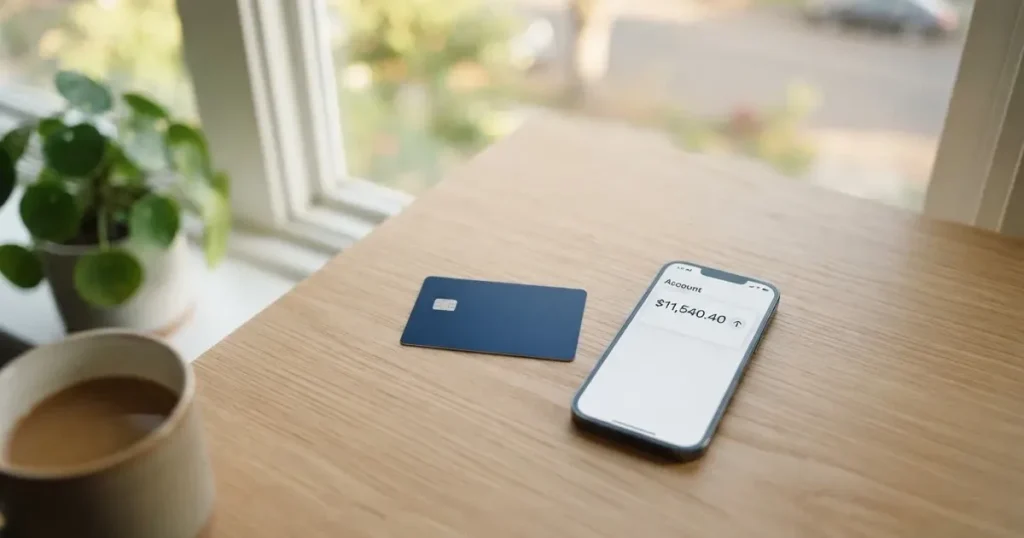
The Javex Virtual Dollar Card is a virtual, dollar-denominated payment card aimed at users in Nigeria, Kenya, Ghana and South Africa. It behaves like a prepaid card: crypto deposited into the app is converted into a wallet balance, and that balance pays for purchases. In exchange it offers three things that are hard to find in those markets — a way to hold and spend dollars online, a crypto-funded spending route, and a card that works for international transactions. What it does not offer is disclosure. The public pages name almost no figures: no fee schedule, no limits, no coins, no networks, no issuing bank, no licence name. I scored it 3.8 out of 10, and most of the reasoning behind that number is simply that I could not verify things rather than that I found them to be bad.
That distinction matters as you read on. Where the card’s own pages say nothing, I say nothing invented — I write “not stated” and tell you where to look. Where a fact comes from a third-party site rather than Javex, I mark it unofficial. Read on with that bargain in mind.
The conditions described here are current as of October 28, 2026.
Verdict: 3.8 out of 10, and the reason is thin disclosure
Javex scores 3.8 / 10 overall. The card exists, it targets a real gap, and it has a registered company behind it. But the terms a reader would need in order to trust it — what a swipe costs, how much you may move in a day, which coins work, who issues the card, which licence applies — are absent from the public pages. For anyone who has trouble getting an ordinary bank card, a dollar card with crypto funding is genuinely useful. For anyone who wants to know what they are paying, the card cannot answer.
| Criterion | Mark | Why |
|---|---|---|
| Who can get it | 2 / 10 | The site names users in Nigeria, Kenya, Ghana and South Africa; verification needs a BVN and top-ups from an account in your own name |
| Cost | 5 / 10 | Card fees are not disclosed — the site says “lowest fees” and “transparent pricing”; withdrawal is charged, amount unnamed |
| Top-up options | 4 / 10 | Crypto deposits are automatically converted to a wallet balance that feeds the card; coins and networks are not named |
| Reliability and complaints | 5 / 10 | Javex Technologies Ltd, CAC registration RC8795706, calls itself “licensed” without naming the licence; the issuer is unnamed; App Store 5.0 from 2 ratings; no complaints found |
| Everyday use | 3 / 10 | A virtual dollar card only; Apple Pay and Google Pay, ATM: not stated; 2FA, PIN and biometrics are offered |
| Total | 3.8 / 10 |
Who it suits. A Nigerian, Kenyan, Ghanaian or South African user who needs a dollar card, holds or receives crypto, and is comfortable verifying with a BVN and funding from a bank account in their own name. For that person the card does a real job.
Who it does not suit. Anyone who plans to compare costs before committing; anyone who needs a physical card, a phone-number-based KYC process they can complete from another country, or certainty about which network to send funds on. If you are outside the four named markets, or outside countries the terms treat as restricted, stop reading — the card is not addressed to you.
Will they give you the card?
Mostly yes, if you are in the four named markets and can complete identity verification the way Javex describes it — and there is no physical card in the picture at all.
The site names users in Nigeria, Kenya, Ghana and South Africa. The Terms go wider in one direction and narrower in another: they bar nationals or residents of any “Sanctioned Country or Restricted Jurisdiction”, and that list is not given. The App Store listing for the app sits on the Nigerian storefront, which is a hint about the centre of gravity but not a rule.
Verification runs through BVN validation and AML checks, you must be 18 or older, and only one account per person is allowed. Deposits have to come from a bank account in your own name — that is a common anti-fraud rule in this category and it will catch you out if you were planning to top up from a shared or business account. Card-specific onboarding steps are not stated, so I cannot tell you how many screens you will get or what document upload looks like.
The verification tier structure is not stated either: there is no published list of what unlocks higher limits or extra features.
So: eligibility is clear enough for a resident of the four markets with a BVN and a same-name bank account, and unclear for everyone else.
How to get it
The short version is that the card appears to be an in-app product rather than something posted to you — the name on the store listing is “Javex: Crypto & Gift Cards” — but the exact card-specific steps are not stated, and I will not invent a walkthrough you would find out was wrong.
What is actually documented is this. You must be 18 or older. You hold one account per person. Identity verification includes BVN validation and AML checks. Money arriving must come from a bank account in your own name. The product itself is called the “Javex Virtual Dollar Card”, it is virtual, and it is described as being for international transactions. The card network is not stated.
Delivery is virtual only, so there is no waiting period, no courier and no failed delivery to worry about — though that also means no fallback if your phone is lost or the app is unavailable. Activation steps, card expiry, and whether a new card can be reissued are all not stated.
You will also need the app. The iOS app is “Javex: Crypto & Gift Cards”, version 1.0.9, rated 5.0 from 2 ratings when I read it on 2026-10-21. The Android package is com.javex.javex_app, and its rating could not be retrieved. Two ratings is not a signal in either direction, but it does mean the visible App Store score tells you almost nothing about how the app behaves in daily use.
If a step-by-step matters to you, this is the section where the card’s own documentation is thinnest. Ask support directly, in writing, and keep the answers.
Fees: what a Javex payment really costs
This is the weakest part of the picture, so let me be blunt: Javex does not publish its fee schedule. The site promises “best exchange rates and lowest fees” and “transparent pricing” — words, not numbers. The Terms do say one useful thing: instant buy/sell fees are built into the quoted rate you see, rather than added afterwards. That is a fair structure. It just is not a figure you can plan around.

| Fee or limit | What the card states |
|---|---|
| Issuance | not stated |
| Monthly fee | not stated |
| Conversion | instant buy/sell fees are built into the quoted rate; no figure published |
| FX | not stated; the site claims “best exchange rates” without numbers |
| ATM | not stated |
| Daily limits | not stated |
| Monthly limits | not stated |
| Card currency | USD (“Virtual Dollar Card”); the wallet also holds local currency |
Now let me walk through three ordinary payments and what I can and cannot tell you about each.
Buying something in dollars from a US merchant. The clearest case, because the card is dollar-denominated and made for international transactions. You pay from the wallet balance. Whether a foreign-exchange fee is applied on top, and at what rate, is not stated — the “best exchange rates” claim gives you no number to hold them to.
Buying something priced in naira, naira being the wallet’s local-currency side. Here a conversion happens at the point of sale, from your dollar balance into local currency, and the Terms say instant buy/sell fees are inside the quoted rate. How wide that spread is: not stated. This is the payment where the cost is most likely to matter and least visible, so before you rely on it, ask for the spread in writing.
A declined or reversed payment. Not a purchase, but it has a cost you should know exists. Declined authorisations can leave a hold on your funds that persists for several days, typically up to seven. That is a property of card payments in general, not a Javex rule, and it catches people out regularly.
There are no tiers, no ATM terms, no limits published. On costs, my score is 5 out of 10: the structure described is reasonable, and the disclosure is absent.
Top up: how money gets onto the card
Crypto deposits are automatically converted into your wallet balance, and that balance is what funds the card. That is the whole mechanism as documented, and it has one enormous implication for anyone about to tap a transfer: the coins and networks are not listed. Send on the wrong network and the money may be gone — blockchain transfers are irreversible, and a deposit sent to an unsupported network or to an address belonging to a different network can be lost or need manual support recovery, with no guarantee.
This is not a scare tactic about Javex specifically. It is the single most common way people lose funds with crypto-funded cards. On Ethereum, for example, sending a token requires ETH for gas, so a wallet holding the token but no ETH cannot send it at all. On Tron, fees are paid through bandwidth and energy resources, often by burning TRX. Circle stopped supporting USDC on Tron in February 2024, so “USDC over TRC20” is not a native option. Before your first transfer, get the exact coin and network from support in writing.
The second route in is the bank account: deposits from an account in your own name, as verification requires.
The third is taking money out, and here the wording is unhelpful in a different way. Withdrawals go to approved Nigerian bank accounts — Nigerian, not the other three named markets, which is worth flagging if you are in Kenya, Ghana or South Africa. All withdrawals incur a fee, and the amount is not stated. The crypto top-up fee is also not stated.
| Top-up route | What is documented |
|---|---|
| Crypto deposit | Automatically converted to wallet balance, which funds the card; coins and networks not listed |
| Bank transfer | From an account in your own name |
| Withdrawal | To approved Nigerian bank accounts; a fee applies, amount not stated |
| Top-up tiers or minimums | not stated |
One more thing that belongs here rather than later: any crypto you send on-chain is outside the platform’s control once it leaves. That is the nature of the network, not a policy of this company.
Paying with it every day
It is a virtual dollar card with an app, a PIN, biometrics and 2FA, and that is genuinely most of what you need for daily spending — provided the payment is online and denominated in dollars.
What is confirmed: virtual format, USD denomination, Apple Pay and Google Pay support, two-factor authentication, a transaction PIN, and biometric login. What is not stated: how to add the card to Apple Wallet, ATM availability and fees, which card network runs it, merchant category restrictions, and spending caps.
On that last point, two category facts are worth having in your head because they explain declines you may otherwise puzzle over. Merchants can look up the card’s issuing country from the number itself, and some decline prepaid or foreign-issued cards for that reason alone. Address verification, which compares the billing address a buyer typed against the issuer’s records, is mostly a US, Canada and UK mechanism and is generally unavailable for foreign-issued cards — which means some ordinary checkouts will simply fail. Neither is a Javex problem. Both will feel like one.
Rewards are modest and easy to overstate. There is no cashback. The app gives reward points on eligible transactions and referral bonuses — points, not money back, and “eligible” is doing real work in that sentence.
Disputes are the quiet weak point. The Terms put arbitration in Lagos under the Arbitration and Mediation Act 2023. No refund or chargeback policy is stated. If a purchase goes wrong, the route that card networks normally provide you is not described, and arbitration is a slower, more formal process than a chargeback.
Support is advertised as a 24/7 team on a contact page, with presence on Facebook, TikTok, Instagram and X. No response-time commitment is published.
What can go wrong
Ranked by how much it should bother you, not by how dramatic it sounds.
Undisclosed fees and limits. You cannot budget a card whose charges and caps are not published. If a percentage is taken on conversion and you did not know, you will notice at the worst moment.
The wrong network eats your deposit. Not stated which coins or networks work, so a first-time transfer is a genuine risk, and the network offers no reversal.
The issuer is not named. A payment card runs on an issuer licensed under the network’s rules, and often the crypto brand is only a programme manager in front. Javex’s public pages do not say who issues the card. When you cannot name the institution that holds your money, you cannot work out which complaint route exists.
The licence is claimed but not named. Javex Technologies Ltd is registered with the Corporate Affairs Commission, RC8795706, and describes itself as a “Licensed and regulated digital exchange platform” without naming the licence. Governing law is Nigeria. There is a registered company; there is not a verifiable licence.
Wallet custody is not stated. The card’s public pages do not say whether your crypto sits in a custodial wallet held by Javex or in one you control. That single unknown decides how much of the category’s counterparty risk you are carrying. Custodial platforms have a history: Mt. Gox, about US$350 million reported stolen 2011–2014; Coincheck, about US$400 million in 2018; Ronin Network, US$625 million in 2022.
Disputes route through Lagos arbitration with no stated refund policy.
The app has almost no visible track record. 5.0 from 2 ratings on iOS, and no retrievable Android rating.
Complaints and news. I found no official incidents, and no user reports on Trustpilot or Reddit; a Trustpilot page was not found in search on 2026-10-21 and no recurring theme emerged. Press coverage is not stated either way. Take the absence of complaints carefully: with a young product and a thin rating base, that is as likely to mean few users as few problems. It is not evidence of a clean record.
Programme closure risk. Card programmes do end. Visa terminated its global agreements with FTX on 13 November 2022 and the FTX US debit card was wound down by its issuer; WaveCrest, a Visa issuer that supplied crypto card brands, was suspended by Visa in Europe in 2018. Closure typically means a notice period, then loading stops, then spending stops, then you are asked to withdraw what is left. A secondary source reported one 2026 closure with new loads ending 8 July 2026 and spending stopping 8 August 2026 — single source, unconfirmed, and I include it only to show the pattern is live this year.
Sanctions and geography. Stablecoins are not censorship-proof: Tether says it disables tokens in wallets on the OFAC sanctions list and has frozen funds tied to illicit activity. Nationality is screened separately from residence in most programmes, which is why the Terms’ bar on nationals of sanctioned countries sits alongside the four named markets.
Tax. A reminder rather than advice: in the US the IRS treats digital assets as property, so each card payment funded from crypto can be a separate taxable disposal measured at fair market value on the date. Your own jurisdiction will differ. Take professional advice if this becomes a habit.
What to take instead
Three alternatives with more published detail, all scored higher. None is a Javex substitute for a Nigerian user — they answer different questions — but they are what I would read if disclosure is my priority.
| Javex | Young Card | Coinbase Card | OKX | |
|---|---|---|---|---|
| Score | 3.8 / 10 | 5.7 / 10 | 6.4 / 10 | 6.2 / 10 |
| Who | Nigeria, Kenya, Ghana, South Africa | not stated | All US states except Hawaii; US identity rules | EU plus Norway; Iceland and Liechtenstein excluded |
| Card | Virtual, USD; network not stated | not stated officially | Visa prepaid debit, virtual or physical | Mastercard euro virtual debit linked to OKX Pay |
| Card fee | not stated | not stated officially | “Zero spending fees and no annual fees” | None (explainer, as of May 2026) |
| Funding | Crypto to wallet balance; coins/networks not listed | not stated for the card itself | Linked bank account, paycheck deposit, or crypto balance | USDC or USDG in OKX Pay; other coins converted first |
| Rewards | Points on eligible transactions, referral bonuses | Cashback in YNG tokens: 0.1% Essential, 1.8% Gold, 3.6% Platinum | Optional crypto rewards on purchases, US users only, variable rate | Cashback on USDG only, 2%–10% by tier with monthly caps in EUR |
| Rough edges | No fees, limits, issuer or licence published | Most facts not stated officially | Spread applies on conversion at payment | No auto top-up; payment declines if balance short |
Coinbase Card (6.4/10) is the most transparent of the three and the obvious comparison for anyone who reads terms before signing up: Visa prepaid debit, virtual or physical, zero spending fees and no annual fees, with all fees disclosed in the cardholder and user agreements. What you give up is geography — the card is for US states except Hawaii, account opening follows US PATRIOT Act identity rules, and there are no other countries. The cost is a spread when Coinbase buys, sells or trades your crypto, charged at the moment of payment. Rewards are optional crypto rewards on every purchase, US card users only, at a variable rate shown in the app.
OKX (6.2/10) is the European answer, launched 28 January 2026 for the EU plus Norway under MiCAR via OKX Europe Ltd, with Iceland and Liechtenstein excluded — and I should flag that one explainer calls the coverage the “entire EEA”, which conflicts with the exclusions; treat the coverage question as unsettled. The card is a Mastercard euro-denominated virtual debit linked to OKX Pay, issued through an unnamed European licensed payment provider; no physical card is mentioned. Card fee none, no transaction fee, no OKX FX fee. The conversion spread is where sources disagree: 0.1% per an explainer as of May 2026, against 0.4% in the launch press release — the explainer is newer. Funding is USDC or USDG held in OKX Pay, other coins must be converted first, there is no auto top-up, and a payment is declined if the balance is short. Cashback is on USDG purchases only, not USDC, with monthly caps in euros by tier.
Young Card (5.7/10) is the local-market comparison, and here I have to be honest that the facts are thin: who can get it, the card itself, cost and funding are not stated officially. What is documented is the rewards structure — cashback paid in YNG tokens at a rate set by Club tier: 0.1% Essential, 1.8% Gold, 3.6% Platinum, with Bronze and Silver not stated. A rewards schedule published without a fee schedule is worth asking about.
| Pros | Cons |
|---|---|
| A dollar card for four African markets, where one is genuinely hard to get | No published fees, limits, coins, networks, issuer or licence name |
| Crypto deposits convert to a spendable balance automatically | Virtual only — nothing to hold if the app goes down |
| Apple Pay and Google Pay, 2FA, PIN, biometrics | No stated refund or chargeback policy; disputes go to Lagos arbitration |
| Withdrawals to approved Nigerian bank accounts | App rated from only 2 iOS reviews; no retrievable Android rating |
| Registered company, CAC RC8795706 | No complaint history found — which with a young product means little either way |
Who I would recommend it to
I would recommend Javex to one specific person: someone in Nigeria, Kenya, Ghana or South Africa who needs a dollar card now, already holds or is paid in crypto, and treats it as a convenience tool rather than as a place to keep money. Fund it, spend it, and keep the balance small enough that being unable to withdraw it tomorrow would not hurt you.
I would not recommend it to someone choosing on value, because value cannot be assessed from what is published. I would not recommend it to anyone outside the four named markets. And I would not recommend it as the place to hold a crypto balance, because the custody model is not stated — and that is the one question whose answer decides whether this is a wallet you depend on or an interface you use.
Before you sign up, get four things in writing from support: the full fee schedule, the daily and monthly limits, the exact coins and networks accepted for deposit, and who the card issuer is. Anyone unwilling to answer those four is telling you something.
Frequently asked questions
What is the Javex card?
The Javex Virtual Dollar Card is a virtual, dollar-denominated payment card aimed at users in Nigeria, Kenya, Ghana and South Africa. Crypto deposited into the app is converted into a wallet balance, and that balance pays for purchases, so the card behaves much like a prepaid card. It is described as being for international transactions. The card network is not stated, and no physical version is offered.
How does the Javex card work?
You deposit crypto, it converts automatically into a wallet balance, and the card spends that balance. You can also deposit from a bank account in your own name. Because the card is dollar-denominated, a purchase priced in local currency involves a conversion at the point of sale. The Terms say instant buy/sell fees are built into the rate you are quoted, though the spread itself is not published.
Is Javex a bank?
Not on the evidence available. Javex Technologies Ltd describes itself as a “Licensed and regulated digital exchange platform” but does not name the licence. It cites a Corporate Affairs Commission registration, RC8795706, and says its governing law is Nigerian. The card issuer is not named. So treat it as a crypto platform with a card front-end, not as a bank.
Who can apply for a Javex card?
The site names users in Nigeria, Kenya, Ghana and South Africa. You must be 18 or older, hold one account per person, pass identity verification including BVN validation and AML checks, and make deposits from a bank account in your own name. The Terms also bar nationals or residents of any “Sanctioned Country or Restricted Jurisdiction”, though that list is not given.
Is the Javex card free?
Nobody can tell you, and that is the honest answer. The site advertises “lowest fees” and “transparent pricing” without a single figure. Issuance, monthly fees and FX are all not stated. What is documented: instant buy/sell fees sit inside the quoted rate, and all withdrawals carry a fee of an unnamed amount. Ask for the schedule before you rely on the card.
How do I top up the Javex card?
Two ways: crypto, which converts automatically into the wallet balance that funds the card, and a bank transfer from an account in your own name. The catch is that neither the accepted coins nor the networks are listed. Get both confirmed in writing before your first transfer — sending on an unsupported network is irreversible and can mean losing the money.
Can I use the Javex card in my country?
The card is built for international transactions and its balances are in US dollars, so it is designed to work outside its home markets. But the public pages only ever name Nigeria, Kenya, Ghana and South Africa, and withdrawals are stated to go to approved Nigerian bank accounts only. If you are anywhere else, ask support before you rely on it.
Is the Javex card safe?
It has real safeguards: two-factor authentication, a transaction PIN, biometric login, and Apple Pay and Google Pay. What is not stated is the custody model — whether your crypto is held by Javex or by you — and who the card issuer is. Since a card runs on a licensed issuer while the crypto brand is often just a programme manager, that omission matters. Deposits should be small and treated as spending money.
Is the Javex card worth it?
For its intended user — someone in Nigeria, Kenya, Ghana or South Africa who needs a dollar card and already uses crypto — the convenience is real. Beyond that audience the card cannot be assessed, because no fees, limits, networks or issuer are published. My score is 3.8 out of 10, mostly reflecting missing disclosure rather than discovered problems.
How do I withdraw money from Javex?
Withdrawals go to approved Nigerian bank accounts, which is narrower than the four markets the card targets. Every withdrawal carries a fee, and the amount is not stated. Given that, I would spend the balance through the card where possible and treat withdrawal as the exception rather than the route.
Exchange cards: choosing by where your coins sit – cryptocardpicker
Content created by the «cryptocardpicker» team