
A generous crypto card with a soft spot: generous cashback and low FX, but a thin issuer trail and a rough complaint record
 Available in US

The ether.fi card pays up to 3% cashback in ETHFI, converts at a 0.5% FX fee on the Core tier, and hands you a free virtual card straight after verification. That is a genuinely good set of numbers for a crypto payment card. The problem is what sits underneath them: the card’s own public pages never name the bank that issues it, and in November 2025 the cards were suspended after fraudulent transactions. Add a Trustpilot score of roughly 3.3 out of 5 from 47 reviews, and you have a card that works well on a good day and leaves you guessing on a bad one. I scored it 6.7 out of 10.
Who is it for? Residents of the listed jurisdictions — Australia, Germany, Japan, Singapore, Switzerland, the UAE, the UK, Canada, Brazil and others, plus 31 US states — who want cashback in a crypto token on ordinary spending and are comfortable holding that token through a seven-day lock. Who is it not for? Anyone who needs a bank you can name, a published dispute record, or a card they can rely on the day after a fraud alert.
The conditions described here are current as of October 28, 2026.
| Criterion | Mark | Why |
|---|---|---|
| Who can get it | 7 / 10 | Issued across a long list of jurisdictions, but that list is the whole world only in places: no application if your jurisdiction is unlisted |
| Cost | 7 / 10 | One free virtual card on Core, free plastic, but shipping costs an undisclosed sum; 0.5% FX on Core |
| Top-up options | 7 / 10 | Any supported token can be deposited to your Safe, from several networks, but the coin and network list is not published on the card pages |
| Reliability and complaints | 4 / 10 | The issuer is not named officially; Trustpilot sits around 3.3; cards were suspended in November 2025; freezes are the recurring complaint |
| Everyday use | 9 / 10 | Virtual and physical Visa, Apple Wallet and Google Pay, ATMs up to $5,000 per withdrawal |
| Total | 6.7 / 10 | Strong day-to-day mechanics, weak on the questions that only matter when something goes wrong |
Will they give you the card?
They will give it to you if you live in one of the listed jurisdictions, and only then. The card states plainly that if your jurisdiction is not listed you will not be able to apply — there is no waiting list, no manual exception, no appeal. The named list is generous: Andorra, Argentina, Australia, Austria, Brazil, Canada, Cyprus, the Czech Republic, France, Germany, Hong Kong, Hungary, Italy, Japan, Mexico, Poland, Portugal, Singapore, Spain, Switzerland, the UAE and the UK, plus 31 US states. Belgium and Ireland are eligible even without physical delivery. Everything is “subject to KYC and compliance” — that phrase does most of the work here, and you should read it as a real gate, not a formality.
Three things are worth pausing on. First, the country test is about jurisdiction and residence. Second, citizenship rules are not stated: the card’s pages do not say whether a citizen of a restricted country living in Germany can apply. If that describes you, you will have to ask support before you deposit anything. Third, there are hard blocks on ATM withdrawals in North Korea, Iran and Myanmar.
How to get it
The order of operations is short, and one step in it is unusual. You deposit tokens to your Safe first. Then you verify your identity via KYC. Then you order a virtual or physical card inside the app. That ordering matters, because a $10 crypto deposit is required before KYC can complete, in all regions — and if verification fails, that deposit can be withdrawn. Think of the $10 as the price of the application, not a fee for the card.
The identity check itself is a single flow with no tiers: a phone one-time code, an identity document (passport, national ID or driver’s licence), a selfie liveness check, your address, and sometimes a questionnaire from the card issuer. Proof of address is requested in some cases only — no older than three months, and phone-bill screenshots are not accepted. Most reviews describe the whole thing as completing “within 48 hours”. The card does not publish its official rejection reasons. What people report failing on is more mundane: an expired or cropped document, a screenshot instead of a photo, information that does not match across fields, an address that does not match.
The card is a Visa, in virtual and physical form. The card’s own pages do not state which currency it holds; they reference USD and EUR purchases as separate things, which I will come back to in the costs section. Delivery details are thinner still: the physical-card article gives no countries, no delivery time and no price. PO boxes are not allowed, the address must be in Latin characters only, and shipping details cannot be changed after you order — a mistake there is a permanent mistake.
| Detail | What the card says |
|---|---|
| Card network | Visa, virtual and physical |
| Steps | Deposit tokens → KYC → order card in app |
| KYC | One flow: phone code, ID, selfie, address, sometimes issuer questionnaire |
| Proof of address | In some cases only, under three months old, no phone-bill screenshots |
| Typical completion | Most reviews say “within 48 hours” |
| $10 crypto deposit | Required before KYC completes; withdrawable if verification fails |
| Delivery | Countries, time and price not stated; no PO boxes, Latin characters only, no changes after ordering |
Fees: what it really costs
The headline is friendly: one free virtual card on Core, a free physical card, and a 0.5% FX fee on Core that drops to 0.25% on Luxe and to nothing on Pinnacle and VIP. EUR purchases have their own 0% FX article. The fine print is where it gets more complicated, and one number is missing that you will want before you order anything physical.
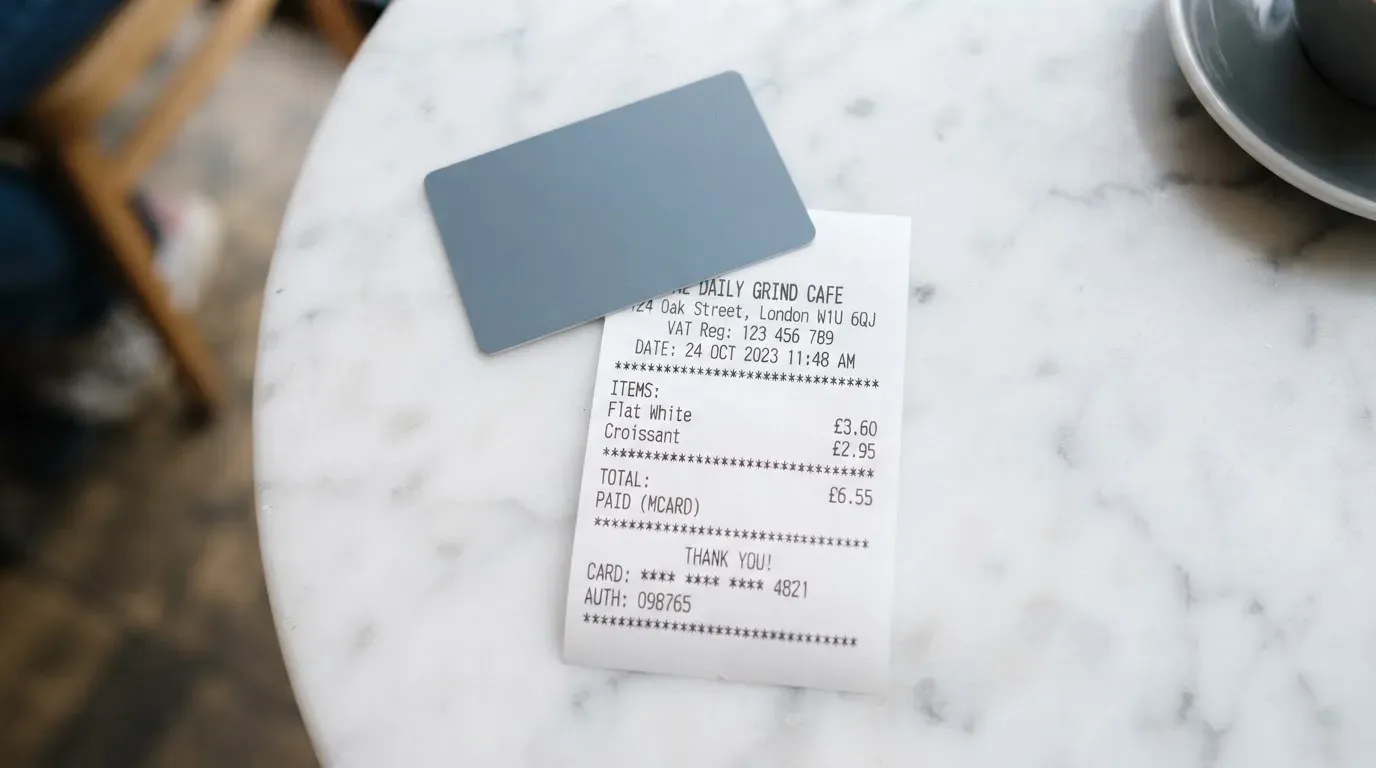
The missing number is the Core shipping fee. The card says a shipping fee applies and does not say how much. On Luxe+, shipping is included. The monthly and annual fee for Core is not stated, and neither is the physical card fee. The first virtual card costs $10 in regional-pricing countries — Argentina, Angola, Bangladesh, Bolivia, Colombia, Ecuador, Indonesia, Malaysia, Mexico, Nigeria, Peru, the Philippines, South Africa and Thailand — which is the one place the price of a card is actually published.
Two fees you will meet outside the official pages: a 1% FX fee outside USD and EUR, and a 2% ATM fee with a $250 daily cap. Both come from third-party sites and are not confirmed by the card, so treat them as the price of finding out, not as a quote.
| Fee or limit | What is published |
|---|---|
| Virtual card, Core | 1 free; $10 in regional-pricing countries |
| Physical card, Core | Free, shipping fee applies (amount not stated) |
| Monthly or annual fee, Core | Not stated |
| FX fee, Core | 0.5% on top of the base rate |
| FX fee, Luxe | 0.25% |
| FX fee, Pinnacle and VIP | None |
| EUR purchases | Separate 0% FX article; lower cashback ladder |
| Crypto conversion fee | Not stated |
| ATM withdrawal limit | Up to $5,000 per withdrawal; 5 withdrawals and $25,000 per rolling 24h |
| ATM fee | Not stated in the ATM article; unofficial: 2% with a $250/day cap |
| ATM free withdrawals | Free up to 10/month on Pinnacle and VIP; “available” on Core and Luxe |
| Daily and monthly caps | Set by you, in the Cash tab |
| Weekly per-card limits by MCC | $500 for crypto purchases, gambling, FX and prepaid loading; $1,000 for money transfers, stock brokers and dating; $3,000 for pharmacies, licensed online casinos (MCC 7800–7802) and crypto-account funding; advertising $30,000 per transaction |
Now let a few ordinary payments show you where the fees actually land.
Buying coffee in your own currency in a country that charges you in USD: the 0.5% Core FX fee applies if the card spends USD. On EUR there is a separate 0% FX article, so the ladder depends on which of the two the merchant’s terminal charges you in.
A weekend away in a third currency: here the unofficial 1% comes in, on top of whatever the card’s own schedule says for that currency. This is the case the card pages handle least clearly, and it is the case where a reader deserves the most caution.
Cash from an ATM: the limits are generous — $5,000 per withdrawal, five a day, $25,000 per rolling 24 hours — and the fee is not stated in the article that gives the limits. Unofficial sources say 2% with a $250 daily cap. If you plan to live on ATM cash, that is the number to confirm in the app before you rely on it.
The per-card weekly limits by merchant category are the quiet constraint. $500 a week on crypto purchases, gambling, foreign exchange and prepaid loading; $3,000 on pharmacies and licensed online casinos; $30,000 per transaction on advertising. Overall tier limits are not stated.
How to Top up
Topping up is the part this card does more than its rivals, and the part the documentation describes least precisely. You deposit any supported token to your Safe — in Credit mode the deposit becomes collateral; in Direct Pay mode the balance is spent directly. The coin and network list is not on the card pages; it lives in two help articles, “Supported assets and networks for your Vault with Cash” and “USDC and USDT deposit networks and addresses”. Deposits are accepted from multiple chains.
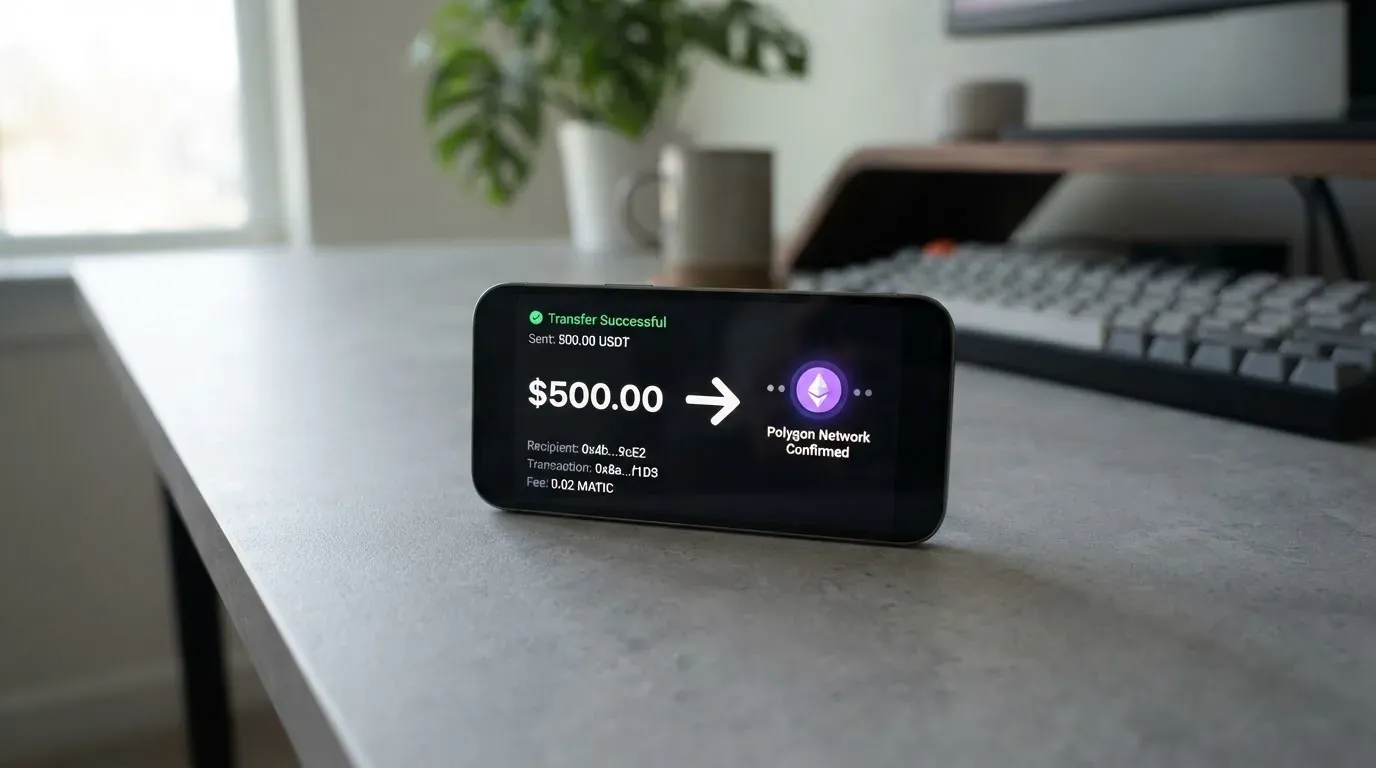
That last sentence is where the real risk sits, and it is a risk shared by every card in this category, not by this one alone. Blockchain transfers are irreversible. Send tokens on a network the provider does not support, or to an address belonging to a different network, and the funds can be lost or need manual support recovery with no guarantee. A chain named in a headline article is not the same thing as a chain listed in those two help pages. Check the pages, not the marketing.
Getting money back out is a two-sided process: you request a withdrawal with the token, amount and recipient address, and it executes once the required Safe owners sign. Cross-chain withdrawals have their own article. Fees are not stated for any of it. Closing your account needs a $0 balance, no active borrows and no pending card transactions, then a 14-day waiting period — and because the balance has to be emptied first, what happens to any residual balance is not stated.
Fiat top-up by bank transfer has a separate article with its own country list. I did not read its fees, so I will not guess at them.
Paying with it every day
This is where the card earns its 9. Apple Wallet and Google Pay are both supported, added through the card details. That is what makes a card feel normal: you tap a phone instead of handing over plastic.
The cashback is the other reason to carry it. It is paid in ETHFI, locked for seven days and then claimable. The ladder depends on tier, and it falls steeply:
- Core: 3% on the first $2,000 a month, then 1% up to $3,000, then 0.5%.
- Luxe: 3% on the first $10,000.
- Pinnacle: 3% on the first $50,000.
- VIP: 4% on the first $50,000.
- Business: 1%.
EUR purchases run on a lower ladder of their own. ATM withdrawals, cash advances, peer-to-peer payments and gambling merchant categories are excluded. No payout cap is stated. Cashback-excluded or limited categories include MCC 6011, 6012, 6211, 6513, 6532 and 7995; gambling is capped at $500 a week rather than fully blocked.
The app is an iOS app called “ether.fi: Crypto Card & Spend” requiring iOS 16.0 or later, rated 4.9 from 141 ratings in the US storefront as I read it on 2026-10-20. The Google Play listing was not found or not read, so I cannot tell you what Android users have.
When something goes wrong, there is a route. Disputes go through in-app chat with support. For unauthorised transactions you delete the card and contact support, which moves into Visa’s fraud process; for merchant problems — goods not delivered, duplicate charges, subscriptions — you go through Visa’s dispute process, and you should contact the merchant first. Disputes may take up to 90 days. No dispute fee is mentioned. Refunds come from the merchant, and their timing is covered in a separate article.
What can go wrong
The reliability score of 4 out of 10 is not a rounding artefact; it comes from four specific things.
The issuer is not named. The card’s help articles mention Visa and there is a Cash Protection Program, but the legal entity and the issuing institution are not stated, and the ether.fi site was returning a 429 when I looked. Third-party blogs disagree: one names Rain, another names Third National under a Visa licence. Neither is official, and I would not repeat either to a reader as fact.
The complaint themes cluster into four groups, all of them reported by users:
- KYC limbo — address verification dragging on for weeks or months.
- Denial after approval, with “suspected fraud” and no specific reason.
- Compliance freezes with slow automated support.
- Deposited funds lost during card activation, in a 2025 review.
In November 2025, PANews reported that the cards were suspended after fraudulent transactions, with the CEO promising refunds. I found no confirmed licence loss or issuer change in 2026 as of my check on 2026-10-20 — but “no confirmed change” is not the same as “no change”.
On security, the design is better than the complaints suggest. The Safe vault is self-custody in style: withdrawals need Safe owner signatures. There is passkey sign-in, email one-time codes, a PIN, an immediate card freeze in the app, and spending limits you set yourself — though changes to those limits take effect only after a security delay. The Cash Protection Program is not insurance. It reimburses unauthorised smart-contract asset movement, capped at $10,000 on Core, $50,000 on Luxe, $200,000 on Pinnacle and Business, and $500,000 on VIP, with programme capacity of $5 million and a $100 claim fee that is refunded if the claim is approved. It excludes compromised keys, credentials or devices — which is to say it does not cover the most common way people lose crypto.
The category risk sits underneath all of this. A card number starts with a six- or eight-digit issuer identifier, and merchants can look it up; a card that looks foreign to a shop is a card that gets declined. Visa itself does not issue crypto cards to consumers — it licenses issuers and can suspend programmes, as it did with WaveCrest in Europe in 2018 and with FTX’s agreements in November 2022. Programme closures tend to follow a pattern: a notice period, spending stops, loading stops, then you are asked to withdraw what is left.
What to take instead
I compared this against three cards that solve the same problem differently.
Xplace (7.7 / 10) is the closest rival and the one I would look at first. Its country list is not stated and its own terms say services are “not available in all jurisdictions” — so it trades a clear list for ambiguity. What it offers instead: an instant virtual card and a physical Silver card live, with Gold and Platinum coming soon at a 7–14 business day delivery; a Cash mode that spends stablecoin balance and a Credit mode that borrows against holdings; annual fees of free on Basic, $99 on Silver, $249 on Gold and $999 on Platinum; “0% FX on Platinum”; stablecoin spending with “no hidden spread”; deposits of BTC, ETH, SOL, JitoSOL, USDC, USDT and xStocks on Solana; and cashback of 0.5%, 1%, 1.5% and 2% by tier, paid in USDC. If you want a card whose terms are legible, this one is further along.
Anodos Card (7.2 / 10) is more open geographically — “available in 150+ countries, with a few exceptions” — and more explicit about who it excludes: no cards for residents of Belarus, China (Mainland), Cuba, India, Iran, Iraq, Israel, Myanmar, Nepal, Nicaragua, North Korea, Russia, Syria, Turkey, Ukraine, Venezuela or Vietnam; Chinese and Hong Kong passports ineligible; Nigeria, Sri Lanka and South Africa only with “enhanced review + explicit approval”; spending blocked in Cuba, Iran, North Korea, Russia, Syria and Ukraine. It is free on the Financial Freedom tier, or $9.99/month on Pro and $29.99/month on Elite. Its FX fee is 1.50%, 1.25% and 1.00% by tier — worse than ether.fi’s 0.5% on Core — but it says the number, and it publishes its late-payment and returned-payment fees too. Collateral sits in your wallet on Ethereum, Polygon, Optimism or Arbitrum. Its terms also require you to attest you are not a US citizen; a separate US programme exists in 30 states.
Sponge (4.9 / 10) is thinner still. A virtual card described on its homepage as a credit card issued by Rain, a Visa Principal Member; USDC collateral moved from the Sponge wallet with card fund, on Base or Solana. No country list on the card pages beyond a minimum age of 13 in the platform terms; costs, fees and rewards not stated. It scores lowest on what it does not tell you.
| ether.fi | Xplace | Anodos | Sponge | |
|---|---|---|---|---|
| Score | 6.7 | 7.7 | 7.2 | 4.9 |
| Card | Visa, virtual and physical | Visa, virtual live, Silver physical live | Visa, physical and virtual | Virtual, described as credit |
| Where | Listed jurisdictions plus 31 US states | Not stated | 150+ countries with named exclusions | Not stated |
| Annual fee | Not stated on Core | Free to $999 by tier | Free to $299.90 | Not stated |
| FX | 0.5% Core, 0.25% Luxe, none Pinnacle/VIP | 0% on Platinum | 1.50% / 1.25% / 1.00% | Not stated |
| Cashback | 3% on ETHFI, tiered | 0.5%–2% in USDC, Credit mode | Not stated | Not stated |
Who I would recommend it to
I would recommend it to you if you live in one of the listed countries, you already hold crypto you are comfortable spending, and your spending is in USD or EUR. You want the cashback in ETHFI, you use Apple Pay or Google Pay, and you want the option of a metal card as your balance grows. You read the seven-day lock as a feature.
I would tell you to think twice if you cannot name the bank behind the card and that bothers you. If you are planning to spend in third currencies, where the fee is only documented by third parties. If you need ATM cash as a primary channel. If your income depends on this card not being frozen next week. If you are in a jurisdiction the list does not mention, you cannot apply at all and none of this applies to you.
For a first card, I would look at Xplace for legible terms or Anodos for a country list that tells you exactly where you stand. For this one, I would keep a small balance and check the Cash Protection Program’s exclusions before you fund it.
Frequently asked questions
What is the ether.fi card?
It is a Visa, available as a virtual card and as physical plastic, that spends a crypto balance held in a Safe vault tied to the ether.fi app. In Credit mode your tokens act as collateral; in Direct Pay mode the balance is spent directly. Card payments go through Visa’s network in the usual way. What sits underneath the crypto is a card programme whose issuing bank the public pages do not name.
How does the ether.fi card work?
You deposit supported tokens to your Safe, complete a KYC check, then order a virtual or physical card in the app. At payment the card draws on that balance and converts crypto as needed, and you earn cashback in ETHFI. Because the balance is a stored balance rather than a bank account, the card cannot overdraw it. ETHFI cashback is locked for seven days before you can claim it.
Is ether.fi a bank?
No — not as far as anything published says. ether.fi appears to be a programme manager and front-end for a Visa programme, and the card’s own pages do not state the legal entity or the issuing institution. Blogs name Rain or Third National; the two disagree, and neither is official. This is the single biggest thing to weigh before you deposit, because your protection rests on the issuer, not on the brand.
Which countries can get the ether.fi card?
The listed jurisdictions — Andorra, Argentina, Australia, Austria, Brazil, Canada, Cyprus, the Czech Republic, France, Germany, Hong Kong, Hungary, Italy, Japan, Mexico, Poland, Portugal, Singapore, Spain, Switzerland, the UAE and the UK — plus 31 US states, with Belgium and Ireland eligible without physical delivery. If your jurisdiction is not on the list you cannot apply. ATM withdrawals are blocked in North Korea, Iran and Myanmar.
Does the ether.fi card require KYC?
Yes, and KYC cannot even start until a $10 crypto deposit is in your Safe, in every region. The check is one flow with no tiers: phone code, passport or national ID or driver’s licence, selfie liveness check, address, and sometimes an issuer questionnaire. Proof of address is only sometimes required, must be under three months old, and phone-bill screenshots are not accepted. Most people report completion within 48 hours.
Is the ether.fi card free?
One free virtual card on the Core tier, and a free physical card, but Core shipping costs a sum the card does not publish. In regional-pricing countries — Argentina, Angola, Bangladesh, Bolivia, Colombia, Ecuador, Indonesia, Malaysia, Mexico, Nigeria, Peru, the Philippines, South Africa, Thailand — the first virtual card costs $10. Monthly and annual fees on Core are not stated. A $10 crypto deposit is also required before KYC completes, refundable if verification fails.
What are the ether.fi card’s fees and limits?
Core charges 0.5% FX on top of the base rate; Luxe 0.25%; Pinnacle and VIP none. EUR purchases have a separate 0% FX article. Weekly per-card limits run $500 for crypto purchases, gambling, foreign exchange and prepaid loading, $3,000 for pharmacies and licensed casinos, and $30,000 per transaction for advertising. Unofficial sources report 1% FX outside USD and EUR and a 2% ATM fee with a $250 daily cap.
Is the ether.fi card safe?
The underlying design is reasonable: a Safe vault requiring owner signatures to withdraw, passkey sign-in, an in-app instant freeze and limits you set yourself. But the Cash Protection Program is not insurance — it caps at $10,000 on Core and excludes compromised keys, credentials or devices. Trustpilot sits around 3.3 from 47 reviews, with recurring reports of KYC limbo, unexplained fraud-flag denials and frozen balances. In November 2025 cards were suspended after fraudulent transactions.
How do I add the ether.fi card to Apple Wallet or Google Pay?
Both mobile wallets are supported, and you add the card by entering the card details rather than scanning anything — the number is in the app. Once added, you tap to pay and Apple Pay substitutes a device-specific number for the card number, so the real one is never stored on Apple’s servers. One caveat to check before you rely on it: an issuer can restrict a tokenised number to specific channels, and I would not assume phone payments carry the same limits as chip payments.
Can I withdraw from ether.fi and delete my account?
You request a withdrawal with the token, amount and recipient address, and it executes once the required Safe owners sign; cross-chain withdrawals follow their own article and fees are not stated. To close the account you need a $0 balance, no active borrows and no pending card transactions, followed by a 14-day waiting period. Because the balance must be emptied first, what happens to any residual balance is not stated — clear it before you start the clock.
Credit and cashback cards: choosing between them – cryptocardpicker
Content created by the «cryptocardpicker» team