
CoinW card review: cheap virtual card, thin fee disclosure, heavy complaint record
 Available in US
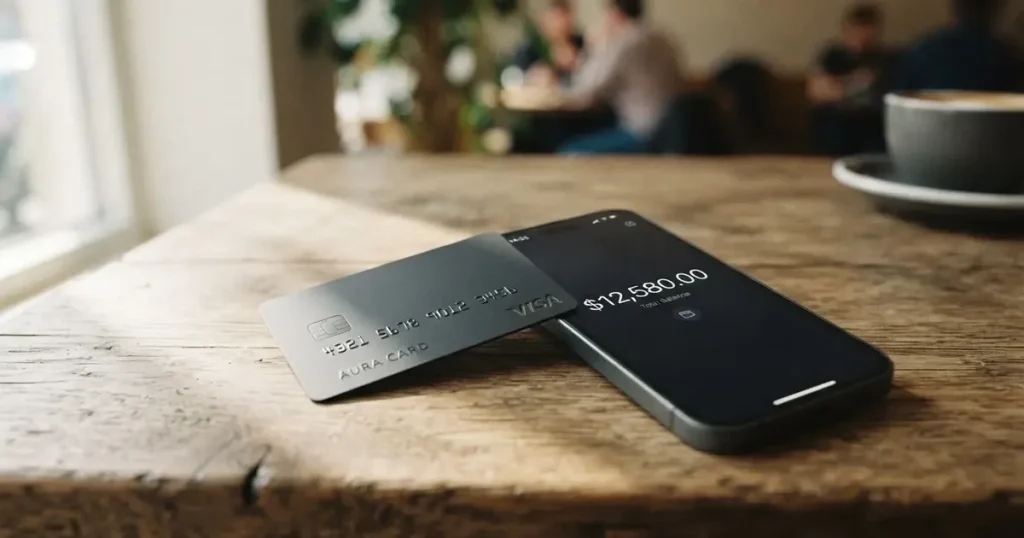
CoinW’s card looks, on paper, like a clean answer for people who want to spend USDT without moving money through a bank first. That is exactly the pitch. The card is denominated in SGD, it spends your USDT balance directly without a manual withdrawal step, the virtual version came out free with no monthly charge, and the physical card draws at ATMs worldwide up to a large single-transaction ceiling. If that is the job you need done, it is a real job being done.
But I have spent this page reading past the announcement, and the gap between what the August 2025 release says and what a third-party database and a year-plus of public complaints say is wide enough that I would not treat the launch post as a description of the product you will actually hold. The fee schedule is not disclosed on the readable official pages. The legal entity behind the exchange is not named there either. The virtual card’s price is stated as free in one source and $15 in another. And the Trustpilot profile for the exchange carries a 1.7 out of 5 across 143 reviews, dominated by frozen accounts and profit rollbacks.
So the honest summary is this: a convenient product attached to a platform with a thin disclosure record and a loud complaint record. Convenience is real. So is the risk.
The conditions described here are current as of October 28, 2026.
The score: 5.2 out of 10, and why
| Criterion | Mark | What I found |
|---|---|---|
| Who can get it | 7 / 10 | Unofficial starting data points to 176+ countries for the global card and 45 regions for the iPay Card variant, with issuance blocked in the United States, United Kingdom, Canada and China. None of this is confirmed on the card’s readable official pages. |
| Cost | 6 / 10 | Per the August 2025 release, the virtual card is free to issue with a zero monthly fee. Unofficial figures put issuance at $15 virtual and $98 physical, with a 1% commission and 2% on non-USD. |
| Top-up options | 4 / 10 | The card spends USDT directly with no manual withdrawal. Unofficial: a 2% top-up fee. Thin on options, heavier on charges. |
| Reliability and complaints | 2 / 10 | No legal entity named on readable pages. Trustpilot for the exchange is 1.7 of 5 across 143 reviews, citing frozen accounts and profit rollbacks. Unofficial: a 2023 hack. |
| Everyday use | 6 / 10 | Virtual or physical, ATM withdrawals worldwide up to $20,000 per transaction. Apple Pay and Google Pay support not disclosed. |
| Total | 5.2 / 10 | A product that does one thing simply and attaches it to a platform that has to earn trust it has not yet earned. |
The score is not a rounding of the marks; it is what those six judgements add up to in my head after reading everything I could. Reliability is where the weight sits. You can forgive a card a 2% foreign-currency fee because it is visible and it is a line in the app. It is much harder to forgive an exchange that froze someone’s account in June and rolled back their profit in September, because that touches not a fee but the thing you were trying to escape — the feeling that the money is not quite yours.
Who this suits, in one sentence: someone who already holds a CoinW exchange account, holds USDT there, and wants to spend it at a shop without first converting it into fiat in a bank. Who it does not suit: anyone who needs a card to be a stable, boring payment instrument, and anyone whose country or citizenship is not clearly documented as eligible.
Will they give you the card?
Here is the first thing that should give you pause, and I want to be precise about it, because precision cuts both ways: the card’s readable official pages do not state the eligibility criteria. That is a plain fact and I am stating it once here so you do not go looking for it again later in this page.
What exists instead is unofficial starting data, which I am passing to you as unofficial — not confirmed by the card itself, so treat it as a lead rather than a promise. That data describes a global programme reaching 176+ countries, a narrower iPay Card variant limited to 45 regions, and a set of exchange-restricted jurisdictions — the United States, the United Kingdom, Canada and mainland China among them — where accounts cannot be opened.
That exclusion list deserves a moment of your attention, and not because I am going to help you get around it. I am not. What I mean is that the list itself is informative. If you live in one of those countries, the honest answer to “can I use CoinW card in my country” is that the platform says it cannot serve the exchange there, and a card attached to an exchange account is therefore not available to you through that route. If you live somewhere else and hold a citizenship from one of those countries, note that platforms screen citizenship and country of birth separately from where you live — that is standard practice in this industry, because sanctions screening is applied to people as well as to addresses. So residence and nationality can pull in different directions here, and only the platform’s own answer will settle it.
Two further gaps sit alongside this. Whether identity verification is required is not stated. Nor is the verification tier structure. That matters more than it sounds: the pattern across this whole category is that lower tiers come with daily limits, and higher tiers come with higher limits, so “do I need KYC” and “what will my daily limit be” are the same question wearing two hats. If your use case involves moving real money through the card, you should treat the identity question as unresolved until the platform answers it in writing, not assume the easiest answer.
How to get it
The card comes in two forms — virtual or physical — and, per the CoinW release of August 2025, it is denominated in SGD and spends USDT directly. That is the shape of the product as officially announced.
There is one unofficial detail about the rails, and it is the kind of detail that matters more than it looks. A third-party card database lists CoinW as a Visa/Mastercard product issued by a Singapore bank, with no date shown on its entry. That is unofficial and not confirmed by the card, so I will not build anything on it, but you should understand why it matters if it turns out to be accurate: the network — Visa or Mastercard — is what routes the payment, and the bank is the institution that actually holds the card programme. The crypto brand is often only a front end sitting on top. When something goes wrong, the question of who answers you depends entirely on which of those layers holds the licence.
Delivery is another silence. Whether the physical card ships, how long it takes and what it costs are not stated. If you are outside Singapore and the physical version is the one you want, that is an unanswered question, and unanswered logistics are rarely free.
And activation, which is on the list of things people search for, is not described on the pages I could read. How a virtual card is switched on, whether a first small transaction is required, whether the card arrives pre-activated — all unknown. Treat “how to apply” and “how to activate” as questions to ask the platform before you commit, not as a procedure you can follow from this page.
Fees: what it really costs
This is the section where I would slow down, because it is where the official record runs out. The fee schedule is not stated on the readable official pages. Everything below is either from the August 2025 release or flagged unofficial.
| Fee or limit | Value | Source |
|---|---|---|
| Virtual card issuance | Free | CoinW release, Aug 2025 |
| Physical card issuance | Up to 50% off during launch period (price not stated) | CoinW release, Aug 2025 |
| Virtual card issuance (unofficial) | $15 | cryptocards.so |
| Physical card issuance (unofficial) | $98 | cryptocards.so |
| Monthly fee | Zero for the virtual card | CoinW release, Aug 2025 |
| Annual fee (unofficial) | None | cryptocards.so |
| Transaction fee (unofficial) | 1% | cryptocards.so |
| Transaction fee on non-USD (unofficial) | 2% | cryptocards.so |
| FX fee (unofficial) | 2% for non-USD | cryptocards.so |
| Top-up fee (unofficial) | 2% | cryptocards.so |
| ATM withdrawal | Global ATMs; fee not stated | CoinW release, Aug 2025 |
| ATM single transaction | Up to $20,000 | CoinW release, Aug 2025 |
| Other limits | Not stated | — |
Look at that table and you will see the shape of the problem. The one number I can attribute to the company is zero — zero monthly fee, free virtual issuance. Every figure that describes what a payment actually costs comes from an unofficial source, and those figures conflict with the release on the virtual card’s price. Free versus $15 is not a rounding error; it is the difference between a card you try for nothing and one that costs you the price of a modest dinner.
The unofficial 1% transaction fee and 2% on non-USD is the number I would actually plan around, if I were planning around it at all, because a card denominated in SGD that you use anywhere that is not Singapore is, by definition, a non-USD currency operation most of the time. Read those two lines as one: spend SGD, and you may be paying both a conversion cost and a currency cost on every transaction.
Two everyday payments, worked through, so the fees stop being abstract.
A coffee in Singapore, for a small sum in SGD. The transaction fee is not officially stated, so the unofficial 1% is the only figure in play. On a small purchase, one percent is a rounding error in absolute terms — a few cents — but it is also the smallest of your worries here, because the real issue at a till is acceptance, not arithmetic.
A hotel or a flight booked online, in euros or dollars, from a card denominated in SGD. Now you are in the currency-fee case: the unofficial 2% applies, and 3-D Secure may or may not prompt you for an extra identity step. On a €400 booking, two percent is €8 for the privilege of not converting first — and you have to weigh that against the fact that converting first, into SGD, would have cost you something too, at a rate no one has published.
There is one more fee line that belongs in this section and does not belong to the card at all. If you fund the card by sending USDT on a public blockchain, the network charges its own fee — gas on Ethereum, bandwidth and energy on Tron — and that is the blockchain billing you, not the card provider. It is easy to mistake a failed or slow deposit for a card problem. It usually is not.
The release also ties fee discounts to something called the Fast-Track Access Program. I did not read the details, so I will not characterise them, but the shape of the claim should make you curious: a card that announces its pricing alongside a programme for faster access to something is a card whose headline price may not be the price you pay.
Top up: how the money gets in
The central mechanic is the most attractive thing about this card, and it is worth stating plainly before I qualify it. Per the release, the card spends USDT directly, without manual withdrawals. You do not convert to SGD, you do not wait for a fiat rail, you do not move money into a bank account. You spend what you hold. That is genuinely simpler than the alternative, and for someone whose alternative is a correspondent bank that declines transfers, it is not a small thing.
Everything else about funding is quieter. The official top-up methods are not stated. What is not stated either: which networks the card accepts USDT on, what the minimum is, how long it takes, whether there is an auto-top-up, and — importantly — what happens to a deposit sent on the wrong network. That last one is not a hypothetical. Blockchain transfers are irreversible. A transfer sent to an address of another network, or on a network the provider does not support, can be lost, or can need manual recovery through support with no guarantee of success. The card’s pages do not tell you which networks are supported, and in this category that single missing fact is the one that most often costs people real money.
The unofficial top-up fee is 2%, which sits uncomfortably close to the unofficial 1% transaction fee. Top up and spend, and you may be paying three percent round the loop before anything else. Combined with the 2% non-USD figure, a card user outside Singapore running several transactions a month is looking at a running cost that no free-issuance announcement will offset.
Withdrawal from the card itself is not stated. So the return journey — money from the card back to somewhere you control — is a blank in this review too.
Paying with it every day
Virtual or physical, that is your choice, and the physical card works at ATMs worldwide. Wallets: not stated. Apple Pay and Google Pay support: not disclosed. Rewards: not stated. The app: not stated. Disputes and chargebacks: not stated.
That last group deserves more than a shrug. A dispute process is how you get money back when a shop takes a payment and never gives you the goods, and its absence from the readable pages means that if something goes wrong on a $20,000 purchase, you have no documented route to contest it. In several markets that matters enormously, because consumer reversal rights are a legal backstop for ordinary debit cards and prepaid cards are often outside them. A card with no stated dispute route and no stated app features is a card you would be adopting on trust rather than on evidence.
The accept-the-card-anywhere promise also deserves a reality check, because it is a promise about the whole payments network and only partly about CoinW. When you pay, a merchant’s system can look up the card’s issuer details and see where the card came from. If the issuing country differs from the billing address you type, some merchants apply extra scrutiny or decline outright. Address verification — the check that compares the street number and postal code you enter with the issuer’s records — is mainly offered in the United States, Canada and the UK, and is generally unavailable for foreign-issued cards. A card issued in Singapore and used in Europe is, to a checkout system, a foreign card. It will usually work. It will not always work, and when it does not, the decline is not something you can argue with at the counter.
Some merchants also decline prepaid cards by policy, and some block whole merchant categories by policy rather than by law — gambling is the classic example, and the blocked list varies by issuer. If gambling is why you want a crypto card, that is worth checking against the issuer’s list first, not last.
One small comfort worth mentioning: declined payments sometimes leave a temporary hold on your funds that can persist for several days, up to about a week. If a payment fails at a shop, do not assume the money is gone and do not panic-double-spend elsewhere while it is held.
What can go wrong
I have left the heaviest section for here, because this is where the review turns from product assessment to risk assessment, and the two should not be blurred together.
Start with the company, because you cannot assess a card programme from a front end. The legal entity behind the exchange is not stated on the readable pages. A third-party summary says the exchange was founded in 2017, is based in Dubai, and was hacked in 2023, with no date shown for the hack. That is unofficial, and I am not going to convert it into a fact, but note the shape of the disclosure: on the pages a regulator or a cautious user would look at, you cannot find the entity.
Then the complaints, which are about the exchange rather than the card specifically — but you are holding a card attached to that exchange, so the distinction is thinner than it sounds. On Trustpilot, the CoinW exchange profile shows 1.7 out of 5 across 143 reviews, read on 2026-10-21, with 76% of reviews at one star. The company replies to all negative reviews, and its Trustpilot replies direct users to [email protected] or to in-app chat; the languages and hours of that support are not stated. Support that exists but whose hours you cannot find is not the same as support you can count on at 2am on a Sunday.
The themes in the reviews are consistent enough to name. Users report frozen or restricted accounts and withdrawals under anti-money-laundering risk flags between June and October 2026. Users report profit rollbacks and clawbacks in September 2025 and March 2026 — the exchange taking back gains, which is a different order of grievance from a fee. Users report delayed withdrawals ranging from weeks to two months, in August 2025 and February 2026. And users report templated support replies. I want to be fair about what this is and is not: these are user reports, not adjudicated findings, and a low Trustpilot score on any exchange is partly a function of who goes to write a review. Frozen accounts are also, in this industry, frequently a compliance function working as intended rather than a failure. The point is not that CoinW has done nothing wrong. The point is that a person reading only the launch release would never know any of this was on the record.
Security features are not stated. Whether the card supports two-factor authentication, instant freeze, spending limits or tokenised mobile wallets is unknown, and those are exactly the controls that determine how bad a stolen credential gets.
Then the structural risks, which belong to the category rather than to this issuer, and which are worth five minutes of your attention because they are the risks a crypto card adds on top of an ordinary one.
Custody. Control of crypto belongs to whoever holds the private key. With a custodial wallet — which is what “spends your USDT on the exchange account” almost certainly means — the provider holds the credentials, so you must trust them completely. A seed phrase is typically twelve to twenty-four words and is an unencrypted form of the private key; anyone who obtains it can restore the wallet and spend its funds. Blockchain transfers are typically irreversible, and a stolen key has no built-in recovery — the network cannot freeze or return what left. The history of custodial platforms is not encouraging: Mt. Gox, with roughly $350 million reported stolen across 2011 to 2014; Coincheck, about $400 million in 2018; Ronin Network, $625 million in 2022.
Stablecoin de-peg. A stablecoin aims to hold a steady value against a fiat currency and, as the BIS put it in July 2025, about 90% of stablecoin market capitalisation sits in Tether’s USDT and Circle’s USDC. But stablecoins are not actually guaranteed stable. TerraUSD collapsed in May 2022. USDC temporarily lost its peg in March 2023 during the US banking crisis. If your card balance is USDT and USDT slips, your card balance slips, and nothing in the card’s terms — which are not disclosed on the readable pages — has been shown to protect you from that.
Network mistakes. USDT exists on several chains, including Ethereum, Tron, Solana, Polygon and Avalanche. Fees differ by network: on Ethereum you need ETH to pay gas, so a wallet holding USDT but no ETH cannot send; on Tron, fees are paid through bandwidth and energy resources and often burn TRX. And there is a trap worth knowing about: Circle stopped supporting USDC on Tron in February 2024, so sending “USDC over TRC20” is not a native option. Sending to the wrong network is irreversible.
Sanctions and censorship. Tether says it disables tokens in wallets on the OFAC sanctions list and has frozen funds tied to illicit activity. Stablecoins are not censorship-proof, and I am not offering that as a workaround for anything — I am telling you that the asset class you are trusting to behave like cash has a switch attached to it that someone else controls.
Regulatory shape. In the EU, MiCA took legal effect in June 2023; its stablecoin rules applied from 30 June 2024 and the remaining provisions, including crypto-asset service provider rules, from 30 December 2024. Under MiCA, e-money tokens may be issued only by a credit institution or an electronic money institution. Transitional arrangements let providers operating under national law continue only until 1 July 2026 or until they receive or are refused authorisation, whichever comes first — and ESMA maintains an interim register of authorised providers, white papers and non-compliant entities that you can check. A card itself is a payment service regulated separately under e-money and payment-services law, so a crypto card often depends on two licences at once, and a card can outlive or outlast neither. In the US, FinCEN guidance treats administrators and exchangers of convertible virtual currency as money transmitters. And note the historical precedent that still shapes how issuers think: Visa and Mastercard do not issue crypto cards to consumers themselves — they license issuers, and they can suspend a programme. Visa terminated its global agreements with FTX on 13 November 2022 and the FTX US debit card was wound down. Visa suspended WaveCrest in Europe in 2018, closing all WaveCrest-issued Visa programmes. Programme closures typically run in a fixed order: notice, then spending and loading stop, then a call to withdraw remaining balances. If you hold a balance on a crypto card, the ability to withdraw it is the single most important thing the issuer can take away from you, and it is the thing these pages do not tell you about.
On tax, one neutral note and no advice: the IRS treats digital assets as property, so exchanging them for goods, services or dollars generally produces a taxable gain or loss, measured in local fiat currency at fair market value on the date of the transaction. Each card payment funded from crypto may therefore be a separate taxable event. What that means for you depends entirely on where you live — I am not going to tell you what to do about it.
What to take instead
The honest comparison is against cards whose disclosures are better, not necessarily against cards whose features are better. Here are three, with their scores, and I want to walk through the trade-offs with you rather than just rank them.
| Card | Score | Key advantage | Key limitation |
|---|---|---|---|
| Coinbase Card | 6.4 / 10 | “Zero spending fees and no annual fees”; US-only but fully disclosed terms | US residents only (all states except Hawaii); crypto converted to USD at purchase with a spread |
| OKX | 6.2 / 10 | No card fee, no transaction fee, no OKX FX fee | Euro card, EU plus Norway only; cashback only on USDG |
| Young Card | 5.7 / 10 | Cashback in YNG by tier: 0.1% Essential, 1.8% Gold, 3.6% Platinum | Eligibility, card type, fees and top-up not stated |
| CoinW | 5.2 / 10 | Spends USDT directly with no manual withdrawal | Fee schedule, entity and network support not disclosed |
Coinbase Card is the disclosure benchmark. It is a Visa prepaid debit card, virtual or physical, spending cash or crypto, with what the company itself calls zero spending fees and no annual fees. Every fee it has is disclosed in its cardholder and user agreements — which is a sentence worth savouring, because the CoinW announcement tells you the monthly fee is zero and then tells you nothing at all about what a payment costs. Its limits are hard limits: available in all US states except Hawaii, no other countries, and account opening follows the US PATRIOT Act identity rules — name, address, date of birth, ID. All crypto is converted to US dollars for purchases and ATM withdrawals, and a spread applies when Coinbase buys, sells or trades. Funding is a linked bank account or a paycheck deposit into Coinbase at zero fees. Rewards are optional crypto rewards on every purchase for US card users, at a variable rate shown in the app, from a rotating selection. If you are American and want a crypto-spending card whose costs you can read before you commit, this is the one to read first — and note that paying in crypto means paying the spread, which is the same category of cost as CoinW’s unpublished 1%, just disclosed.
OKX is the closest thing here to a properly stated fee schedule, and it comes with a narrower map. A Mastercard, euro-denominated virtual debit card linked to OKX Pay, issued through an unnamed European licensed payment provider; a physical card is not mentioned. The card fee is none, per an explainer as of May 2026. There is no transaction fee and no OKX FX fee; the conversion spread is the one number that shifts, with 0.1% in the May 2026 explainer against 0.4% market spread in the launch press release — the explainer is newer, and the conflict is worth noting rather than resolving. Eligibility is the EU plus Norway, launched 28 January 2026, with Iceland and Liechtenstein excluded; one explainer’s conclusion says “entire EEA” and is inconsistent with the rest. Funding means holding USDC or USDG in OKX Pay, via Convert or an external deposit — other coins must be converted first, there is no auto top-up, and a payment is declined if the balance is insufficient. Rewards are cashback only on USDG purchases, so USDC earns none, with monthly caps in euro by tier: Regular 2% cap 10, VIP1 4% cap 300, VIP2 4.5% cap 450, VIP3 5% cap 1,000, VIP4+ 10% cap 1,000 — a set of figures the source itself marks as inconsistent, since the text says 2–5% while the table says 10%. A 30-day launch promo of up to 20% for VIP and 15% for regular is also advertised. So: transparent about its percentages, vague about whether a physical card exists, and closed to you if you are outside the EEA.
Young Card I can tell you least about, which is itself the finding. Its score is 5.7. What is established is that cashback is paid in YNG tokens at a rate set by Club tier — Essential 0.1%, Gold 1.8%, Platinum 3.6% — with Bronze and Silver not stated. Eligibility, card type, costs and top-up are all not stated. A rewards rate is a nice thing to have and is not a substitute for knowing what a payment costs or whether you can get one.
Set against all three, CoinW’s case is narrow but real: it is the only one of these that advertises spending USDT directly without a manual withdrawal, and if that specific smoothness is what you need, no amount of comparison will talk you out of it. But it is also the only one whose fee schedule, legal entity and supported networks I could not find stated on its readable pages.
Who I would recommend it to
I would recommend this card to exactly one kind of person: someone who already has a CoinW exchange account, already holds USDT on it, wants to spend that balance at a shop without a manual conversion step, is comfortable treating the balance as money held by a counterparty rather than by themselves, and has checked — actually checked, on the platform, before depositing — that their country and citizenship are eligible and that they can withdraw if they need to.
Everyone else, I would steer elsewhere. If you live in the United States, the United Kingdom, Canada or mainland China, the starting data says the exchange does not serve you and I would not spend time on this page. If you need a card for a subscription, a rent payment or anything where a declined payment is expensive, go and read the Coinbase terms if you are eligible, or the OKX figures if you are in the EEA — the difference between a disclosed 0.1% spread and an undisclosed 1%-plus-2% is the difference between a cost you can budget for and one you find out about afterwards.
And if what you are looking for is an exit from a bank that will not open an account for you, I want to say something careful. This card may be the fastest route from USDT to a tap-to-pay terminal, and for some people that is genuinely the only route on offer. But it does not convert custodial risk into anything else. You are still holding your money with a company whose exchange profile shows frozen accounts and rolled-back profits, behind an entity the public pages do not name, on rails whose withdrawal process you have not been able to read. Convenience is not custody, and a card that spends your USDT in one tap is still a claim on someone else’s balance sheet.
Take it if the direct-spend feature is what you need and you have done the checks. Otherwise, a card that tells you its fees is a better card.
Frequently asked questions
What is the CoinW card?
It is a virtual or physical payment card attached to a CoinW exchange account, denominated in SGD, that spends USDT directly without a manual withdrawal step. The card type and denomination come from CoinW’s August 2025 release. Whether it runs on Visa or Mastercard, and which bank issues it, is listed only by third-party sources and not confirmed by the card itself.
How does the CoinW card work?
You hold USDT in your CoinW account and the card draws on that balance when you pay. Because it is effectively a prepaid arrangement, the card spends only what is loaded and cannot overdraw. The conversion mechanics between your USDT and the SGD balance are not disclosed on the readable official pages, and which networks the card accepts USDT on is also not stated.
Is CoinW a bank?
No — the readable official pages do not describe CoinW as a bank, and they do not name the legal entity behind the exchange. A third-party card database lists the card as issued by a Singapore bank under the Visa or Mastercard scheme, but that is unofficial. The company is best understood as a crypto exchange that also offers a card programme.
Who owns CoinW, and who is behind the card?
The legal entity is not stated on the pages I could read. A third-party summary describes the exchange as founded in 2017, based in Dubai, and hacked in 2023, with no date given. Because the issuing institution is also unofficial, the parties who would actually answer a complaint are not clearly identifiable from public information.
Does the CoinW card require KYC, and who can get one?
Whether identity verification is required is not stated on the readable official pages, nor is the verification tier structure. Unofficial starting data describes global availability across 176+ countries, an iPay Card variant limited to 45 regions, and issuance blocked in the United States, United Kingdom, Canada and mainland China.
Can I use the CoinW card in my country?
Unofficial starting data says the exchange cannot open accounts in the United States, United Kingdom, Canada and mainland China among other restricted jurisdictions, so no card is available there. Elsewhere the card is advertised globally. Because nationality and country of birth are screened separately from residence, the platform’s own written answer is the only one worth relying on.
Is the CoinW card free?
The virtual card is announced as free to issue with a zero monthly fee, and physical card fees were up to 50% off during the launch period. An unofficial source puts issuance at $15 virtual and $98 physical, which conflicts with the release on the virtual price. Transaction fees are not officially disclosed; unofficial figures are 1% and 2% for non-USD.
How do I top up the CoinW card?
The card spends USDT held in your CoinW account directly, so topping up means getting USDT into that account. Official top-up methods and supported networks are not stated, and an unofficial source lists a 2% top-up fee. Sending on an unsupported network is irreversible, so confirm the network before transferring.
How do I add the CoinW card to Apple Wallet or Google Pay?
I cannot tell you, because the card’s readable official pages do not disclose Apple Pay or Google Pay support. In general, tokenised mobile wallets replace the card number with a device-specific number and use a one-time code per payment, but whether this card participates at all is unconfirmed. Check the platform’s own documentation before planning around contactless payments.
Is the CoinW card safe, and is it worth it?
Worth it depends on whether spending USDT directly without a manual withdrawal is worth something to you; nothing else about the product is clearly better documented than its rivals. Safety is harder to answer: security features are not stated, the legal entity is not named publicly, and the exchange’s Trustpilot profile shows 1.7 out of 5 across 143 reviews citing frozen accounts and profit rollbacks. Read that as a reason to ask questions before depositing, not as a verdict.
Exchange cards: choosing by where your coins sit – cryptocardpicker
Content created by the «cryptocardpicker» team