
A solid everyday crypto card for US residents — but the conversion spread is the price you actually pay
 Available in US

The Coinbase Card is a prepaid Visa debit card that spends directly from your Coinbase balance. Cash in your account is yours to spend; crypto held there is converted to US dollars at the moment of payment and then spent. It is a practical, low-friction card for US residents who already keep money on Coinbase — and a poor fit for almost everyone else. It works in every US state except Hawaii, is issued by a real FDIC-member bank, and charges no monthly or spending fees. The catch is not a fee schedule; it is a conversion spread that appears whenever crypto is spent, and the reality that a few of the details people search for (exact ATM rules, spending limits, delivery times) simply are not published on the card’s public pages. I have been through those pages and reports and tell you below what is confirmed, what is not, and who should look elsewhere.
The conditions described here are current as of October 28, 2026.
Verdict: 6.4 out of 10
My score for the Coinbase Card is 6.4 out of 10. That is a middle-of-the-road number, and it is not a shrug — it reflects a card that does its ordinary job well but is locked to one country and hides its most important cost inside the conversion. It suits US residents who spend crypto and want to earn rewards on everyday purchases, and who are comfortable holding their balance with Coinbase. It does not suit anyone in another country, anyone who wants a card that keeps them clear of conversion costs, or anyone whose main worry is how their funds are held.
Here is the score broken down, criterion by criterion:
| Criterion | Mark | Why |
|---|---|---|
| Who can get it | 4 / 10 | Available in all US states except Hawaii; no other countries |
| Cost | 8 / 10 | “Zero spending fees and no annual fees”; Coinbase ATM $0; international transactions 0% from the issuer; a spread applies at conversion |
| Top-up options | 4 / 10 | Linked bank account or part of a paycheck, free; crypto balance converted to USD at payment; specific coins and networks not named |
| Reliability and complaints | 7 / 10 | Issued by Pathward, N.A., Member FDIC, on the Marqeta platform; Trustpilot 4.0/5 from 23,282 reviews, with complaints about account blocks and slow support |
| Everyday use | 9 / 10 | Virtual or physical Visa prepaid; ATM; unofficial: Apple Pay and Google Pay |
| Total | 6.4 / 10 | A strong everyday card inside the US; limited and spread-exposed outside the practical use case |
Read that table as a whole, not as five separate verdicts. The two low marks — who can get it, and top-up options — are not really about quality. They are about the card being built for exactly one job: letting a US Coinbase user spend their Coinbase balance in a shop. Where that job is all you need, the card performs. Where you need anything else, the low marks tell you to look elsewhere.
Who will they actually give you the card?
Straight answer: only people in the United States. The card is available in all US states except Hawaii, and in no other countries. If you are outside the US — even in a country where Coinbase itself operates — this is not a card you can open today. That single fact does more to shape who should read this review than anything else in the report.
Account opening follows the USA PATRIOT Act identity rules: name, address, date of birth and identification. That is the baseline the law requires before an account is opened, and Coinbase may also ask to see a driver’s license or other identifying documents.
One thing that often catches people out: eligibility also ties citizenship and residency to the card, and your use of it may be limited until your identity is verified. If that verification stalls, you are holding a card that works only partially — which is worth knowing before you build your day-to-day spending around it. Anything beyond this, the card’s public pages do not spell out, and I would not guess on your behalf.
How to get it
There is no credit check and no staking requirement. That is worth pausing on if you have been turned away by ordinary banks or have a thin credit file: this card does not ask for either. The route is straightforward — sign up, then create a virtual card or order a physical card in the app. The virtual card is the faster starting point because you can begin using it immediately.
The physical card’s delivery time is not stated on the card’s public pages. Older agreement language does say there was no fee for replacement cards sent due to expiry, but that is a different thing from how long the first card takes to arrive. If you need a physical card quickly, plan around the virtual one.
Fees: what it really costs
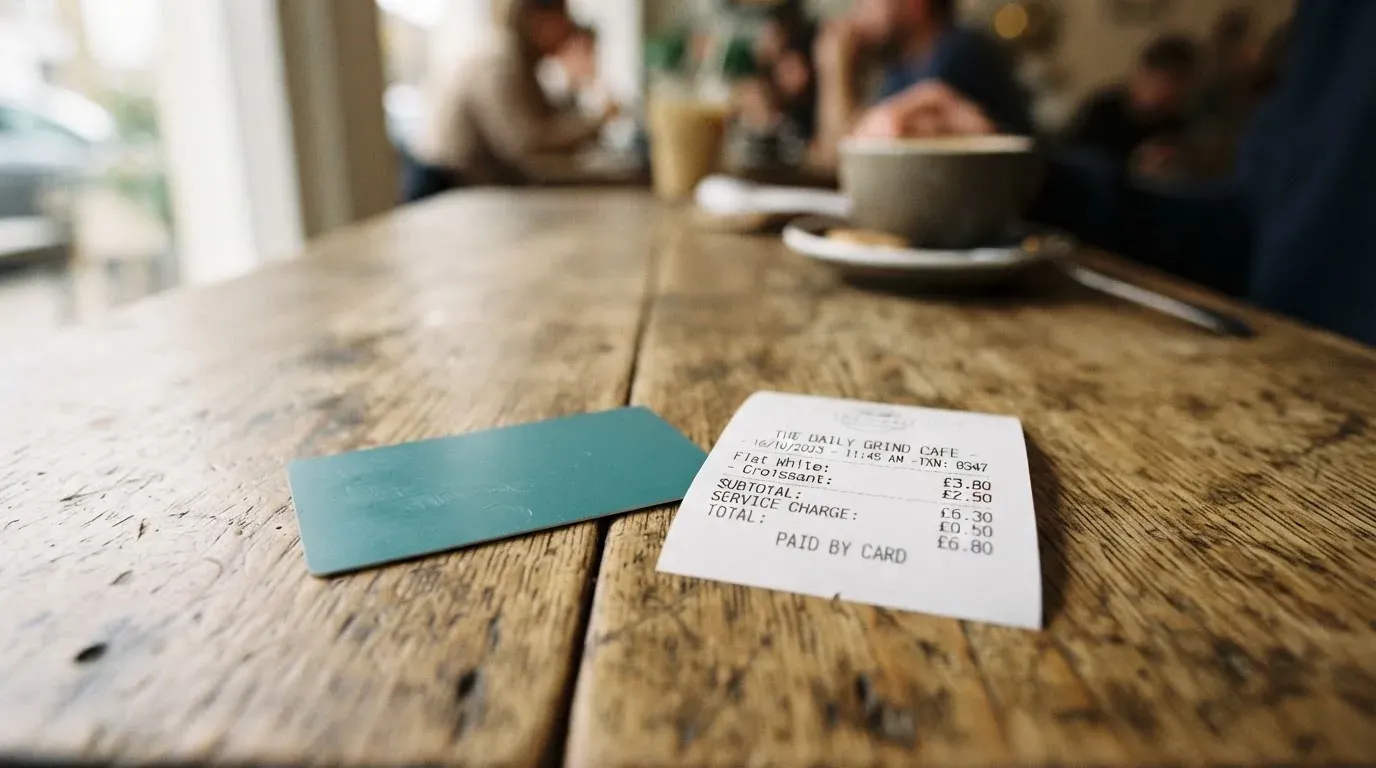
The headline numbers are genuinely good. Coinbase states “Zero spending fees and no annual fees,” and all fees are disclosed in the Cardholder Agreement and User Agreement. On top of that, Coinbase charges no transaction fees and $0 for ATM withdrawals (the ATM operator itself may charge). International transactions carry 0% fee from the issuer, though you may also be charged a fee by Coinbase and the network converts foreign-currency purchases.
Here is the cost picture in one table:
| Fee or limit | What it is |
|---|---|
| Spending fees | Zero |
| Annual fee | Zero |
| Coinbase transaction fees | None |
| Conversion | A spread applies when Coinbase buys, sells or trades crypto, i.e. at payment |
| International transactions | 0% fee from the issuer (you may also be charged a fee by Coinbase) |
| ATM withdrawal (Coinbase) | $0 |
| ATM withdrawal (older fee schedule) | $0, balance inquiry $0 |
| Card currency | USD only; crypto is converted to US dollars at payment |
| Monthly fee | $0 |
| Funding from linked bank account or paycheck | Zero fees |
Now the part that matters day to day, because it is easy to read “zero fees” and stop reading. The conversion spread is the real cost of this card. When you spend crypto, there is no Coinbase transaction fee — but a spread applies when Coinbase buys, sells or trades the crypto. So a purchase paid from a crypto balance is not free; it is paid for in the spread baked into the exchange rate you receive. If you mostly spend from cash you have already loaded, this barely touches you. If you live on your crypto balance, it is the number to think about before you start swiping.
Let me run three ordinary payments through that logic. Buying everyday groceries from a cash balance you loaded from your bank: zero spending fee, zero conversion — the cheapest case the card offers. Buying groceries paid directly from a crypto balance: no transaction fee, but the spread applies as Coinbase converts. Paying for something priced in euros while your balance is in dollars: no issuer international fee, but Coinbase may charge a fee and the network handles the currency conversion — a case where the cost is not fully visible on the card’s own schedule. Those three are the shapes most spending will take, and only the first is genuinely cost-free. Payment costs depend on how you fund the purchase and what the network conversion entails.
There is no paid tier structure — one tier, no levels. The only variation is the rotating crypto reward you pick for yourself.
Top up: getting money onto the card
The funded answer is simple and free. You fund the card by linking a bank account or by depositing part of a paycheck into Coinbase, both at zero fees. You can also spend a crypto balance you already hold on Coinbase, and it is converted to USD for you.
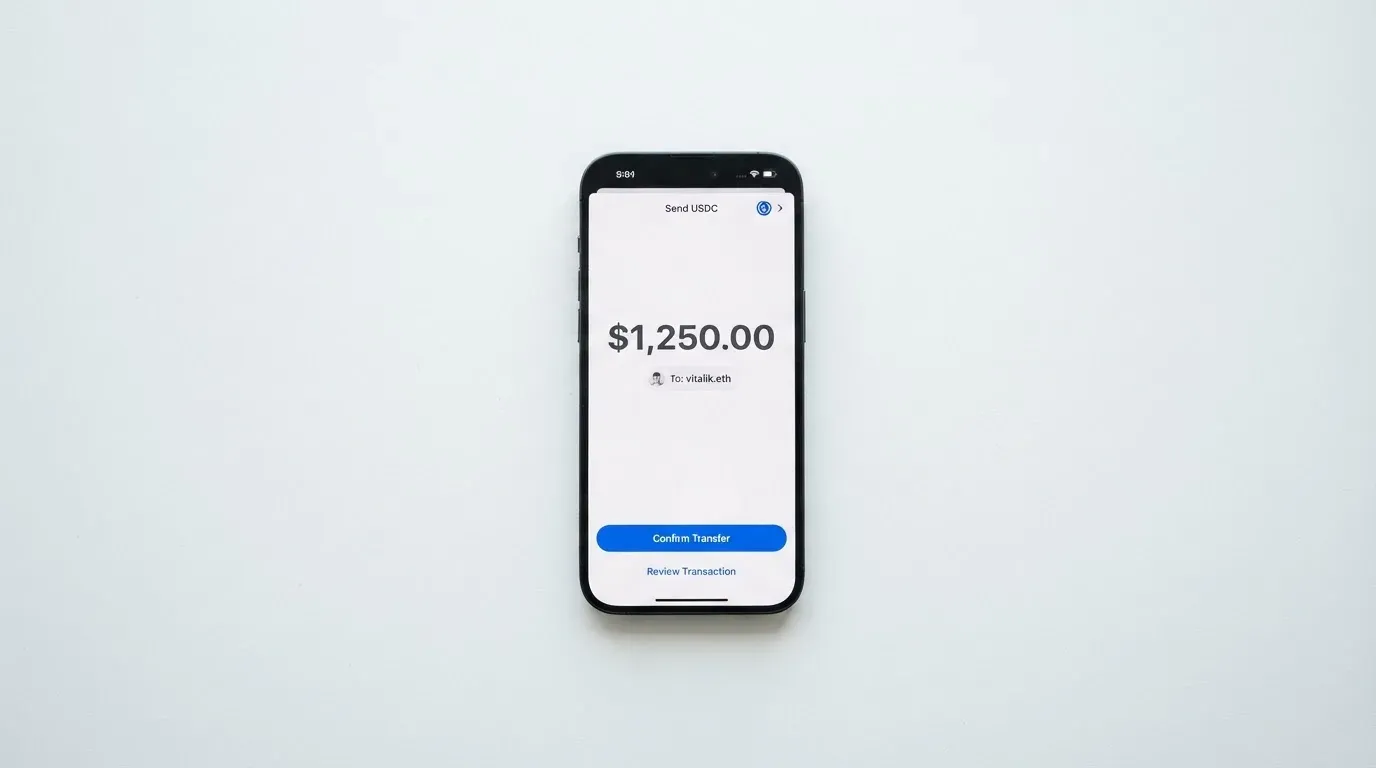
Two things people search for and rarely get a straight answer to on the card’s pages. The minimum top-up amount is not stated, and specific network fees are not stated. If you are planning to move stablecoins in from elsewhere, that is a real gap to be aware of rather than a detail I can fill in for you. What I can say is that the everyday route — bank link or paycheck — is the one the card is built around and the one it prices at zero.
On the way out, taking the balance off the card is not stated either. An older agreement does say funds on the card do not expire after the card’s “Valid Thru” date, which is reassuring as far as it goes, and it flags a sharper edge: if your address on file changes to a non-US address, the card may be cancelled and funds returned. That is a real constraint for anyone who might move.
Paying with it every day
The strongest part of this card is ordinary, low-friction use. It is a Visa prepaid debit card, virtual or physical. It spends cash or crypto, and any crypto is converted to US dollars for purchases and ATM withdrawals. Virtual or physical is your choice, and the rewards are optional crypto rewards on every purchase — US Card users only, with a variable rate shown in the app and a rotating selection of crypto to choose from.
There is also an app worth knowing: it runs on iPhone (iOS 16.4+), Mac and Vision, in 18 interface languages including Russian and Turkish, and carried a 4.7 App Store rating from 1.8M ratings when I checked. Unofficial but widely reported: Apple Pay and Google Pay support. Treat that as third-party reporting, not as something the card’s own pages confirm. Blocked merchants are not documented.
If something goes wrong with a purchase, the older agreement describes the path: report unauthorised transactions and the issuer decides, with a decision expected within 10 business days, in some cases taking up to 45 days, with the account credited within 10 business days meanwhile. Losses after 60 days from the statement may not be recoverable. Merchant refunds come from the merchant and can post late. Chargeback via Visa is not stated.
What can go wrong
Three things, in order of how likely they are to affect you.
First, conversion spread. Covered above, and it is the everyday cost that the “zero fees” headline can disguise.
Second, frozen accounts and slow support. This is the loudest complaint theme on Trustpilot, where Coinbase as a whole sits at 4.0/5 from 23,282 reviews — 45% five-star, 43% one-star. Users report slow or absent support in fraud cases, account lockouts and heavy verification, and multi-day holds on larger deposits, plus fees on conversions and debit-card transfers. A US consumer-research study even ranked Coinbase third among digital wallets for CFPB complaints, on difficulty retrieving money, and a technology outlet reported Coinbase confirmed it had mistakenly overcharged some users’ bank accounts. Trustpilot covers the whole Coinbase platform, not the card specifically, but it is the same company holding your balance.
Third, who actually holds your money. The card is custodial: your funds sit with Coinbase and the issuing bank, not in a wallet only you control. Under older agreement terms, funds transferred from the Coinbase USD Wallet are eligible for FDIC insurance up to $250,000 if deposit-insurance requirements are met, and Visa Zero Liability applies. Instant card freeze and spending controls in the app are not stated, so do not assume them.
One detail worth flagging because it signals documents can lag reality: an agreement in the official static-assets folder names MetaBank, N.A. as issuer (Marqeta as programme manager), while the current card page names Pathward, N.A. This kind of mismatch is normal in a document set that is updated in pieces — but it is why I tell you the issuer as the card’s own current page states it.
On help, if you need a human: phone 1-888-908-7930, email [email protected], mail 100 Pine Street, San Francisco, CA 94111, plus in-app Card > Support.
What to take instead
The honest framing is that the alternatives are not simply worse or better versions of the same thing — they serve different countries. Compare them on that basis.
| Young Card | OKX | BingX | |
|---|---|---|---|
| Score | 5.7 / 10 | 6.2 / 10 | 5.8 / 10 |
| Where | Not stated | EU plus Norway (Iceland and Liechtenstein excluded) | Europe (EEA), APAC, LATAM and other selected regions |
| Card type | Not stated officially | Mastercard virtual debit, euro, via OKX Pay | Virtual (instant) and metal, Visa debit, settles in USD |
| Cost | Not stated officially | No card fee | Not stated |
| Conversion | Not stated | Spread 0.1% (explainer, May 2026) vs 0.4% (launch release) | Not stated; USDT converted at real-time rate |
| Funding | Not stated | USDC or USDG in OKX Pay | USDT from BingX Fund Account |
| Rewards | Cashback in YNG by Club tier: Essential 0.1%, Gold 1.8%, Platinum 3.6% | Cashback on USDG only, tier caps in EUR up to 10% at VIP4+ | Not stated |
A few notes for the comparison to be fair. OKX’s spread figure is reported inconsistently in May 2026 data — 0.1% in an explainer versus 0.4% in the launch press release, with the explainer being newer. Its rewards are USDG-only, and the reward table is itself inconsistent. BingX’s reach is broad but has no fixed country list, so you would need to confirm with support. Young Card’s mechanics are largely unstated officially; its cashback is paid in its own YNG token, which is a different kind of risk than a stablecoin.
The pattern across all three: if you are not in the US, your realistic crypto card choices run through Europe, and none of them gives you the Coinbase Card’s specific setup. If you are in the US, those alternatives are mostly not available to you anyway — which is why the Coinbase Card scores as it does rather than lower.
Who I would recommend it to
If you live in the US, already hold a balance on Coinbase, and want a card that spends it without thinking — with no monthly fee, no spending fee, optional crypto rewards, and a virtual card you can use the same day — this is a reasonable, unexciting, well-made choice. I would recommend it to you with the spread in mind.
I would not recommend it if you are outside the US, if you need a card that keeps you clear of conversion costs, or if the custody question is the thing you are trying to solve rather than accept.
And if your priority is the card being simple and its costs being obvious, a plain bank debit card still wins on both counts — this card’s value is that it spends a crypto balance, and it is worth paying a spread for only when that is what you actually want to do.
Frequently asked questions
What is the Coinbase Card?
The Coinbase Card is a prepaid Visa debit card that spends directly from your Coinbase balance. Cash you have loaded can be spent as-is, and any crypto held on Coinbase is converted to US dollars at the moment of payment. It comes in virtual and physical form, is issued by Pathward, N.A., and works as an everyday spending and ATM card inside the United States.
How does the Coinbase Card work?
You fund the card by linking a bank account or depositing part of a paycheck into Coinbase, both free, or by spending a crypto balance you already hold. When you buy something, cash is deducted directly; crypto is converted to US dollars at the payment and then spent. Rewards, if you opt in, are added as a rotating crypto of your choice at a variable rate shown in the app.
Is Coinbase a bank?
No. Coinbase is a crypto exchange and financial services company, not a bank. The Coinbase Card itself is issued by Pathward, N.A., a Member FDIC, under a Visa U.S.A. licence and powered by the Marqeta platform. Older agreement language references FDIC insurance eligibility up to $250,000 for eligible funds — conditions apply.
Which countries can I use the Coinbase Card in?
The card is available in all US states except Hawaii, and in no other countries. So it is available to use across the US, but you cannot open one from outside the US. International transactions carry a 0% fee from the issuer, though Coinbase may charge a fee and the network converts foreign-currency purchases.
Does the Coinbase Card require KYC?
Yes. Opening the card account requires your name, address, date of birth and other identifying information, following the USA PATRIOT Act rules, and Coinbase may also ask to see your driver’s license or other documents. There is no credit check and no staking requirement. Your use of the card may be limited until your identity is verified.
How do I top up the Coinbase Card?
The main ways are linking a bank account or depositing part of a paycheck into Coinbase, both at zero fees. You can also spend crypto already held on Coinbase, converted to dollars at payment. The minimum top-up amount and specific network fees are not stated on the card’s public pages, so check the app before transferring in from elsewhere.
What are the Coinbase Card’s fees?
Coinbase states “Zero spending fees and no annual fees,” with no Coinbase transaction fees and $0 charged by Coinbase for ATM withdrawals (the ATM operator may charge). International transactions are 0% from the issuer, though Coinbase may charge a fee. The cost to watch is the conversion spread, which applies when Coinbase buys, sells or trades crypto at payment.
Is the Coinbase Card safe?
It carries normal card protections — older agreement terms reference Visa Zero Liability and report lost or stolen cards immediately, and eligible funds transferred from the Coinbase USD Wallet may be FDIC-insured up to $250,000 subject to requirements. But it is custodial: your balance sits with Coinbase and the issuing bank. Trustpilot shows Coinbase at 4.0/5 from 23,282 reviews, with recurring complaints about account freezes and slow support.
Can I use the Coinbase Card with Apple Pay?
Apple Pay and Google Pay support are reported by third-party outlets rather than confirmed on the card’s own public pages, so treat it as unofficial. The card’s own documentation does not confirm it. If mobile wallet use matters to you, verify it yourself in the app before relying on it.
Is the Coinbase Card worth it?
It is worth it if you are a US resident who already keeps money on Coinbase and wants to spend it with no monthly or spending fee and optional crypto rewards. It is not worth it if you are outside the US, if you want to avoid conversion costs, or if holding funds with a custodian is your main concern. Inside the US, with a Coinbase balance, it is a solid everyday card.
Exchange cards: choosing by where your coins sit – cryptocardpicker
Content created by the «cryptocardpicker» team