
A USDC-native Visa Infinite card with a self-custody promise and a short public record
 Available in US

Bitypay is a crypto card built around one clear idea: you keep USDC in a wallet you control, the card draws on it, and the money moves over ordinary Visa rails. On the evidence I could find, that core looks unusually attractive for anyone who already holds USDC and wants a card that behaves like a normal one — the daily-use profile is the strongest thing about it, and the cost picture, where it is documented at all, is better than most of this category. The problem is everything around that core. The card’s own public pages would not load for me, the issuer and the licences are not named, and nearly every concrete number I have comes from a third-party listing rather than from Bitypay. That is not a reason to refuse the card, but it is the reason to read this review as a map of what is known, what is claimed, and what you still have to find out yourself before you load money into it.
The conditions described here are current as of October 28, 2026.
Verdict: 7.4 out of 10
| Criterion | Mark | Why |
|---|---|---|
| Who can get it | 6 / 10 | Issuing countries are not disclosed and the official site was unreachable; unofficially, full “Level 4” verification, and one Reddit comment says availability depends on citizenship |
| Cost | 9 / 10 | Unofficially, issuance and the monthly fee are free, FX and ATM free, USDC top-up 0%; the same page says transaction and maintenance fees are “not publicly disclosed” |
| Top-up options | 7 / 10 | USDC as collateral in a self-custody wallet on Base or Arbitrum; unofficially USDC and USDT |
| Reliability and complaints | 6 / 10 | Brand owned by Codego Group; issuer and licences not named, official site returned 403; unofficially self-custody, no complaints found for this card |
| Everyday use | 9 / 10 | Unofficially Visa Infinite, virtual and physical, Apple Pay and Google Pay, contactless, ATM with no fee |
| Total | 7.4 / 10 | A card that looks easy to live with, wrapped in an information vacuum |
Who this suits: someone who already holds USDC, who is comfortable moving funds on Base or Arbitrum, and who wants a Visa Infinite card that works in shops, at terminals and in a mobile wallet. Who it does not suit: anyone who needs a published list of issuing countries, a named EU or US issuer, or a fee schedule they can read before committing. If your decision hinges on “can I get one where I live, and is my money protected by a licensed institution I can name”, this card cannot answer that today from public sources — and the gap is not a small one, because an EMI in the EU must safeguard customer funds in dedicated accounts or insure them, and you cannot check whether the entity behind this card does that when the entity is not named.
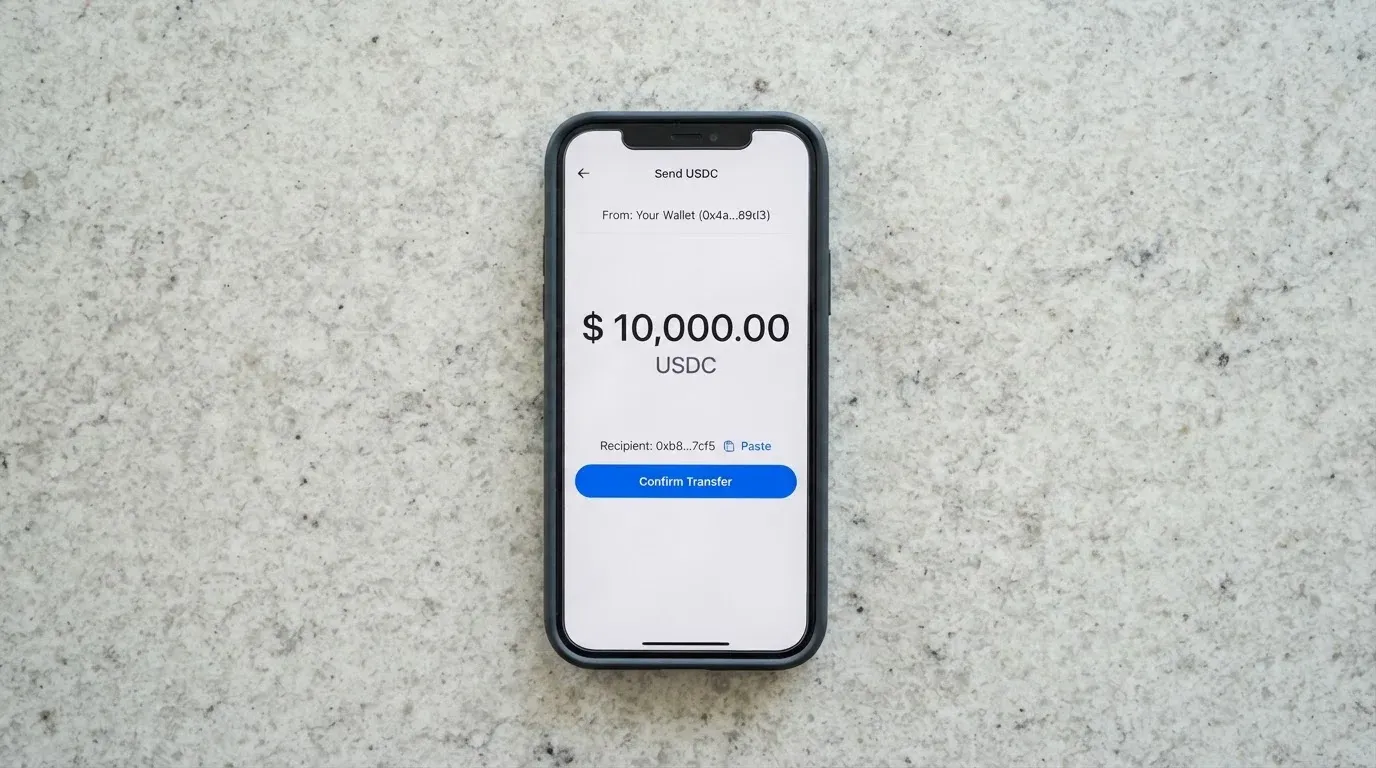
Two words of warning before the detail. First, do not confuse Bitypay with BitPay, the long-standing Bitcoin payment processor at bitpay.com: they are unrelated companies, and search results mix them up constantly. Second, remember where most numbers below come from. Bitypay’s own public pages did not load when I checked, so most facts are marked as unofficial and come from a third-party card listing; treat them as a starting point for your own questions, not as terms.
Will they give you the card?
Straight answer: I cannot tell you, because the card does not say. The list of issuing countries is not stated on the public pages I could reach, and Bitypay’s official site was not available to me when I checked. That is not a technicality — for a card aimed at people who have trouble getting an ordinary bank card, “which countries” is the first question, not the fifth.
What is unofficial but circulating: sign-up runs through a full “Level 4” verification — email, phone, identity document, proof of address and a selfie. That is the deepest tier of checks most people meet anywhere, and it is consistent with the general pattern in this category: regulated businesses must verify customers and assess risk under anti-money-laundering law, with ongoing monitoring and suspicious-activity reporting. In the EU, due diligence covers name, address, date of birth, nationality and identity documentation, a sanctions check, the purpose of the relationship, and whether you are a politically exposed person. In the US, the customer identification programme requires name, date of birth, address and an identification number.
Two things that are easy to confuse, and worth separating:
- Residence and citizenship are not the same thing. Nationality is recorded and screened separately from where you live, because sanctions screening and issuer risk policy are often applied to citizenship and country of birth as well as to your address.
- A KYC level is not a promise of approval. Completing “Level 4” tells you what documents are collected, not whether the application will be accepted in your country.
One further signal, and I want to be careful with it: a single Reddit comment reportedly says usability depends on citizenship and regulatory gating. That is an anecdote I did not read and cannot verify, and I would not build a decision on it. But it sits in a category where it is common — KAST, for comparison, states plainly that living in a supported country is not enough if you only hold an ID from a restricted region. Treat unknown citizenship rules as a real possibility, not a fringe worry.
The minimum you should establish yourself before signing up: which countries are served, what entity issues the card, which regulator licenses it, and what happens to your balance if that entity fails.
How to get it
The card’s public pages do not state a sign-up process, so there is no published sequence I can walk you through. What I can tell you is the shape of it, based on the unofficial verification description and on how this category generally works.
The unofficial picture is a standard onboarding funnel: account, then the “Level 4” document set (email, phone, identity document, proof of address, selfie), then card issuance in the app. The card itself is unofficially described as Visa Infinite, offered both virtual and physical — the virtual one for immediate online use, the physical one for terminals and contactless. Delivery time is not stated anywhere I could find, and that is a practical gap: if you are choosing this card because a bank card is not arriving, “how long until the plastic lands” matters more than most of the marketing details.
Two warnings about the mechanics, both general to crypto cards rather than specific to Bitypay:
- Merchant category codes can be blocked. MCC 7995 covers gambling — casinos, betting, lotteries. Issuers block these on specific cards by policy, not by law, and the blocked list varies by issuer. Whatever the policy is here, it is not published.
- Address verification can cause declines. AVS compares the numeric parts of the billing address you type with the issuer’s records; it is mainly offered in the US, Canada and the UK and is generally unavailable for foreign-issued cards. A card issued in one country can also simply look “foreign” to a shop in another, because the BIN at the front of the number tells the merchant which institution and which country issued it.
If your situation is that you cannot open a conventional account, a card like this can still be refused by merchants for reasons that have nothing to do with you. That is worth weighing honestly before you commit.
Fees and what a payment actually costs you
The cost line is where Bitypay scores best and where my confidence is lowest — because the two sources I have contradict each other. The unofficial figures I found: issuance free, monthly fee free, FX fee free, decline fee free, ATM fee free, 0% deposit fee on USDC, and daily, monthly and ATM limits listed as unlimited. The same unofficial page then says transaction and maintenance fees are “not publicly disclosed”. A page cannot meaningfully say a fee is free and undisclosed at the same time, so treat the whole table below as unverified.

| Fee or limit | What the third-party listing says | Status |
|---|---|---|
| Issuance | Free | Unofficial |
| Monthly fee | Free | Unofficial |
| Conversion fee | Not publicly disclosed | Unofficial |
| Foreign exchange fee | Free | Unofficial |
| ATM fee | Free | Unofficial |
| Decline fee | Free | Unofficial |
| Deposit fee (USDC top-up) | 0% | Unofficial |
| Daily spend limit | Unlimited | Unofficial |
| Monthly spend limit | Unlimited | Unofficial |
| ATM limit | Unlimited | Unofficial |
Nothing about this is stated by the card itself. Tiers, if any exist, are not stated. The card’s settlement currency is not stated.
Now the part you actually care about — three ordinary payments and which fees apply.
- A coffee in your own country, paid by contactless. If the unofficial figures hold, no fee at all: no FX involvement, no conversion, and ATM fees are irrelevant. This is the case the card is built for.
- A subscription or hotel abroad, paid online. Here the “FX free” claim is doing a lot of work, and it is exactly the claim I would not rely on. If the card settles in dollars and the merchant charges euros, someone converts; the question is whether that cost is 0% and who eats the spread between the network rate and the rate you get. Unverified either way.
- Withdrawing cash from an ATM. Unofficially free, which is unusual in this category — most cards charge per withdrawal plus a foreign fee. But “unlimited” limits and “free” withdrawals in the same breath is another reason to read the source sceptically.
The one fee you will pay regardless of what any card says: the on-chain network cost of your own deposit. Gas or bandwidth is charged by the blockchain, not by the card provider. On Ethereum that means holding ETH to move anything at all, since fees are paid only in ETH — a wallet with USDT but no ETH cannot send. On Tron, fees are paid through bandwidth and energy resources, often burning TRX. On Base and Arbitrum the cost is low but not zero. So “0% deposit fee” describes the card’s cut, not the whole cost of getting money in.
My honest summary: if the free-fee picture is accurate, this is among the cheapest cards in the category. If it is not, the undisclosed transaction and maintenance fees are the number that decides whether it is cheap or expensive, and you currently have to ask.
How to top it up
This is the clearest part of the design, and the reason the card exists. The stated mechanism: USDC held as collateral in a self-custody wallet on Base or Arbitrum, with spending over Visa rails and no manual conversion step. You do not convert, transfer to a platform account and wait; the card draws on what is already there.
Unofficial additions: USDC and USDT are supported, on Base and Arbitrum, with a 0% deposit fee on USDC. Nothing about withdrawal from the card back to a wallet or bank is stated — and that gap matters. How money leaves is as important as how it arrives, especially if the card is your main spending route.
Because the funds sit in a wallet you control, the usual custodial risks largely fall away. Control of crypto belongs to whoever holds the private key; with a custodial wallet the provider holds the credentials and you must trust them completely. A seed phrase — typically 12 to 24 words — is the unencrypted form of the private key, and anyone who obtains it can restore the wallet and spend its funds. This category has a hard record on that front: Mt. Gox (about US$350 million reported stolen, 2011–2014), Coincheck (about US$400 million, 2018) and Ronin Network (US$625 million, 2022). Keeping your own keys removes the counterparty risk; it does not remove the risk of a stolen phrase, of phishing, or of clipboard-hijacking malware that swaps an address you copied. On self-custody, the responsibility is entirely yours.
Three practical warnings about the transfer step:
- Wrong network, gone money. Blockchain transfers are irreversible. A deposit sent on a network the provider does not support, or to an address belonging to another network, can be lost or need manual recovery with no guarantee. Check the network twice — twice, not once — because this is the single most expensive mistake available to you here.
- Not every USDC route is open. Circle stopped supporting USDC on Tron in February 2024, so “USDC over TRC20” is not a native option. Circle lists USDC as natively supported on 38 networks as of 16 September 2026, including Ethereum, Solana, Base, Polygon PoS, Avalanche, Arbitrum and Stellar — but that is Circle’s list, not the card’s, and the card’s own supported list is the unofficial one above.
- The token can move. Tether says it disables tokens in wallets on the OFAC sanctions list and has frozen funds tied to illicit activity. Stablecoins are not censorship-proof, and freezing is not a hypothetical in this category.
If you are methodical about the network and hold only what you are comfortable having on-chain, this is the part of the card that should make you feel good. It is simple, and its failure modes are ones you can actually control.
Paying with it every day
Unofficially, and it is a good list: Visa Infinite, virtual and physical, Apple Pay and Google Pay, contactless, ATM with no fee. If that holds, this is a card you would not have to think about — the sort you tap for the supermarket and hand over for a bar, with the wallet in your phone for anything online. The 9 out of 10 here reflects exactly that.
The “unofficially” is doing real work, though, and there are two ways to read it. Either Bitypay is a well-run product whose documentation simply is not reachable, or it is a thin listing with aspirations. The evidence does not distinguish between those. So before you rely on any of it:
- Check which applications it reports. Not stated. You should not assume Apple Pay works simply because the network is Visa; the token has to be provisioned, and an issuer can restrict a tokenised number — blocking it on magnetic stripe, phone or website use.
- Check online payment behaviour. Online payments may trigger 3-D Secure, which adds an identity check: the issuer assesses risk and either approves frictionlessly or challenges you with a one-time code or biometric. Visa’s brand is Visa Secure, Mastercard’s is Identity Check; EMV 3-D Secure 2, published in 2016, supports one-time passcodes and app-based authentication aligned with EU strong customer authentication. If your logins fail without that prompt, you will feel it.
- Check what happens when a payment is declined. A declined authorisation may leave a hold on funds that can remain for several days, typically up to seven. With a self-custody balance, that means your own money is frozen until the hold clears — no customer service line, because there is no custodial account to appeal through.
Rewards, unofficially: no cashback, staking, welcome or referral bonus listed, but free access to more than 1,300 airport lounges. That is a coherent pairing with Visa Infinite — a card sold on the lounge and the metal, not on rebates. If you spend on everyday groceries, there is nothing here for you.
Where to spend: cards like this are usually accepted anywhere Visa is accepted, but gambling (MCC 7995) is commonly blocked, prepaid and foreign BINs get declined at some merchants because the BIN lookup reveals the card type and issuer country, and address verification is generally unavailable for foreign-issued cards. Plan for a decline rather than treating it as a personal failure.
What can go wrong
I found no complaints specific to this card — and I want to be precise about what that means. Searches return BitPay, the unrelated legacy company. There is no Trustpilot page for Bitypay. Absence of complaints from a product with almost no public footprint is not evidence of a clean record; it is mostly evidence of a small footprint.
The real risks, ranked by how much they could hurt you:
- Counterparty and licensing risk. The brand is owned and operated by Codego Group; the issuer and licences are not stated. A crypto card often depends on two licences — MiCA covers the crypto side (custody, exchange, transfer) while the card itself is a payment service regulated separately under e-money and payment-services law. MiCA’s rules on asset-referenced tokens and e-money tokens applied from 30 June 2024 and the remaining provisions, including crypto-asset service provider rules, from 30 December 2024; under MiCA, e-money tokens may be issued only by a credit institution or an electronic money institution. ESMA keeps an interim register of authorised CASPs, white papers and non-compliant entities, and you can check a provider there — but only if you know the provider’s legal name, which is exactly what is missing here.
- Programme shutdown. This category has done it before. Visa terminated its global agreements with FTX on 13 November 2022 and the FTX US debit card was wound down by its issuer. WaveCrest, a Visa card issuer that supplied crypto card brands, was suspended by Visa in Europe in 2018, closing all its Visa programmes. Closures typically give a notice period, then stop spending and loading, then ask users to withdraw remaining balances. Self-custody helps here in a way custodial cards never can: your funds stay in your wallet and the card’s death does not take them with it. But your ability to spend does stop.
- Wrong-network deposits. Irreversible, and the recovery path is manual with no guarantee.
- Fee reality. If the free-fee story is wrong, you find out at the till.
- Support. Not stated. No published support channel, no dispute process, nothing about complaints handling. With a self-custody card, a provider’s ability to reverse anything is limited anyway, so a cardholder who is used to chargeback protection will feel the difference.
- Security practices. Nothing official on two-factor authentication, freeze, spending caps or key management. The general category’s typical safeguards are app-based 2FA, instant card freeze, spending limits, 3-D Secure confirmation and tokenised mobile wallets — ask whether this card has them.
One last thing people forget with self-custody cards: taxes do not pause because the money moved through a card. In the US the IRS treats digital assets as property, so exchanging them for goods, services or dollars generally produces a taxable gain or loss, measured in your local currency at fair market value on the date of the transaction. Every card payment funded from crypto may be a separate disposal. I am not giving you tax advice — I am telling you that a card spent from crypto is not tax-neutral, and that is a conversation to have with a professional in your own country.
What to take instead
If the missing issuer, licences and fee schedule decide against Bitypay for you, these are the cards with published terms. Scores are on the same ten-point scale as the verdict above.
| Alternative | Score | Card | Who can get it | Cost |
|---|---|---|---|---|
| MetaMask | 7.1 / 10 | Mastercard, virtual then optional metal | Sign-up open in 45 listed countries/territories; other regions on a waitlist; proof of residency required; US/UK sign-ups temporarily closed per FAQ | Virtual free; metal $199/year |
| KAST | 6.1 / 10 | Visa Platinum / Infinite (metal, gold) | Residence list shown at KYC, country list not published; citizenship and ID of origin also matter | Standard 0 USD; Premium 1,000 USD/year; Private 10,000 USD/year |
| TokenPocket | 5.8 / 10 | Visa debit in Europe, Mastercard debit elsewhere | Visa for European countries/territories; Mastercard for Australia, Canada, Hong Kong, Japan, Taiwan, New Zealand, Singapore, South Korea, UK and others | Small NFT creation fee partly covered; 1% fee on depositing crypto, refunded later via rewards |
Where each one is genuinely stronger:
- MetaMask is the closest comparison and the one I would look at hardest. Its terms are published in a way Bitypay’s are not: eligibility countries, pricing, tokens and networks. It spends directly from a connected wallet on Linea, Base, Monad and Solana, with mUSD, wETH, EURe, GBPe, USDC and USDT named. Cashback is real and published — 1% on Virtual, 3% headline on Metal with a footnote capping it at the first $10,000 then 1% — paid in mUSD into the Money Account. Its catch: “minimal fee for each transaction” with the amount not stated on the pages read, one card per user, and Solana-only wallets cannot withdraw credit.
- KAST publishes numbers in a way almost nothing else does, including real cashback tiers (1.5%, 2% and 3% by level) and the awkward ones — a non-USD transaction fee of 0.5%–1.75% depending on residence, a 0.50 USD declined-transaction fee, a 1 USD/month inactivity fee after 12 months. If you are comparing cards, read this row, because it shows what a fully disclosed fee schedule looks like.
- TokenPocket is the weakest of the three on terms but answers a question Bitypay does not: which countries. Visa for European countries and territories, Mastercard for a long list elsewhere, Americas planned. But it charges 1% on crypto deposits and runs on Arbitrum with an Arbitrum wallet, and Fiat24 cards are virtual with no physical card mentioned.
The honest summary of this section: Bitypay scores higher than two of its alternatives, but on the axis where it would matter most for you — can I verify what stands behind this card — the alternatives publish more. That is the trade you are being offered.
Who I would recommend it to
I would recommend the Bitypay card to someone in a specific position: you already hold USDC on Base or Arbitrum in a wallet with your own keys, you are technically comfortable enough to check a network twice, you want a Visa Infinite card for everyday spending including abroad, and you do not mind that the fee schedule and the issuer are things you will have to ask about yourself. For that person the design is genuinely good — self-custody removes the counterparty risk that has gutted this category, and a Visa card that taps and works is a better daily tool than most of its rivals.
I would not recommend it to you if any of these are true: you need to know today which countries are served; you cannot find a named issuer or licence; you are moving a large balance; you depend on chargebacks and dispute handling; you are in a country where crypto itself is restricted and you would rather not be visible to an unnamed compliance team; or you simply want a fee schedule you can read before committing. In those cases take MetaMask or KAST, both of which publish more, even if neither is free.
And one caution that applies to all of this: this is a review of what is publicly documented, and for this card that is unusually little. My score of 7.4 is not a verdict on the product — it is a verdict on the balance between a promising design and an almost complete absence of published terms. If you are in the market for a card precisely because conventional banking has closed doors, you are already used to doing your own diligence. Do it here too, and start with the three questions in the next section.
Frequently asked questions
What is the Bitypay card?
Bitypay is a crypto payment card built around USDC held in a self-custody wallet on Base or Arbitrum, with spending over ordinary Visa rails and no manual conversion step. Unofficially it is described as Visa Infinite, available virtual and physical, supporting Apple Pay, Google Pay and contactless payments. The brand is owned and operated by Codego Group; the issuing entity and its licences are not stated on the card’s public pages.
Is Bitypay a bank?
No — and this is one of the most important distinctions for you. Bitypay markets a card; the entity that actually issues cards and holds your balance would be a bank or an electronic money institution licensed under Visa’s programme. That entity is not named in the information I could reach. An EMI in the EU can issue e-money and payment cards but cannot lend, and must safeguard customer funds in dedicated accounts or insure them.
How do I get the Bitypay card?
The card’s public pages do not publish a sign-up sequence, so there is no official walkthrough I can give you. Unofficially, onboarding involves a full “Level 4” verification covering email, phone, identity document, proof of address and a selfie. After approval you are described as receiving both a virtual and a physical Visa Infinite card. Delivery time for the physical card is not stated anywhere.
Does the Bitypay card require KYC?
Almost certainly yes, and unofficially it requires the most thorough tier: identity document, proof of address and a selfie, alongside email and phone. This follows the general pattern for regulated businesses, which must verify customers and assess risk under anti-money-laundering law. Completing verification does not guarantee approval — the issuing countries are not disclosed, and citizenship can affect eligibility separately from residence.
How much does the Bitypay card cost?
Unofficially: issuance free, monthly fee free, foreign exchange free, decline fee free, ATM free, and a 0% deposit fee on USDC top-ups. However, the same third-party listing says transaction and maintenance fees are “not publicly disclosed”, so those free-fee claims contradict it. You will also pay the blockchain’s own network fee on your deposit. Treat the cost picture as promising but unverified.
How do I top up the Bitypay card?
You send USDC to your own self-custody wallet on Base or Arbitrum, and the card spends that balance directly over Visa rails — no manual conversion. Unofficially USDT is supported too, with a 0% deposit fee on USDC. Check the network twice before sending: blockchain transfers are irreversible, and a deposit on an unsupported network can be lost or require manual recovery with no guarantee.
Can I use the Bitypay card in my country?
I cannot answer that reliably. The card does not publish its list of issuing countries, and its official site was unreachable when I checked. Where to spend is a separate question: cards like this generally work anywhere Visa is accepted, but gambling (MCC 7995) is often blocked by policy, and some merchants decline prepaid or foreign-issued cards because the BIN lookup reveals the card type and issuer country.
Is the Bitypay card safe and are my funds insured?
The design is safer than most: because it is self-custody, your USDC stays in a wallet you control and the provider cannot move it. Control of crypto belongs to whoever holds the private key, and anyone who obtains your seed phrase — typically 12 to 24 words — can restore the wallet and spend everything in it. But the issuer and its licences are not named, so I cannot confirm that customer funds are safeguarded in dedicated accounts or insured, as an electronic money institution must do.
How do I withdraw money from the Bitypay card?
This is not stated, and it is a gap you should close before you rely on the card as your main spending route. What is stated is the funding side only: USDC held as collateral in your own wallet, spent over Visa rails. Because the balance never leaves your custody, your wallet is the natural place to withdraw from — but confirm the card’s own position rather than assuming it.
Is the Bitypay card worth it?
Worth it if you already hold USDC on Base or Arbitrum, want a Visa Infinite card for everyday spending, and are comfortable doing your own diligence. Not worth it if you need a published list of issuing countries, a named licensed issuer, or a fee schedule you can read first — under MetaMask or KAST you can find all three, and both publish more than Bitypay does. My mark of 7.4 out of 10 reflects a good design wrapped in an information vacuum, not a verified verdict on the product.
Wallet cards: who should pick one – cryptocardpicker
Content created by the «cryptocardpicker» team